News

Many hardworking and successful marijuana connoisseurs have dreamed of one day working a legal and legitimate job in the cannabis industry.
For Ohioans that dream can finally become a reality. According to many Ohio medical-marijuana industry experts, there is a shortage of skilled workers as the state’s medical marijuana program takes off like John Glenn in a rocket.
Indeed, some Ohio medical marijuana companies have looked far and wide to find experienced workers. Standard Wellness near Sandusky, one of the state’s first cultivators and processors of medical marijuana, started with four employees and now has 45, said CEO Erik Vaughan recently to Cleveland.com.
“We had to go out of state to find specialists and managers for our cultivation business,” says Vaughan.
Also telling is how many cannabis careerists have had to leave Ohio to make their career dreams a reality. But staying near to home is now possible as the only state-approved career school for cannabis education east of Colorado – The Cleveland School of Cannabis or CSC – is opening a second location in Columbus this April and currently enrolling students.

Columbus City Schools has had its share of issues and most local media love to kick our city schools while they’re down.
Recently, our region’s conservative radio station 610 WTVN and its most prominent local personality, Joel Riley, criticized Columbus City School teachers about how many sick days they take. He repeatedly cited recent research by Ohio State professor Vlad Kogan who found on average, each city school teacher took 14 sick days per school year.
So, who exactly is Vlad Kogan? He’s a father of two children who attend Columbus City Schools and he regularly shows up to school board meetings.
He’s a professor, as mentioned, but he’s also a researcher for The Education Governance & Accountability Project at OSU, something he doesn’t reveal to local media when presenting unflattering data about city school teachers.
The Education Governance & Accountability Project is funded with a $630,000 grant from the Chicago-based Spencer Foundation, which is committed to supporting high-quality investigation of education through its research programs.

Look for the Ohio Legislature to come out very soon with a bill to bail out FirstEnergy for its two nuclear plants on Lake Erie – Davis-Besse near Toledo and Perry east of Cleveland. FirstEnergy says it will close its nuclear reactors without a massive ratepayer bailout, attempting to blackmail the legislature with a hollow “threat.” FirstEnergy has been a major donor to some powerful politicians.
Nuclear utilities are getting smarter about getting public bailouts. In Illinois, Exelon is asking that the state take over from the regional transmission authority. Then Illinois could increase the capacity charges for nuclear power. They claim that this is not a nuclear bailout!
In Ohio’s proposed FirstEnergy bailout in 2018, one argument the sponsors gave was that without nuclear we would be left in the dark. That didn’t ring true, though, so they started quoting a new mantra: Nuclear Power should be given zero emissions credits!
WHAT ZERO EMISSIONS?
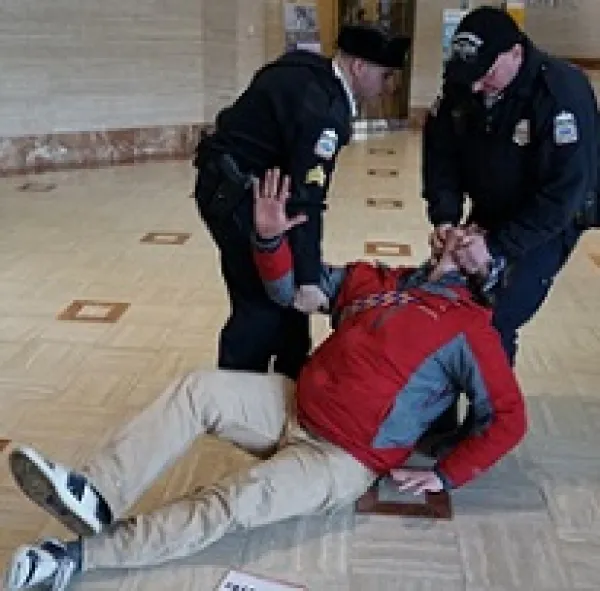
The Ohio Senate passed SB23 yesterday to restrict abortion to the first six weeks of a woman’s pregnancy, in a vote of 19 to 13.
Republican Senator Kristina Roegner, the sponsor of the bill, told the Columbus Free Press after the vote, “The next step naturally is that it will go to the House Health Committee chaired by Derek Merrin (R) where the sponsor is Representative Keller (R).”
A Republican majority in the Ohio House of Representatives is expected to pass the bill, and Ohio’s new Republican Governor Mike DeWine has promised to sign it into law.
Senator Roegner introduced the bill in the senate session, and criticized the Supreme Court Ruling Roe v Wade (1973) which protects a woman’s right to an abortion based in her right to privacy regarding her body and her personal medical care. Roegner claimed Roe v Wade created a “moving target” by defining human personhood as beginning when the fetus is able to survive outside the womb and said, “We need a new standard. The heartbeat bill provides this new standard.”
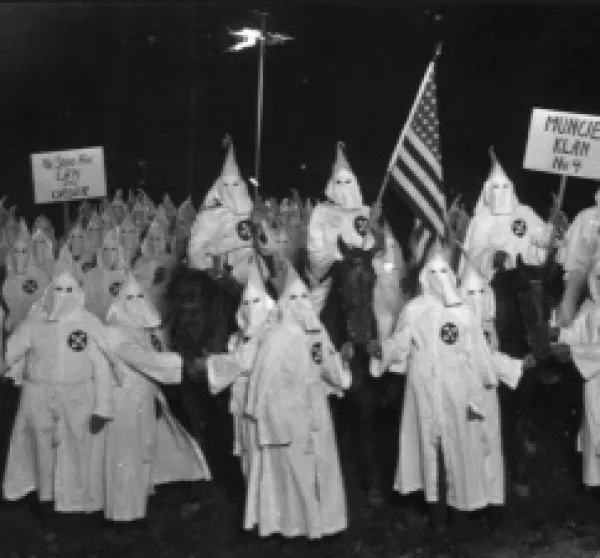
Many people hear the name “Ku Klux Klan” and think of the deep South and unreconstructed neo-confederates riding at night with support from the city fathers and some obese caricature of a sheriff. That image is a convenient alibi of denial for those living in the deep North – as Ohio, Indiana and Michigan have always been hotbeds of Klan activity, and Dayton has always been a center of white supremacist activity. This is why the so-called Honorable and self-described Sacred Knights of the KKK have chosen to come to Dayton to recruit at a rally at the old courthouse on May 25, 2019.
The city gentrifiers-in-chief initially feigned shock and horror immediately followed by the usual mumbling about rights and free speech. On March 9, the other shoe fell. Black Lives Matter Dayton requested the use of the Levitt Pavilion Dayton, which is two blocks from the Klan's rally. Their plan was to hold an indoor concert in opposition. Black Lives Matter Dayton’s request was denied.

After Grove City police recently confiscated CBD products from a vape shop after executing a search warrant, what does this portend for all local CBD retailers who are not licensed by the state?
Depending on how each local police agency views CBD it could mean shutting down the retailer.
CBD is one of the many cannabinoids or compounds derived from the cannabis plant. When processed into an isolate form, it is non-psychoactive, unlike its mind-altering cannabinoid relative Delt-9-tetrahydrocannabinoil (THC).
Many are coming to the realization that CBD is potentially the next big thing in holistic health. There is little federal research to go by, but millions of CBD users swear by its anxiety and pain reducing powers, and thus the market could reach $2 billion by 2020, according to the Hemp Business Journal.

With March being Women’s History Month and women only holding 23.7% of the seats in Congress despite making up 51% of the U.S. population, the personal-finance website WalletHub today released its report on 2019’s Best & Worst States for Women as well as accompanying videos.
To identify the most women-friendly states, WalletHub compared the 50 states and the District of Columbia across 24 key metrics. The data set ranges from median earnings for female workers to women’s preventive health care to female homicide rate.
TOLEDO, OH: Fifty years after the media infamously declared “Lake Erie is dead,” Toledo voters recognize that Lake Erie and its entire ecosystem is very much alive – and as such, Lake Erie has the right to exist, flourish, and naturally evolve.
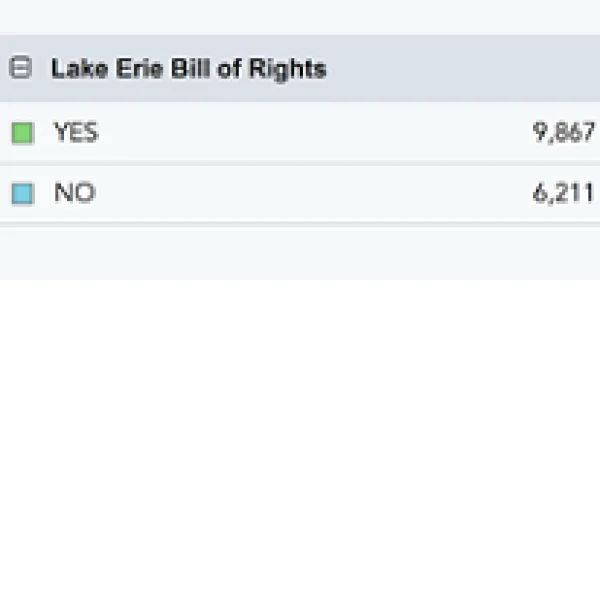
Despite agricultural and industrial interests’ well-funded campaign opposing the ordinance, with a 61.37-percent yes vote on Tuesday, Toledo voters have enacted the Lake Erie Bill of Rights Charter Amendment. The law recognizes the rights of the lake and its watershed, and empowers citizens – as part of that larger ecosystem, and who have “the right to a healthy environment” – to stand up for the lake when those rights are violated.
“It was definitely a long, hard struggle to get to this day, but all the hard work and countless volunteer hours by everyone in our local community group has paid off,” stated Crystal Jankowski, a Toledoan for Safe Water organizer. “We started this more than two years ago and had to overcome election board decisions and protests in court just to get on the ballot.”

Two to three years ago city parking officials and the Mayor’s Office began crafting the current Short North Parking Plan. Homeowners in the Short North aren’t entirely sure when the city began this round of planning because the city tried to keep it a secret from many Short North residents, this according to the activist group Preserve Short North Neighborhoods.
The city’s newest plan to ease parking in the Short North began in late January and many neighborhood homeowners say it sacrifices their interests to appease high-end developers.
“There was an enormous amount of secrecy around this,” says Mark Bocija, the homeowner who started Preserve Short North Neighborhoods. “They had been meeting for over a year with no discussion to residents. In fact, people on the planning committee were told not to tell any residents about it.”
Bocija says representatives from the Short North Civic Association and the Short North Alliance were on the planning committee, and they too must have been told to not alert residents because they never did.