
Anti-War

“Who controls the past, controls the future. Who controls the present controls the past.” –Orwell
The U.S. government has reached the bottom of the barrel. Having packed every square inch of the National Mall with monuments to every war they wanted to admit to, including the wars on Vietnam and Korea, and including the two world wars, our dear leaders have decided that another World War I monument is needed, and that it will be built in Pershing Park (named in 1981 for a World War I general by then already sufficiently forgotten).
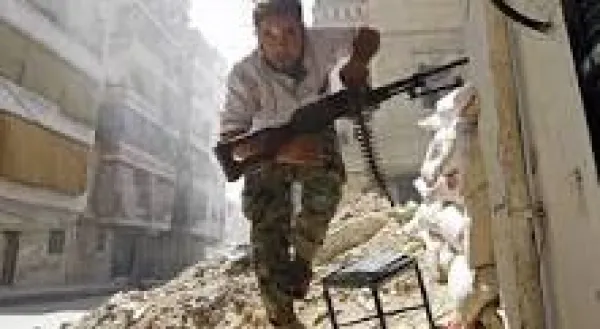
A cease-fire, even a partial one by only some of the parties to the war in Syria, is the perfect first step -- but only if it's widely understood as a first step.
Almost none of the news coverage I've seen speaks to what purpose the cease-fire serves. And most of it focuses on the cease-fire's limitations and who predicts someone else will violate it, and who openly promises to violate it. The big outside parties, or at least Russia, plus the Syrian government, will go right on bombing selected targets, which will go right on shooting back, while Turkey has announced that ceasing to kill Kurds would just be taking the whole thing a bit too far (Kurds the United States is arming against other people the United States is arming, by the way).
The United States distrusts Russia on this, while Russia distrusts the United States, various Syrian opposition groups distrust each other and the Syrian government, everybody distrusts Turkey and Saudi Arabia -- the Turks and Saudis most of all, and U.S. neocons remain obsessed with Iranian evil. The predictions of failure could be self-fulfilling, as they seem to have been before.
The United States has launched over 100,000 air strikes during its war on (or is it of) terror. It's blown up houses, apartments, weddings, dinners, town hall meetings, religious gatherings. It's killed senior citizens, children, men, women. It's tapped them, double tapped them, bugsplatted them, targeted them, kill-sported them, and collateral damaged them by the hundreds of thousands. It's killed civilians, journalists, mercenaries, opportunists, those trying to get by through support of the dominant force in their village, and those opposing the foreign occupation of their countries. It's killed kind people, smart people, dumb people, and nasty sadistic people who -- purely because of where they were born and raised -- had no opportunity to become U.S. presidential candidates.
Of course I would like all militaries to refrain from bombing hospitals, but I want to say a word in support of the not-yet-injured. Don't people of sound body have rights too? If there is a problem with bombing hospitals, why is there not a problem with bombing everywhere else? If there's not a problem with bombing everywhere else, why isn't it OK to bomb hospitals too?

Enlistment exam provides alternate pathway to graduation
Thousands of New Jersey high school seniors may be taking the military’s enlistment exam to fulfill a graduation requirement because they opted out of the controversial PARCC tests when they were juniors.
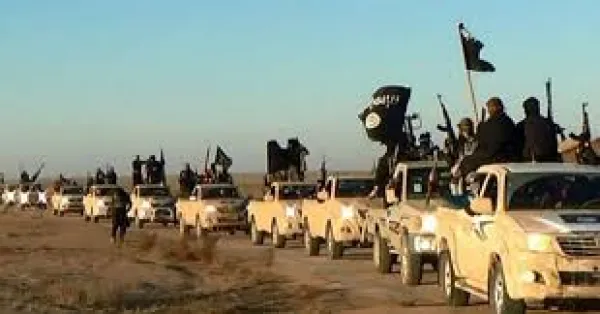
US options in dealing with Islamic State (ISIS, ISIL, Daesh, etc.)
 n the abstract, the US has four broad options for dealing with the Islamic State (ISIS), which now more or less controls most of eastern Syria and northern Iraq, much of it uninhabitable. From this base, ISIS regularly sends out multilingual messages of doom and destruction to the rest of the world, but especially to “the infidel West,” which includes the already terrified US. None of the US options are particularly attractive, none are likely to be decisive, and any of them, even if taken independently, remain dependent on others for their eventual usefulness.
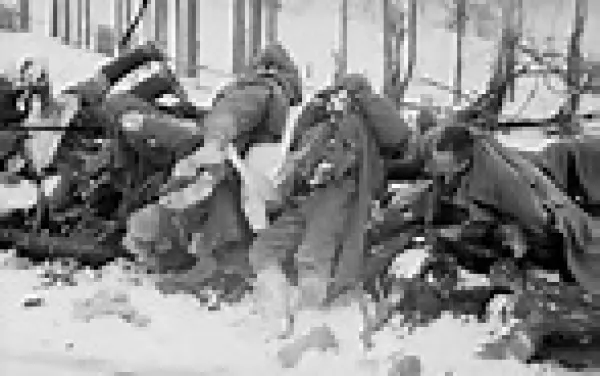
How many people have been killed in the wars in Afghanistan, Iraq, Syria, Yemen or Somalia? On November 18th, a UN press briefing on the war in Yemen declared authoritatively that it had so far killed 5,700 people, including 830 women and children.
– President Obama, State of the Union, January 12, 2016 “Even worse, we are facing the most dangerous terrorist threat our nation has seen since September 11th, and this president appears either unwilling or unable to deal with it.”

What if the very worst result of George W. Bush's war lies is that people stop taking seriously the danger of actual nuclear weapons actually falling into the hands of actual lunatics? Arguably the very worst result of Woodrow Wilson's lies about German atrocities in World War I was excessive skepticism about reports of Nazi atrocities leading up to and during World War II. The fact is that nuclear weapons are being recklessly maintained, built, developed, tested, and proliferated. The fact is that governments make mistakes, fail, collapse, and engage in evil actions.

If you have to obsess over a political candidate who's ocassionally allowed on television, please do so with Ted Rall's book on Bernie. This is not John Nichols' interview of Bernie in which he forgets that foreign policy even exists. This is not Jonathan Tasini's almost worshipful book in which he selectively includes the best and omits the worst of Bernie Sanders' record.
And this is not even just an honest look at the facts about Bernie (which Rall sees as far more positive than negative). What sets this book apart is not that it's a cartoon, but that it's an argument for placing Bernie Sanders in a particular position in U.S. history, namely as the restoration of liberalism to a Democratic Party that hasn't seen it since the McGovern campaign.