
Local
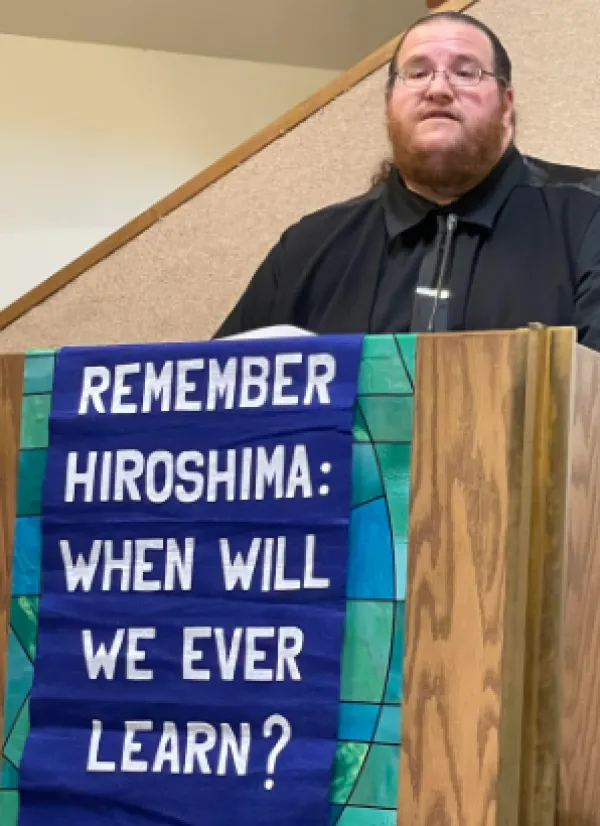
From the 78th Commemoration of the Atomic Bombings of Hiroshima and Nagasaki
Columbus Campaign For Arms Control Peace Concert
August 13th, 2023
For far too many, the names “Hiroshima” and “Nagasaki” have been relegated, diminished, beatified, and locked away into the ever palatable and thus, readily ignorable conceptual box known as history. History with a capital H. Tragic history, yes, but past history: something that “happened.”

Sunday, August 13, 6pm
University Baptist Church, 50 W Lane Ave, Columbus, OH 43201
Annual commemoration of atomic bombings in Japan advocation for nuclear de-proliferation and disarmament.
Performers: David Reed, Paul Strawser, Larry Marotta, Steve Farakas, David Tomasacci
Sponsored by Mark Stansbery, Yoshie Furuhashi, and Rocco diPetro, and Columbus Campaign for Arms Control.
We live among swelling waves of misinformation and disinformation. This is sometimes by accident but increasingly by design in organized campaigns. The daily and periodic media remind us of this with respect to politics. But too often unremarked is that this radical attack on the foundations of our democratic mutual exchange of verified information is the undercutting of medical science—as well as climate and safety. Not without precedent, the frequency and threat are unparalleled.
Consider a major case in point:
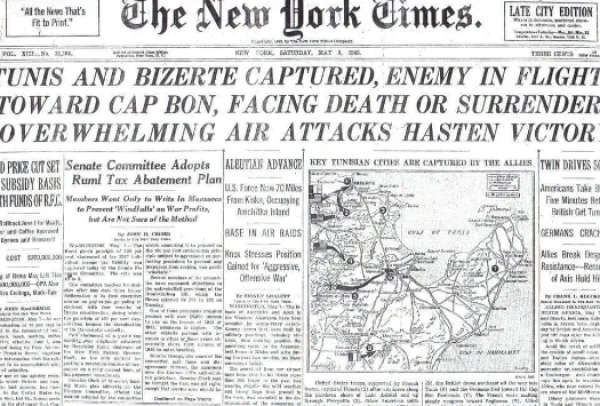
The New York Times promotes a prominent misinformed challenge to scientific knowledge without any basic investigation.
In March 2017, the New York Times published an article that accused Dr. Carlo Croce of The Ohio State University Medical Center of blatant scientific misconduct. [(https://www.nytimes.com/2017/03/08/science/cancer-carlo-croce.html)] Clearly apparent, the accusations were based almost completely on the unproved claims of D.A. Sanders, a Purdue University virologist.
The Times report is notable for two main points.

Saturday, August 12, 7-11pm, 2228 Balmoral Rd.
We will be meeting in person at the home of Pete Johnson, 2228 Balmoral Rd.
Everyone is welcome!
Bring a chair; food and drink are welcome.
This event will be rain or shine; we will party indoors or out.
If you have any announcements for the progressive community, contact us at <colsfreepress@gmail.com>.
Hosted by The Columbus Free Press.

When Circleville police officer Ryan Speakman sic’d his German Shepard “Serg” onto Jadarrius Rose, was the officer trying to fulfill a “Try That in a Small Town” fantasy? It was July 4, after all.
Juxtaposed to this in Columbus is the rat-ta-tat-tat echo of gun violence. Four officer-involved shootings in a month, and one officer charged with murder. Bullets flying in all directions at Westgate Park and the Great Southern parking lot. Guns are now the leading cause of death of children.
The disturbing and laughable irony is that the Ohio GOP’s love affair with permitless carry is going to mean more money for police in the long run.
Jadarrius Rose was driving a semi when ordered by state troopers to pull over for no good reason – a missing mud flap on a perfectly sunny day. The truth is Rose was profiled (he’s African American).
Yet the fallout from Central Ohio’s latest police brutality may be far greater than a small-town cop getting fired and Rose scarred for life.

We have less than one week remaining in our August Challenge to raise $5000 to match a potential gift by an anonymous supporter. We currently sit at $3661.00 raised.
Kent Beittel's vision opened The Open Shelter in 1983 and thanks to the grassroots support of caring supporters like YOU, we have continued "Staying Behind With Those Left Behind."; homeless and marginally housed men, women, children, and families who have nowhere else to turn.
As of August 1st, we have assisted 1,915 of your neighbors in 2023 with food, clothing, hygiene products, items to survive outdoors, Birth Certificates, State IDs and so much more. We have been there for the most vulnerable for nearly half a century. We saw a 27% decrease in financial support during the first half of this year while our number of guests served continues to increase. Please help us meet the match so we can receive much-needed funds.
Thank You.

A gay couple’s marriage is thrown into crisis when one of them begins a passionate affair with a younger woman.
After completing his latest project, filmmaker Tomas (Franz Rogowski) impulsively begins a heated love affair with a young schoolteacher, Agathe (Adèle Exarchopoulos). For Tomas, the novelty of being with a woman is an exciting experience that he's eager to explore despite his marriage to Martin (Ben Whishaw). But when Martin begins his own affair, the mercurial Tomas refocuses his attentions on his husband. Set in contemporary Paris, "Passages" charts an escalating battle of desire between three people, where want is a constant and happiness is just out of reach. The film creates an insightful drama exploring the complexities, contradictions, and cruelties of love and longing.

Democracy in Ohio ain’t dead yet -- voters ensured that yesterday by overwhelmingly rejecting Issue 1. The people’s right to democratically amend the Ohio Constitution prevailed despite relentless attacks from far-right schemers and big business owners.
As of the morning after the election (August 9), the unofficial results from the Secretary of State (who, it should be noted, campaigned hard for Issue 1 to pass) show 1,315,346 votes in favor of Issue 1 and 1,744,094 against – showing that overwhelming 57 percent of voters said “hell no” to the Statehouse power grab.
These results are quite a debacle for Ohio Republicans. In January, they made August Special Elections illegal. They argued that, especially due to low turnout, elections in August were a “waste of money.”

It’s been over two years since Secretary Alejandro Mayorkas stated that the Department of Homeland Security was exploring Temporary Protected Status (TPS) for Mauritania. This measure would save lives, and has bipartisan support. Instead, the Biden administration has resumed deportation charter flights to Mauritania, despite long-standing bipartisan agreement to not deport Mauritanians from the U.S.

Part Two
(Anti-)Zoning (Anti-)Enforcement, under the auspices of City Attorney and City Council, forms one leg of the evil, broken triangle, the misnamed Division of Public (aka Private) Service is the second.
Led by Jennifer Gallagher, an engineer not an administrator by background, the Division is devoted to private interests not the public. Gallagher herself, who responds to no communications from the public, is under longtime investigation by the Ohio Ethics Commission for awarding contracts for the controversial controversial Little Turtle redevelopment to her husband’s construction business. Even by Andy Ginther’s thin statement of ethics, Gallagher should resigned or been immediately removed from office following those revelations. (See my “J’accuse: The City of Columbus Division of Public (aka Private) Service,” Busting Myths, Columbus Free Press, Mar. 3, 2023 https://columbusfreepress.com/article/busting-myths-j%E2%80%99accuse-city-columbus-division-public-aka-private-service )