
Local

Thursday, August 12, 7-9pm, this Zoom event requires advance registration via Meetup
Life After Belief Groups meet for support, encouragement, and growth in the process of living life without supernatural belief. Our core concerns are Community, Charting a New Course, Compassion, and Coming Out. [Read more about these Core Passions below.]
Many in this Secular Community Group are still in various stages of recovery from religion and are processing the feelings, thoughts and struggles of leaving a religious community behind. We include people ranging from those who are attending their first “secular/atheist” group ever and have fears and concerns of being “found out” to those who have been on this journey for a longer time.
• We are a Diverse and Inclusive Secular Community.
• Atheist, Humanist, Non-Religious, Agnostic, Free-Thinker, Anti-Theist, Spiritual But Not Religious, Naturist, Curious But Still with Some Faith, etc.
• From younger families to singles, from baby boomers to teenagers and kids, we are diverse and welcoming having those who identify as LGBTQ, Straight, Polyamorous, etc.

ANADA – Activists across Canada marked the third anniversary of the Yemen school bus massacre on Monday with protests at weapons manufacturers and government offices, calling on Canada to stop all weapons exports to Saudi Arabia. The Saudi bombing of a school bus in a crowded market in northern Yemen on August 9, 2018 killed 44 children and ten adults and wounded many more.
In Nova Scotia activists protested outside Lockheed Martin’s Dartmouth facility. The bomb used in the airstrike on the Yemeni school bus was made by weapons manufacturer Lockheed Martin. Lockheed Martin Canada is a wholly-owned subsidiary of U.S. company Lockheed Martin.

Kevin “Rashid” Johnson, an incarcerated advocate for prisoners’ rights, has been abruptly transferred to another prison without any of his property, and guards are reportedly threatening Rashid’s life. We must show prison officials that he has support on the outside and we are watching their every move.
Demand his property be returned and that guards stop harassing him.

Tuesday, August 10, 7:30-8:30pm, this on-line event requires advance registration
Join us for a monthly meeting to take action in the Beyond Coal Campaign. We are organizing to stop fossil fuels and to move towards a renewable, just, and equitable future! This meeting will focus on a campaign to request that the Public Utilities Commission of Ohio [PUCO] protect Ohioans from unjust coal plant bailouts.
Currently, Ohioans are shelling out $233,000 a day to bail out the OVEC [Ohio Valley Electric Corporation] coal plants — Kyger Creek in Ohio and Clifty Creek in Indiana — and subsidize the shareholder profits of AEP, Duke, and AES Ohio (formerly Dayton Power and Light).
FirstEnergy customers are now paying for these plants as well. In 2020, the PUCO audited this corporate bailout and found that the OVEC plants are not just financial losers that will continue to cost customers every single month but that they’re also being run inefficiently, in ways that cost customers even more money.
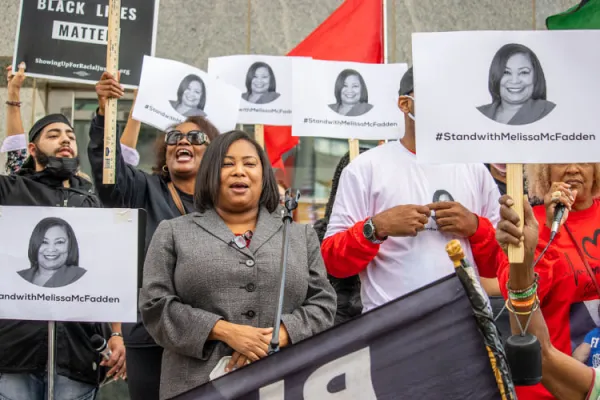
The protests in the summer of 2020 after the murder of George Floyd focused attention on the interaction of police and the Black community. Protestors accused Columbus Division of Police officers of multiple use of force violations. Several internal and external investigations, trials, and lawsuits are still pending. The Division’s internal investigations are conducted under the supervision of Mark Gardner, the Commander of the Internal Affairs Bureau.
Gardner and other supervisors have expressed the notion that many protestors are affiliated with an “organized group” called Black Lives Matter (BLM) in internal documents obtained through records requests. They also expressed opinions that BLM is or should be on the City’s official list of hate groups.
“It is concerning that the person who is in charge of Internal Affairs, the bureau that is responsible for investigating the complaints filed by the protestors, also believes that Black Lives Matter is a hate group,” said Columbus police Lt. Melissa McFadden, speaking as a private citizen.

Newspapers were once the leaders in covering business news in their communities. The daily Columbus Dispatch just abdicated that title to Columbus Business First, a weekly. Both have active websites.
The Dispatch announced a few months that it no longer would have a free-standing business section on Mondays. Last week its editor-apologist Alan Miller announced it would no longer have a free-standing section on Tuesday through Saturday. Can the elimination of the Sunday business section be far behind?
Why? The obvious reasons appear to be that readership of business news in the Dispatch is on freefall and that advertising in the business section is disappearing rapidly. That is too bad because at one time the Dispatch had top-notch business reporters though I noticed recently that the paper was running more press releases from major Columbus companies under business reporters' bylines.
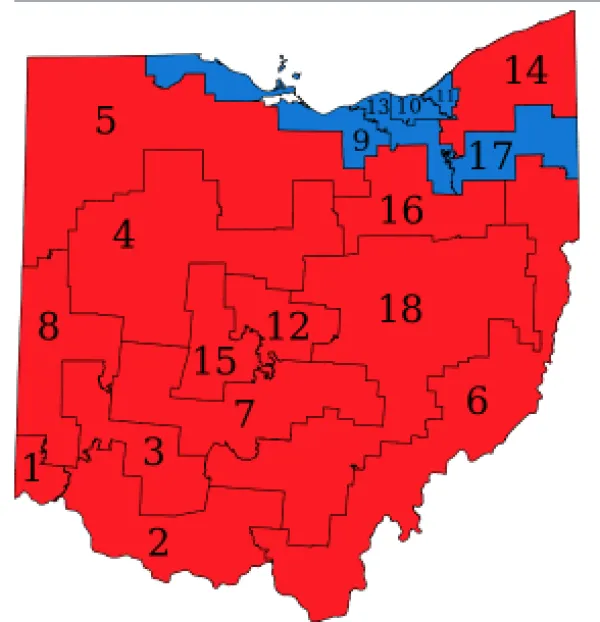
Monday, August 9, 2021, 6:30 PM (social time), 7:00 PM (program)
Dick Gunther, Emeritus Professor of Political Science at Ohio State University will join us to discuss the process of redistricting that will begin that month. Current information from the Bureau of the Census is that data will be released August 16 so states can begin the process of redistricting. Professor Gunther serves on the Ohio Redistricting Commission. Location: Open air shelter #1 at Whetstone Park. This is just across the bridge on your left as you enter the park on Hollenbeck. The meeting will also be shared on zoom. Join Zoom Meeting: https://ashlanduniversity.zoom.us/j/91270379532. Meeting ID: 912 7037 9532.

I read Daniel Sherrell’s Warmth: Coming of Age at the End of Our World sitting on the edge of what was left of the Shenandoah River after a summer of very little rain. Six inches is enough to canoe in but it’s less than that in many places. Fish are few and far between, yet humans are out there in canoes, dragging them over rocks, casting their lines, luring the last fish to their doom. I know the fish murders are not the problem, not at this scale. The problem is the power lines hanging low across the water, the 12-foot American Flag hung up on the shore, the massive actions of corrupt governments and industries — but also the cabin my family’s in and the car that drove us to it — not to mention the airplanes audible from great distances and tricking the mind into hoping for thunder.

Sunday, August 8, 2021, 7pm
The University Baptist Church, 50 W. Lane Ave. (43210)
Columbus Campaign for Arms Control invites all peacemakers to attend the annual Hiroshima/Nagasaki commemoration event:
Original Compositions Peace Concert featuring local musicians and composers: Devin Copfer, Paul Strawser, David nelson Tomasacci, Rocco De Pietro
Contact: Mark D. Stansbery, 614-252-9255 or walk @igc.org
Thank you to our sponsors, and supported by Puffin Foundation West
The U.S. Department of Justice criminally indicted and signed a deferred prosecution agreement with FirstEnergy for the Company’s efforts to bribe Ohio officials as part of the House Bill 6 scandal.
In this indictment, new details of inappropriate communications between FirstEnergy executives and Sam Randazzo, the former chairman of the PUCO and OPSB were made available.
Randazzo resigned last year after the FBI raided his home and it became clear he had taken $4.3 million from FirstEnergy immediately before his appointment as PUCO Chairman.