
Local
Friday, November 13, 2020, 1:00 - 2:00 PM.
COMPAS panel: The response to the COVID-19 pandemic has largely been carried out through executive and administrative orders. Is this an appropriate way to make public policy? Under what circumstances can the use of emergency powers be justified in a democracy? What limits should be placed on those powers, and how should those limits be enforced? This event will be held online via Zoom. All are welcome to attend, but registration is required. OSU Center for Ethics and Human Values. More information and registration here.

The Community Festival (ComFest) is seeking applications for its 2021 Community Grants program. Each year, ComFest invites grant applications to support and sustain innovative programming demonstrating a commitment to ComFest’s principles and mission which are rooted in community, social justice and progressive activism.
ComFest established the grants program in the spirit of giving back to the community. Since 2006, over $320,000 has been awarded to local organizations.
To learn more about ComFest’s Grants program, application requirements, read about previous grant recipients and submit an application, please visit https://www.comfest.com/committees/grants.
The deadline for submitting applications is Tuesday, January 19, 2021. Applications received after the deadline cannot be considered.
Tuesday, November 10, 1-2:30pm, this on-line event requires advance registration
Facebook Event
What would a public bank option do for Columbus?
The Public Banking Institute, with Ohio sponsors and advocates, invites you to explore and learn about the Public Banking Movement.
When investments from private banks do not meet critical needs in our community for affordable housing, for green infrastructure projects, or provide adequate credit for small retail businesses, the growing market for local food systems, renewable energy, and more, the public bank option is an alternative that is being explored in states and cities nationwide.
The COVID-19 pandemic has exposed the profound injustice at the core of so many of our economic institutions. The need for a municipal public bank, mission-driven to invest in public priorities, offers many potential benefits.
Join us for an introduction to public banking. There will be plenty of time to ask questions of Ohio advocates as well as a seasoned expert from the Public Banking Institute.
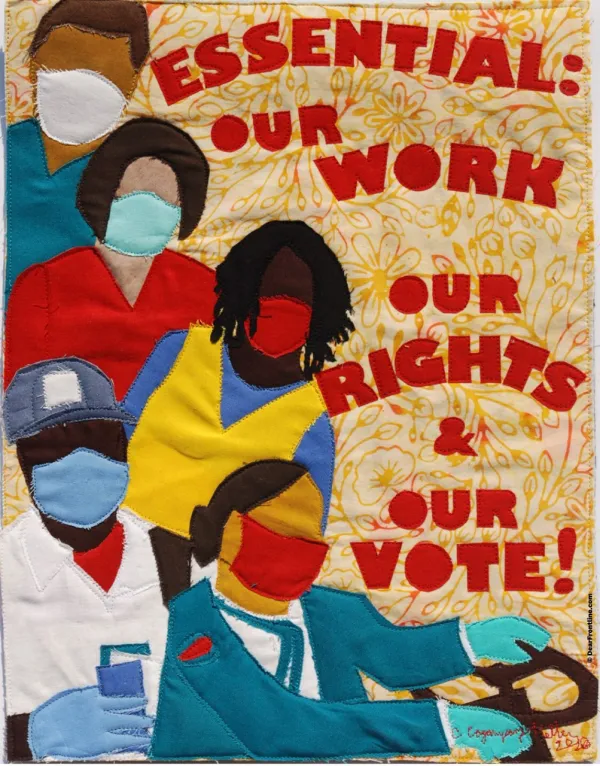
As part of a new national campaign to deliver better treatment and pay to all “essential workers” the Columbus City Council unanimously passed a resolution supporting an Essential Workers Bill of Rights last Monday.
Essential Worker resolutions have also passed in Lakewood, Toledo, and Dayton, and are under consideration in Fremont and other cities across Ohio. The Columbus resolution can be read here (search “To Support an Essential Workers Bill of Rights”).
The city of Columbus is asking for the public’s help with an independent investigation into the actions of some Columbus Police officers during the Summer 2020 protests and riots.
On June 1st, Mayor Andrew J. Ginther established an email hotline outside of CPD’s chain of command for the public to send complaints, video, and photographs related to officer actions during the protests and riots.
An independent committee established by the city reviewed complaints received, and separated the complaints to be investigated either criminally or administratively. To ensure each complaint received an independent review, the city hired a retired FBI agent to investigate any complaints deemed potentially criminal by the committee.
In order for a full and independent investigation to be done, the city needs help identifying all parties involved in the encounters, whether it be a member of the public or an officer participating in the actions seen in the photos/videos.
Monday, November 9, 2020, 6:30 - 8:30 PM
Join the Freedom of Choice Ohio Coalition to talk next steps post-election. We'll hold space as a community to process election results, clarify expected legal and legislative impacts, and make our plans to protect Ohioans' reproductive rights during Lame Duck. Community building has never been more important, so meeting attendees will receive electronic gift cards. Dinner is on us! Register here.
Sunday, November 8, 8pm
Streaming on Twitch twitch.tv/matternews_ (recommended/encouraged), Facebook, YouTube https://www.youtube.com/channel/UClVpHbydnEU1mpFUZCa9-AA , and Instagram instagram.com/matternews_ (least reliable).
Tune-in to our lineup of storytellers, poets, and musicians sharing experiences of and viewpoints on inequity in Columbus, Ohio.
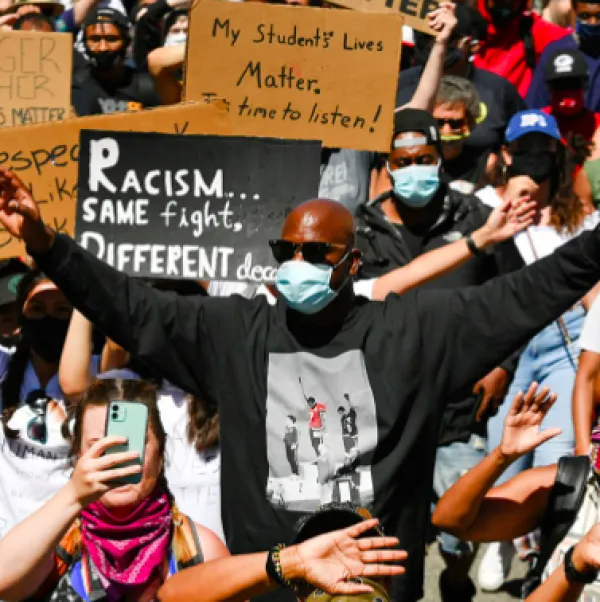
Saturday, November 7, 12 noon
Ohio Statehouse
https://www.facebook.com/events/731533317408587
Hosted by Occupy Columbus, Our Revolution - Central Ohio and 10 others
Our nation is living through a simultaneous public health and economic crisis, while also having seen an unprecedented assault on our democratic institutions through a corrupt presidential administration and political leaders who have enabled voter suppression. Our current elected officials have shown an unwillingness to meet the needs of everyday working Americans across the country and right here in our own backyard.