Local

BANGKOK, Thailand -- Thailand's democracy activists, angered by Hong Kong's police brutality, joined an international "Mulan" boycott which expanded after Disney thanked China's security forces for help with filming in a desert where one million Uighurs and other Muslims are imprisoned or suffer other rights violations.
"It just keeps getting worse!" Hong Kong's leading activist Joshua Wong tweeted.
"Now when you watch #Mulan, not only are you turning a blind eye to police brutality and racial injustice -- due to what the lead actors stand for -- you're also potentially complicit in the mass incarceration of Muslim ethnic Uighurs. #BoycottMulan," Mr. Wong said.
"We have still not forgotten that Mulan's leading actress supported the police use of violence against Hong Kong protesters who fight for freedom and democracy,” announced prominent Thai student activist Netiwit Chotiphatphaisal.
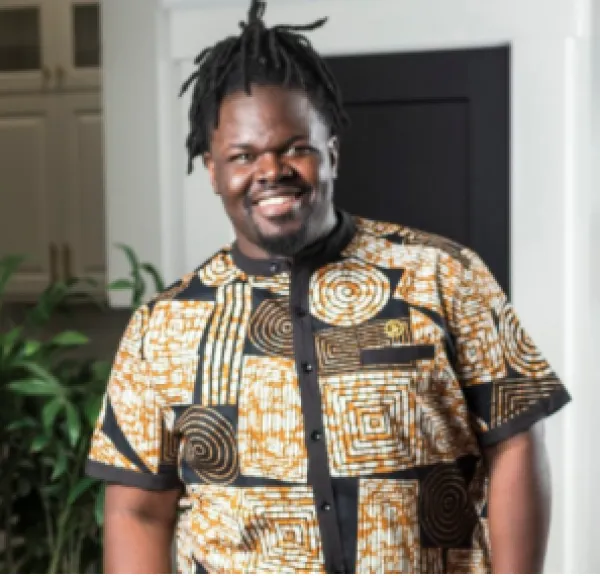
In response to the impact COVID-19 has taken on local performing artists, the Lincoln Theatre Association will launch the Lincoln Living Room Concert Series. For three consecutive Fridays beginning September 11, this free video series will livestream 30-minute sets from select graduates of the Lincoln’s Expand Your Horizon Incubation Program for emerging artists. The concerts will air on the Lincoln Theatre Facebook page at 7pm each Friday, offering viewers the chance to experience the wealth of local artists honing their craft at the Lincoln.
Designed to provide performers the opportunity to earn an income while venues are closed, the Lincoln Theatre Association will pay each performer a fee, and during each concert, also provide links for viewers to “tip” artists directly.
The Lincoln Living Room Concert Series schedule is as follows:

Saturday, September 19, 12:15pm, Big Room Bar, 1036 S. Front St.
The Coffee House Rebels RETURN to performing, kicking things off for the Pre Doo Dah Parade Party. The band will perform a fast paced, passion filled set of topical and classic music! Live3 seating will be limited to 36 inside The Big Room Bar with all safety protocols in effect. This event will also be live streamed. Come on down and join us for a start of a fun event!

BREAKING: ICE Detainee Faints After Hours with Breathing Difficulties and No Medical Care, Taken to Hospital, Status Unknown
Call 419-947-4085 and tell the Morrow County Commissioners to Close the Jail Before More People Die
On Friday, September 11, a man who had recently been booked into the Morrow County Correctional Facility (MCCF) for U.S. Immigration and Customs Enforcement (ICE) began to complain that he could not breathe. There were no medical staff on duty, and the Corrections Officers did nothing to help him. He was listless and unable to sleep all night, clearly in need of serious medical attention.
The next day, around lunch time, this man fainted in the chow hall. He bled everywhere and the area was cleared. Again, there were no medical staff on duty. Another detainee attempted to perform CPR. An ambulance was called and arrived about fifteen minutes later. There must be video of all of this, as there are cameras in the chow hall. Ohio Immigrant Alliance is calling on Morrow County to release the video footage to the man's family.
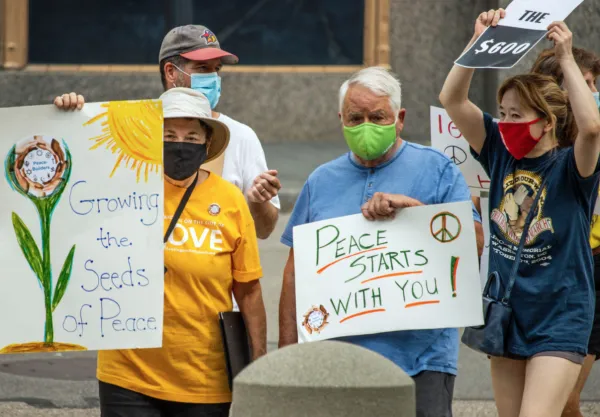

Wednesday, September 16, 7:00 - 8:30 PM
Learn the backstory of Low Power FM Radio in Cbus. Are you listening to 92.7 or 98.3 or 94.1? or streaming WCRSFM.org? or WGRN.org? Find out about locally produced shows and national programs syndicated by Pacifica Radio, and the best progressive Talk Radio Shows. Share your favorite music genre, news, comedy, and environmental programs and podcasts! More information and registration here.

In May 2020, word began travelling within the Ohio State community that departments had been asked to plan for budget cuts up to 20%, effectively erasing all security for student workers, staff, and contingent faculty. This prompted graduate students from multiple departments to advocate for themselves and create the Graduate Student Labor Coalition (GSLC), a student advocacy group meant to address concerns regarding the University’s response to inequitable working practices related to graduate student workers in the midst of this global pandemic. As the summer progressed, and uprisings against police brutality and racial injustice swept through the nation, it became clear that OSU’s tendency to respond to crises with empty assurances in lieu of meaningful action was not limited to the pandemic. In recent weeks, OSU faculty members of the American Association of University Professors have also brought to light evidence that OSU’s insistence on the necessity of budget cuts is not backed up by available financial records.
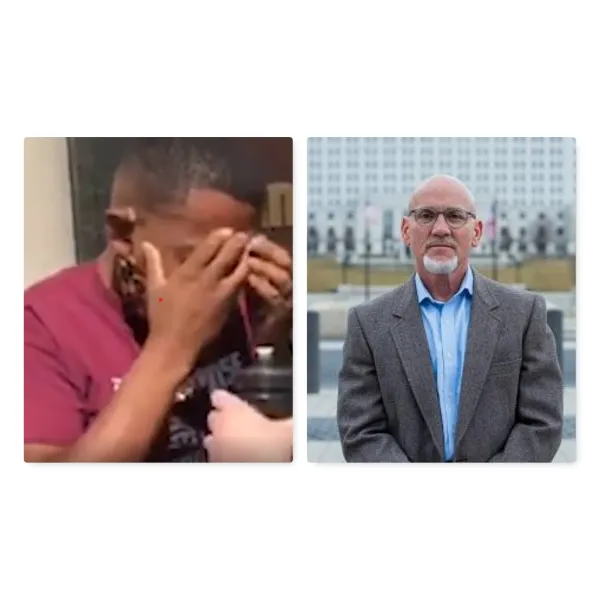
Last night’s Columbus City Council 4-3 vote that indefinitely tabled an ordinance which would have put limits on the Columbus Division of Police use of chemical agents, helicopters, military-type rifles and “less-lethal” munitions – such as rubber and wooden bullets, which injured numerous peaceful protesters – was especially shocking due to the fact that three Black Democratic City Council members voted against it.
I believe the message these three Black City Council members sends is, they have joined the ranks of #BlueLivesMatter and #AllLivesMatter while turning their backs on police reform and the Black Lives Matter movement.
The Black citizens of Columbus and others fighting for reform measures should be outraged over this vote.
The three Black Councilmembers who voted to indefinitely table the ordinance were Council President Shannon Hardin, Priscilla Tyson and Mitchell Brown. Emmanuel Remy, who is not African American, also voted to table. Councilwoman Elizabeth Brown, who wrote the legislation, and Councilmembers Rob Dorans and Shayla Favor (who is African American) voted for the ordinance.
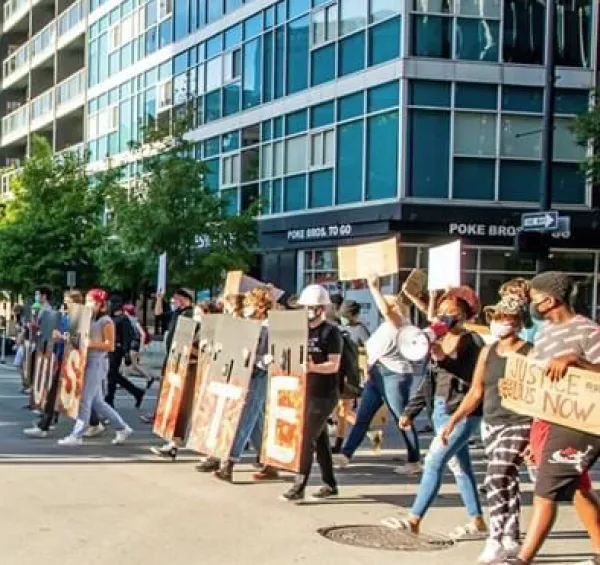
On September 15th, Columbus community will join Julius Tate’s family for an evening of poetry with local artists. This evening will honor Tate’s life through celebrating him and all lost from police murder. The march gathers at 5:30 PM at Mayme Moore Park and the poetry readings followed by the march will begin at 6:00 PM.
This evening will be the fourteenth of sixteen consecutive days of marching for justice to commemorate the life Julius Tate. For the past two weeks, hundreds of community members have come out to voice their support for Julius’s family, and their outrage at Columbus Police Department.
“The same use of excessive force that resulted in police murder of George Flloyd, Aubrey Ahmed, and Breonna Taylor is the same policing that exists here in Columbus,” says an anonymous community member who has come to every evening of the march. “We still do not have justice for Julius Tate.”
Tate was sixteen years old when he was shot eleven times, handcuffed, and killed, according to the official autoposy. His arm was broken in the process.