
Local

Since the first Coronavirus cases in Ohio were confirmed in early March, events have been canceled left and right. Everything from small gatherings and weddings, to big city festivals and major international events have all been halted due to the pandemic.
However, it is not 100 percent doomy and gloomy while we are all in quarantine. Organizations and individuals alike have come up with alternative ways to have events virtually, to align with the social distancing guidelines that have been governed by our State leaders and the Centers for Disease Control (CDC).
Virtual Events are not just a way to keep the masses entertained while the curve is being flattened, but virtual events have also boosted morale and raised awareness, and sometimes funds for organizations and individuals who need it the most during these times. We can’t be together physically for each other, but we have been there and shown our support virtually for each other. Businesses and local municipalities have all held meetings on Zoom since the pandemic shut down gatherings of more than ten people.

As of Friday, April 24, the Centers for Disease Control and Prevention released numbers that show 30% of known black patients tested positive for COVID-19. Conveniently or not, the report didn’t have any other racial information for 75% of all cases totaled. It also didn’t include any demographic breakdown of deaths. Yet this was a released federal report of case data by race. I’m confused and concerned as to why they released the numbers for the black race only.
Lets back up a little. On Monday, April 20, Ohio Governor Mike DeWine informed the public that he had formed a Minority Health Strike Force to study the problem in Ohio that the disease has “disproportionally” impacted blacks. This strike force is also supposed to study the implications on a national level. Some would say that they should just be focusing on Ohio at this time and after this pandemic is contained to then pool the information from the nation totals together to “study” the impact on blacks and all races of people.
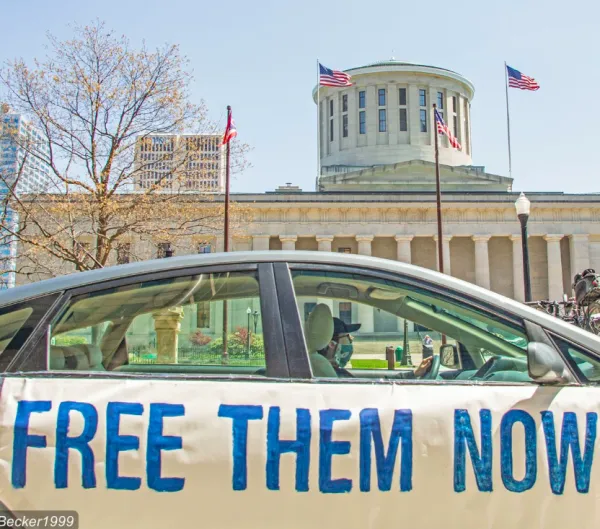
Over the weekend, ten inmates at the Morrow County Jail tested positive for COVID-19. The jail is one of two ICE contracted detention centers in Ohio.
Most, if not all are immigrants held on civil immigration charges for ICE. On Friday night, the ACLU of Ohio sued ICE, demanding the release of medically-vulnerable immigrants currently detained in Butler and Morrow Counties.
Said Lynn Tramonte, Director of the Ohio Immigrant Alliance, “Doctors have been telling government officials to reduce jail populations to avoid mass outbreaks, and no one in charge in Ohio listened. For weeks, inmates at the Morrow County Jail have been warning family members and friends about the filthy conditions, lack of soap and PPE, and frequent transfers of people into and out of the jail. They felt like sitting ducks for the disease. And now their worst fears have come true.
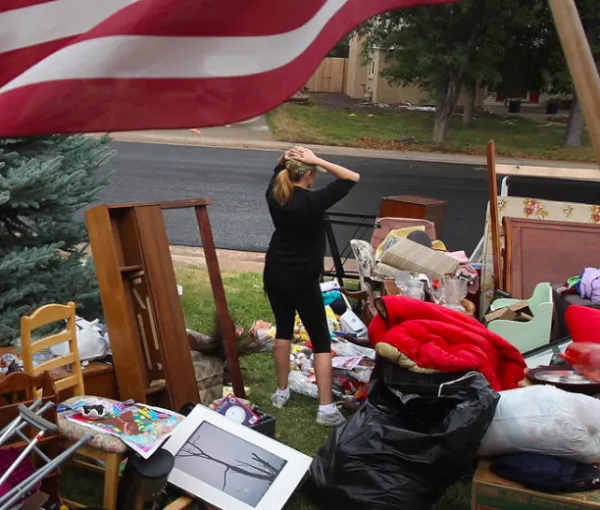
With eviction filings for Franklin County spiking in late March and early April, local housing advocates agree a “tsunami” of evictions will hit Columbus and the rest of the state if Governor DeWine and the Ohio congressional delegation do not act.
A wave of evictions for Franklin County this summer could be a foregone conclusion.
Even before the pandemic, the county’s eviction court was one of the busiest in the state, averaging 75 hearings or cases a day and around 17,000 per year, according to the Legal Aid Society of Columbus.
City Council member Shayla Favor has been tasked with the looming housing crisis. She told the Free Press her top priority is making sure Columbus residents are able to stay in their homes.
Call your US Senators and Representative to demand that they work to ensure safe, secure elections during the COVID-19 Outbreak. We want to minimize the spread of COVID-19 and voting by mail is a good way to do it.
Senator Portman: (202) 224-3353, (614) 469-6774
Senator Brown: (202) 224-2315, (614) 469-2083
Rep. Balderson (202) 225-5355; (614) 523-2555 (OH12)
Rep Steve Stivers (202) 225-2015:(614) 771-4968 (OH15)
Rep. Beatty (202) 225-4324; (614) 220-0003 (OH3)
Background HERE (from Indivisible) on a plan from Senator Elizabeth Warren.
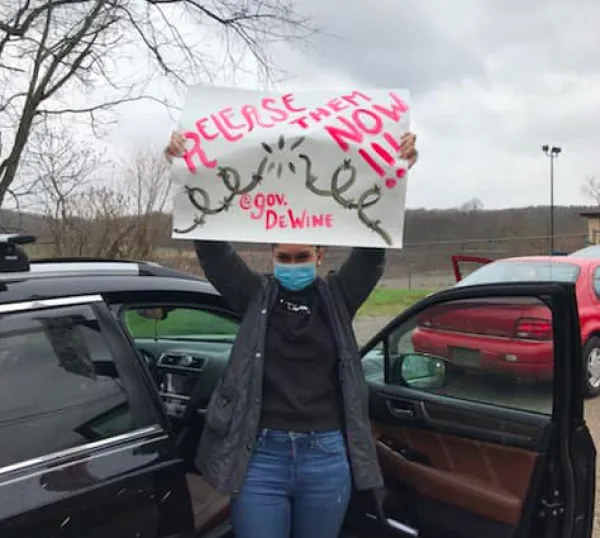
Governor DeWine and Health Department Director Dr. Amy Acton failed to include Ohio prisons and jails in their COVID-19 harm reduction plan. Now, inmates, staff members, and their loved ones are paying the price.
Just last night, we learned that an Immigration and Customs Enforcement (ICE) detainee at the Morrow County Jail had finally been tested for COVID-19. His results came back positive, days after he first began to show symptoms. This is a jail that had no free soap until very recently, and has continued to accept transfers from other counties and facilitate deportations, spreading the virus in Ohio and beyond.
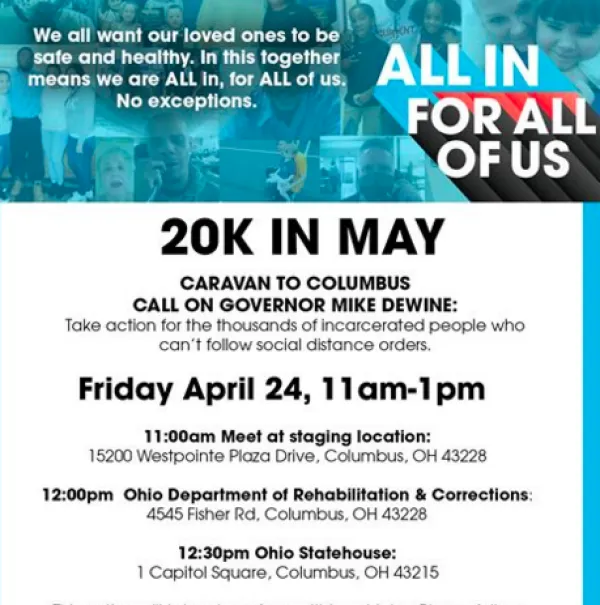
Friday, April 24, 11am-1pm
Caravan of cars, vehicles only and practice social distancing
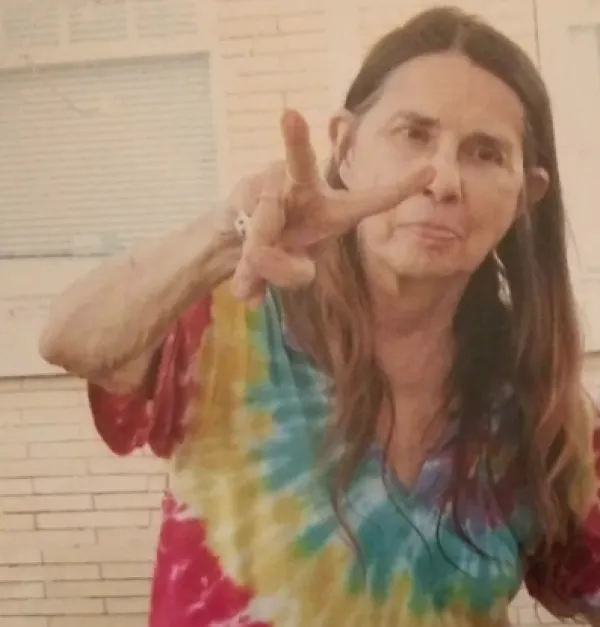
Margaret Sarber-Nie passed away today. Many people whose lives intertwined with hers are mourning. Margaret was a hippie, an activist, a militant. Her resume includes involvement with some of the most radical organizations of the 60s and 70s. She was one of the founders of Community Festival, edited the Columbus Free Press, worked with the Indochina Coalition, SDS, and participated in demonstrations and actions – fighting for a revolution.
I can remember the first time I met Margaret. It was at Community Festival in the early 90s. I had just begun publishing the Free Press and she told me she was a former editor of the paper and I should look it up in the newspaper’s files. If I wanted to talk to her, I could call her at 268-FUCK. I did call her.
Margaret was a great storyteller and fascinating as the stories were – they were all true. From her being one of the Free Press staff arrested in 1972 for inciting riot during the Vietnam War to openly carrying a rifle to protect the community from law enforcement and the FBI (wearing a beret, of course).

It’s a comforting thought, to think the law is on your side. For 50 years, environmentalists in the United States have celebrated Earth Day tomarkthe anniversary of the birth of the modern environmental movement. They celebrate the creation of the United States Environmental Protection Agency and the passage of the Clean Air, the Clean Water, and the Endangered Species acts.
But, there is a catch.
The laws celebrated during Earth Day have failed to guard against mass species die-offs, the climate crisis, deadly air pollution, the corporatization of freshwater, and the largest loss of biodiversity in human history. The planet is on the verge of ecological collapse.
These environmental laws may have won narrow battles. But they are decisively losing the war.
“Environmental protection” is no more than an illusion that functions to permit and regulate harms to nature. It legalizes pollution.
April 22, Earth Day - 7:20 - 9:00 pm EST
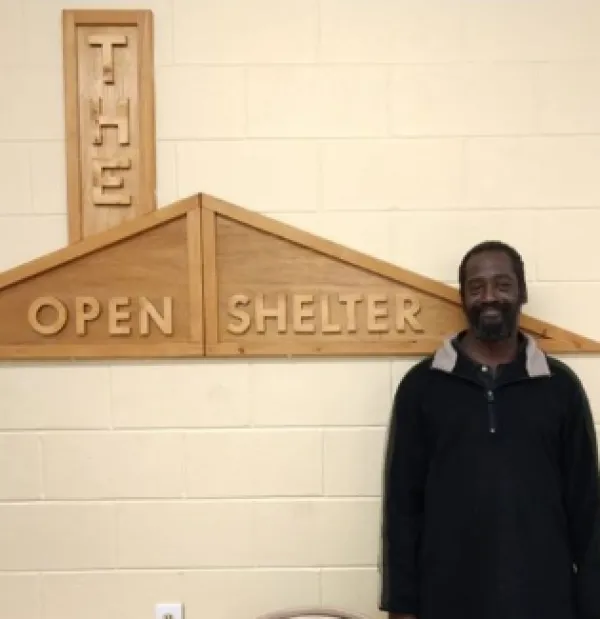
Over at The Open Shelter, they have upped their sanitation with cleanings twice a day. They are also offering hand sanitizer as soon as people walk in. Not only do people not have access to places to wash their hands, making them more susceptible to the Coronavirus but Shell Mathias worries their immune systems won’t be able to stand up as well as others
“Their bodies are already tired, they are worn down and not getting the rest they should and perhaps not getting the nutrition they need,” said Mathias, who works at The Open Shelter.
The guests at The Open Shelter have reacted well to the new procedures as a result of COVID-19. Its supporters, old and new, have also reacted well. The shelter has received support, financially and materially, from so many individuals and groups that it has been overwhelming. They are committed to providing meals, almost always hot, to anyone who shows up. This requires supplies they do not usually have or need, such as Styrofoam to-go containers, Styrofoam bowls with lids, pre-wrapped plastic ware and lots of bottled water.