
Local
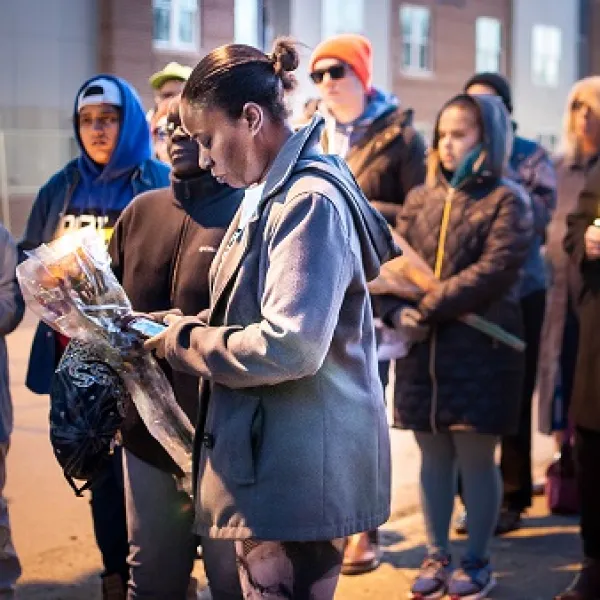
Over 60 family, friends, and community members gathered December 7th at a corner of Mount Vernon Avenue and Champion Avenue in a vigil to remember and grieve for Julius Tate, Jr., killed by Eric Richards of the Columbus Police Department. The street corner is near the spot where 16-year-old Julius Tate, suspected of robbery, was killed in a sting operation exactly one year before.
Members of his family spoke; Julius' sister read a poem she wrote for him, and Julius' brother gave a musical offering. His mother said that she wants justice for Julius, her firstborn son, that she wants the truth of what happened December 7th, 2018. Both his mother and his grandmother demanded justice for Julius, but as well for all black kids, and for all kids. A sister insisted that Julius did not own a gun, that the CPD claim is impossible that Julius pointed a gun at one of the plain clothes officers.

Thursday, December 12, 2019, 7:00 PM
We will be discussing resolutions of support, Op Ed in the Columbus Dispatch, SPAN quarterly meeting report, membership and more to advance improved and expanded Medicare for All. Central Ohio Meeting. Location: Unitarian Universalist Church, room 301, 93 West Weisheimer Rd, Columbus, 43214. There is plenty of parking, and it is a short walk from the COTA stop on North High Street. For more information, contact Bob Krasen, SPAN Ohio Regional Coordinator brkrasen@gmail.com.
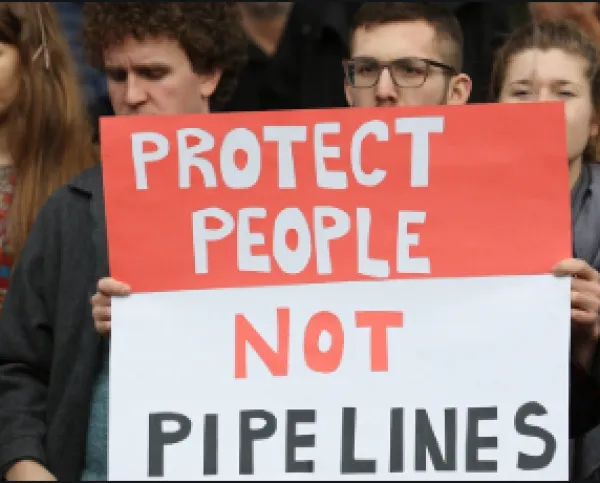
Wednesday, December 11, 2019, 11:00 AM. Public Utilities Committee Meeting
7th Hearing and possible vote on S.B. 33. Modify criminal and civil law for critical infrastructure damage 7th Hearing Poss. Vote Cc: House Clerk Committee Members Committee Clerk Speaker's Office Assistant Majority Floor Leader's Office Caucus Staff Bill Sponsor Legislative Information Systems LSC Press Room Minority Leader's Office. Associated Files: SB 33 witness slip[11487].pdf. Location: Ohio Statehouse, 1 Capitol Square, Columbus. Room 116.
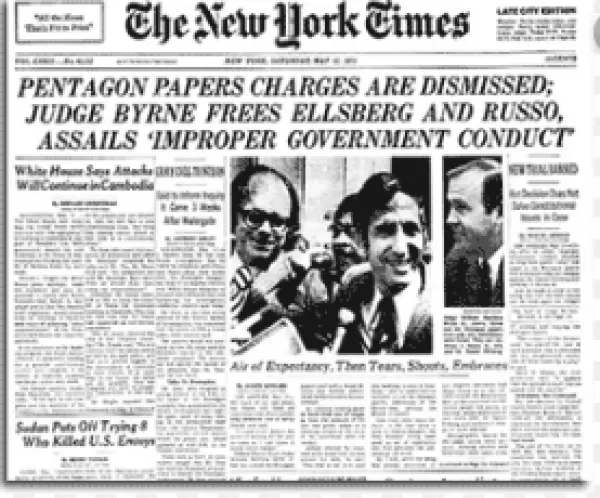
It’s not the New York Times this time. Although it is another pile of Pentagon papers. Now it’s the Washington Post in an eerie déjà vu moment telling us we were lied to about a war by three presidential administrations: George W. Bush, Barack Obama and Donald Trump. Last time it was four – Eisenhower, Kennedy, Johnson and Nixon.
After more than 18 years the Taliban’s in control – or contesting U.S. forces for control – of Afghanistan. The longest running war in U.S. history has cost $1.5 trillion, but that’s only a part of the price tag. Just like President Johnson refused to raise taxes for the Vietnam War, the U.S. will pay $600 billion in interest on borrowed war dollars by 2023.
But the longest long-term cost of the war is the $1.4 trillion that will be spent on Afghanistan war vets by the year 2025.
Of course, the U.S. military budget doesn’t include veteran’s benefits as a category. Rather veteran’s support is shifted to Health and Human Services to minimize the actual cost of the U.S. war machine.

Tuesday, December 10, 2019, 6:00 – 8:00 PM
Tis the season to gather with friends and celebrate reproductive freedom! Join us for a holiday happy hour to learn more about our work and to enjoy some holiday spirits. We’re also thrilled to be joining forces with Women Have Options - Ohio to launch our joint Abortion Care Package program at this event! Come make care packages and learn how you can bring this program to your own community or congregation in the New Year. Donate $5 at the door to get a complimentary drink ticket. Cash only please. All proceeds will benefit the Ohio Religious Coalition for Reproductive Choice. Location: Growl, 2995 N. High St., Columbus. Facebook.

Monday, December 9, 2019, 7:30 PM
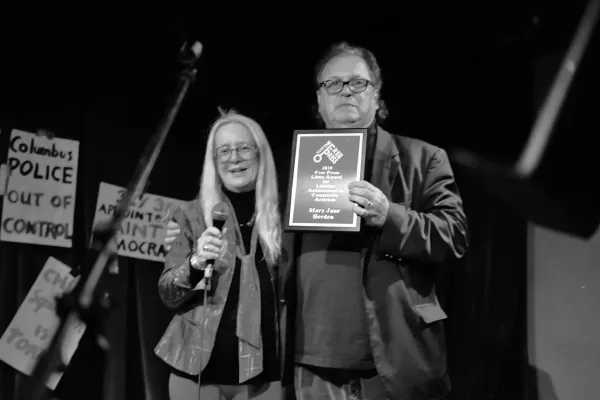
It was a night of comradery and celebration at Ace of Cups on November 4 when the Free Press held our 2019 annual awards ceremony. DJ laChewla started the evening off with a variety of music genres and a little rock-n-roll as people gathered and waited for the Yellow Brick pizzas to arrive for dinner. Former award winners, other Free Press friends, writers, and readers socialized and enjoyed the food, drink and music. Brian Clash, a former Free Press award winner, played a set including his inspirational protest songs.
The Columbus Cabal
We should rename the Columbus City Council to the Columbus Cabal. Webster’s defines "cabal" as "the contrived schemes of a group of persons secretly united in a plot. A secret clique or faction." The Columbus Cabal would be closer to truth in advertising: think about the tax abatements for the rich, a free new stadium for a second-rate soccer team and an appointment system that reeks of cronyism and toadism.
Not a REAL Civilian Police Review Board
The Acting Chief Cop Tom Quinlan let it be known at his audition at East High last week that he favors installing a Civilian Police Review Board. As a matter of fact, he said he contacted City Hall people to come up with names of people who could serve. Its laughable that he wants more toadies foisted upon the public from the City Cabal and the Mayor's Office. Nothing surprising here as it has been the MO of City Hall to usurp a public idea and rig it so they don't lose control over it. By the way, the D behind the names of the incumbents running last month stands for "Developer-owned and operated."
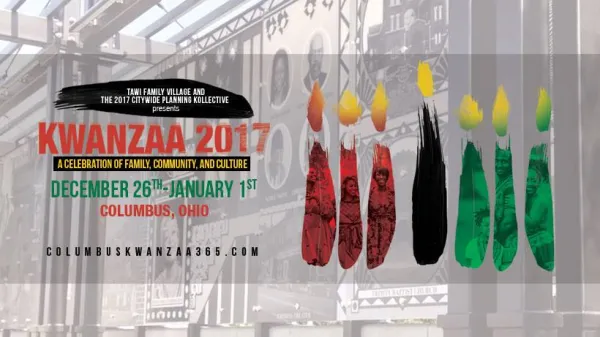
Now that Thanksgiving is behind us, we now enter the finish line with the month of December. In the month of December, you see it all. Deck The Halls With Boughs of Holly. Jingle Bells. The barrage of Christmas-themed ads on television. The shopping malls stock full of customers shopping for loved ones, friends, and themselves.
However, not everyone is in the Christmas spirit. Not necessarily because they are the offspring of Ebenezer Scrooge. Perhaps the reason is because there are people out there do not celebrate Christmas, but another alternative holiday.
There are plenty of alternative holidays around, for those who aren’t into sneaking a kiss with their lover under the mistletoe, or the annual television airings of It’s A Wonderful Life and A Christmas Story.
There are a few alternative holiday celebrations in the Columbus area for those that celebrate Chanukah or Kwanzaa, which are the two biggest alternative holidays during the holiday season.

Sunday, December 8, 2019, 4:30-7:30pm, Peace Lutheran Church, 455 Clark State Rd., Gahanna, Ohio
Please join us for this educational and uplifting program as we take an interfaith perspective of our shared home by looking at our planet from the perspective of nine different faiths. Stay after the program for a delicious potluck meal!
Please RSVP via Eventbrite by clicking here or by emailing office@iaco.org. Facebook Event
Co-sponsored by:
• Baha’i’s of Columbus
• Bharatiya Hindu temple
• Broad Street Presbyterian Church
• The Burkhart Center
• Church of Jesus Christ Latter-day Saints
• First Congregational Church
• First Unitarian Universalist Church of Columbus
• Islamic Foundation of Central Ohio