
Local

There’s a mantra that Americans are the freest people in the world. The First Amendment guarantees our right to free speech, assembly and redress of grievances. The Republican-dominated Ohio State Senate opposes these basic principles and they memorialize their hatred of civil liberties in Senate Bill 33.
Known all over the nation as the “pipeline protest bill,” SB 33 criminalizes protest activities. This ALEC-based (American Legislative Exchange Council) bill already passed through nine state legislatures – and passed 24-8 in the Ohio Senate. Ohio State Senator Frank Hoagland (R-Mingo Junction), the man who introduced SB 33, is a member of ALEC.
The bill makes trespassing on “critical infrastructure” property different than regular trespassing and defines “critical” as pipelines, natural gas plants, other facilities and even property where a pipeline might someday be built. Protestors found in violation can face a third-degree felony that carries a prison sentence from three months to five years and increases of fines by the ten-fold – up to $100,000.
Now through September 2019
Join our online taco or beer challenge to raise funds for abortion access and immigrant / border justice! We will be fundraising for one of our favorite abortion funds, La Frontera Fund! They are located in the Rio Grande Valley and their day to day work is very much at the intersection of reproductive justice and immigrant justice. We will also be fundraising for Solidarity with Edith Espinal. Edith has been a part of the Columbus, Ohio community for over 20 years and is currently forced to live in sanctuary because of cruel and unjust deportation policies. Edith's family and community intend to keep Edith home and hopefully set a precedent for how cases like hers are handled both in state and nationally! More details about orgs we are uplifting during Taco and Beer Challenge coming soon! More information on Facebook.

Sunday, September 1, 2019, 4:30 PM
There is NO place for apartheid, hatred, and oppression in Dayton and in the hearts of Daytonians. Come help us peacefully send this message. Sunday, September 1, Christians United for Israel (CUFI) will be in Dayton to “honor” Israel. This is an anti-Semitic organization that supports the oppression and segregation of the Palestinian people. Israel’s illegal occupation of Palestine and the ongoing inhumane treatment of the Palestinian people is nothing to celebrate or honor! Bring signs, posters, and yourselves so that we can peacefully show that we do not stand with oppression nor will we allow the inhumane treatment of Palestinian people to be justified in the name of ANY religion. Location: Dayton Courthouse Square, Dayton 45402. Facebook.
The Fair Food Program created by Coalition of Immokalee Workers (CIW) has ended abuse for tens of thousands of farmworkers in this decade. Today, we’re inviting all Fair Food allies in Ohio to join with the farmworkers by joining the Wendy’s Boycott. If you want to join the boycott or would like more information about the Fair Food Campaign and how you can take action, please send your name to: ohiofairfood@gmail.com or call Sue Carter at 614-459-0017.

Join us on Sept 19, for our "Educate a Legislator Day" to fight Senate Bill 33 that will criminalize protests.
Sheraton Columbus downtown hotel, 75 E. State St. 9am-3pm
Sponsored by Freedom Demands Action and Coshocon Environmental and Community Awareness Inc.
Here is the link for registration. https://forms.gle/9MndaymopD7ELipH6.
Thursday, August 29, 2019, 5-7pm
St. James Tavern, 1057 N. 4th St.
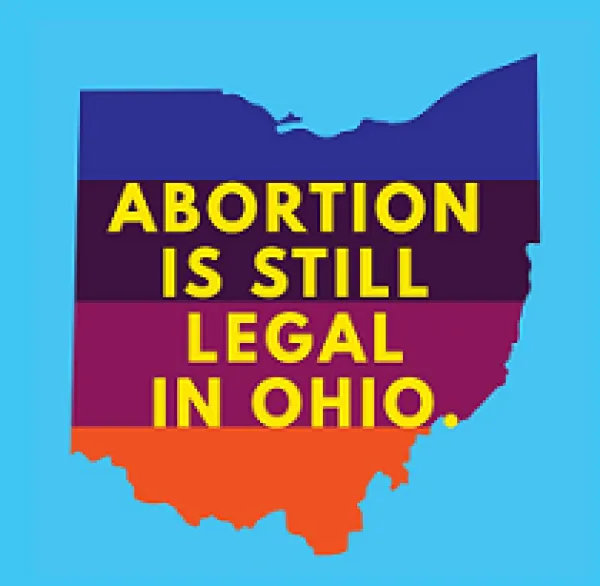
Repro Health Happy Hour (RHHH) is a monthly networking event for people working on sexual and reproductive health, rights, and justice, and issues of gender and sexuality, and all pro-choice individuals looking for fun and progressive drinking buddies. The event was founded in New York City in 2004 and has now spread to more than 32 cities worldwide. http://www.reprohealthhappyhour.com/
20% of all sales will be donated to our local abortion fund, Women Have Options- OHio. https://www.facebook.com/WomenHaveOptions/
Wednesday, August 28, 6-7:30pm
Bexley Natural Market, 58 N. Cassady, Bexley
This Event features 5 panelists to engage in an exciting discussion. It is Free to attend. Please RSVP to bnmrsvp@gmail.com
There will be complementary wine, cheese, and Ohio Pies
Thank you to Slow Food Columbus for partnering with The Bexley Natural Market on this event.
Agenda:
6pm-6:15pm: Reception - wine and cheese and Ohio Pies.
6:15pm: Katie Barr and Trevor Horn introduces panelists and discusses role of Slow Food Columbus
7:00pm: Questions and wrap up
7:15pm: Networking and more light bites
Panelists: Summary of the topics :
Jayne and Isaac Barnes: Honeyrun Farm
-What is happening to honey bees across the world right now; What are the challenges they face, and how that affects us whether we eat honey or not.
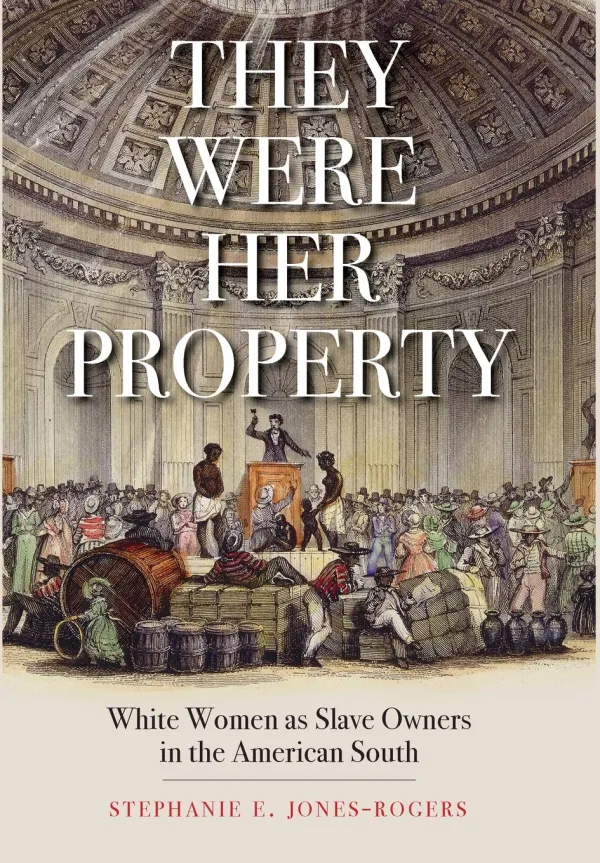
As a professor of African American history, I have very little interest in slavery. I am painfully aware that the insidious institution constructed and maintained the American economy, and that its horrific impact is still felt at this very second. I just have no interest in the subject in terms of research. So, I was surprised to find They Were Her Property: White Women as Slave Owners in the American South such an absorbing read.
For the most part, the story of white women and their role as plantation mistresses has focused on the top 3 percent of slave owners who owned large plantations with twenty or more slaves. Southern plantation mistresses often kept diaries–the Civil War diary of Mary Boykin Chestnut comes to mind–in which they described their lives. But stories such as Chestnut’s are the views of slavery from the elites. There is very little literature on smaller plantations and the acquisition and management of slaves by white women.

The number of people living with HIV in the U.S. is decreasing. With the advancement of antiretroviral therapy, people living with the condition can experience viral suppression and longer life expectancy. However, around the world, HIV remains one of the most serious public health challenges. In 2017, more than 36 million people were living with HIV/AIDS. Of these, 1.8 million were children under the age of 15.
One subset population that is often forgotten in the war on AIDS are those people living in refugee camps. People seeking refuge from countries with higher-than-average HIV numbers and no treatment can spread the disease throughout a camp quickly. Refugee camps in the U.S. and other countries lack HIV education and treatment. Healthcare is a human rights issue that Americans often take for granted. We must gain a better understanding of this issue so that we can demand assistance for those living in camps and advocate for better HIV programming.
Tuesday, August 27, 2019, 7:00 – 9:00 PM
Pete Seeger (May 3, 1919 – Jan. 27, 2014) introduced America to its own folk heritage... and got them singing together and using music as a force for social change. He deeply believed in the power of song, convinced that individuals can make a difference. The film was produced by PBS as part of their American Masters series. Seeger’s inspiring story is told by Bob Dylan, Joan Baez, Bruce Springsteen, Natalie Maines (the Dixie Chicks), Tom Paxton, Arlo Guthrie, and Seeger himself. Co-sponsored by Columbus Folk Music Society and the Columbus Free Press. Q&A panel discussion follows the film. Location: Drexel Theater, 2254 E Main St, Bexley 43209. RSVP on Eventbrite. Donate at Door. Facebook.