
Local

From the Presbyterian Church (USA) Office of Public Witness
For a year now, Palestinians in Gaza have been creatively and bravely protesting for their freedom by marching towards the fence with Israel to demand an end to the blockade of Gaza and respect for their rights. In response, Israel has met unarmed civilians with live sniper-fire, killing over 200 and injuring tens of thousands, including paramedics, journalists, children, and people with disabilities. In total, 45 children have been killed. Click Here to Contact Congress.
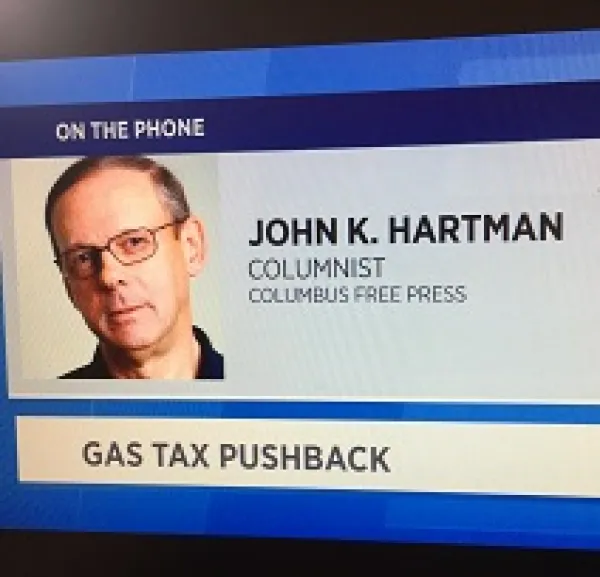
A newspaper reporter friend told me that his paper's coverage policies were determined by the editor's interests rather than the readers' interests.
That could be a reason why newspapers are losing audience these days.
Dispatch editor Alan Miller demonstrated this quirk of leadership in the April 14 edition when he wrote about his father's restoration of a barn in Holmes County and included a picture.
That's 85 miles northeast of Columbus and way out of the Dispatch coverage area.
No other Dispatch journalist could have done it. Only the editor.
I wonder if it signals that Miller is nearing retirement. After four years of cost-cutting and dancing to the GateHouse corporate tune, Miller may be ready for the family farm, so to speak.
Spectrum News 1 Quotes Yours Truly, Columbus Free Press
A Coalition to #FreeMasonique is calling for a National Week of Action to draw attention to Masonique Saunders and has begun a calling campaign to Ron O’Brien asking him to drop the charges against her.Masonique has been sitting in Columbus’ juvenile jail since December, after being charged with aggravated robbery and felony murder, and is awaiting a May 9 court date. She spent her 17th birthday, March 18, in jail. Masonique’s mother is struggling to help her and to pay legal bills.
In December 2018, a Columbus police officer shot and killed Julius Tate Jr., a 16-year-old Black boy, during a sting operation, claiming he had a gun. The police then pinned their murder on Masonique Saunders, Tate’s girlfriend, on the premise she was party to a felony happening during the murder. Read more in the Free Press May article by Sarah Mamo: “A sting, a police murder and a cover-up.”
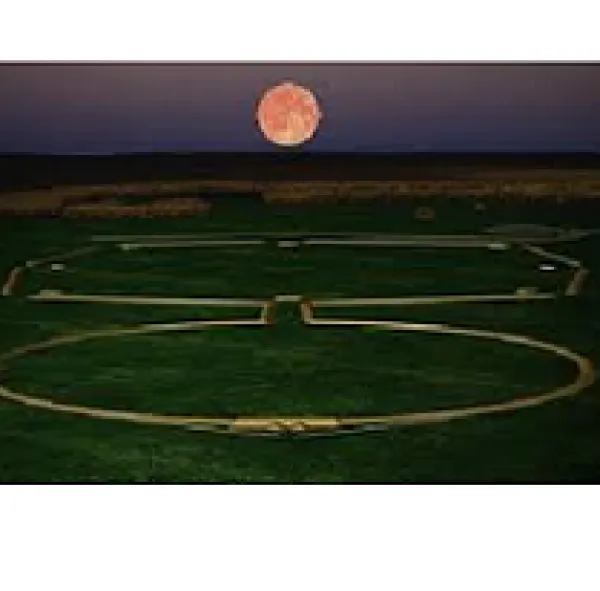
Farmer-tanned golfers smoking cigars and swigging beer are gleefully swatting their ball in and around the Octagon Earthworks, built 2,000 years ago by Native Americans in what is now Newark.
The Octagon is arguably a massive lunar temple considering it tracks the moon’s major cycle of 18.6 years. Some experts believe it is twice as precise as Stonehenge and equally impressive as the Great Pyramid. Nevertheless, the Octagon has been besieged by a private golf course for over 100 years.
The Free Press and others have witnessed golfers tee off on the Octagon’s mounds instead of designated tees. The golfers also drive their carts on the mounds themselves. Such blasphemy would inspire many Native Americans to call on their moon goddess Hanwi to smoke them into oblivion.
However, ending golf at the Octagon could soon be a reality, where it will be open to the public and restored to its prehistoric glory as a ceremonial pilgrimage site built by the Hopewell culture (100 BC to 500 AD).
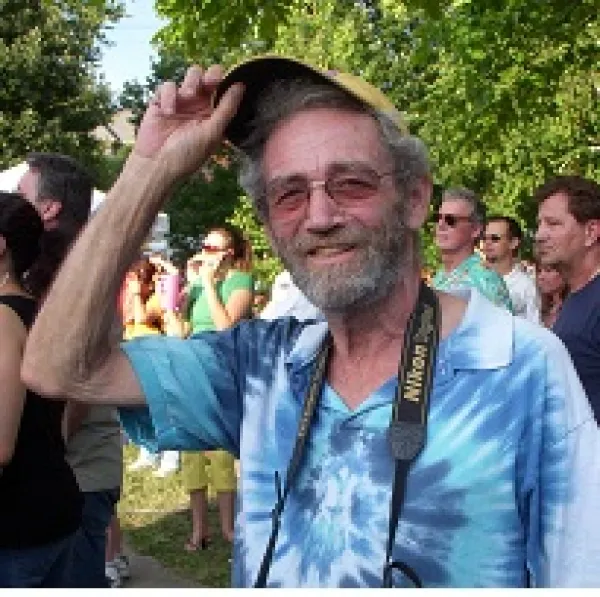
Columbus’ original beatnik and prime hippie #1 Charlie Einhorn passed into the cosmos in April 2019. So central was Charlie to Columbus’ budding counterculture of the 1960s is that the first headshop took its name from his musical instrument, Charlie’s Guitar. His good friend and co-conspirator Stan Bobrof told the Free Press Charlie’s Guitar was “where it’s at.” Charlie is now drinking coffee and reminiscing with Stan in paradise.
One of the most interesting and unknown aspects of Charlie’s life was his escape from the holocaust and journey to Belgium and eventually the United States. He later relished teaching new immigrants English as a Second Language, because he could relate from his own experiences.
The Freep itself owes a huge debt to Charlie Einhorn and his wife Lynn Stan for the uncountable hours they put in – way into night laying out the paper in the 1990s. Charlie moved the Free Press out of the paste-up stone ages into the desktop publishing era. His creative ideas for the cover were some of the best in Freep history.
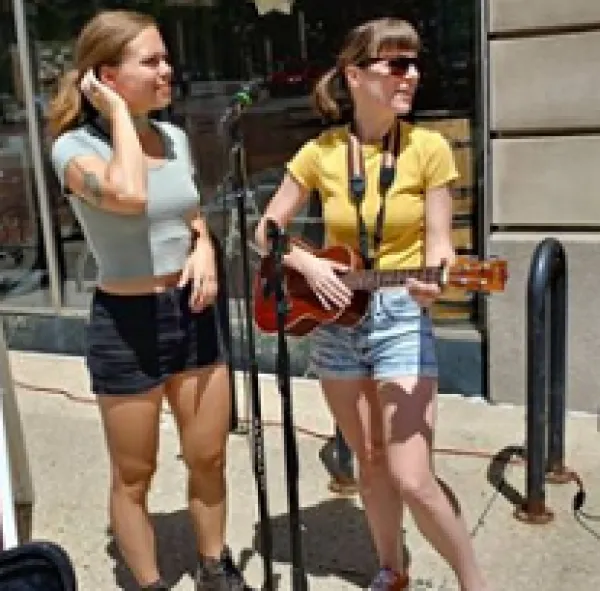
Sunday, April 28, 1-3pm
Exhausted by the onslaught of anti-woman legislation coming out of our statehouse? Feeling helpless to fight back? No worries! Come on down to the Sunlight Market this Sunday. Listen to local music, check out some art from local artists, pick up some free emergency contraception, and bring your donations for Women Have Options - Ohio, an organization keeping abortion accessible no matter what laws our state passes.
All tips and half of all art proceeds will go toward WHO/O.

Nineteen-sixty-eight was the like the runaway carousel in the Alfred Hitchcock movie Strangers on a Train. The Vietnam War, the assassinations of the Reverend Dr. Martin Luther King, Jr. and United States Senator (D-MA) Robert F. Kennedy within two months of each other, the chaos at the Democratic convention in Chicago, urban rebellions and their attendant horrors in black enclaves across the United States, the black gloved fists at the 1968 Summer Olympics, the election of former Vice President Richard Nixon to the presidency–these things and more made it an annus horribillis. Yet at the same time, sports magic was happening in Columbus, Ohio.

While modern warfare may consist of a hefty dose of drone strikes and off-site technology, it doesn’t change the fact that post-traumatic stress disorder has been and continues to be a genuine threat to veterans returning from the battlefield.
Many solutions to PTSD involve medical treatment. However, over time an interesting element has crept back into the treatment conversation: the fact that people with PTSD are human beings. PTSD is a profound mental struggle that can’t simply be “turned off” with a pill. It’s a challenge that requires a complicated response, something that music is uniquely equipped to deliver.
Veterans in the U.S.According to the University of Nevada, Reno, there are nearly 20 million veterans in the United States. That’s a significant portion of a population that, as of 2016, consisted of around 330 million people. To put it another way, on average, just over one in every 16 people you meet is a veteran.

Saturday, April 27, 2019, 10:00 AM – 4:00 PM.
Keynote Speaker: Michael Lighty, Sanders Institute Fellow. Conference fee: $40.00. Workshops and lunch provided. Scholarships available. Location: Quest Business and Conference Center, 8405 Pulsar Place, Columbus, Ohio. Register at www.spanohio.org.

Fri, April 26-Sun, April 28
Ohio Union, 1739 N. High St.
A variety of topics including: Medical Issues and Developments, Healthcare and Safety, Partners, Spouses, and Family, Legal Issues and Employment, Youth and Aging Needs, Homelessness, Mental Health, Legislative Updates and more. Tickets: transohio.ticketleap.com/symposium2019. transohio.org.