
Local

City Council must have been in a generous mood earlier this week during its Monday meeting at City Hall when it handed out two 10 year 75% tax abatements worth $680,710 to Hubbard Park Place LLC and Brunner Building LLC for two separate building projects in the Short North with a total investment cost of approximately $46 million. Both projects will create eight full-time permanent jobs in the economically depressed area of the Short North.
Then came Ball Metal Food Containers turn. According to the Department of Development, Ball Corp along with its subsidiaries is “the world’s leading supplier of metal packaging to the beverage, food, personal care and household industries, aerospace and other technology industries servicing both the commercial and government sectors.” Council members felt justified in handing out another 75% 10 year tax abatement totaling $1,684,430 for Ball Corp’s $15 million investment into their existing facility on the West side of Columbus and the promise of 50 new jobs.

Dear Mr. Holland: After studying and assessing your work this semester, it is with deep regret that I have to inform you that you failed Social Science Statistics 101.
As you know, you have characterized us as “conspiracy theorists” because in our STRIP & FLIP SELECTION OF 2016: FIVE JIM CROWS & ELECTRONIC ELECTION THEFT, Harvey Wasserman and I have suggested that exit polls matter. You have also publicly denounced our colleague Richard Charnin, who has two separate Master’s degrees in Applied Mathematics, for his analysis of this year’s primary exit poll results versus election results.
Since you show so little interest in statistical analysis, let me briefly go over what you should know:

On May 19 demonstrators gathered at the Ohio Statehouse and the North Market to raise awareness of the forms of violence experienced by black women, girls, and transgender women. They called for an end to criminalization of black victims of sexual violence, gender discriminatory legislation, and narrow social standards of black womanhood and femininity.
“We’re here today to join a national day of action lifting up the names of black women, girls, and femmes who have been killed in the past two years,” said Rev. Lane Campbell, minister of religious education at the First Unitarian Universalist Church. “These are just the cases that we know about. There are many other names that we don’t know.”
The protesters unfurled a large scroll of names and read them aloud, chanting “Say Her Name” after each victim’s name.
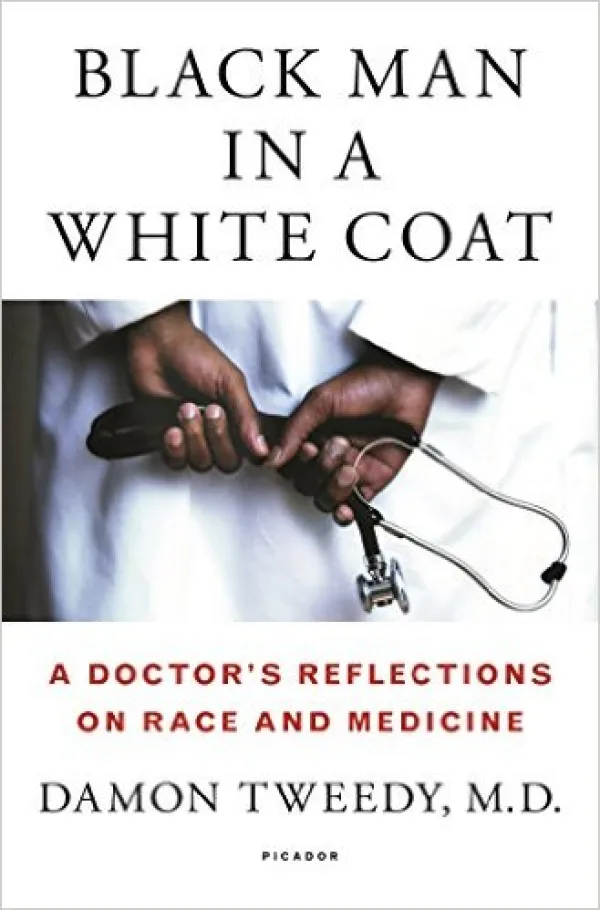
In so many ways, Dr. Damon Tweedy was fortunate. He grew up in an intact home with loving, strict, and steeped-in-the-church parents who were gainfully employed and taught him to aim high. Tweedy’s parents did not even finish high school. His father worked all his life as a butcher in a grocery store; Tweedy’s mother spent forty years working for the federal government. Tweedy also had a great example in his older brother who graduated from college. He had done well in high school and college, but he arrived at Duke University School of Medicine full of apprehension and doubt. Could he cut it? He was from a working class family, attended a middling, state-supported public university, and would be one of a few black scholarship students, recruited in part to diversify the student body, in his classes. His classmates would primarily be middle- and upper-class white students who had attended prominent universities and could afford to be at Duke. Tweedy studied his tail off that first half of the semester. When he received his midterm grades, he was in the top half of all of his classes, and his doubts began to recede.
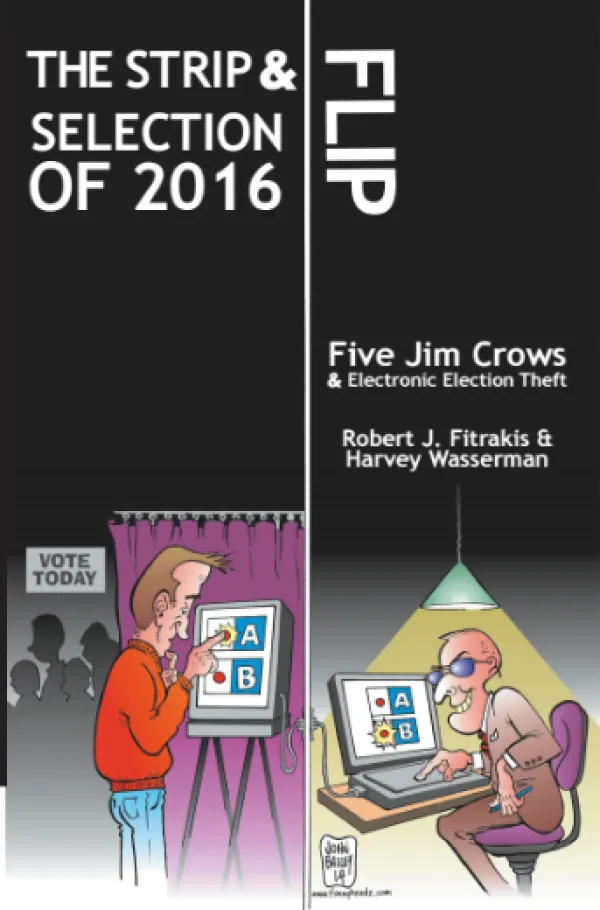
Just because a crisis situation seems impossible to address effectively, there is no reason to give up, but every reason to keep wheels turning--inside out, as does this masterful dissection of elections and voting as a system between the Civil War and today.
Quite a time period to cover in less than 100 pages, but authors Bob Fitrakis and Harvey Wasserman face this challenge, prefaced and introduced by the famed author and investigative reporter Greg Palast and actress and activist (head of Progressive Democrats of America) Mimi Kennedy.
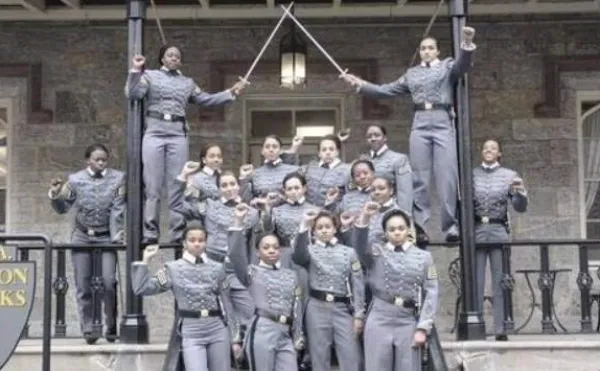
Like a violent storm the US Army sought to squash any signs of expression when a group of graduating black female West Point cadets took a photo with raised fists. Their raised fists a sign of solidarity with Black Lives Matter.
Military insiders have reported the black female cadets have complained to senior officers the racism within the mostly white and male-dominated academy is too much to take. The military would never allow these cadets to speak publicly, however, so it may never be known whether they meant the picture to go viral.

“Conspiracy theory’ is a term that strikes fear and anxiety in the hearts of most every public figure, particularly journalists and academics. Since the 1960s the label has become a disciplinary device that has been overwhelmingly effective in defining certain events as off limits to inquiry or debate. Especially in the United States, raising legitimate questions about dubious official narratives destined to inform public opinion (and thereby public policy) is a major thought crime that must be cauterized from the public psyche at all costs…CIA Document 1035-960 played a definitive role in making the ‘conspiracy theory’ term a weapon to be wielded against almost any individual or group calling the government’s increasingly clandestine programs and activities into question.” – From CIA Document 1035-960
“We’ll know our disinformation program is complete when everything the American public believes is false.”-- William Casey, Ronald Reagan’s first CIA Director (from Casey’s first staff meeting, 1981)

By press time, it might well be that everything there is to say about Prince had been said, and then some. Forgive me though, if I take a couple of minutes to talk about not the performer, but about his favorite instrument, a knock-off Fender Telecaster.
There is a movement on to educate the world that Prince was not just a pop star, but a great guitarist as well. Even a cursory look around the internet should convince you of the truth of this. Of the live footage out there, perhaps the most stunning is his solo on “While My Guitar Gently Weeps” at the Rock ‘n Roll Hall of Fame ceremony inducting George Harrison. Yowsa. What are these wild and strange blues, and why are they emanating from a guy who is famous for smoothly produced pop music?

Two things.
Used Kids is no longer on the OSU campus. Used Kids moving to Summit/Hudson is momentous because the record store was the last visible bastion of campus counter-culture. I feel bad for the students. Sometimes it seems like OSU doesn't like music.
The second was that I missed the Vic Mensa show at OSU. I saw Big Sean last year, and it was pretty amazing. He rocked with complete emcee dominance to 6,000 kids with the use of a band and deejay.
I guess it just depends where you stand.
Used Kids' relocation mostly seems inconvenient to people living in the dorms, given there are several venues and record stores off-campus. But since I don't live in the dorms, Used Kids moving doesn't really affect my life. They're moving to the area where Rhumba and Wild Goose are, so I feel like new experiences will occur.

Weirdo well-established solo electric guitarist Buckethead could easily run for president this year. He's got gimmicks galore--let us count the ways we saw at his recent sold-out, truly standing-room-only Woodlands show:
1) The upside down KFC 36-piece bucket atop his head. This has been one of his two standard trademarks since his coming on the scene nearly a quarter-century ago. An upside down KFC 36-piece bucket? Why, that's nearly as brilliant as your own obnoxious reality TV show which appears on your presidential candidacy resume. Buckethead wouldn't fire you, though, he'd instead ask you to pile your KFC skins farther away from him--integrity of piles, you know.