
Local
F-ck bein' on some chill s--t. We reserve the right to go zero to 100 real quick. And last week, it could never be untoward to say that the whole Ohio Student Association squad was on some real s—t.
I arrived in Xenia at around noon, having failed to wake up in time to join the march from the Beavercreek Wal-Mart. The marchers would not arrive for another two and a half hours, which gave me time time to explore Xenia, this quintessentially American town, which provided the setting for this quintessentially American tragedy.
In Xenia, the Town Square is a strip mall. The Ten Commandments are proudly displayed on the courthouse lawn. The coffee shop across the street sells fair-trade coffee alongside Twinkies. The signs that line the street posted by the economic promotion consortium called Downtown Xenia Now extol Xenia as “a family adventure and an action movie all rolled into one.” The tobacco shop further down the road proclaims on its door that it is “American Owned and Operated.” And of course, in true small-town American fashion, everyone you met was nothing but friendly and hospitable.

Jaiymie Kiggins was born and raised in Columbus Ohio. He graduated from Antioch College in 1994.
In addition to being a sculpture and union stagehand he has applied his metal working skills to race cars and boats. He is a Comfest regular where many many people have seen his work, which also adorns libraries, schools and hospitals throughout Central Ohio. He currently resides on a farm outside Lancaster Ohio and his work can be seen at http://www.kiggins-sculpture.com/
FP: Describe for our readers the most compelling art piece you have made

If you’re in the mood for a big, flashy musical but can’t afford a trip to Broadway, why not head for Westerville? Otterbein University’s theater department turns out a steady stream of singing and dancing thespians, and putting on major musicals is an important part of their education.
To be sure, several local theater troupes also tackle musicals from time to time, but none of them can match the size and spectacle of an Otterbein production.
Take the current show, Sweet Charity. Even before the familiar first strains of the overture fill the air, you know it’s going to be big because the orchestra pit is so crowded. Conductor Lori Kay Harvey leads an ensemble of 22 that includes strings, reeds, brass, a keyboard and two percussionists.
Once the show gets under way, the romantic travails of Charity Hope Valentine (Madison Tinder) are intermixed with production numbers that fill the huge Cowan Hall stage with singers and dancers.

The Columbus International Film & Video Festival (CIF&VF) is bigger and better than ever this year.
Progressive educators at Ohio State University started the longest running film festival in the U.S. back when 16mm film was a new and exciting format. Now in its 62nd year, the Festival kicks off with a series of Early Bird Films in October and early November that lead up to the official start of the now 12 day Festival November 13-25.
This year the Festival teams up with Stonewall Columbus, VSA Ohio – The State Organization on Arts and Disability and the Niagara Foundation to bring films not seen anywhere else in Columbus.
The main Festival in November starts off with a film about sex and disability from Australia. Scarlet Road follows the extraordinary work of Australian sex worker, Rachel Wotton. Impassioned about freedom of sexual expression and the rights of sex workers, she specializes in a long over-looked clientele – people with disability. Director and Star Rachel Wotton will speak about the film and do a Q&A immediately after the film via Skype.
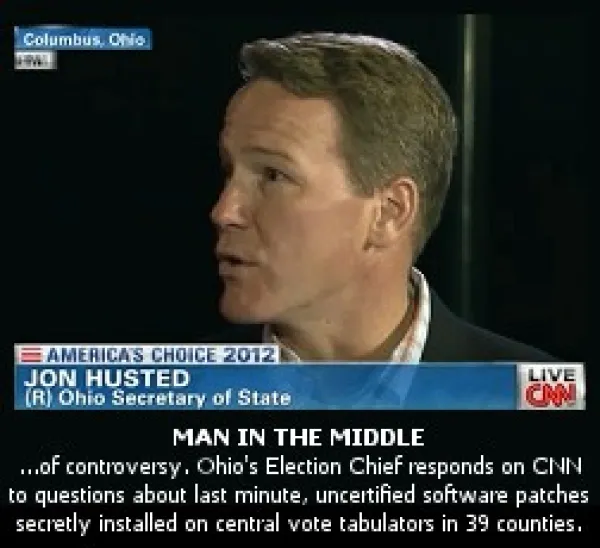
Will precinct-by-precinct, 15 minute-by-15 minute election night results that are available only to the Ohio Secretary of State Jon Husted, compromise the security of the statewide election?
In Ohio’s notorious 2004 presidential election, called by pollster Lou Harris “one of the most corrupt in U.S. history,” one of the signs of election tampering was the impossible results flowing from precincts in Republican rural Ohio. In Cyde, Ohio they initially reported 130 percent voter turnout.
In Perry County, one precinct came in at 120 percent, another at 114 percent. In Miami County, the Concord Southwest precinct claimed 679 out of 689 voters cast ballots overwhelmingly for Bush. They later admitted to The Free Press that only 549 people signed into the polls and that the other votes had been the result of bad computer tallies.
Now with Ohio’s new election night reporting system it is easier than ever to stack the deck and bring in the cybervote at the precinct level.
Secretary of State’s strange secret software patches suspected purpose to steal election
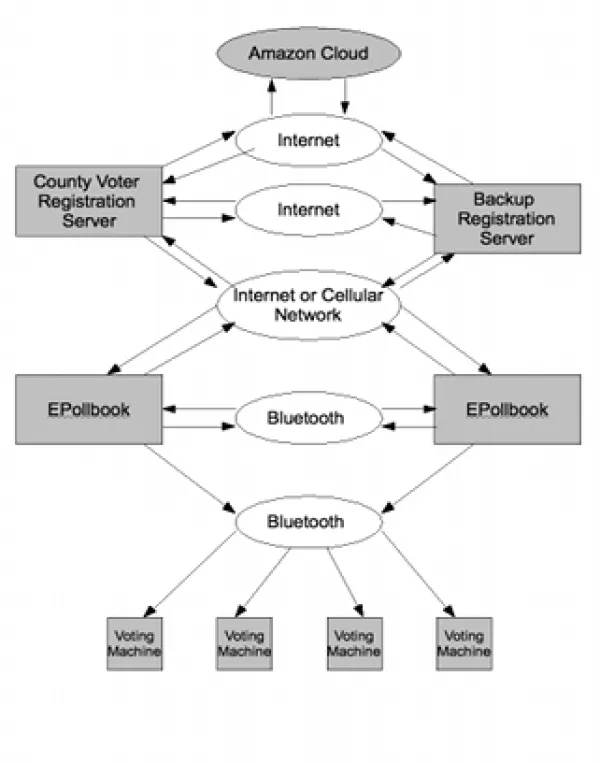
While some attention is focused on the risks inherent in placing untested software patches on county election tabulators, another election technology is being aggressively deployed throughout Ohio. That technology, the e-pollbook, appears to reduce lines at the polls, increase convenience and be a more modern way to verify voter identity and precinct location. The technology as deployed brings with it new possibilities for tampering with elections and whole new vectors for cyber attack.
What is most alarming is the potential for this technology to compromise the secrecy of the ballot. E-pollbooks could allow people with access, from election officials and private contractors to Ohio Secretary of State John Husted, to know how you voted.

Everyone has hang-ups - inhibitions, insecurities or situations that prevent one from having sex.
You have a partner, each is in the mood, you move closer in the direction of getting it on, and then everything stops. Someone's hang-up shows up.
Some hang-ups are mental – needing to have things arranged in a particular way - lights off, music on, lingerie or other “costuming,” grooming (brushing teeth, shaving, showered), focusing on having an orgasm in order to have satisfying sex, being over worried about STDs – the list goes on.
Some hang-ups are societal or based on religious beliefs – needing to be married, with a partner of a certain faith, or waiting until the third date. Perhaps you feel like you've had too many partners, and want to keep it below a certain number.
Some hang-ups include physical problems like maintaining an erection, premature ejaculation and menstruation. When a physical problem presents itself, it depends on how each partner treats this situation.

The United States Supreme Court, in a 5-4 decision, allowed Ohio’s notoriously racist voting laws to remain in place during the 2014 election. Ohio Secretary of State (SoS) Jon Husted has embraced the new Jim Crow policy of limiting access to the polls by poor, elderly and black voters.
Husted, under a twisted version of “equality” has limited Ohio’s nine major urban areas to having only one early voting site each, guaranteed to create long lines as it did in the 2004 and 2012 elections. In 2008, then-SoS Jennifer Brunner allowed the Franklin County Board of Elections to establish five early voting centers in the greater Columbus area.
Last week, the U.S. Sixth Circuit Court of Appeals upheld federal Judge Peter Economus’ historic ruling protecting African American voting rights in Ohio. In a September 4, 2014 opinion, Economus held that the actions of Ohio Secretary of State Jon Husted violated both the equal protection clause of the 14th Amendment and the Voting Rights Act of 1965 by erecting illegal barriers to keep minorities and the poor from voting in the Buckeye State.
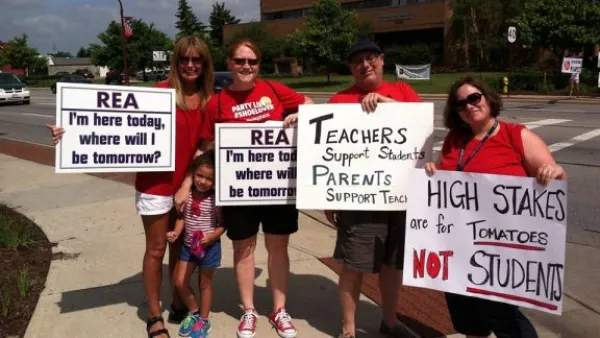
Striking Reynoldsburg teachers want the public to know one thing: they’re on the picket line because they care about students first.
The strike is more about what the Reynoldsburg school district is forcing on the students and teachers than winning a compensation package that’s on par with neighboring districts, said the Reynoldsburg Education Association (REA), the teachers’ union.
The Reynoldsburg school district, led by Superintendent Tina Thomas-Manning, called an “education ally” of Gov. John Kasich by the REA, has been pushing hard for teachers to accept a merit-based pay system.
Conservatives and Capitalists have long been among supporters of merit-based pay claiming it will help to close “the achievement gap.”
Critics of merit-based pay say it is a veiled effort to privatize education by replacing teachers with technology, increasing class sizes, increasing the number of standardized tests and growing the number of for-profit charter schools.
The U.S. Sixth Circuit Court of Appeals upheld federal Judge Peter Economus’ historic ruling protecting African American voting rights in Ohio. In a September 4, 2014 opinion, Economus held that the actions of Ohio Secretary of State Jon Husted violated both the equal protection clause of the 14th Amendment and the Voting Rights Act of 1965 by erecting illegal barriers to keep minorities and the poor from voting in the Buckeye State.
Husted’s attack on voting right proceeded under the guise of fighting “voter fraud.”
Economus noted, “The state’s argument about reducing fraud did not withstand logical scrutiny.”
As the New York Times stated, “There has been no in-person voter fraud documented in the country.”
Republican Secretary of State Husted is up for re-election this year, and in order to increase his chances he came up with a variety of measures that directly suppress minority and poor voters. His opponent, State Senator Nina Turner (D-25), is a black female and an outspoken voting rights activist.