
Local
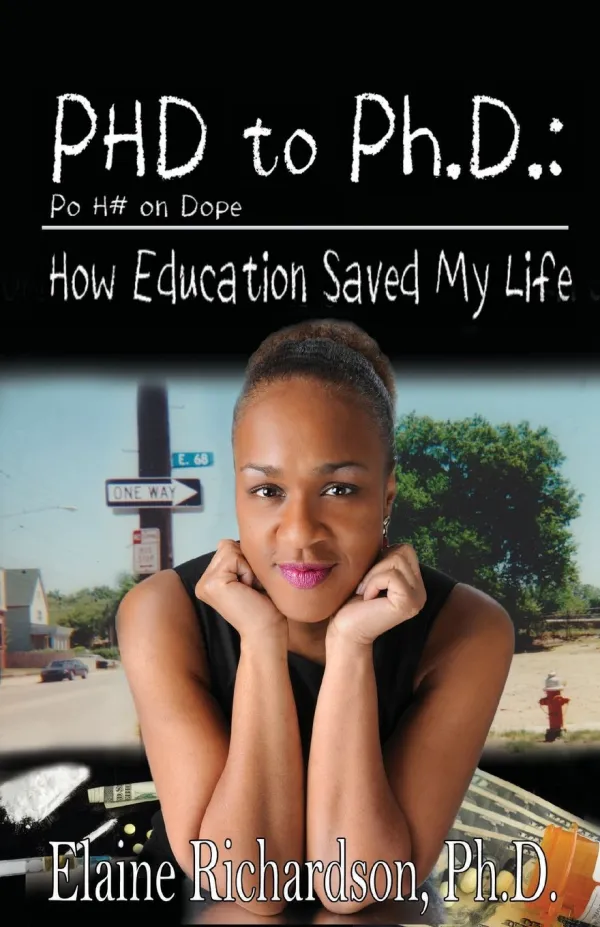
Dr. Elaine Richardson is a very accomplished human being. She founded the OSU Hip Hop Literacies Conference which has brought the Dream Defenders, Chuck D, MC Lyte, Dr. Christopher Edmin and many other prominent Hiphop thinkers to our fair city over the years. Dr. E has won countless awards including the Ohio State University Community Cultural Icon Award. Ohio State University College of Education Diversity Award and National Council of Negro Women Community Service Award. In 2013, Dr. E was named one of Cleveland Ohio’s Top 25 Most influential African-American Women Award in 2013.
Saturday, August 9th Dr. E will be performing at the Frank Hale Center’s MLK Lounge, 154 12th Avenue on OSU’s Main Campus in support of her recent memoir PHD (Poor H* on Dope) To PHD: How Education Saved My Life.
PHD to To PHD openly details how Dr. E. used education to escaped the fatal dangers of prostitution and drug addiction via education. Dr. E was kind enough to talk to me about her book, life, her SIsterFriends program, the importance of media literacy, and more.
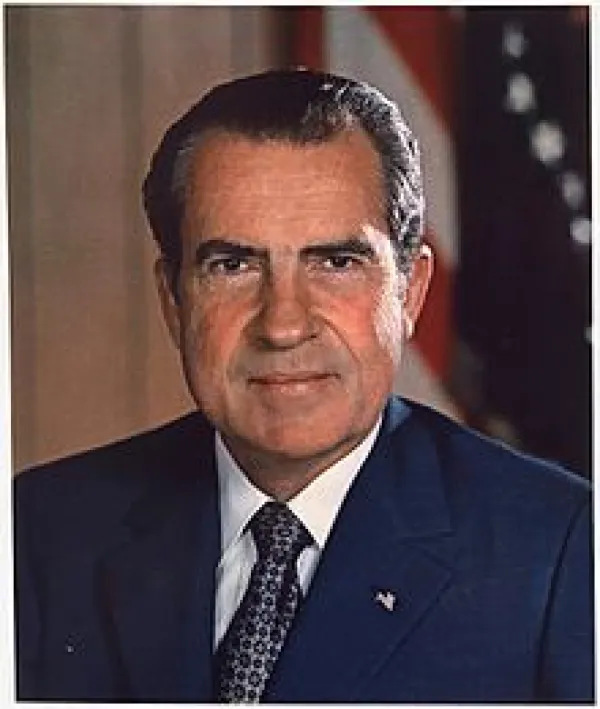
Richard Nixon was a traitor.
The new release of extended versions of Nixon's papers now confirms this long-standing belief, usually dismissed as a "conspiracy theory" by Republican conservatives. Now it has been substantiated by none other than right-wing columnist George Will.
Nixon's newly revealed records show for certain that in 1968, as a presidential candidate, he ordered Anna Chennault, his liaison to the South Vietnam government, to persuade them refuse a cease-fire being brokered by President Lyndon Johnson.
Nixon's interference with these negotiations violated President John Adams's 1797 Logan Act, banning private citizens from intruding into official government negotiations with a foreign nation.

The Supreme Court of Ohio will decide whether Columbus citizens’ basic constitutional rights, in place since before World War I, will survive.
Citizen’s initiatives, the favorite tool of the Progressive Era to defeat robber barons and political bosses, are being arbitrarily rejected by the one-party Democratic machine in Columbus.
The Columbus Coalition for Responsive Government filed a “Verified Petition for Writ of Mandamus” on Wednesday, August 6 with the Ohio Supreme Court. The Coalition is suing to have their initiative signatures counted concerning their “Columbus Fair Campaign Code.”
The initiative calls for public financing of elections for Columbus City Council and Mayor.
The current city charter only requires 4,478 valid signatures to get an initiative on the ballot. The Coalition submitted petitions 16,205 signatures. But Columbus City Clerk Andrea Blevins, on the advice of City Attorney Richard Pfeiffer, refused to verify the signatures as per the usual procedures.
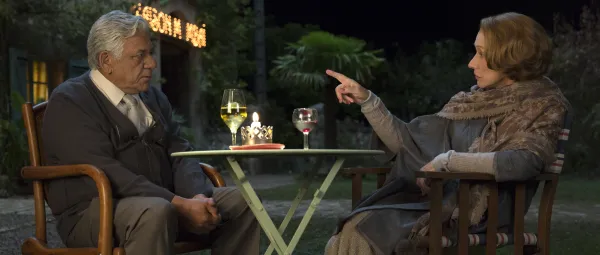
Presumably, you’ll be able to see The Hundred-Foot Journey without sitting through the intro that preceded preview screenings. Lucky you.
In the short teaser, producers Steven Spielberg and the “a-ma-zing!” Oprah Winfrey talked about the flick’s cross-cultural significance. This was obviously meant to whet viewers’ appetites, but it could well have backfired by making Journey sound like a self-righteous sermon.
Fortunately, the new film from director Lasse Hallstrom (Chocolat) manages to leaven its message with humor. Even more fortunately, the humor avoids the cultural stereotypes that marked, for example, the recent Million Dollar Arm.
“Papa” (Om Puri), son Hassan (Manish Dayal) and the rest of their family are depicted as intelligent but lovably quarrelsome human beings who happen to operate a restaurant in Mumbai, India. In the opening scenes, Hassan’s mother is shown infusing him with the love of cooking before a tragic fire takes her life and forces the family to relocate.

At their July 8, 2014 County Central Committee meeting, the Franklin County Green Party endorsed the Columbus Community Bill of Rights. Co-Chair Bob Fitrakis called for “a return to localism where local people control their air and water and are not at the mercy of corporate polluters.”
The Columbus Community Bill of Rights proposes an Amendment to the Charter of the City of Columbus. A group is collecting signatures to put a citizens’ initiative on the ballot that will give Columbus residents local control over the extraction of hydrocarbons and protect the unalienable rights for pure water, clean air, and safe soil. The Community Bill of Rights would free Columbus citizens from "toxins, carcinogens, radioactive substances, and other substances known to cause harm to health.”
The Franklin County Green Party holds that human rights take precedence over corporate profit. “We do not believe corporations have the same rights of flesh and blood people, and living human beings have the right to decide what goes into their air, soil, and water,” Fitrakis stated.
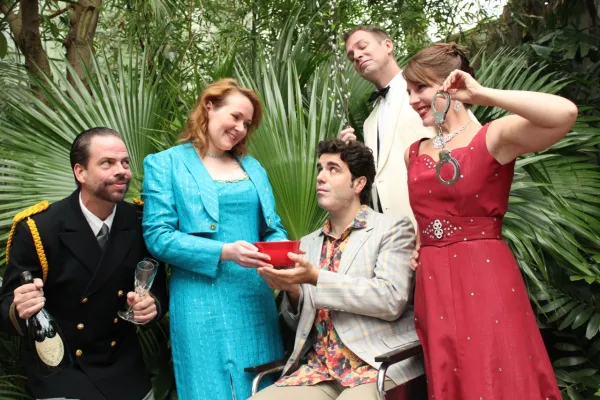
If The Miracle Worker had a male lead, Matt Clemens would be perfect for the part.
In the past year, I’ve seen two theater productions that forced me to upgrade my opinions of the musicals in question. The first was Sunday in the Park With George at Short North Stage; the second was CATCO’s current staging of Dirty Rotten Scoundrels.
The one thing the productions have in common is that Clemens was cast as the male lead. To be sure, both shows have many other fine attributes, but it’s hard to overestimate the actor’s contributions. Not only does he sing like an angel—a fallen angel in the CATCO show—but he imbues his characters with enormous appeal.
In Scoundrels, David Yazbek and Jeffrey Lane’s stage adaptation of a 1988 movie, he plays a huckster named Lawrence who poses as a prince in order to prey on wealthy women vacationing on the French Riviera. Despite this morally bankrupt occupation, Clemens somehow convinces us Lawrence is a basically decent guy who’s worthy of our attention. Neat trick.

Cancer took the life of film critic Roger Ebert in 2013, 14 years after it claimed former TV co-host Gene Siskel.
Unlike Siskel, however, Ebert did not sneak off into the great beyond. Even after thyroid cancer necessitated the removal of Ebert’s lower jaw—taking away his ability to eat, drink or speak—he remained a public figure with help from a prosthetic chin and a computerized voice.
Director Steve James (Hoop Dreams) recaps Ebert’s storied career in Life Itself, a documentary named after the critic’s 2011 memoir. Because James began his documentary only five months before Ebert’s death, it also serves as a record of his harrowing final days.
It may be due to the unexpectedly short time James had with Ebert that Life Itself comes off as a bit messy. Though it follows a generally chronological outline, some segments seem to be stuck here and there for no particular reason.
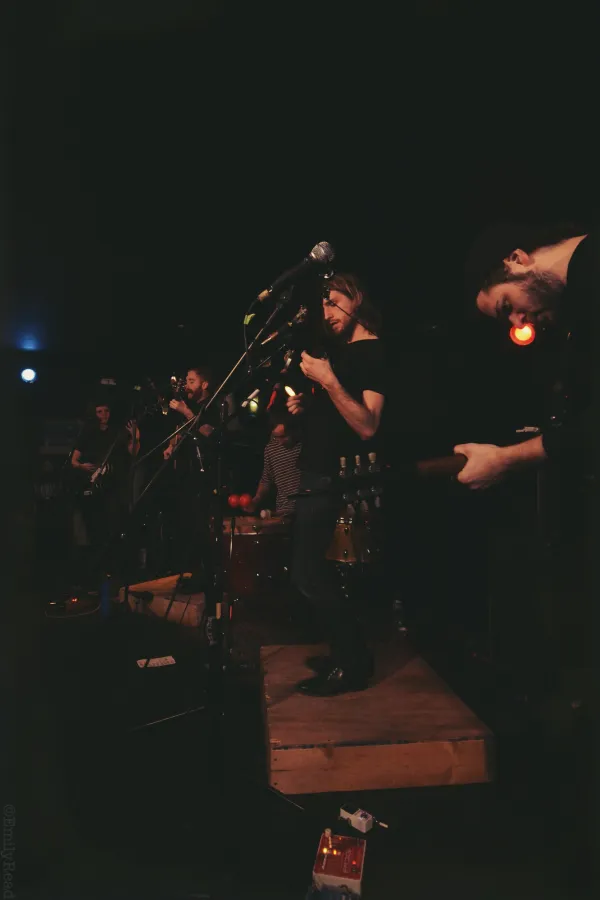
As you may or not be aware, on Friday, August 29th the “Fashion Meets Music Festival” will be coming to the Arena District. From a cursory review of its website, it includes hipster bands, “Access to Excess VIP Badges” and the kind of people who hang out at the patios on the 670 cap. Also, “urban camping,” presumably a cleaner and puma-free version of regular camping.
Frankly, the thing looks like a hurricane of suck, some sort of Lolapalooza for idiots wearing those nice black shirts with the subtle patterns. Admittedly, my general preference is that fashion not meet music, so take that with a grain of salt.
Headlining the festival will be R&B singer R. Kelly. Kelly is famous both for his music, which is terrible, and for 2002 allegations that he made a professional quality sex tape with a 14 year old girl which included footage of him urinating on her. He was acquitted of the charges brought against him, likely because prosecutors were unable to establish the identity (and therefore the age) of the female in the video.

MRSA, or Methicillin-resistant Staphylococcus aureus, is a bacterial infection that is resistant to most antibiotics, contagious and potentially deadly. Commonly found in hospitals and afflicting health care workers, it leads to large pusfilled masses on the skin which must be incised and drained. A specific, special antibiotic regime must be followed to cure the infection and prevent blood poisoning. As of the time of this writing, July 24, 2014, according to sources at least one inmate in the Franklin County Jail has this infection, is not being treated as per the orders of doctors at Grant Hospital, and is in the general population with a fist-sized hole in her chest oozing black pus. Pictures smuggled from the jail show the wound without gauze or a bandage on her emaciated body. The pictures are included in this story.
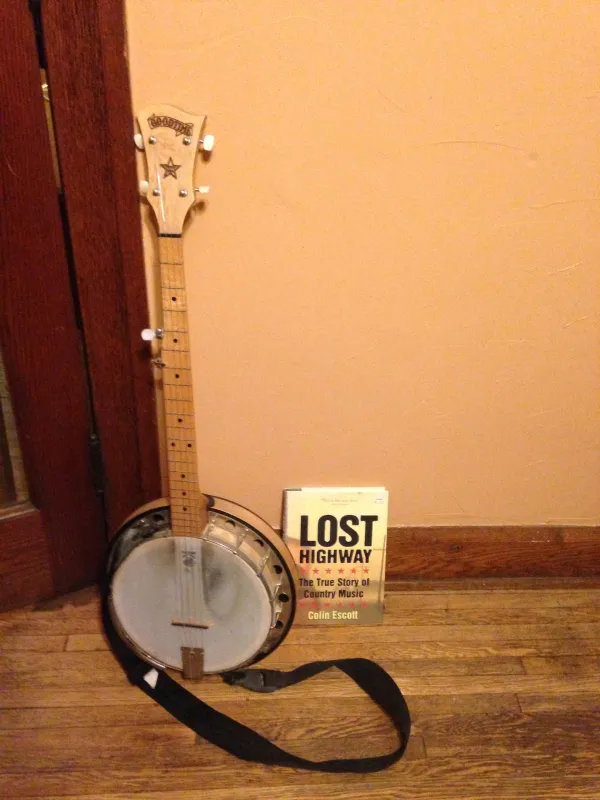
In 2004, the transplanted Nashville act Old Crow Medicine Show came into the public consciousness with their massive hit, “Wagon Wheel.” Unlike standard millennial country acts, OCMS was an all-string ensemble of double bass, banjo, fiddle, guitar, and something called a gitjo (presumably a distant cousin to Bertie Wooster’s banjolele). They billed themselves as an “old time string band.”
In the wake of “Wagon Wheel,” old time string band acts have sprung up like daisies. It’s to the point that upstanding American youth are forsaking their Stratocasters and developing a lyrical obsession with geography, particularly mountains and bodies of water. Indeed, geographical terms frequently work their way into the names of these acts -- Yonder Mountain String Band, the Lost Bayou String Band, and the On Pearl Alley Right Behind Long’s Bookstore String Band. Like goddamn Mapquest with fiddles, really.