
Evolving Beyond Cynicism
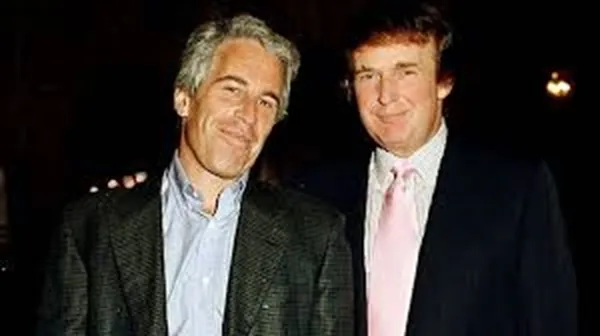
Distraction from Epstein files may be the primary cause for the attack on Venezuala. Creative Commons image
Oh good. Now we have a war to focus on. Everyone’s tired of Epstein by now, and tired of the possibility that the bad guy may be, ho hum, our own national leader, a.k.a., the commander-in-chief.
So the commander-in-chief has stepped in for the sake of the public good, bestowing on America a far more traditional enemy to hate and fear and let dominate the headlines: narco-terrorists.
I’m still trying to grasp the fact that Donald Trump has actually invaded Venezuela. He’s no longer simply bombing boats in the ocean. The U.S. military bombed Caracas on Jan. 3 and broke into the home of the country’s president, Nicolas Maduro, and his wife Cilia Flores. They were kidnapped and extradited to the United Staes, where they are now on trial for drug trafficking – as though that was the moral purpose of the invasion.
Obviously it wasn’t. As The Intercept notes: “This is a clear-cut act of military aggression, a brazen violation of international law, and a textbook example of unreconstructed 19th-century colonialism.
“Donald Trump now says that the U.S. will ‘run’ Venezuela and ‘take’ the country’s vast oil reserves.”
I’m in sync with the enormous outrage over this invasion, both here in the U.S. and around the world. Where I back away slightly, however, is when a critic points out that Trump’s military action was “illegal,” because he invaded Venezuela without congressional approval. When I read this kind of criticism, I feel an inner alarm go off. Making a a war “legal” doesn’t make it just or moral. Legal wars still kill and maim innocent people, still destroy communities, still create intense hatred that guarantees future wars. In other words, war itself is always the core of the wrong.
In no way am I saying I oppose self-defense, or even retaliation. I’m saying, instead, that I believe we need to rethink what self-defense actually means.
What, oh what, is power? We live in a world that is armed against itself with preposterous enormity – nuclear-armed against itself, for God’s sake. Violent response is embedded in the way we think, regarded as the nature of protection. Where’s my gun? And it’s likely to be the first response to a perceived threat, especially at the national level. And anyone who dares to question this is easily belittled as crying: “Gosh, can’t we all just get along?”
I took aim, so to speak, at this cynicism in a poem I wrote some years ago, called “Can’t We All Just . . . Oh Forget It,” which begins:
The cynics”
play with their sticks
and knives, mocking
the merciful, the naïve,
the cheek turners.
Can’t we all just . . .
oh, forget it.
But maybe the answer
is yes,
if we undo the language,
the easy smirkwords
that belittle
our evolving . . .
Belittle our evolving! Disagreement – conflict – is often incredibly complex. Simply “eliminating” it, shooting it out of existence, may be a tempting course of action, but it solves nothing. Instead, we have to understand it. And every time we understand the reasons for a conflict – and figure out how to rectify and transcend those reasons – we evolve.
Consider these words about the Venezuela invasion by Jordan Liz:
“Ultimately, whether it’s removing Maduro or invading Cuba, Mexico, or Colombia, none of these actions will solve the drug crisis because they fail to tackle the root cause: public suffering. While there are many reasons people turn to drugs, the lack of adequate healthcare, poverty, homelessness, social stigmas about drug use, and criminalization are the leading factors. People turn to drugs when their governments and communities turn their back on them. Drug cartels, like any other capitalist enterprise, exploit these people’s hopes and desires for their own gain.
“. . . If Trump really cared about the drug crisis, he would be working tirelessly to solve the affordability crisis — not denying its existence or spending billions on battleships.”
War is not the answer, even if it’s legal.