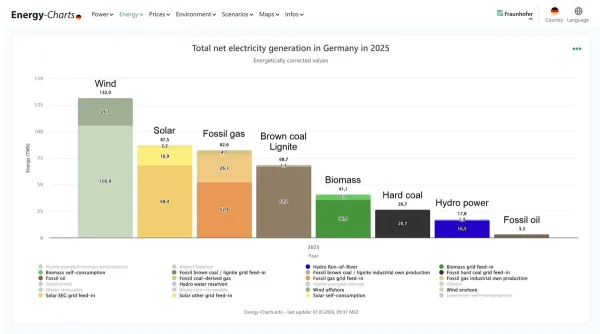
New renewables (wind, solar, and biomass) generated more electricity than fossil fuels (all coal, fossil gas, and oil). Total renewables, including a limited amount of hydro, delivered nearly two-thirds of Germany’s net electricity generation in 2025.

Germany’s solar generation increased more than 20% from the previous year.
Coal generation has fallen to levels last seen in the 1950s and 1960s.

Net total electricity generation in Germany has declined about 20% since 2002 despite population growth and the increase in electric vehicles and electric appliances. Even more significant has been the nearly 70% decline in generation from fossil fuels and nuclear power in the past two decades. In fact, renewables have been generating more electricity than fossil fuels in Germany since 2019.

While Germany’s 2025 achievements are remarkable–generating 278 TWh of renewables–the country failed to meet their targets of 346 TWh. The 20% shortfall is due largely to lackluster policy support in the later Merkel years and subsequent governments. However, Russia’s invasion of Ukraine and Europe’s dependence on Russian fossil gas has rekindled support for renewables not only in Germany but Europe wide.
During the past decade solar generation has tripled across Europe, while coal-fired generation has crashed 60%. In 2025 solar alone generated more electricity in the EU than brown and hard coal together. US president Trump can’t change that dynamic.
Germany’s renewable development continues to outpace that in California by a wide margin. In 2024, the most recent year for which data is available, wind in California generated only 16 TWh, just a fraction of that in the much more densely populated Germany. Solar generated nearly 51 TWh, providing a respectable 18% of the golden state’s consumption, but still far less than that in Germany. While California has made the most progress in energy conservation of the states in the USA, its total consumption has only decreased 10% since a peak in 2008, about half the progress of Germany.
So break out the beer. Germany’s renewables growth is something to cheer.