Inconvenient Stores: A Community Crisis By Esther Flores BSN, RN
Haga clic aquí para español - Click here for Spanish
The State of Convenience Stores in Impoverished Neighborhoods
Today, convenience stores on the West Side and in other low-income areas of Columbus often exploit residents and make life more difficult for hardworking people who don't have a vehicle to travel to places like Kroger, Walmart or Aldi. These stores are often located in food deserts that are crime infested. Instead of serving the community, these chains of grocery stores often operate illicit activities that exacerbate the challenges of local residents and the nonprofits that protect and serve vulnerable populations. Illicit activities are rampant, yet politicians and law enforcement officials frequently fail to address these problems in a timely manner. As Thomas Jefferson once said, “The truth shall set you free.” Unfortunately, the reality on the frontlines is far from liberating, as we see the hurt of those we serve, including the children being groomed for addiction and prostitution.
Poverty Pimps and Negligent Landlords
The term "poverty pimps" does not only apply to certain nonprofits that receive continuous funding from foundations and government sources, despite their role in perpetuating the suffering within the community. The issue extends to local and out-of-state slum landlords who neglect their properties, relying on property management companies to provide only superficial fixes. Many of these buildings are infested with roaches and rats and children are forced to live in these deplorable conditions which lead to respiratory problems and parasitic skin infections. Basements with black mold. Drains backing up. Social issues are widespread, with limited financial resources available. Landlords target section eight tenants near convenience stores that overcharge and take their EBT funds, resulting in transactions being processed out of state. As a result, families are left without money to feed their children for a month. Prosecuting these grocery store fraudsters with Racketeer Influenced and Corrupt Organizations Act charge is as slow as molasses. The Franklin County Commissioner, Erica Crawley, City Attorney, Columbus Police Department (CPD) detectives, and Job and Family Services are aware and still no one has been prosecuted as of yet especially with the EBT scams.
Price Gouging and Unfair Practices
An obvious case of exploitation occurs in stores such as Speedy Drive Thru and Smoke, where a gallon of milk costs $5.05 and a dozen eggs are priced at $4.99. At the same time, a beer can, and condom are sold for $1. Due to inflation, a single cigarette cost 0.50 cents. Cleaning agents are also marked up to astronomical prices. It is a common practice for store owners to purchase items from larger food retailers such as Kroger, Walmart, and Dollar General, only to resell them in local neighborhoods at double the cost. Do you see anything convenient about these markets and grocery stores? Many of these convenient store owners are related and often foreigners who achieve the American dream by exploitation in the area.
Illicit Sales and Community Safety Concerns
Some convenience stores go beyond price gouging, engaging in the sale of drugs and paraphernalia to children. For instance, M & J Carryout near police precinct 19 has been reported to sell blunts to minors. Street-level marijuana is dangerous, and it is often laced with dangerous substances such as fentanyl, resulting in erratic behavior among youth. The process of prosecuting these business owners through the City Attorney's office is slow and cumbersome, leaving the community vulnerable. Despite reaching out to law enforcement, action is seldom swift or effective. Unfortunately trap houses around these inconvenient stores are harboring runaway minors.
Case Study: Herbert’s Market
Last year Herbert’s Market served as a prime example of an "inconvenient store" under investigation for selling stolen goods. When notified by the city attorney’s office, the owner was conveniently out of the country. The store is surrounded by illicit activity, which negatively impacts neighboring businesses as customers are deterred by the visible drug activity and prostitution. Rosco Market on the Hilltop for years sold drugs inside and outside. Grace was extended by the city attorney office to clean their act on the verge of losing their liquor license. However, there are still drug dealers selling out of their parking lot. Many grocery stores throughout Columbus are selling drugs because it is easy since there are no consequences. Community advocates living in food deserts neighborhoods must confront these bad business practices with the Attorney General. These stores need to be shut down. Herbert’s market is now under scrutiny because it inherited several of the illegal activities that were taking place at the Sanctuary Night Drop-In Center.
Targeting Youth: Drug Paraphernalia and Vaping
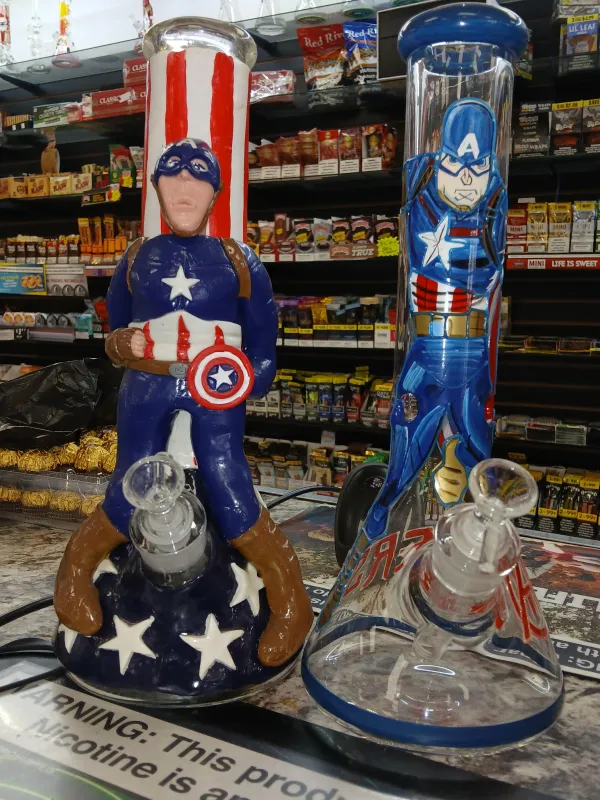
A major concern is the sale of drug paraphernalia featuring superhero imagery and the distribution of vapes to minors. Children in these neighborhoods are increasingly exposed to and ingest chemicals such as THC, CBD, nicotine, and other addictive and carcinogenic substances with attractive scents. This trend is alarming, as it is likely to lead to a surge in chronic illnesses such as COPD, heart attacks, gastrointestinal issues, strokes, mental health disorders, and various forms of cancer among teens in the coming years.
Recent trends indicate an alarming rise in the use of vapes and nicotine gum among children and adolescents. Vaping devices often market colorful cartoons and common candy packaging with fun flavors. They are easily accessible like flavored cigars and cigarettes in many convenience stores, sometimes even those located near schools. Nicotine gum, originally intended to help adults quit smoking, is now being used by some youths as a discreet way to consume nicotine, bypassing traditional tobacco products. Studies have shown that early exposure to nicotine through these products can lead to addiction, negatively affecting brain development, attention, and impulse control in young people. Furthermore, both vaping and nicotine gum use can serve as gateways to other substance abuse and pose long-term health risks. M&J Carryout has been an issue for selling weed and vapes to minors. There are a few trap houses around that area as well that allow minors to stay. Minors may be vulnerable to sexual exploitation because of substance dependency. Furthermore, reports indicate concerning incidences of drug sales occurring in Columbus middle schools located on the West Side.
Convenience stores that sell vaping products and nicotine gum without adequate age verification contribute to this growing public health issue. The lack of strict regulation and oversight by law enforcement and the City Attorney’s office, especially in marginalized neighborhoods, allows children to purchase these items with little resistance. Health experts and community advocates stress the importance of stronger enforcement of age restrictions and educational campaigns to inform parents and children about the dangers of nicotine addiction and the deceptive marketing tactics used by some retailers. According to the National Institute of Health a single JUUL pod can deliver nicotine equivalent to a pack of 20 cigarettes, though vaping often delivers less nicotine per puff than smoking. While a cigarette typically provides systemically absorbed nicotine, vaping is highly variable with some devices having the nicotine equivalent of 20 to 600 cigarettes. Incorporating this research highlights the urgent need for community intervention and policy reform to protect vulnerable youth from the harms associated with vaping and nicotine gum. Addressing these issues at the local level, alongside efforts to combat illicit drug sales and price gouging, can help foster a safer and healthier environment for children, teenagers and adults.
Dispensaries and Changing Neighborhood Dynamics
Since recreational marijuana was legalized, dispensaries have become more noticeable than convenience stores in low-income neighborhoods, selling products like flavored and gummy cannabis. They have become more visible than in the grocery stores. The only difference is that the price of weed is much more controlled than the necessities sold in the grocery stores. Some of them are located walking distance from elementary schools. Planet Puff is close to Borough Elementary School. Adult marijuana use has been associated with more risky behaviors, such as hazardous driving on local roads and freeways. On several occasions, strong odors of marijuana have permeated public spaces, highlighting changing norms and potential safety risks. There are some drivers in Columbus who are putting long incense sticks in their vehicle vents to cover up unpleasant smells of weed. There are too many dispensaries in poor communities, especially on the west side off Sullivant Ave and West Broad Street. A letter was provided to the City Attorney to help extend the 500-foot distance requirement between dispensaries and schools or nonprofits like ours in Columbus, Ohio. According to Section 3780.01 of the Ohio Revised Code, it states that both medical and recreational (adult-use) marijuana dispensaries must be located at least 500 feet away from the boundaries of a parcel of real estate containing a school, church, public library, public playground, or public park. The 500-foot rule is insufficient; it should be increased to over 1,000 feet.
It is illegal for convenient stores to be dispensaries for weed and other drugs and paraphernalia. According to “Ohio Revised Code Section 2925.14, which addresses the illegal use or possession of drug paraphernalia, it is clearly stated that this practice is not permitted. (2) No person shall knowingly sell, or possess or manufacture with purpose to sell, drug paraphernalia, if the person knows or should know that the equipment, product, or material will be used as drug paraphernalia.” So WHY do store owners, unlike other women or men, are treated differently regarding possession of drug paraphernalia? Columbus criminalizes vulnerable people while allowing perpetrators to profit from those struggling with addiction.
Exploitation and Cultural Issues
Professional price gougers show little regard for the well being of the community and appear untouchable. Reports of business owners exchanging money for sexual favors from vulnerable women further tarnish their reputation. These men often come from cultures with misogynistic practices, and infidelity or polygamy are condoned. The lack of accountability and transparency perpetuates a cycle of exploitation to the street sisters of 1DivineLine2Health desire to help. Their mothers and sisters are raising their children. Imagine your child entering the convenient store Speedy Drive Thru & Smoke across from our center and seeing colorful drug paraphernalia with flashing colorful lights. How would you feel? There must be some form of regulation by the city attorney to STOP these practices. These convenient stores are a part of the problem especially those selling drugs.
Looking Back: Community-Oriented Stores of the Past
In contrast to the current situation, convenience stores in places like the South Bronx once played a positive role in the community. Store owners were actively involved, donating funds and groceries for annual block parties and supporting frequent customers in need. For example, single mothers were allowed to borrow money for essentials, with their names recorded in a notepad as a gesture of trust. They would pay the owners. These stores provided accessible staple foods and cultural items, fostering a sense of community and reliability for residents living in public housing. Some of the owners lived in the community and their children attended the schools with the neighborhood kids.
Instead, what we see are bongs shaped like superheroes such as Captain America. Does Marvel Comics allow patriotic symbols to be used to promote smoking weed, meth, crack, and other dangerous drugs? Did you know that pipes and some other drug paraphernalia cost less than a gallon of milk? It's outrageous, but that's the reality on the West Side. These items are with flashing lights on display. The children that participate in our program and use our playset are exposed to all of this. What has Columbus become? Why are most of the local grocery stores owned by foreigners? Why are they untouchable? They are a part of the problem in a community that is plagued with homelessness, prostitution, addictions, pedophiles, murderers and dangerous people. Neighbors need to rise up and boycott these groceries stores! The city attorney should shut them down.
The Department of Job and Family Services should consider allocating funds to acquire these chains from the environmental court, with the objective of making healthy foods and beverages more accessible and affordable for the public. In addition, give local business owners an opportunity to run these places and provide affordable prices on necessities. America is capitalism with free trade but not to promote dangerous behaviors that affect our community. The West Side will rise once the community, and nonprofits and the old timers are empowered to take back their community. How many of us will protect our children? Distress arises from an identifiable root cause, DRUGS. If we address and remove it ,then change is evitable. Instead of people shouting NIMBY to programs like ours, why not say and boycott these chains of “inconvenient” stores to reform or get the Hell Out.
En Español = In Spanish
Tiendas de inconveniencia: Una crisis comunitaria
29 marzo 2026
traducción: NS
Somos testigos del sufrimiento de quienes atendemos, incluso los niños manipulados para caer en la adicción y prostitución
El estado de las tiendas de conveniencia en los barrios perdidos
En la actualidad, las tiendas de conveniencia en el lado poniente de Columbus y otras zonas de bajos ingresos suelen aprovecharse de los residentes y agravan las vidas de las personas trabajadoras que no cuentan con un vehículo para trasladarse a los supermercados tipo Kroger, Walmart o Aldi. Estos establecimientos suelen ubicarse en desiertos alimentarios marcados por la criminalidad. Lejos de servir a la comunidad, estas cadenas terminan operando como focos de actividades ilícitas que profundizan las dificultades de los habitantes y de las organizaciones sin fines de lucro que se empeñan en proteger a las poblaciones más vulnerables.
Las prácticas ilegales proliferan sin control, mientras que políticos y autoridades policiales fallan reiteradamente en atender estos problemas con la debida urgencia. Tal y como advirtió Thomas Jefferson: “la verdad os hará libres”. Sin embargo, la realidad en la calle dista mucho de cualquier forma de liberación: ahí se evidencia el sufrimiento de quienes atendemos, incluidos niños manipulados para caer en la adicción y prostitución.
En los EE.UU. se les conocen como “proxenetas de la pobreza” a los individuos y organizaciones que lucran de la indigencia, y esta frase se aplica no sólo a ciertas instituciones sin fines de lucro que disfruten flujos de recursos ininterrumpidos a pesar de su papel de perpetuar el sufrimiento de la comunidad. También están implicados los caseros ausentes y negligentes que contratan a las empresas administradoras de propiedades que ponen parches en lugar de mantenimiento y reparación.
Muchos edificios padecen plagas de cucarachas y ratas, niños tienen que vivir en condiciones deplorables que provocan problemas respiratorios e infecciones de parásitos en la piel. Sótanos con moho, drenajes tapados, asuntos sociales dispersados por toldas partes, recursos limitados. Caseros depredan a inquilinos con subsidios de vivienda bajo la Sección Ocho cerca de tiendas de conveniencia con precios abusivos que drenan sus vales de dispensa tipo EBT, porque procesan las transacciones en un estado foráneo.
Dejan a las familias en quiebra, sin poder alimentar a sus hijos por el mes entero. Demandar a estas cadenas fraudulentas bajo la Ley sobre Organizaciones Corruptas e Influenciadas por el Crimen Organizado (RICO) es como pedir las perlas de la virgen. Están conscientes la Comisionada del Municipio Franklin Erica Crawley, la fiscalía de Columbus, detectives del Ministerio Público (CPD) y los Servicios de Empleo y Familia (JFS), pero ninguna denuncia ha procedido, ni siquiera contra los fraudes con vales EBT.
Aumentos abusivos de precios y comercio desleal
Un caso contundente de explotación se da en tiendas como Speedy Drive Thru and Smoke, donde el galón de leche cuesta $5.05 y una docena de huevos $4.99, pero una lata de cerveza y un condón se venden por $1. La inflación impulsó un cigarrillo suelto hasta $0.50. Los productos de limpieza también están etiquetados con precios astronómicos.
Es común que los dueños de tiendas compren artículos de grandes minoristas como Kroger, Walmart o Dollar General, sólo para revenderlos en vecindarios locales al doble del costo. ¿Ves algo “conveniente” en estos mercados y tiendas de abarrotes? Muchos de los dueños de estas tiendas de conveniencia son familiares y a menudo son extranjeros que alcanzan el sueño americano mediante la explotación en la zona.
Venta de productos ilícitos y preocupaciones por la comunidad
Hay tiendas de conveniencia que —más allá de la especulación depredadora de precios— participan en la venta de drogas y asesorías a menores de edad. Ejemplo es la tienda de abarrotes M&J (M&J Carryout) cerca de la comisaría de la delegación (precinto) 19 que se ha señalado por vender a adolescentes puros rellenados de marihuana conocidos como blunts. Cabe señalar que la marihuana que circula a nivel callejero representa un grave riesgo porque con frecuencia está adulterada con sustancias altamente peligrosas como el fentanilo que provoca comportamientos erráticos en las vidas de los jóvenes.
El proceso judicial contra estos propietarios por medio de la fiscalía de la ciudad resulta bizantino y lento, dejando a la comunidad vulnerable. A pesar de las denuncias presentadas ante las autoridades, es rara la ocasión cuando la respuesta es pronta y eficaz. Mientras tanto, las viviendas utilizadas como puntos de distribución ilegal —conocidas coloquialmente como trap house— proliferan en los alrededores de estas tiendas, sirviendo incluso como refugios para menores huidos.
Estudio de caso: la Tienda Herbert
La Tienda de Herbert (Herbert’s Market) se volvió caso celebre el año pasado cuando se la denunció como tienda inconveniente: por ser un establecimiento bajo investigación por la venta de mercancía robada. Al ser notificado por la fiscalía de la ciudad, su propietario —de manera sospechosamente oportuna— se encontraba fuera del país. Herbert opera en un entorno marcado por actividades ilícitas que perjudican a los comercios vecinos debido al consumo visible de drogas y prostitución que ahuyenta a los clientes y deteriora la vida económica de la zona.
Igual, el Mercado Rosco (Rosco Market) en la colonia Hilltop funcionó durante años como un punto de venta de drogas adentro y afuera del local. A pesar de que la oficina del fiscal le otorgó una oportunidad para corregir su conducta ante la amenaza de perder su licencia de alcohol, la realidad es que los traficantes continúan distribuyendo a cielo abierto en su estacionamiento.
La problemática no es aislada: numerosas tiendas de abarrotes por toda la ciudad están implicadas en la venta de drogas, aprovechando la falta de consecuencias y controles efectivos. Frente a esta situación, líderes comunitarios que viven en zonas consideradas “desiertos alimentarios” exigen acciones contundentes del Fiscal General y llaman a cerrar estos establecimientos.
Y Herbert’s ha vuelto a los reflectores por tomar la estafeta de varias actividades ilegales que anteriormente tenían lugar en el Centro Noche de Refugio (Sanctuary Night Drop-In Center).
Juventud en la mira: asesorías de consumo y vapeo
Comercialización de parafernalia de drogas con imágenes de superhéroes representa una de las amenazas más graves a menores de edad, junto con la distribución de vapeadores. En estos vecindarios, niños y adolescentes están cada vez más expuestos a —y consumiendo— sustancias químicas como nicotina o extractos de marihuana tetrahidrocannabinol y cannabidiol (THC y CBD), además de otros compuestos adictivos y potencialmente cancerígenos disimulados con aromas atractivos. La tendencia es alarmante: todo apunta a desencadenar un aumento significativo en los próximos años de enfermedades crónicas como la enfermedad pulmonar obstructiva crónica (EPOC), infartos, problemas gastrointestinales, accidentes cerebrovasculares, trastornos mentales y diversos tipos de cáncer.
Los datos recientes revelan un incremento preocupante en el uso de vapeadores y chicles de nicotina entre niños y adolescentes. Muchos de estos dispositivos se promocionan con colores llamativos, caricaturas y presentaciones que imitan dulces populares. Su acceso es alarmantemente fácil: se venden con la misma facilidad que cigarrillos o puros saborizados en numerosas tiendas de conveniencia, incluso cerca de escuelas.
El chicle de nicotina, concebido originalmente como una herramienta para ayudar a adultos en dejar de fumar, está siendo utilizado por menores como una forma discreta de consumir nicotina, eludiendo los productos tradicionales de tabaco. Diversos estudios han demostrado que la exposición temprana a la nicotina puede conducir a la adicción e impactar el desarrollo cerebral, la atención y el control de impulsos. Además, tanto el vapeo como el uso de estos productos pueden actuar como puerta de entrada a otras sustancias y acarrear graves consecuencias a largo plazo.
M&J ha sido señalado reiteradamente por vender marihuana y vapeadores a menores. A su alrededor, varias trap houses operan y permiten la estancia de menores, quienes, debido a su dependencia a estas sustancias, quedan en una situación de extrema vulnerabilidad, incluso a la explotación sexual.
A esto se suman reportes inquietantes sobre la venta de drogas dentro de escuelas secundarias en la zona oeste de Columbus, lo que evidencia una crisis en expansión que afecta directamente a la población más joven y vulnerable.
Las tiendas de conveniencia que comercializan productos de vapeo y chicles de nicotina sin una verificación de edad adecuada están alimentando una creciente crisis de salud pública. La falta de regulaciones estrictas y supervisión efectiva por parte de las autoridades —incluyendo la policía y fiscalía, sobre todo en barrios marginados— permite que menores de tierna edad accedan a estos productos con alarmante facilidad.
Especialistas en salud y defensores comunitarios advierten que esta negligencia institucional exige medidas urgentes: una aplicación mucho más rigurosa de las restricciones de edad y campañas informativas que alerten tanto a padres como a niños sobre los riesgos de la adicción a la nicotina y las tácticas engañosas de mercadeo de ciertos comerciantes.
El Instituto Nacional de Salud (NIH) advierte que un solo cartucho desechable tipo JUUL (que suena como joya en inglés) puede contener la cantidad de nicotina equivalente a un paquete entero de 20 cigarrillos. Aunque el vapeo suele suministrar menos nicotina por inhalación que el tabaco tradicional, la exposición total varía de forma significativa según el dispositivo: algunos alcanzan niveles equivalentes a 20 o ¡600! cigarrillos. Estos datos evidencian la magnitud del problema y refuerzan la urgencia de intervenir.
Incorporar esta evidencia científica no deja lugar a dudas: se requiere acciones inmediatas a nivel comunitario y reformas de política pública para proteger a los jóvenes más vulnerables. Enfrentar esta problemática desde lo local, en paralelo con esfuerzos para frenar la venta de sustancias ilícitas y los abusos en precios, es fundamental para garantizar entornos más seguros y saludables para niños, adolescentes y adultos.
Dispensarios y la evolución de colonias
Desde la legalización de la marihuana recreativa, los dispensarios han pasado a dominar el paisaje urbano en barrios de bajos ingresos, volviéndose incluso más visibles que los supermercados, comercializando productos como cannabis saborizado y gomitas. La paradoja es evidente: mientras el precio de la marihuana está fuertemente regulado, los productos básicos en tiendas no cuentan con el mismo control.
La situación resulta especialmente preocupante cuando algunos de estos dispensarios operan a escasa distancia de escuelas primarias. Tal es el caso del Planeta Humo (Planet Puff) ubicado a pocos pasos de la escuela primaria Borough.
Diversos estudios han vinculado el uso de marihuana en adultos con conductas de riesgo, como la conducción peligrosa en calles y autopistas locales. Cada vez es más frecuente el intenso olor a cannabis invadiendo espacios públicos, reflejo de normas sociales en transformación, acompañadas con potenciales riesgos para la seguridad. En ciudades como Columbus, conductores colocan largas varillas de incienso en las rejillas de ventilación de sus vehículos para encubrir el olor asqueroso de la hierba.
La concentración de dispensarios en comunidades vulnerables es alarmante, particularmente en el lado oeste de la Avenida Sullivant y el Paseo Poniente (West Broad Street). Frente a esta situación, se ha presentado una carta ante la Fiscalía Municipal solicitando ampliar la distancia mínima obligatoria de 150 metros entre dispensarios y espacios sensibles como escuelas u organizaciones de beneficencia como la nuestra.
Actualmente, la Sección 3780.01 del Código Revisado de Ohio establece que los dispensarios de marihuana por uso adulto médico o recreativo deben ubicarse a un mínimo de 150 metros (500 pies) de predios con escuelas, iglesias, bibliotecas, parques o áreas de juego. Sin embargo, esta medida resulta claramente insuficiente: dicha distancia debería doblarse a más de 300 metros (mil pies).
Es ilegal que las tiendas de conveniencia operen como dispensarios de mota u otras drogas y parafernalia. La Sección 2925.14 del Código Revisado de Ohio prohíba de forma categórica el uso o posesión ilegal de parafernalia de drogas: “(2) Ninguna persona deberá a sabiendas vender, poseer o fabricar con la intención de vender parafernalia de drogas, si el sujeto sabe o debería saber que dicho equipo, producto o material será utilizado con tal finalidad”.
ENTONCES: ¿Por qué los propietarios de ciertos comercios parecen operar con un trato distinto en la aplicación de la ley referente a la posesión o venta de parafernalia? Mientras se criminaliza, procesa y castiga a personas en situación de vulnerabilidad —muchas de ellas atrapadas en ciclos de adicción—, algunos establecimientos continúan lucrando con la venta de productos diseñados para el consumo sin enfrentar las consecuencias establecidas. Semejante disparidad no sólo pone en entredicho la equidad del sistema, sino que también perpetúa un modelo bajo el cual se sanciona quienes más sufren, mientras otros obtienen beneficios económicos a costa de esa misma crisis.
La explotación y la dimensión cultural
Los especuladores de precios profesionales muestran escaso respeto por el bienestar de la comunidad y operan como si fueran intocables. Las denuncias que señalan a dueños de negocios intercambiando dinero por favores sexuales con mujeres en situación de vulnerabilidad agrava aún más su ya cuestionada reputación. Dichos propietarios provienen de culturas con prácticas misóginas, y donde se tolera la infidelidad o poligamia. La ausencia de rendición de cuentas y de transparencia alimenta un ciclo continuo de explotación —y las “hermanas de la calle” en la organización 1DivineLine2Health busca apoyar—. Sus madres y hermanas se cargan con criar a sus hijos. Basta imaginar a un menor entrando a una tienda de conveniencia, como es la Speedy Drive Thru & Smoke frente a nuestro centro, encontrándose con parafernalia de drogas de colores llamativos y luces resplandecientes. ¿Qué sentiría cualquier padre o madre?
Es urgente que las autoridades de la ciudad intervengan para imponer una regulación donde la fiscalía podrá PONER UN ALTO a estas prácticas. Estas tiendas de conveniencia forman parte del problema, especialmente aquellas que facilitan el acceso a drogas.
Retrospectiva: Tiendas de ataño orientadas a la comunidad
Había una vez que las tiendas en el Sur del Bronx jugaron un papel positivo en su comunidad. Los dueños de las tiendas participaban activamente en la vida comunitaria: donaban dinero y víveres para las fiestas anuales de la cuadra y brindaban apoyo a los clientes habituales en sus momentos difíciles. A las madres solteras se les permitía fiar productos esenciales, anotando sus nombres en una libreta sencilla como muestra de confianza —y huelga decir que éstas posteriormente saldaban las deudas—. Algunos de los propietarios incluso vivían en el mismo vecindario, y sus hijos asistían a las mismas escuelas que los demás niños del barrio, reforzando así los lazos locales. Aportaron alimentos básicos accesibles y productos culturales, creando un sentido de colectividad y confianza entre los residentes de viviendas públicas.
En lugar de ello, lo que tenemos hoy son pipas de agua (bongs) con forma de superhéroes como el Capitán América. ¿Permitirá Marvel Comics manejar los símbolos patrióticos para promover fumar marihuana, metanfetamina, piedra (crack) y otras drogas peligrosas? ¿Sabes que las pipas y otros artículos de parafernalia cuestan menos del galón de leche? Es indignante, pero esa es la realidad en el lado poniente.
Estos productos se exhiben con luces destellas y llamativas, al alcance de la vista de todos, incluso los niños que participan en nuestro programa y utilizan nuestras áreas de juego. ¿¡En qué se ha convertido Columbus!?
Surgen preguntas incómodas: ¿Por qué la mayoría de las tiendas de abarrotes locales están en manos de extranjeros? ¿Por qué parecen intocables? Lo cierto es que forman parte de un problema más amplio en una comunidad golpeada por la falta de vivienda, prostitución, adicciones y presencia de individuos peligrosos.
Ante este panorama, la indignación crece. Los vecinos deben organizarse y meditar un boicot a estas tiendas. Asimismo, corresponde la fiscalía actuar con firmeza y clausurar aquellos establecimientos que contribuyen a esta crisis.
El Departamento de Servicios de Empleo y Familia (DJFS) debe contemplar asignar recursos para adquirir estas cadenas a través del tribunal ambiental, modificando el objetivo para hacer accesibles los alimentos y bebidas saludables para la clientela. Asimismo, se debe abrir la puerta a empresarios locales para que administren establecimientos que garanticen precios justos en productos de primera necesidad.
Los Estados Unidos se rigen por un modelo capitalista de libre mercado, más no uno que fomenta conductas peligrosas que perjudican el tejido social. El lado poniente se levantará cuando la comunidad, las organizaciones sin fines de lucro y los residentes de toda la vida estén empoderados para recuperar su entorno.
La pregunta es ineludible: ¿Cuántos estamos dispuestos a proteger a nuestros hijos? El malestar tiene una raíz reconocible: las DROGAS. Si se enfrentara y eliminara este problema, el cambio será inevitable.
En lugar de rechazar nuestras iniciativas comunitarias bajo el pretexto de “no en mi patio trasero” (nimby), ¿por qué no volcar esa indignación hacia estas cadenas de tiendas inconvenientes? ¡Reformarse o sácate!