
Iran's Execution Machine: How the Death Penalty Became a Tool of State Power
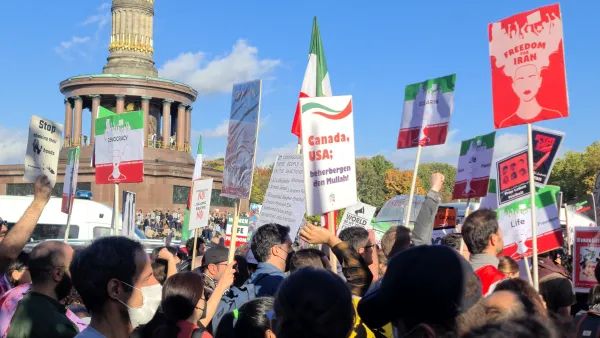
EU Voices Outrage Over Iran’s Executions; creative commons image: Copyright: C.Suthorn/cc-by-sa-4.0/commons.wikimedia.org
In my previous article, I argued for an international ban on the death penalty, regardless of the crime alleged or the circumstances of the conviction. Iran offers one of the starkest demonstrations of why such a ban is necessary. Iran's extraordinary use of capital punishment is not simply a story about crime, religion, or political repression. It is the product of something more consequential: a state in which the death penalty is deeply embedded in the legal system, readily available to prosecutors, weakly constrained by judicial safeguards, and increasingly useful to an authoritarian government seeking to intimidate and control its population.
In 2025, Amnesty International recorded at least 2,159 executions in Iran, the highest number it has recorded in the country in decades and more than twice the 2024 total of 972. These numbers should force us to look beyond individual crimes and ask a more fundamental question: Why has execution become such a powerful instrument of state policy in Iran?
The answer has two dimensions. The breadth of Iran's legal system helps explain the quantity of executions. The political use of that system explains their significance. Drug offenses and other criminal cases feed thousands of people into the execution system. Political executions, national-security cases, and the selective punishment of protesters and dissidents give that same system a broader function: deterrence, intimidation, and social control. Iran's execution crisis is therefore not the product of one cause. It is the result of several systems converging around one ultimate power, the state's authority to take a human life.
Capital punishment is built into the system
In many authoritarian systems, the state relies on imprisonment, disappearance, torture, or extrajudicial killing to silence political opponents. Iran has used all of these tools. But it possesses something more consequential: a formal judicial machinery that allows the state to impose death sentences across a broad range of alleged offenses. Iranian law provides multiple pathways to capital punishment, including crimes prosecuted under concepts such as moharebeh—often translated as "enmity against God"—and Mofsed-e-filarz, or "corruption on earth." Other offenses, including certain drug crimes, murder, and some national-security offenses, can also carry the death penalty. This gives the state a remarkably broad legal vocabulary through which very different forms of alleged wrongdoing can become capital cases. Amnesty has documented people facing death sentences on politically motivated charges including moharebeh, Mofsed-e-filarz, and baghi, or "armed rebellion against the state."
That distinction matters. An extrajudicial killing exposes the naked coercive power of the state. A formal execution can conceal that same power behind the appearance of law. The government can present the death of an opponent not as political violence, but as the lawful punishment of a criminal. A person who disappears may become a symbol of state lawlessness. A person who is tried, sentenced, and executed can instead be portrayed as someone who simply received the punishment prescribed by law.
In this sense, the legal system itself does part of the regime's political work. It transforms state violence into judicial punishment and gives repression the appearance of legality. But the legal system alone does not explain the extraordinary numbers.
In Islamic republic of Iran execution is a weapon of political intimidation.
This is also where Iran's system takes on its most distinctive authoritarian character. Since the 2022 "Woman, Life, Freedom" uprising, Iranian authorities have increasingly used the death penalty against protesters, dissidents, and people perceived as challenging the Islamic Republic. Amnesty International has described the death penalty as being weaponized to punish those who challenge, or are perceived to challenge, the establishment and to instill fear among the wider population. The logic is fundamentally different from imprisonment. A ten-year prison sentence removes one opponent from society for ten years. An execution removes that person permanently—but its intended audience is much larger. It sends a message to everyone watching: This is what happens if you cross the state.
For an authoritarian government, that message can matter more than the number of people actually executed. The execution of a relatively small number of highly visible protesters can have an intimidating effect far beyond the individuals who are killed. It turns punishment into political theater and the condemned into warnings to everyone else. The broader criminal system supplies the numbers; political executions give those numbers their message. Drug offenders, murder defendants, and others may constitute the bulk of those executed. But when protesters, dissidents, and alleged security threats are selectively subjected to the same ultimate punishment, the entire execution system acquires a political function. The message is not limited to those standing before the executioner. It is directed at everyone who is still alive.
Religion provides an additional layer of legitimacy
The Islamic Republic is not simply an authoritarian government that happens to retain the death penalty. Its legal and political order is partly rooted in its state interpretation of Islamic jurisprudence, giving capital punishment an additional source of religious and legal justification. This does not mean Islam itself requires Iran's contemporary execution system, nor should the Islamic Republic's interpretation of Islamic law be treated as representative of Muslims or Islamic societies generally. The relevant question is narrower: how has the Iranian state used its own interpretation of religious law to institutionalize and legitimize punishment? A secular authoritarian government that executes its opponents generally has to justify the killing through the language of criminal law, national security, emergency powers, or the protection of the state. The Islamic Republic has another layer of justification available to it: religious authority as interpreted and enforced by the state.
An execution can therefore be presented not simply as an exercise of political power, but as the implementation of divine law, the punishment of serious wrongdoing, the protection of society, or the defense of the Islamic Republic itself. That religious framing matters because legitimacy does not disappear simply because democratic accountability does. Even authoritarian governments need narratives explaining why their actions are supposedly lawful, necessary, and just. For the Islamic Republic, religion can provide precisely that narrative. It can turn a question of state power into a question of religious duty. That makes abolition more difficult. Challenging the death penalty can become not merely a debate about criminal justice, but a challenge to a political system in which religious and political authority are intertwined. Religion, in other words, does not by itself explain the extraordinary number of executions. It helps explain how the state legitimizes them.
The greatest danger is not only the death penalty—but the process that produces it. There is another reason Iran's use of capital punishment is so dangerous: the problem is not only what punishment the state imposes, but how it arrives at the decision to impose it.
A death sentence is produced within a judicial system that international bodies and human-rights organizations have repeatedly criticized for serious due-process failures. The UN has raised concerns about inadequate access to lawyers, unfair trials, torture and ill-treatment, coerced confessions, and the use of such confessions as evidence. It has also documented executions in cases where prisoners' families or legal counsel were not properly informed.
Amnesty has likewise documented capital cases involving allegations of torture-tainted confessions and grossly unfair trials. In 2025, for example, it reported cases in which defendants facing execution alleged torture and forced confessions during proceedings before Revolutionary Courts. These are not procedural details. When the punishment is death, the integrity of the entire judicial process becomes a matter of life and death. The fundamental problem is the irreversibility of capital punishment. A wrongful prison sentence can, at least in principle, be overturned. A person can be released, compensated, and given the opportunity to rebuild a life. An execution offers no such remedy. Once the state takes a life, no appeal can restore the person who was killed.
That makes judicial independence, legal representation, and due process more than technical safeguards. They are the final barriers between the power of the state and an irreversible act. And this is where the argument for abolition goes beyond the question of whether every person sentenced to death is innocent. Even if a defendant committed a serious crime, the state is still exercising an irreversible power. When that power exists within a system vulnerable to torture, coerced confessions, inadequate legal representation, political interference, or unfair trials, the danger becomes even greater.
When the same state controls the security forces, prosecutors, prisons, and judicial institutions, and when defendants can face compromised proceedings, the death penalty becomes an exceptionally dangerous concentration of state power. The possibility of wrongful imprisonment is a grave injustice. The possibility of wrongful execution is an irreversible one.
Minorities bear a disproportionate burden of death penalties
Iran's execution system cannot be separated from the country's ethnic and political divisions. UN officials have repeatedly expressed concern that minorities including Kurds, Ahwazi Arabs, and Baluch people are disproportionately affected by executions. Amnesty's reporting has likewise documented disproportionate effects on marginalized communities. In earlier reporting, it found that Baluch people accounted for a disproportionately large share of drug-related executions relative to their share of Iran's population. These patterns matter because many marginalized communities live in regions that have experienced decades of poverty, political marginalization, armed conflict, separatist movements, and tensions with the central government. The issue is not simply that ethnicity determines who is executed. Rather, ethnic marginalization, poverty, political conflict, and security policies can intersect with the criminal-justice system, producing disproportionate exposure to capital punishment. In such an environment, criminal justice can become intertwined with broader questions of ethnic identity, political loyalty, and state control.
Capital punishment can therefore serve several functions simultaneously: criminal punishment; political repression; deterrence; social control; and the suppression of marginalized communities.
This convergence helps explain why executions can become so deeply embedded in the machinery of the state. The gallows can become an extension of the political geography of the state. War and crisis create new opportunities for repression Iran's execution system is also highly adaptable during periods of national-security crisis. The clearest recent example came after the June 2025 Iran-Israel war. Iranian authorities intensified prosecutions involving alleged espionage and collaboration with Israel. Amnesty's 2025 assessment reported that at least 11 men were executed on such charges after the Israeli strikes, compared with two before the strikes in June. The significance is larger than the numbers themselves. During wartime, accusations of espionage or collaboration carry enormous political weight. The government can portray suspected opponents not merely as criminals or dissidents, but as enemies of the nation acting on behalf of a foreign adversary. That creates a powerful justification for extraordinary punishment.
War does not create the machinery of repression. It gives that machinery a new vocabulary. A person who might otherwise be described as a dissident can instead be portrayed as a spy, collaborator, or agent of the enemy. Political opposition can be reframed as a national-security threat. A government facing an external enemy can invoke national survival to demand harsher punishment at home. In such circumstances, the death penalty can move rapidly from being an instrument of criminal justice to an instrument of national-security repression. This is another reason Iran's execution system is so difficult to understand through a single lens.
Political repression explains the strategic use of executions against protesters and dissidents. Religious jurisprudence helps explain the regime's legitimacy narrative. Weak due process explains why the death penalty becomes particularly dangerous. Ethnic marginalization helps explain its disproportionate impact. And war and national-security crises can provide moments when the system accelerates and expands. Different justifications. Different categories of defendants. Different political circumstances. But one ultimate power: the state's authority to take a human life.
The lesson Iran offers the world
Iran's execution crisis should not be understood simply as evidence that Iran has unusually harsh criminal laws. It reveals something more fundamental about capital punishment itself. A death-penalty system can begin as a mechanism of criminal punishment and become something much larger. It can punish drug offenses. It can punish murder. It can be invoked in the name of religion. It can be justified as national security. It can be imposed after political unrest. It can disproportionately affect marginalized communities. And it can be used selectively against protesters and dissidents to send a warning to millions of others. That is what makes the Iranian case so important.
The problem is not merely that the Islamic Republic abuses the death penalty. The deeper problem is that the state possesses the power to execute at all. Iran demonstrates what can happen when that power exists inside an authoritarian political system: criminal law, religious authority, national-security policy, social control, and political repression can converge around the death sentence.
But there is an even broader lesson. If the death penalty is dangerous because it is irreversible, that danger does not disappear when the accused is charged with a more serious crime. It does not disappear when prosecutors claim national-security grounds. It does not disappear when the government invokes religion. And it certainly does not disappear because a state promises that its courts will use the power responsibly.
The state should not have the power to make an irreversible decision about a person's life when the possibility of error, abuse, coercion, political interference, or discrimination can never be completely eliminated. Iran's execution machine is therefore not merely an Iranian problem. It is a warning about what happens when governments are given the ultimate power over life and death. That is why the international community should move beyond calls for restraint, fairer procedures, or more selective use of capital punishment.
The goal should be abolition.
Not a better death penalty.
Not a more carefully administered death penalty.
No death penalty at all.