United with Springfield
Haga clic aquí para español
During the February 8, 2025 Columbus Free Press salon, we declared “We are United with Springfield.” (Link to salon video)
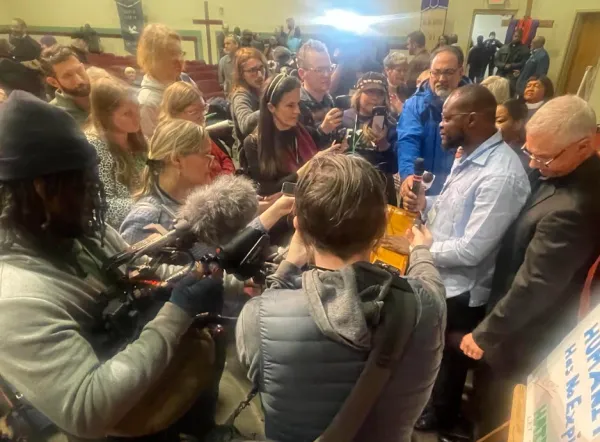
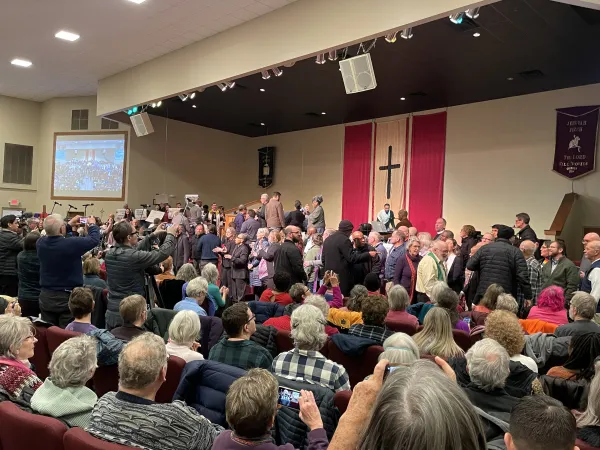
On February 2, 2026, over 1000 people of faith and conscience gathered in solidarity with the Springfield Haitian community. The US government had set February 3, 2026 as the date to end Temporary Protective Status (TPS) for nearly 400,000 Haitians.
The US formalized immigration system since the 1920’s has a primary goal of excluding people, which does not support the current immigratory patterns driven by foreign policy, economic strangulation, and capital transfers. The push and pull character of immigration is profound on families taking this journey. However, Donald J. Trump’s regime seeks to politicize the migrant, and has not worked toward correcting this anachronistic system.
On February 2, 2026, the prayer and public testimony event at St. John Missionary Baptist Church brought together clergy and lay leaders. I asked what motivated the large number of faith leaders to show? I wondered what motivated faith leaders to attend, what in their faith tradition informed this decision (ie., Matthew 25 projects, Matthew 25:31-46 NIV - The Sheep and the Goats - “When the - Bible Gateway), and what public statements on immigration had their faith traditions? I interviewed several Central Ohio clergy to get to those answers.
From the interviews, the motivation for why people attended was clear, and it cut across perceived borders that usually exist among the faithful. Reverend Nick Bates, Interim Executive Director of the Ohio Council Of Churches and Executive Director of the Hunger Network of Ohio stated it the most simply: “We needed to be here!”
Joel Miller, Senior Pastor at the Columbus Mennonite Church, was drawn by the faith based organizing. Reverend Lea Austin, Scioto Valley Presbytery - Presbyterian Church (USA) retired clergy, said that in retirement she wishes to be working for justice and love, and that one’s faith should inform a broader perspective on current affairs. Reverend Joel Esala, Columbus Covenant Presbyterian Church Senior Pastor, was compelled to join based on the faithful commitment to love our neighbor.
Many of the gathered faith traditions have a Matthew 25 ministry focused on welcoming the stranger, caring for the injured, visiting the imprisoned, facing the oppressive systems of the world, and receiving the immigrant. So I asked, how do they envision shared ministries that can better uplift and support the Haitian communities?
Reverend Joel Esala shared that he had not seen many causes that draw such a diverse ministry as that of welcoming the immigrant, which the February 2 Springfield Prayer event demonstrated. “The relationships that are built through this project are truly inspirational.” Reverend Lea Austin emphasized “bridge building” requires intentionality, and that through shared ministries communities can overcome challenges people of faith face alone.
Reverend Joel Miller stated that the time is for the “flock to act not as individual sheep.” According to Reverend Miller, now is the time to celebrate “it’s good to be together” to proclaim a common voice and purpose.
The third question was what do faith communities bring to these times? Reverend Joel Miller maintains that faith communities provide us the ability to live out a society that goes to the moral core of our Humanity. Reverend Joel Esala mentioned that faith communities provide the connectional tissue that can attend to humanity’s need to feel welcomed and needed. Reverend Bates hopes that moral clarity would be at the core of faith communities. Reverend Lea Austin spoke of the intentional work that must accompany a faith community that cares and envisions a world that welcomes the stranger.
Reverend Joel Esala ended with that it was a gift to have been in Springfield on February 2, 2026, and that the power of the people and prayer brought an extension of the TPS for all 400,000 Haitians. All power to prayer and to the people!!
More work is needed to address the out of sync immigration system, and I expect these faith leaders to be in the middle of that scrum as we head toward a world that welcomes the stranger, feeds the hungry, visits the imprisoned, and faces the oppressive systems that humanity has created.
Capitalism is getting old!
We need to find another economic system that can create the wealth needed to address the needs of the world without further stressing the planet's survival, and where Humanity can place a much higher value of sharing that wealth with all.
En Español
¡Solidaridad con Springfield!
de Mark Stansbery
15 febrero 2026
raducción: NS
photo caption: Cientos reunieron en la Iglesia Bautista Misionario de San Juan en Springfield el 2 de febrero reivindicando la extensión del Estado de Protección Temporal para Haitianos. (foto de Megan Henry, Ohio Capital Journal).
Los participantes en el foro mensual del Free Press del 8 de febrero 2026 declararon: “Estamos en solidaridad con Springfield”, ciudad huésped de una gran ola de haitianos y puesto en la mira trumpista. ver el video
Más de mil personas se congregaron para expresar su respaldo a esta comunidad la semana previa, el día 2 de febrero, ya que el gobierno federal había fijado el día 3 para suspender el Estado de Protección Temporal (TPS) para casi 400 mil haitianos.
El sistema de inmigración formal excluye personas en consonancia con su meta principal desde los 1920. Dicha política excluyente no concuerda con los patrones migratorios actuales que se ha evolucionado a impulsarse por política extranjera, asfixio económico y transferencias del capital. El carácter de jalas y estiras a que obedece la normatividad impacta fuertemente sobre las familias que embarcan en el viaje. No obstante, el régimen de Donald Trump pretende politizar al migrante sin atender las necesarias y obligatorias correcciones en ese sistema anacrónica.
La tertulia de oración y testimonio público en la Iglesia Bautista Misionario de San Juan (SJMBC) llevado a cabo el 2 de febrero reunió a los dirigentes de fe con los de la comunidad. Me pregunté que habrá motivado a tantos religiosos a presentarse. Me inquietaba qué hubo en sus respectivas tradiciones que les motivó a asistir, es decir, en qué se informaron sus decisiones —como por ejemplo san Mateo 25, 31-46—, y cuáles discursos públicos sus respectivas tradiciones exponen sobre la migración.
Entrevisté a curas de diversas fes en pos de respuestas a mis inquietudes.
Quedó más transparente que el agua que el impulso rebasaba las fronteras que suelen aparecer entre los creyentes. “¡Nuestra presencia se precisa!” fue la afirmación más sucinta, dada voz por el reverendo Nick Bates, Director Ejecutivo Interino de Consejo de Iglesias Ohioanas (OCC) y también Director Ejecutivo de la Red Ohioana contra Hambruna (HNO).
La organización comunitaria es lo que atrajo al pastor director de la Iglesia Menonita de Columbus (CMC) Joel Miller, mientras la reverenda Lea Austin, jubilada de la Iglesia Presbiteriana del Valle Scioto (SVP), recalcó que pretende dedicar el retiro a trabajar en favor de la justicia y amor que deben orientar una perspectiva más amplia sobre los acontecimientos contemporáneos. Por su parte, el reverendo Joel Esala, pastor director de la Iglesia Presbiteriana Columbuseña del Pacto (CCPC) sentía la compulsión fiel para amar el prójimo.
Varias tradiciones religiosas arraigan sus creencias consecuentes en san Mateo 25, predicando extender la bienvenida al prójimo, cuidar el herido, visitar al encarcelado, dar la cara a sistemas opresoras de todo el mundo y recibir el inmigrante. Por ello indagué cómo visualizan ministerios compartidos que mejorarían y apoyarían a las comunidades haitiana
El reverendo Esala compartió su impresión de que son pocas las causas que atraen tan amplia gama de clérigo como esta de extender la bienvenida al inmigrante, tal y como se manifestó en las plegarias ofrecidas este Día de la Candelaria en Springfield: “Las enlaces que se amarran por medio de este proyecto son una inspiración”. Recalcó la reverenda Austin que la “construcción de puentes” obliga una intencionalidad y, a través de los ministerios compartidos, las comunidades pueden superar los retos que las personas de fe enfrentan a solas
Es hora para que “el rebaño no se porte como borregos individuales”, entonó el reverendo Miller, ya que ha llegado la hora de celebrar “estar juntos” para proclamar con una voz una finalidad única
Una tercera pregunta que les planteé se torna en relación a saber en qué contribuyen las comunidades de fe en la actualidad. Respondió reverendo Miller que las comunidades de fe nos aportan la capacidad de sobrellevar una sociedad que se excava hasta el tuétano de nuestra humanidad. Reverendo Esala entonó una imagen de los tejidos conectivos para ilustrar el papel que es lo que las comunidades de fe proveen para atender la necesidad humana por sentirse acogido y necesitado. Reverendo Bates espera que la claridad moral sea lo que arraigue las comunidades de fe. Y la obra intencionada que debe acompañarlas en el cuidado y visión de un mundo que da la bienvenida al prójimo fue el exhorto de reverenda Austi
Estar presente el día 2 de febrero fue un regalo para el reverendo Esala, y el poder del pueblo combinado con el poder de la oración trajo la extensión del programa TPS para todos los 400,000 haitianos. ¡Todo el poder a la oración y el pueblo!
Hace falta un esfuerzo mayor para dirigirnos a la corrección del sistema migratorio, y tengo la esperanza que estos líderes religiosos se van a ver en el rincón más apretado de la riña que se dé en el camino a un mundo que acepta el prójimo, alimenta el hambriento, visita el encerrado y da la cara a estos sistemas opresivos hechos por la humanidad
¡El capitalismo se caduca!
Debemos encontrar un sistema económico capaz de crear la riqueza que se requiere para satisfacer las necesidades sin arrollar el mundo, donde la humanidad pueda asignar el valor mayor en compartir la riqueza entre todos