
Arts
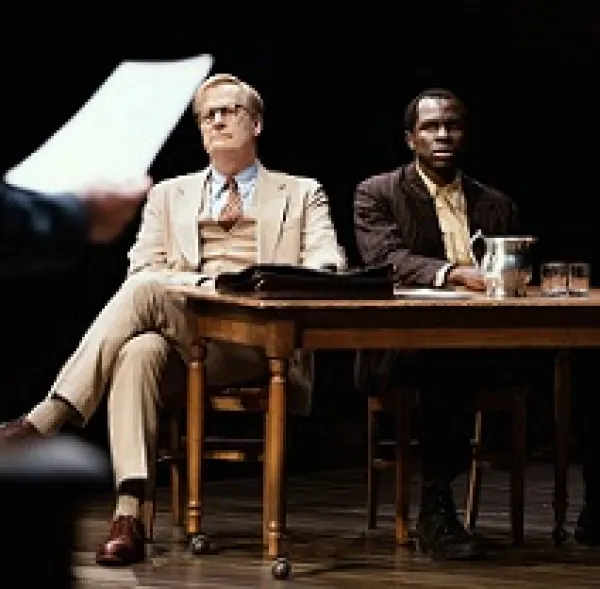
Is Atticus Finch a “white savior”? That question probably wasn’t on the minds of those who took part in a PBS poll that named To Kill a Mockingbird America’s favorite novel. But it certainly was on the mind of Emmy-winning writer Aaron Sorkin when he adapted Harper Lee’s 1960 work for the stage.
After seeing the results of his efforts on a recent trip to Broadway, I had mixed feelings. I felt Sorkin had successfully incorporated modern sensibilities into the beloved tale, but in the process, he misplaced some of the charm and profundity of Lee’s masterpiece.
Set in Depression-era Alabama, the classic story centers on a small-town lawyer who agrees to defend a black man falsely accused of raping a white woman. Lee’s novel and the subsequent Oscar-winning film depict Atticus as a principled man who takes on the case despite knowing it will earn him the animosity of many white neighbors. Conversely, it earns him the respect of the town’s black residents.

A new freely downloadable book
I would like to announce the publication of a book, which reviews the lives and thoughts of some of the women and men who have addressed the crucial problems of ecology and sustainability that we are currently facing. I have tried to let them speak to us in their own words.The book may be freely downloaded and circulated from the following link:
http://eacpe.org/app/wp-content/uploads/2019/09/Lives-in-Ecology-by-John-Scales-Avery.pdf
We face an ecological crisis

While the exact origins of rap and hip-hop music are debatable, what was once an underground genre within New York City hit the mainstream in 1979 with the release of “Rapper’s Delight” by The Sugarhill Gang. In the following four decades, rap music grew from relative obscurity into a cultural juggernaut, influencing everything from films to fashion.
Since 2017, when it pushed past rock ‘n’ roll to become the most popular genre in America, rap music has helped lead the charge in the realm of digital streaming. In 2018, rap and hip-hop made up 31% of the total streaming market, compared to rock’s 23%. And while strong beats and catchy lyrics are a cornerstone of the genre, so are political messages.

Hot times, music, and hopefully sunny weather are on their way back to Olde Towne East as the 43rd Annual Hot Times Festival returns, with organizers hopeful for perfect weather after last year’s rain-shortened Festival.
The 43rd Annual Hot Times Festival will take place September 6 through 8 on the front lawn of the Columbus Health Department in Olde Towne East. Hot Times is truly a community festival that brings the community together celebrating art, music and honoring local community artists.
Friday evening of Hot Times was the only perfect day of the Festival last year, with picture-perfect weather to kick off the weekend. However, it was non-stop rain on the second day of the Festival in 2018 that cut the Festival short as the ground got saturated. The dance floor of the Main Street Stage fell victim to the muddy and saturated ground as festival goers braved the rain to enjoy the festival. While the acts on the Main Street Stage continued on as usual on Saturday as scheduled, capped off with a set by perennial Hot Times Headliner C.J. Chenier, the rain proved too much for the Festival to continue on Sunday.
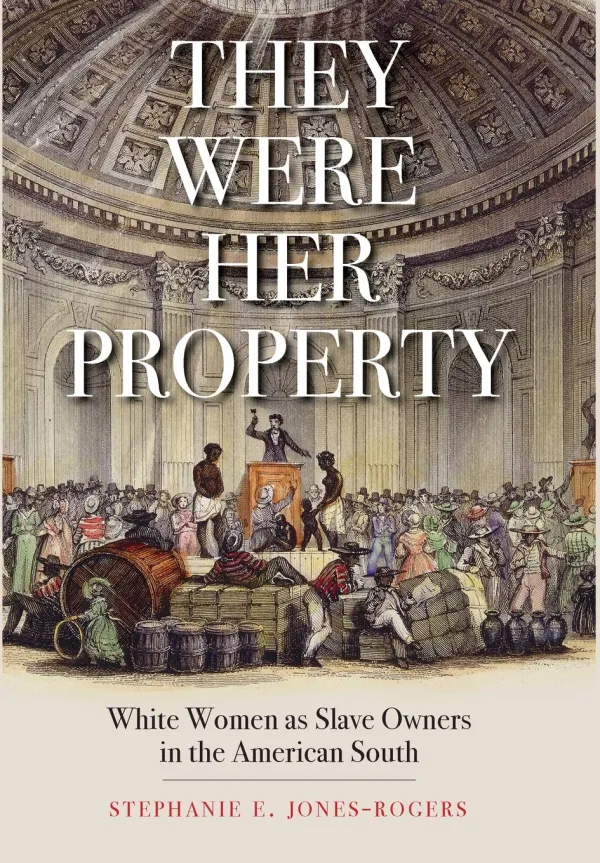
As a professor of African American history, I have very little interest in slavery. I am painfully aware that the insidious institution constructed and maintained the American economy, and that its horrific impact is still felt at this very second. I just have no interest in the subject in terms of research. So, I was surprised to find They Were Her Property: White Women as Slave Owners in the American South such an absorbing read.
For the most part, the story of white women and their role as plantation mistresses has focused on the top 3 percent of slave owners who owned large plantations with twenty or more slaves. Southern plantation mistresses often kept diaries–the Civil War diary of Mary Boykin Chestnut comes to mind–in which they described their lives. But stories such as Chestnut’s are the views of slavery from the elites. There is very little literature on smaller plantations and the acquisition and management of slaves by white women.
I had the pleasure of meeting Arthur Ashe in the early 1980s. It was in a little tennis shop in a strip mall somewhere on Bethel Road. He was representing his brand, Le Coq Sportif, and the store was full of white children who weren’t even born when Ashe was on the professional tennis circuit. In fact, he and I were the only two black people in the store. I had just come from a tennis lesson, and we chatted about that briefly. He signed my copies of two books he had written, stopping to look at a photo of himself after heart surgery, and a poster for my tennis instructor, Dick Fryman. He couldn’t have been more gracious.
The Black Keys and Raconteurs' new albums were my subject this month – until my sweet little lunchbox-sized boombox someone gave me died last week with nary a bang or a whimper. Honestly, the sound wasn't bad when the little bugger worked. Oh, well, next month.
My decade-old $39.99 Target DVD-player however functions though sometimes I need a butter knife to pry open the disc changer. Yay, technology!
I didn't realize until just the other day I've been going through a cinematic revolution-themed phase. Let us recount the ways:
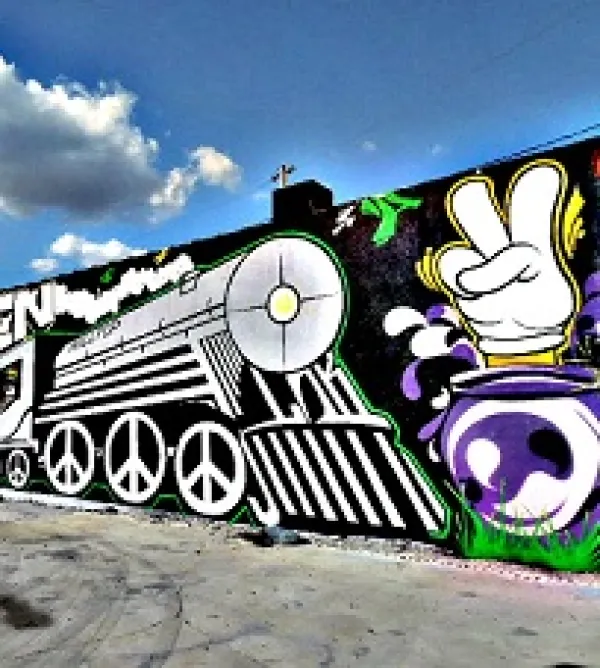
Singer and songwriter Cat Stevens wrote in his 1972 hit song, Peace Train, “Peace Train soundin’ louder, glide on the Peace Train.” Those lyrics may have summed up the growing artist community in the Hilltop, especially right as the Summer Jam West Festival continues to grow steam for a neighborhood that has not been well known for its art in its long history prior to the festival’s existence.
The theme for this year’s Summer Jam West Festival, held last month at Westgate Park was “Peace Train.” After a community-wide contest for mural ideas, local artist Justin Withrow’s concept for “Peace Train” was overwhelmingly selected after the community voted.
At the Peace Train Mural Dedication Ceremony held on July 25, Withrow said, “We’re excited to have the opportunity to win something, competition-style.” Withrow also painted Summer Jam West’s Official Art Car, The Grape Escape, which has been seen at the Westgate Farmer’s Market, Comfest and Summer Jam West, and will be seen at the end of the summer at the Hot Times Festival in Olde Towne East.
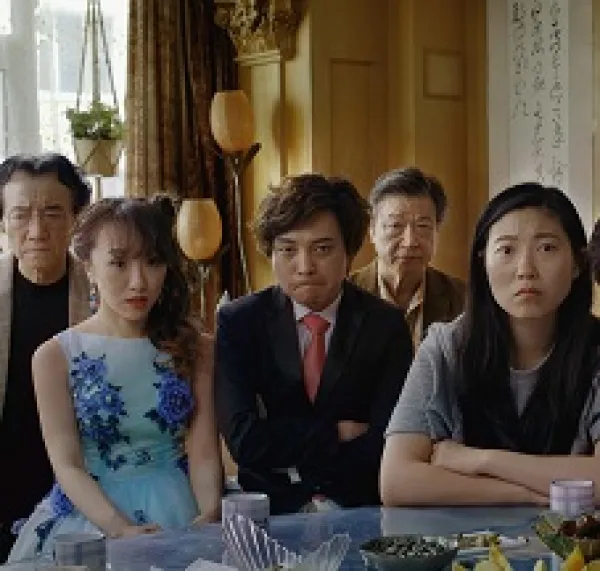
As a Kansas farm girl named Dorothy said long ago, there’s no place like home. Whether that’s a good thing or a bad thing is one of the questions addressed in The Farewell.
Like last year’s Crazy Rich Asians, the new film shows what happens when Westernized Asians return to their cultural homeland. Coincidentally, the flick again features Awkwafina, though this time the rapper-turned-actor is the star rather than the comic relief.
When we first meet her character, a Chinese-born American named Billi, she’s talking over the phone with her beloved grandmother, Nai Nai (Shuzhen Zhao). We quickly realize that neither woman is being quite truthful with the other. Billi insists she’s doing fine, though she actually owes back rent on her New York apartment, and Nai Nai hides the fact that she’s in a Chinese hospital being tested for persistent health problems.

Columbus-based bestselling author Astone Jackson’s second volume of poetry, “Hoping For The Best, Just Hoping Nothing Happens,” was released June 14 and is a follow-up to his first collection of poetry, “The Secrets We Keep That Keep Us From Sleeping,” also an Amazon bestseller, published in 2017. The book is available on Amazon as well as local bookstores such as The Book Loft in the German Village neighborhood of Columbus.
The second volume debuted at No. 1 for new releases in Amazon LGBTQ+ poetry over Pride Weekend in Columbus. In his second book, Jackson, who identifies as bisexual, opens up about his sexuality, writing about same-sex as well as opposite-sex relationships. In this way, Jackson is “coming out” to readers and some people in his life with this volume.
Jackson, 28, is originally from Findlay, Ohio, and lived in West Chester before moving to the Columbus area in 2018. He explained how his passion for writing developed as he coped with the fallout from past relationships and explored new ones.
Poetry is all about honesty and human connection, Jackson said, and in his writing he never pulls a punch.