
Arts
The Columbus Black Theatre Festival (CBTF) celebrates its seventh year this July. As an African American playwright myself, my goal for the CBTF is to showcase original plays by other Black playwrights – especially new playwrights – to encourage them and others to tell our stories so that our generation can leave our future generations a blueprint of our lives as we lived them in our time.
When I first started the CBTF there were those who wanted the “Black” removed from the name, said it would be offensive to some races of people. My response was that only Black people were concerned about what others thought when the focus is put on their race. Columbus, Ohio has a wide variety of festivals throughout the summer. We have an Asian Festival, a German Festival, an Italian Festival and so many other festivals. Why can’t we have a Black Festival?
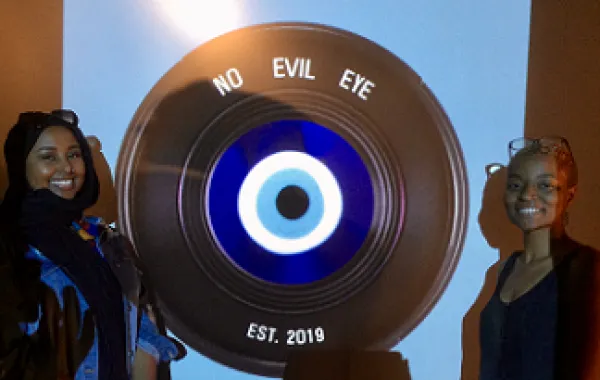
Cinephiles and movie lovers are treated as passive and apolitical consumers in the profit driven commercial film industry. The new leftist, radical, and underground micro-cinema, NO EVIL EYE, offers audiences and artists in Columbus a politically charged space to nurture their love for the art of films. The personal is political. Art is personal and political.
Ingrid Raphaël and Rooney Elmi envisioned and materialized NO EVIL EYE. Ingrid is a video creator, archivist, educator and co-creator of GRID zine, a physical and digital zine highlighting the stories and experiences of black, brown, indigenous, people of color, immigrants and refugees living in the US. Rooney Elmi is a writer, programmer, and editor-in-chief of SVLLY(wood), an annual print and digital movie magazine geared toward curating a radical cinephilia. Their manifesto highlights their belief in bridging their leftist politics of anti-colonialism, internationalism, and solidarity with art.

It was back in 1954 that Japan gave us Godzilla, the story of an ancient monster reawakened by tests of the hydrogen bomb. The original movie (though toned down for its U.S. release) was a grimly compelling morality tale. Like Frankenstein, it warned of the horrors that can be unleashed by scientists bent on advancement at all costs.
Over the years, the classic has spawned numerous sequels and reboots. Many of the earliest were campy affairs in which an actor in a Godzilla costume trampled miniature facsimiles of Tokyo while fighting new monsters such as Mothra and Rodan. More impressive was the 2014 U.S. remake, which used the latest cinematic technology to recapture the awe and wonder—if not the moral authority—of the original.
Now we have Godzilla: King of the Monsters, which could be the Godzilla movie to end all Godzilla movies. Not because it’s so great, unfortunately, but because it’s so boring.
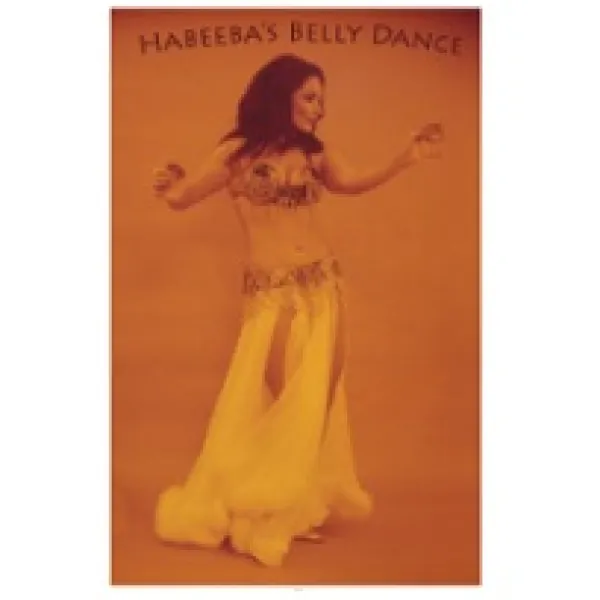
THE ORIGINAL AND LONGEST RUNNING BELLYDANCE SCHOOL IN THE COUNTRY
Neither Habeeba nor her studio will slow down anytime soon, she said. "I am now looking forward to teaching the daughters and granddaughters of the hundreds of women I taught over the years.”
When she first began to dance professionally, Habeeba quickly gained world renown. Since then, she’s performed all over the U.S. from Puerto Rico to Hawaii, and even appeared on classic national television shows such as The Tonight Show, The Ed Sullivan Show and The Nick Clooney Show. Recently, Habeeba was featured in Anietra Hamper’s book “Secret Columbus, A Guide to the Weird, Wonderful, and Obscure."

(Franklinton): OBLSK is collaborating with Sierra Club’s Ready for 100 Columbus campaign, 400 West Rich, and Chromedge Studios to project "Loops and Life," an animation by motion designer Sabrina Truong.
The motion art piece will be projected onto the brick wall exterior of 400 West Rich Street during the Franklinton Friday event on Friday, May 10, from 8:30 to 10:30 p.m.
In addition, beginning at 7 p.m., the Ready for 100 Columbus team will be leading creation of a community art mural in which participants can add their handprints onto a large canvas to show their support for asking the city of Columbus to commit to 100% clean energy.
WHAT: Projection art event and community art mural
WHEN: Friday, May 10, 2019
Community art mural begins at 7 p.m.
Projection art event begins at 8:30 p.m.
WHERE: 400 W. Rich St., Columbus, Ohio, 43215
WHY: To celebrate creative, interactive art while showing support for transitioning to 100% renewable energy in Columbus

Anyone looking for insight into Ilhan Omar, the prominent freshman congresswoman from Minnesota, is apt to be both pleased and disappointed by Time for Ilhan.
Norah Shapiro’s documentary does a good job of explaining how a Muslim immigrant from Somalia came to play such a big role on the national stage. On the other hand, it offers little help in understanding the controversies that have arisen since Omar arrived in Washington.
One thing is certain: Omar is not the kind of woman who’s deterred by long odds. That becomes apparent minutes into the film.
Walking into her young daughter’s bedroom, she’s greeted with the question “Are you president now?” Though that particular job is out of reach for Omar, as it is for any immigrant, the girl obviously thinks there is little her ambitious mom can’t achieve. And Omar seems to have passed this “can do” attitude on to her daughter, whose wall displays a list of qualifications needed to become an astronaut.
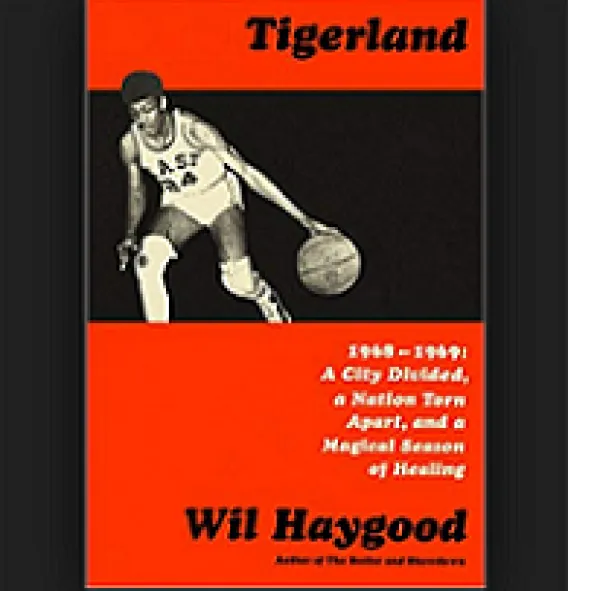
Nineteen-sixty-eight was the like the runaway carousel in the Alfred Hitchcock movie Strangers on a Train. The Vietnam War, the assassinations of the Reverend Dr. Martin Luther King, Jr. and United States Senator (D-MA) Robert F. Kennedy within two months of each other, the chaos at the Democratic convention in Chicago, urban rebellions and their attendant horrors in black enclaves across the United States, the black gloved fists at the 1968 Summer Olympics, the election of former Vice President Richard Nixon to the presidency–these things and more made it an annus horribillis. Yet at the same time, sports magic was happening in Columbus, Ohio.
When the TV show Survivor premiered in the spring of 2000, I was fascinated. Every time those plucky castaways gathered to vote another contestant off the island, my stomach was tied in knots. Would they finally get rid of that evil Richard Hatch, or would another teammate again fall victim to his conniving, backstabbing ways?
Somehow, it always proved to be the latter. Hatch went on to become the show’s first “sole survivor,” ending up with a cool million for his efforts.
After that first season, I kept watching Survivor for several years, but the initial thrill was gone. And it’s definitely vanished now that we’re living in the real-life version of the show, otherwise known as the Trump presidency.

Sunday, March 24, 5-8pm
Urban Arts Space, Lazarus building, 50 W. Town St.
#WomensHistoryMonth is HERE, and Black Girl Miracle is celebrating by hosting a pop-up gallery experience! Over the last six months, we've collaborated with some incredible women and artists to curate an intimate and powerful evening of storytelling through art, poetry, and live music.
BGM's interdisciplinary arts approach reflects the multifaceted-nature of the human experience with pieces and performances created to invite you to grapple with your own sense of self - wherever you are on your journey.
Join us on Sunday, March 24th from 5-8pm at the Urban Arts Space for an evening of great art and good company that feels like family. Bring an open heart, and a friend (or two).
The legacy of President Lyndon B. Johnson has been and forever shall be overshadowed by the war in Vietnam. But LBJ’s administration was about more than what he referred to as “that bitch of a war.” In the space of a little more than two years, Johnson’s administration developed the most ambitious and far reaching social policies since Franklin D. Roosevelt’s New Deal. The Great Society—the phrase was thought up by his speech writer, the late Richard Goodwin, who had worked for JFK—enlarged and strengthened the miniscule American social safety net and provided, among other things, medical care for the old and the poor; food support; money for public schools; a domestic Peace Corps (VISTA); and community action programs. He also moved JFK’s stalled civil rights legislation through Congress, signing the Civil Rights Act in the summer of 1964; after a year and the four murders of voting rights activists, he signed the Voting Rights Act. He knew full well the political costs of both measures, but he supported them anyway. Johnson accomplished this from scratch and purposefully with a staff that was every bit as good as the vaunted Best and Brightest who worked for John F.