
Arts
My students often say to me that they aren’t clear what they should be highlighting when they are reading their texts or primary source documents. I had a similar thought when I was reading A More Beautiful and Terrible History; I wanted to underline just about everything. What a terrific book!
As a professor of African American history, I know my students are woefully ignorant of the story of race in America. They usually know about Rosa Parks, Martin Luther King’s 1963 speech at the March on Washington, Malcolm X’s “by-any-means-necessary approach to ridding America of racism. But even with those subjects, they often get details wrong and miss the nuances. And they are absolutely gobsmacked to learn that white people fought and died alongside blacks for freedom.
When President John F. Kennedy was assassinated on November 22, 1963, his brother, Robert Kennedy, the attorney general, lost more than most. For much of his adult life he had sublimated himself to his brother’s wishes. They talked several times a day in a kind of staccato shorthand that only each understood. Robert Kennedy had managed his brother’s U. S. Senate campaign in 1952 and his presidential campaign in 1960. In terms of a professional life, Robert’s wants and wishes were those of the President. RFK’s power was the president’s power. Personal and professional grief collided, and almost overwhelmed him. But concerned for his brother’s legacy, and contemptuous of his successor, Vice President Lyndon B. Johnson, he entered the 1964 race for the United States Senate for the state of New York.
When beloved Acorn Books on W. 5th Ave. began their three-month long-goodbye going-out-of-business sale a year ago, books were half-price. Nice.
Sad, but nice. I scored a few. Mostly World War II histories.
Then, after a few more price drops, they hit a dollar apiece. Time to plunder – without the guilt. I bought nearly 200, including a fat handful on our tortured history of race. Here's my recommended list you should read at any price:

Someone once observed that when a film borrows a few elements from earlier works, it’s considered unoriginal, but one that borrows every element is considered “well-researched.” In that sense, What Men Want is very well-researched indeed.
Though star Taraji P. Henson is a fresh and funny talent who easily holds our attention as sports agent Ali Davis, the film around her can’t escape the narrow path laid down by previous romcoms. In particular, it seems to borrow heavily from Amy Schumer’s 2015 starring vehicle, Trainwreck.
Is it just a coincidence that the heroines of both films have fathers who taught them to be tough and independent to the extent that they avoid committed relationships? That both relax their non-commitment rules after meeting nice guys? That both eventually screw up those relationships, causing them to re-evaluate themselves? Or, finally, that both stories revolve around basketball and feature appearances by real-life players?
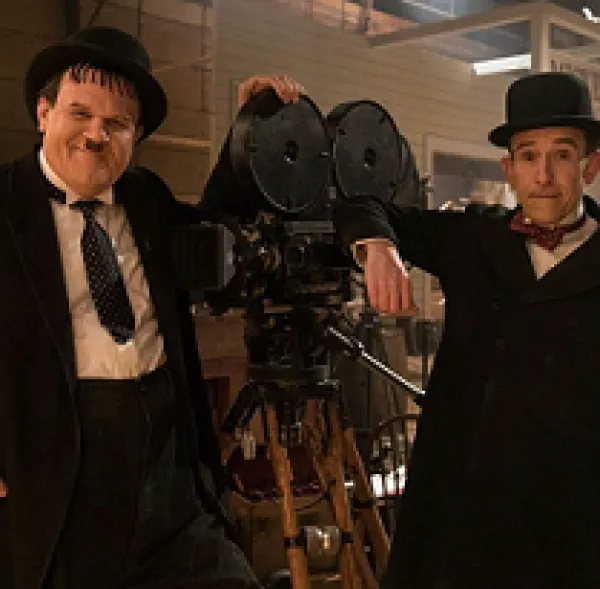
Stan & Ollie is an entertaining story for all viewers, but it’s a special treat for anyone who’s seen old Laurel and Hardy flicks. Besides being physically transformed to look like these iconic comedians, stars John C. Reilly and Steve Coogan do a great job of incorporating the pair’s mannerism into their portrayals.
Reilly’s Oliver Hardy is especially spot-on, right down to his eye-rolling exasperation at his friend’s antics. Coogan’s Stan Laurel is slightly less recognizable, but that’s partly because he’s revealed to be the duo’s leader, the hard-working guy who creates their routines and arranges their business deals. It seems the real-life Laurel had little in common with the simpleton he played in films and onstage.
Screenwriter Jeff Pope bases the story on an actual tour Laurel and Hardy undertook in the UK in 1953, a few years after their cinematic career had faded to black.
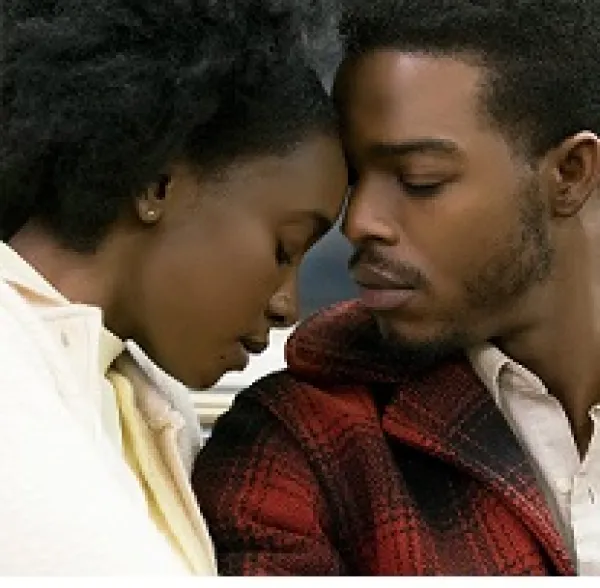
With Moonlight, his 2016 breakthrough film, writer-director Barry Jenkins defied our expectations. If you knew the Oscar winner was set in a poor Miami neighborhood and that two of its characters were drug dealers, you still weren’t prepared for its mixture of tenderness, beauty and longing.
His follow-up film, If Beale Street Could Talk, is just as beautiful but not quite so unexpected. Based on James Baldwin’s 1974 novel and set in Harlem, it faithfully captures the author’s voice as it shares a bluesy, poetic account of young love blossoming in the midst of racial injustice.
Tish Rivers (KiKi Layne) is a 19-year-old who suddenly finds herself attracted to her lifelong friend, 22-year-old Fonny Hunt (Stephan James). Tish becomes pregnant and they get engaged, but their plans are dashed when Fonny is arrested for a crime he didn’t commit. It’s clear he’s been set up by a racist cop, but they have no way to prove it, especially since the alleged victim has disappeared.
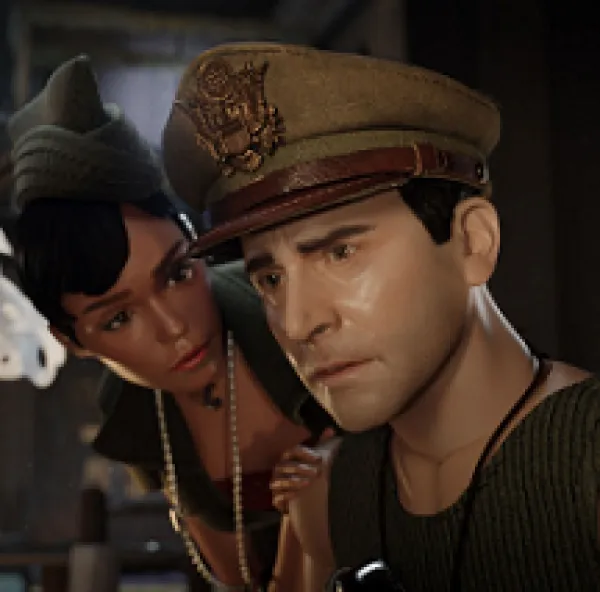
This year’s usual bumper crop of holiday movies includes a political biopic, a Disney sequel and a bizarre tale of the aftermath of a hate crime. All of them open on or before Christmas Day. Let’s start with the best.
Welcome to Marwen
In the spring of 2000, artist Mark Hogancamp was savagely beaten by a group of men who disapproved of his cross-dressing ways. He survived—barely—but his memory didn’t. Since then, he has attempted to deal with his loss and trauma by creating a fantasy world set in the fictitious town of Marwen, Belgium.
Robert Zemeckis has turned this real-life tragedy into Welcome to Marwen, a film that seamlessly blends fantasy and reality with the technical finesse we’ve come to expect from the director of Back to the Future and Forrest Gump.
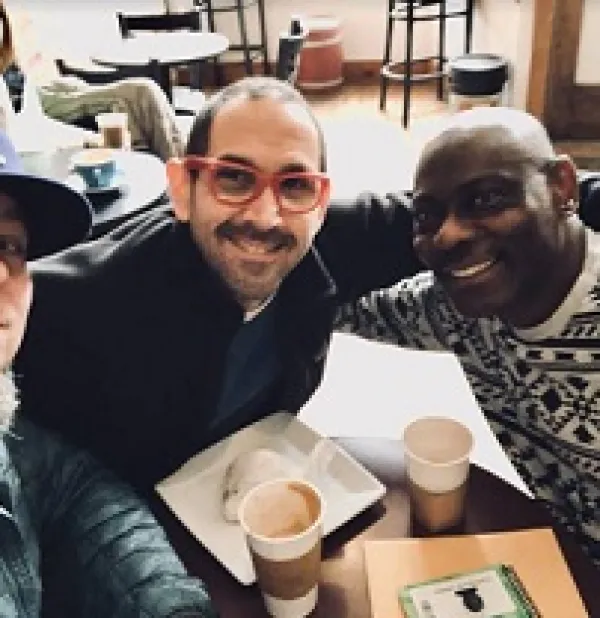
Who knew the war-torn Congo and Hollywood would meet in Ohio and make for a good movie subject?
Keida Mascaro – that's who.
"I gotta make this movie – here, 100% in Columbus, with Columbus money and as much Columbus talent as possible," said Mascaro of New Americans, his and writer Jeffrey Newman's drama about a former Congolese boy-soldier-turned-refugee-turned-immigrant landing here wearing his decades-old refugee camp Surf Ohio t-shirt and a desire to find a certain Ohio amusement park he became aware of in the refugee camp.
"He comes to Columbus because of that shirt and an old '80s cassette Columbus radio mix-tape that has an Ohio amusement park ad," Mascaro explained at the Luck Brothers coffee shop after his post-Thanksgiving workout. "It's his dream, escaping the nightmare horrors of civil war and the get-nowhere camp and finding a paradise of amusement parks and maybe some surfing. Of course reality butts in and his extended family is there for him to a point. His PTSD and naivete complicate matters something fierce."
Our final Fire Forged Poetry event of the year is November 30, 6:30-9pm and has an extra special feature. Hanif Abdurraqib will be our feature and he has chosen to donate to Mozaic, a wellness program and community space for transgender, gender non-conforming, and non-binary people of color ages 13-29.
We will have a short open mic, followed by our feature.
Food Truck TBA!!!
We are looking forward to the feature and the opportunity to donate to an incredibly worthy group.
Fortin Ironworks, 944 West 5th Avenue
Check out more about Mozaic at http://www.mozaicohio.org
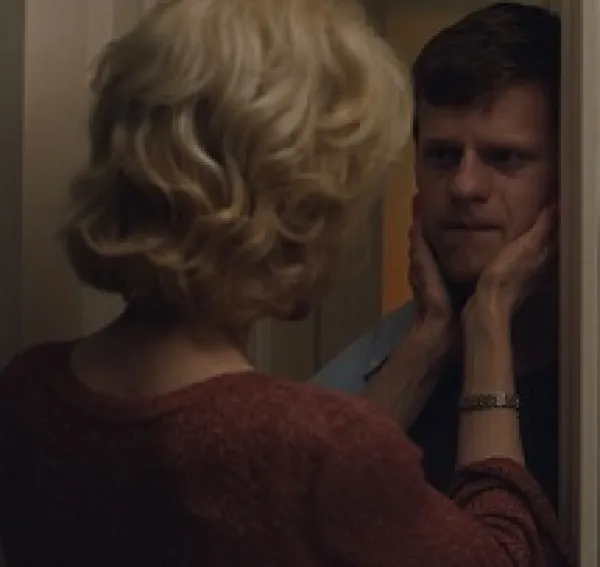
Most of us know gay conversion therapy is a hoax that preys on the fears of gay people and their families, especially those whose religion rejects non-traditional sexual orientations. What most of us don’t know—unless we’ve been unlucky enough to go through it—is just how this therapy attempts to bring about its unlikely transformation.
One person who does know is Gerrard Conley, whose parents pushed him into conversion therapy and who subsequently wrote Boy Erased, a memoir about his experience. The book has been brought to the big screen in a tale that is both harrowing and illuminating.
Directed by Joel Edgerton, who also wrote the screenplay and portrays a key supporting character, the flick begins by spelling out the dilemma faced by its teenage protagonist.