
Arts
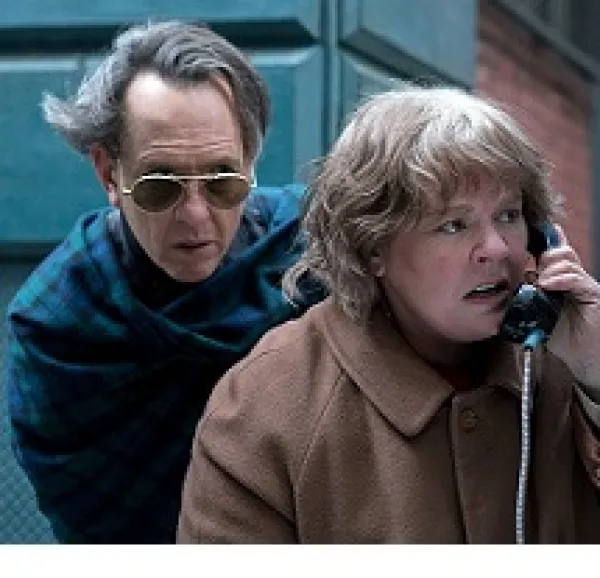
Lee Israel’s abrasive and self-destructive personality is established in the first scene of Can You Ever Forgive Me? While working a late-night job, Lee (Melissa McCarthy) hits the wrong person with an F-bomb and is immediately fired.
This launches a downward spiral that threatens to expel Lee from the New York apartment she shares with her ailing cat. The spiral ends only when it’s replaced by a moral and legal spin out of control.
The fateful catalyst is a letter from a famous author that falls into Lee’s hands. Attempting to sell it to a dealer in literary ephemera, she’s told it would be worth more if only the subject matter weren’t so bland. An author herself—though one who has trouble even giving her latest books away—Lee seizes on the idea of manufacturing spicy correspondence supposedly written by luminaries such as Dorothy Parker and Noel Coward.
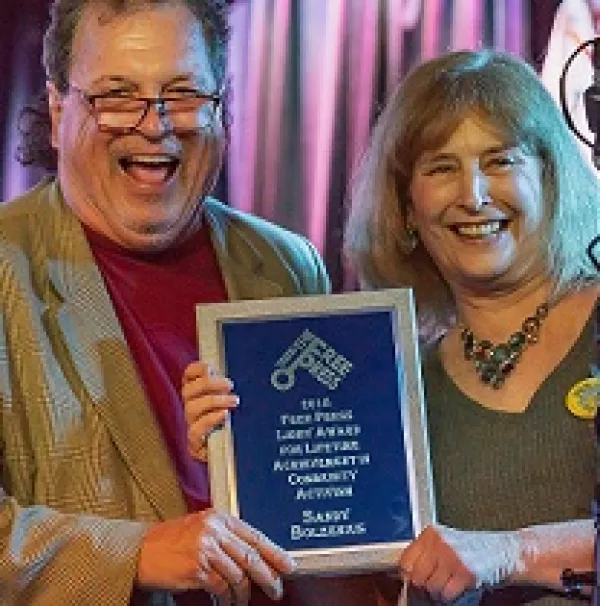
Monday, October 8 was the 2018 Free Press Annual Awards Ceremony at Woodlands Tavern. It was supposed to be “Columbus Day” – but we at the Free Press were happy to hear that the city of Columbus DID NOT commemorate Columbus Day this year. City offices and services remained open. Though they did not admit the decision had anything to do with public outcry or changing the holiday to Indigenous People’s Day – it may still be a step in the right direction to finally stop celebrating the genocidal maniac who didn’t really discover our city or America for that matter.
Instead, it was an occasion to honor local community activists, artists and volunteers. Free Press Editor Bob Fitrakis presented awards to the year’s honorees. The “Free Press Volunteer Award” went to Steve Caruso, who has given so much time, effort and expertise to the Free Press for many years. He provides computer technical support, handles social media, ensures our websites and domain names are up to date, fixes air conditioning/lights/TV/internet connections, helps with salons, plays music, and is an all-round great person to have around.
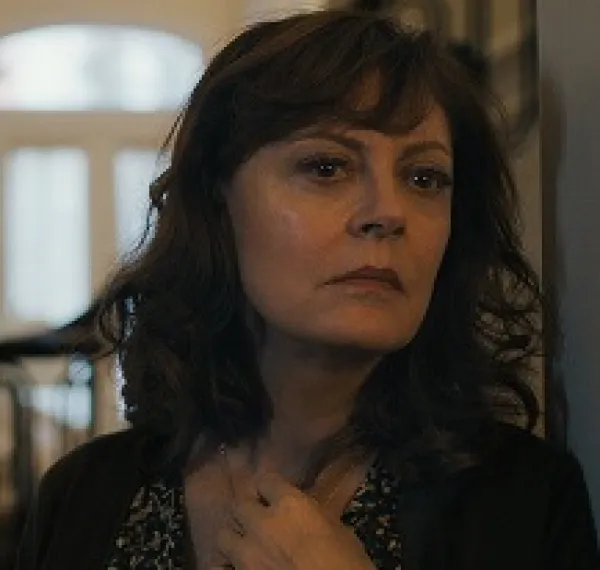
Viper Club is too earnest and low-key to qualify as exciting cinema. On the other hand, if you believe in the First Amendment and are concerned about President Donald Trump’s constant and self-serving attacks on the press, it may prove to be a cathartic experience.
Susan Sarandon stars as Helen Sterling, an emergency-room nurse whose son, Andy (Julian Morris), is in deep trouble. While covering Syria’s civil war as a free-lance journalist, he has been captured and is being held for ransom by the terrorist group known as Islamic State.
As the film opens, Helen has already spent months discussing Andy’s dire situation with an FBI agent named Walsh (Patrick Breen), but he’s ordered her not to tell anyone else. Meanwhile, little progress seems to have been made on securing his release.
When Helen asks for updates or makes suggestions, Walsh responds with variations on the theme “We know what’s best.” He also warns her not to even think of giving in to the terrorists’ demands for ransom money, as that would be against the law and would land her and anyone else who’s involved in prison.

Great songs, fine singing and dancing, nifty special effects, beautiful scenery: What else could you ask from a Broadway musical?
Well, other than a story you actually care about. Aladdin falls short in that respect, especially compared to other Disney musicals like The Lion King or Beauty and the Beast. But for most folks who caught the touring show Thursday at the Ohio Theatre, the production’s other attributes were more than enough.
Based on the 1992 animated film and boasting catchy Alan Menken tunes such as “Friend Like Me” and “Whole New World,” Aladdin arrived on Broadway in 2014. There it was nominated for five Tony Awards but won only for James Monroe Iglehart’s performance in the showiest role, the Genie.
In the touring production, much of the attention also is grabbed by the Genie portrayer, Michael James Scott, who leaves no stone unturned in his quest for laughter and applause. Equally committed, if less showy, performances are turned in by other cast members.
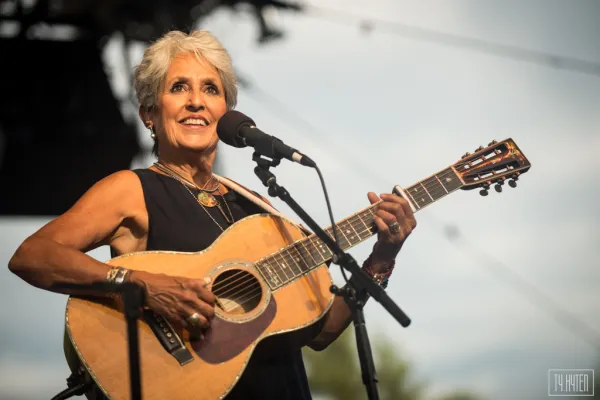
Unforgettable. That’s the best word to describe Joan Baez’s recent show in Cleveland. The setlist consisted of socially conscious songs spanning nearly 60 years and topics from the Civil Rights movement to women’s rights and labor activism. Her voice was as clear and beautiful as it was at Woodstock and she surrounded herself with gifted musicians and singers. As sonically pleasing as the concert was, it was so much more.
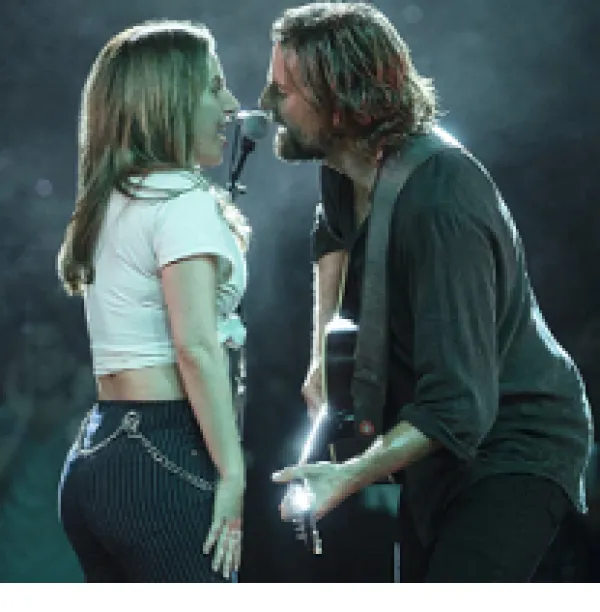
A Star Is Born has been made and remade so often, it must hit a chord with the American psyche. Either that, or it’s such a perfect star vehicle that Hollywood just can’t let it gather dust for long.
Whether it’s set in the movie industry (like the 1937 and 1954 versions) or the music industry (like the 1976 and current 2018 iterations), the tale centers on a couple who fall in love while her career is rising and his is drowning in a pool of alcohol. The result is a potent mix of drama, romance, histrionics and (in most versions) music, giving both of its stars a chance to shine.
Certainly Bradley Cooper and Lady Gaga shine brightly in the current remake, which Cooper also co-wrote, produced and directed. The beginning is a particular joy.
The first scene throws us into the middle of a country-rock concert in which singer-songwriter Jackson Maine (Cooper) holds forth to the adoration of his fans. Afterward, in desperate need of a drink, he instructs his driver to drop him off at what turns out to be a drag bar. It’s there he first hears and marvels at the vocal talents of Ally (Gaga), the only woman in the night’s lineup.
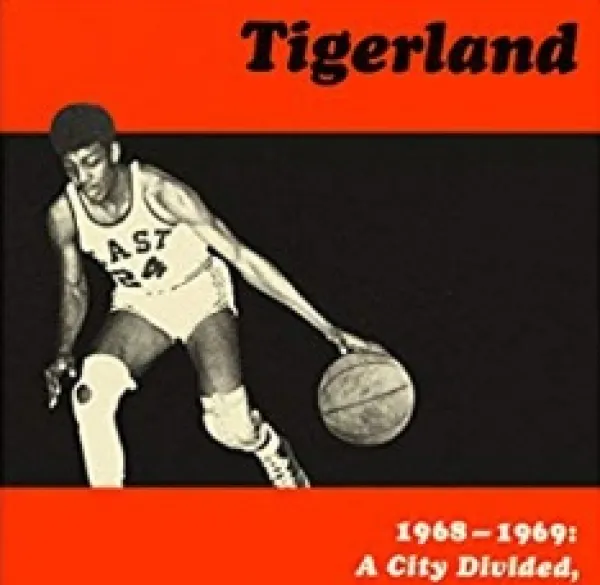
The year was 1968. The Reverend Dr. Martin Luther King Jr. was assassinated. Senator Robert F. Kennedy was assassinated. The nation was in turmoil. There were riots in cities across America. That following school year, the Columbus East High School Basketball and Baseball Teams both won State Championships in Ohio, an unheard of feat at that time.
The events of that championship season, both on and off the baseball diamond and basketball courts, is the basis of the latest book, Tigerland 1968-1969: A City Divided, A Nation Torn Apart, and a Magical Season of Healing, by Wil Haygood.
Haygood made several appearances around Columbus to promote the book upon its September 18 release, including the place that was the focal point of the book, Columbus East High School.
On September 20, Haygood spoke to an audience at Columbus East High School, where several surviving members of the 1969 State Championship Baseball and Basketball Teams were in attendance.
“It was (East High Principal) Jack Gibbs that kept East High School together during the days after Dr. King was shot,” Haygood said to a full audience at the East High School auditorium.
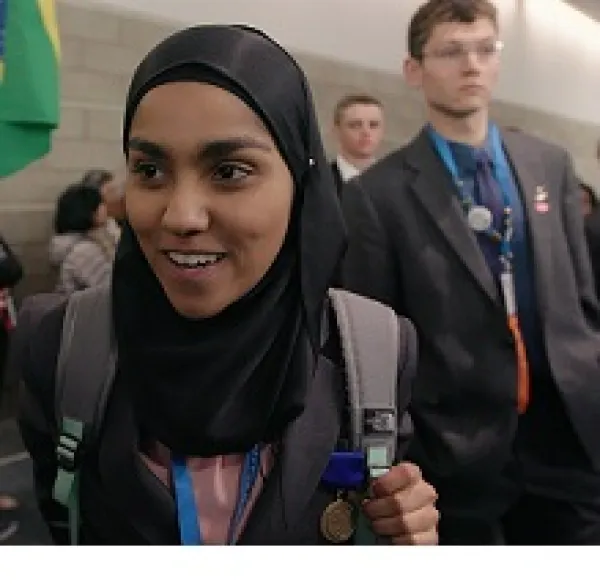
Politics rears its head only toward the end of the National Geographic documentary Science Fair. That’s when various people complain about the current status of science in the U.S., whose officials routinely dismiss research on issues such as climate change and environmental health.
Otherwise, the film is an uplifting celebration of high school students who vie for the chance to win honors at Los Angeles’ Intel International Science and Engineering Fair (ISEF), a huge event that annually attracts 1,700 of the best and brainiest from across the globe.
Sure, the students are competing for a shot at fame and glory—and to impress the colleges and universities they hope to enter. But in the process, they put their intellectual skills to work on complex problems whose solutions could benefit us all.
The implicit message: If given half a chance, nerds could save the world.

9/8/18 - 10/27/18
Recurring weekly on Tuesday, Wednesday, Thursday, Friday, Saturday
Angela Meleca Gallery
144 E. State St., Columbus, OH 43215
(614) 340-6997
Curated by Jason Simon
With Leni D. Anderson, Mary Jo Bole, Moyra Davey, Richard Fletcher, Chester Himes, Bill Horrigan, Masumi Hyashi, William E. Jones, Logan Rollins & the 511 Jazz Ensemble, Jason Simon
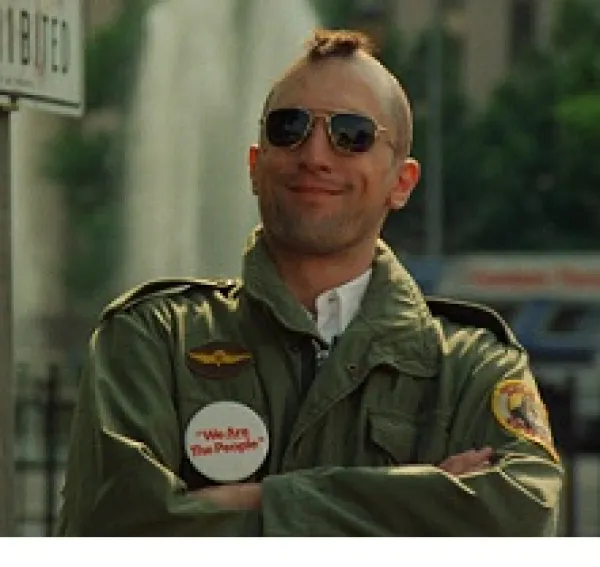
I've been thinking about a couple of decades-old movies lately, Stanley Kubrick's 1987 Full Metal Jacket and Martin Scorsese's 1976 Taxi Driver.
Don't know why for sure.
It just might be a sign of the times.
Both tell stories of male characters descending into the inhumanity of violent madness – one an individual's, the other an organized societal group. Both involve alienation. Both are disturbing. Neither makes sense we want to be familiar or comfortable with. But I don't see how we have a choice anymore.
Full Metal goes full-bore into the deterioration and death of a mentally and physically unfit recruit in Marine Corps basic training while his cohorts successfully adapt to the dehumanizing process of being turned into our nation's first line of defense – killers, in other words.
That's Jacket's first part. The second is a tale of our now-blooded Marines getting the hell shot out of them by a very young NVA or Viet Cong sniper girl. Kubrick getting in his humiliating anti-American licks.