
Arts
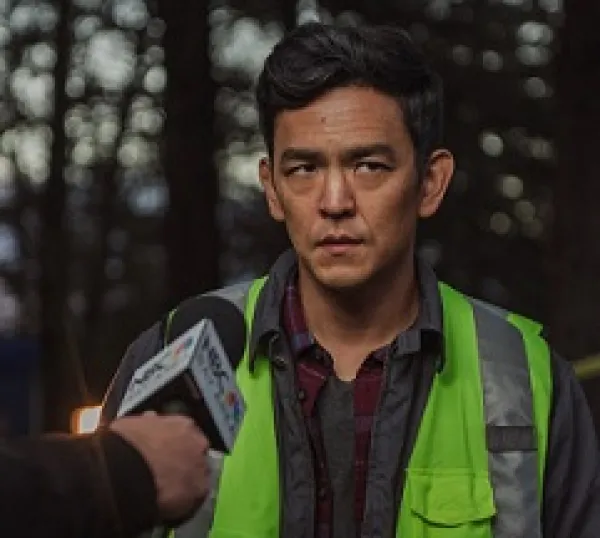
Crazy Rich Asians has been hailed as a possible game-changer, being the first Hollywood movie in 25 years to feature a predominantly Asian cast. As a harbinger of a more-inclusive future, though, I’d rather look to a smaller film called Searching.
Directed and co-written by Aneesh Chaganty, it’s the story of a widowed father desperately trying to learn why his teenage daughter has suddenly disappeared. This new entry is unusual for two reasons. First, the plot unfolds almost entirely on computer screens as the dad searches the girl’s social-media outlets for clues. And second, the dad is an Asian-American named David Kim (played by Star Trek’s John Cho).
The offbeat casting seems almost as revolutionary as the offbeat filmmaking.
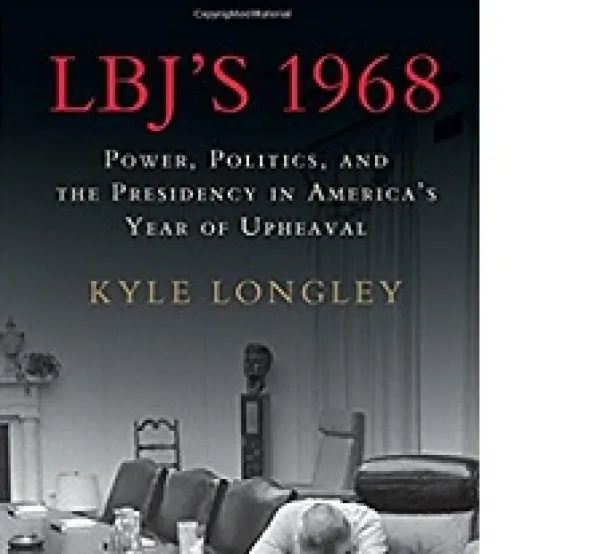
This year is the fiftieth anniversary of the many things that occurred in America’s most horrible year in the most tumultuous decade of the twentieth century. In some ways it’s an anniversary for me, too, because it marks when I became aware of and interested in American politics and history. I remember 1968 as a bubbling cauldron of assassinations, demonstrations, and confrontations near and far. By the time my sixth grade school year was over, there had been Tet – a former neighbor and two of my older sister’s classmates died in Vietnam – President Lyndon Johnson’s declaration that he would not seek reelection; the assassinations of Martin Luther King, Jr. and Robert F. Kennedy; the televised execution of a Vietcong officer by the South Vietnam chief of police; and numerous urban rebellions in cities across America. My mother had subscriptions to the weekly magazines Life, Look, and Newsweek, and I looked at them again and again. Nineteen sixty-eight was indeed, as the Temptations sang several years later, a ball of confusion.

One hopes that human wisdom and ethics will continue to grow, but unlimited growth of population and industry on a finite earth is a logical impossibility.
Today we are pressing against the absolute limits of the earth’s carrying capacity. There are many indications that the explosively increasing global population of humans, and the growth of pollution-producing and resource-using industries are threatening our earth with an environmental disaster. Among the serious threats that we face are catastrophic anthropogenic climate change, extinction of species, and a severe global famine, perhaps involving billions of people rather than millions. Such a famine may occur by the middle of the present century when the end of the fossil fuel era, combined with the effects of climate change reduce our ability to support a growing population.
A new book
I would like to announce the publication of a book addressing these problems, entitled “Population and the Environment.” The book may be freely downloaded and circulated from the following links:

“Words ‘n pictures, you can do anything with words ‘n pictures,” the late Harvey Pekar, writer of the “American Splendor” series famously said of the comics medium. Anyone wishing to see a concrete example of Pekar’s quote need only pick up a copy of the Columbus-produced graphic novel "Far Tune," written by Terry Eisele and illustrated by Brent Bowman.
The "Far Tune" of the title is a play on words, referring both to the name of the young Somali protagonist, whose name is Fartun, as well as to the song she shares with her late mother, who dies in a refugee camp in the story's prologue. Weighty issues are tackled in "Far Tune;" culture clash, religious conflict (most effectively, WITHIN the Islamic religion), generational schisms, and notions of class and gender. Although one could call “Far Tune” a young adult graphic novel, anyone of any age could read it and re-think the circumstances of their own lives in this large and prosperous nation we share.

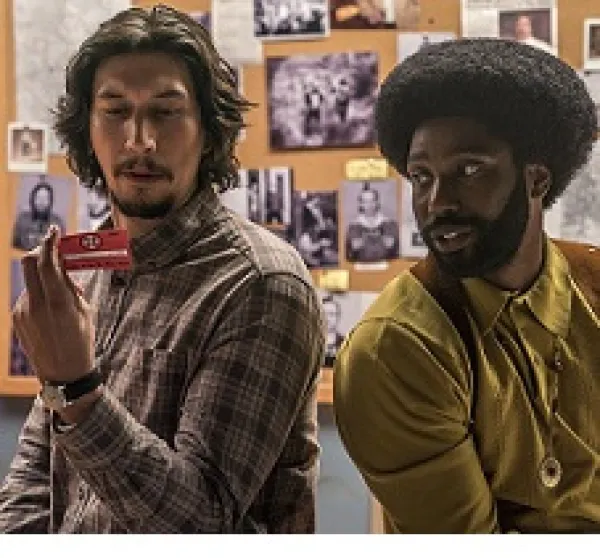
Take an improbable real-life event, add a few history lessons, throw in an inspirational sermon or two, season it with a dollop of satire and romance and pour the whole concoction into a crime-drama mold. Then, for good measure, top it all off with an impassioned plea for decency.
What do you get? With Spike Lee as the director, you get the messy, magnificent and moving BlacKkKlansman.
John David Washington (Denzel’s son) stars as Ron Stallworth, who in the early 1970s becomes the first black cop in the Colorado Springs Police Department. Though at first relegated to serving in the records room, Ron is eager to try undercover work and jumps at the chance to infiltrate a student-sponsored event featuring Kwame Ture, the civil rights activist formerly known as Stokely Carmichael. There Ron proves his worth by taking to subterfuge like Trump to hyperbole. As a reward, he’s reassigned to the department’s intelligence unit.

Thursday, July 19, 6:30-8:30pm
Columbus Museum of Art, 480 E. Broad St.
Experience an American Indian live paint event presented by The Ohio History Connection and Columbus Museum of Art. Renowned American Indian artists, Tom Farris (Otoe-Missouria/Cherokee) and Micah Wesley (Creek/Kiowa) will create new works of art that embrace the story of contemporary American Indian people as artists, tribal citizens and individuals.
CMA values the role artists play in society to imagine and question and we see the Museum as a laboratory for new ideas. Meet Your Creative Community features artists premiering new projects at CMA. Enjoy a family-friendly evening in CMA’s Sculpture Garden with live painting, a cash bar, and tasty bites available for purchase from Schokko Café.
Cost of the program is included with general admission, which is $5 for nonmembers and free for CMA and OHC members.

In a recent column in The Columbus Dispatch, Robert Cooperman talked about the challenges he and other conservatives face in the liberal-dominated theater scene. It’s a natural topic for the Ohio University-Lancaster professor, whose troupe, Stage Right Theatrics, hosted Columbus’s second annual Conservative Theatre Festival in January.
At the end of the piece, the Dispatch announced the troupe’s upcoming production of "Ferguson: Truth Matters," Phelim McAleer’s controversial play about the 2014 shooting of unarmed black man Michael Brown by police Officer Darren Wilson in Ferguson, Mo. The work was described as a “right-wing view” of the fatal incident.
“That’s kind of unfortunate,” Cooperman said of the description, noting that the play’s dialogue was taken verbatim from testimony at grand jury hearings held to determine whether the shooting was justified. “It’s really not a right-wing version.”

Friday, July 6, 6-11pm, Saturday, July 7, 2-10pm, Sunday, July 8, 2-10pm
Columbus Performing Arts Center, 549 Franklin Ave.
Tickets: $10 to $20; free 13 years old and under.
There will be special group/senior rates and day passes.
mine4godproductions.com
Friday, July 6
Comedian Tasha Neal-Harris. 6pm. Tasha wrote and directed "The Wicked Imagination of a Teenage Kid" which premiered this past June at the Gateway Movie Theatre in Columbus.
The Stoopby Jasmyn Green. Dealing with a group of youth from Brooklyn, NY who have to deal individually with grief and mourning when the youngest of their group dies.
Saturday, July 7
Just You And Mefree theatre workshop for youth 13-18 years old. 11am-1pm. Facilitator Shenise Brown is a Theatre Roundtable award winning actress, Excellence in a Female Lead role 2018, for her role in 12 Angry Women a SoArts Production.

In June, when the Trump administration was using kids as bargaining chips in its push for stricter immigration laws, we could have used a child advocate like Fred Rogers. In fact, we could still use someone like the wise and loving “Mr. Rogers” to counteract a toxic atmosphere in which ethnic fears are mined for political power.
After watching the documentary Won’t You Be My Neighbor?, you realize just how much we lost when Rogers died in 2003. Director Morgan Neville (20 Feet From Stardom) has put together a loving homage to the minister-turned-TV star and the unique show he created, Mr. Rogers’ Neighborhood.
Rejecting the pie-in-the-face slapstick of children’s shows hosted by Soupy Sales and others, Rogers concentrated on giving his young viewers a friend who liked them just the way they were. With the help of various puppets (all voiced by him) and human co-stars, he also offered little vignettes designed to help them deal with everyday challenges such as anger, loss and disappointment.