
Arts
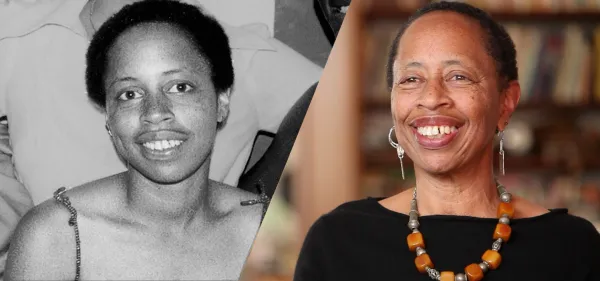
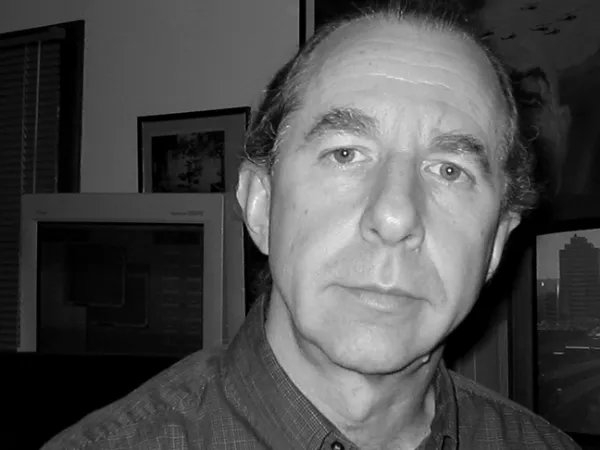

Gail Larned is a fiber artist, has been collaborating with Eric Marlow, jewelry designer, on artistic endeavors for more than three decades. Gail’s artist statement reads: It is my intention to create art that brings an element of natural beauty to the environment. The flower sculptures and dioramas that I make are monumental in scale and elicit a sense of child-like wonder in the viewer. This suspension of the familiar is beneficial in that it allows one to be transported to another reality – much like a feeling of Alice in Wonderland.
Traditionally flowers are used to commemorate major events in life. They represent renewal, celebration, remembrance and pure beauty.
The "Patterns of Life" is an imaginary landscapes seen from above. A bird’s eye view of the Earth, which embodies a pastoral peacefulness and contentment.
In today’s chaotic world I create art that is peaceful and soothing to the viewer, creating a visual oasis.
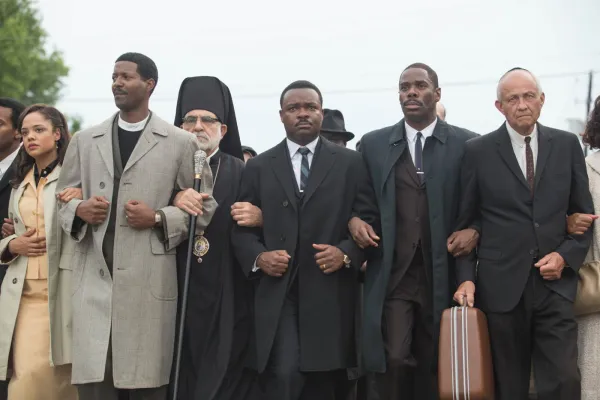
Selma gives us our first glimpse of the Rev. Martin Luther King Jr. (David Oyelowo) while he’s preparing to accept the Nobel Peace Prize.
Given our memories of King as the inspirational leader of the Civil Rights Movement, you might expect him to say something profound and high-minded. Instead, he complains to his wife (Carmen Ejogo) about the formal tie he’s forced to strap on for the occasion.
That’s one way Selma distinguishes itself from the average historical drama it could have been. Rather than turning King and other luminaries of the period into cardboard heroes, it renders them as recognizable human beings.
The other way Selma distinguishes itself is by delving into the arguing and strategizing that went on behind the scenes as King fought to secure voting rights for black Americans. Director Ava DuVernay and screenwriter Paul Webb have put together an illuminating account of the events leading up to a massive demonstration he organized to promote those rights: the 1965 march from Selma, Ala., to the capitol building in Montgomery.
Next week, Columbus viewers will get the chance to see Selma, a smart and impassioned film about a pivotal moment in America’s Civil Rights Movement.
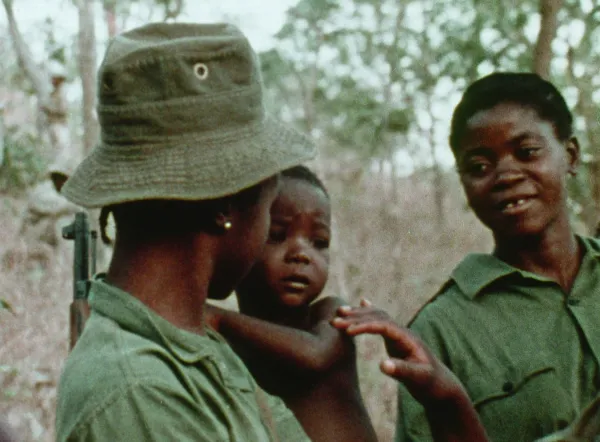
While they’re waiting, they may want to check out the documentary Concerning Violence, a collection of film footage shot during the 1960s and ’70s. Though it’s set in colonial Africa rather than the United States, the underlying racial inequities are all too similar.
Subtitled Nine Scenes From the Anti-Imperialist Self-Defense, the documentary takes us to various countries that were ruled by European governments or business interests. The vintage footage, shot for Swedish television and compiled by Swedish director Goran Hugo Olsson (The Black Power Mixtape 1967-1975), offers a diverse look at an era of African upheaval.
Several revolutionaries talk about the lengths they’ve gone to in their fight for freedom—and the lengths their government has gone to in its attempt to suppress them. A smattering of graphic images underscore their words.
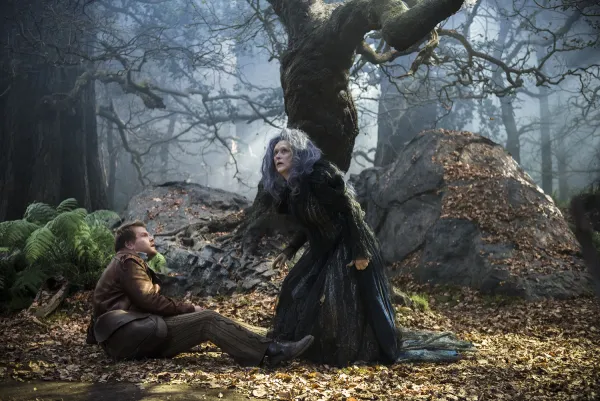
Meryl Streep long ago proved she can act. In Into the Woods, as she did in 2008’s Mamma Mia!, Streep proves that she can sing, too.
One thing, though: You probably wouldn’t want to sing in a choir with her. Performing in an ensemble requires more restraint than performing a solo, as your goal is to blend with the other voices, not to stand out. Whether she’s singing or acting, Streep often seems incapable of exercising this kind of restraint.
Maybe it’s not her fault. Maybe her directors think to themselves: “Hey, I’ve got Meryl Streep here. Why shouldn’t I take advantage of the situation by letting her deliver a Meryl Streep-style star turn?”
Well, there’s nothing wrong with that, as long as she’s the star. It’s not so good when she’s merely one member of a large ensemble, as she is in Into the Woods. The fact is that whenever her Witch is on-screen, the other actors basically disappear into the fairy-tale-style woodwork.
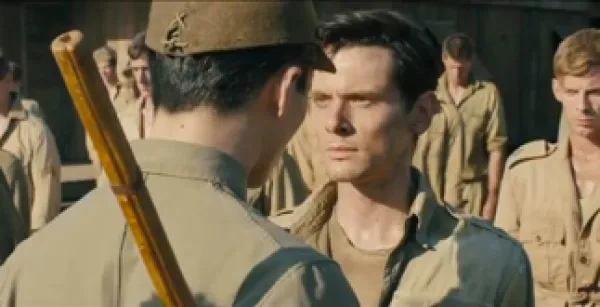
In Unbroken, World War II bombardier Louis Zamperini is subjected to a crash landing at sea and a grueling stint in a Japanese POW camp. Will he survive?
Obviously. Otherwise, the flick would be titled Broken.
The real question is whether you, the viewer, will survive Angelina Jolie’s oh-so-slow, oh-so-traditional war epic. Two hours and 17 minutes might not sound like a long slog, but that’s exactly what it turns out to be.
As you know if you’ve seen any of the recent interviews with Jolie, the second-time director was enamored of the real-life Zamperini, who died before the film was ready for release. Perhaps the saga’s greatest shortcoming is that, after watching it, we’re not sure why she found his story so compelling.
Yes, he was heroic. Yes, he was a survivor. But so were lots of other U.S. veterans.
One thing that sets Zamperini apart is that he was a distance runner at the 1936 Olympics in Berlin. Even there, however, he barely stood out. In an early flashback, we watch as he runs an exceptionally fast final lap on his way to an eighth-place finish.
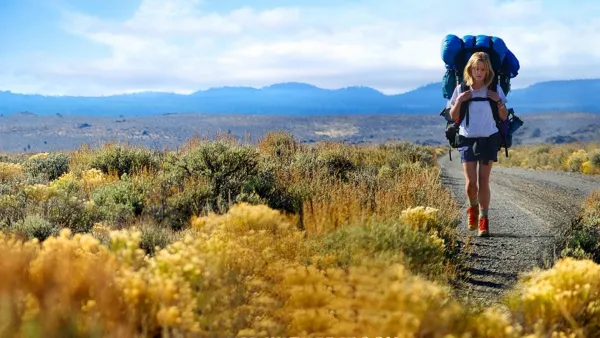
Can you walk your way back to emotional health? Cheryl Strayed (Reese Witherspooon) gives it a try in Wild.
Divorce, disease and her own misbehavior have separated the young woman from the people who’ve been closest to her. Since her life lacks direction, she arbitrarily gives herself one: north. On a morning in the mid-1990s, she sets out to hike the Pacific Crest Trail all the way from California’s Mojave Desert to Washington state.
It’s a grueling trek, as we learn from an early flash-forward. Cursed with a backpack that’s too heavy and boots that are too small, she pauses on a rocky mountain ledge to examine her bloodied feet.
But though her walk is both lonely and dangerous, Cheryl’s greatest challenge is coming to terms with what lies behind her. Thanks to a constant stream of flashbacks, we learn that she had a supportive husband (Thomas Sadoski) but cheated on him with a series of strangers. We also learn that she never appreciated her plucky mother (Laura Dern), who has now disappeared from her life.
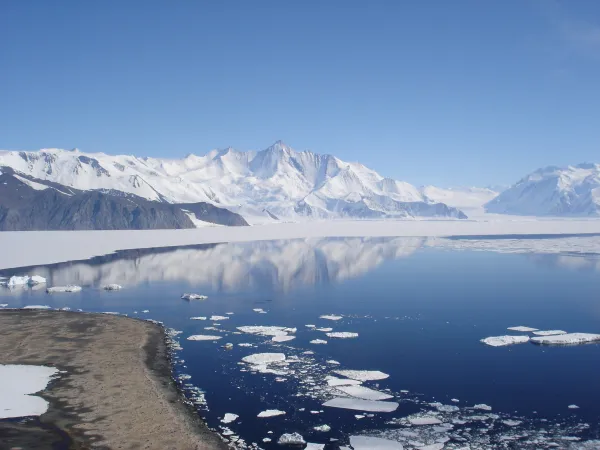
When you think of Antarctica, you probably picture ice, snow and penguins. You don’t normally think of people, other than the odd intrepid explorer driving his dogsled across a frozen landscape.
And yet a few thousand human beings do work in bases spread across Antarctica during what passes for the continent’s summer. And nearly 700 stay through the winter, when the sun never rises, the winds blow fiercely and the temperature dips far, far below zero.
Anthony Powell’s documentary Antarctica: A Year on Ice shows what it’s like to be one of those rare individuals who dare to spend 12 months on the continent at the bottom of the world. It’s fascinating both visually and psychologically.
Who are these folks? Scientists, of course, but New Zealander Powell trains his camera on what one visitor refers to as “normal people”: firefighters, mechanics, shopkeepers.
What all of them share is a sense of adventure. They’re willing to put up with the body-numbing cold and the spirit-numbing isolation just for the chance to experience a land that few will ever see.