
Arts
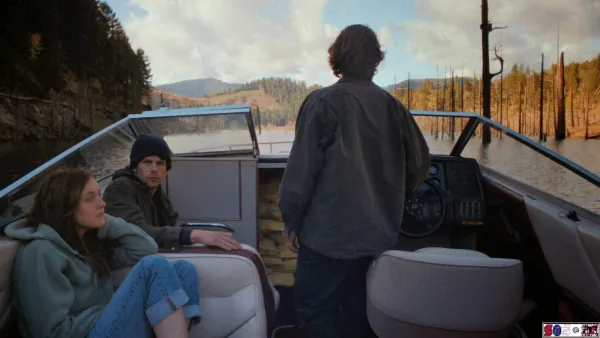
Some movies pack so many plots, subplots and characters into their running time that you just about need a chart to keep them all straight. Night Moves is not one of those movies.
It sticks to three basic characters and a slim plot that could be summarized in little more than a minute. None of this will surprise fans of director/co-writer Kelly Reichardt (Meek’s Cutoff), who favors subtle character study over action, but other viewers should be prepared to exercise a little patience.
This is the kind of film we used to describe as “glacial” before the glaciers started melting and retreating due to global warming—which, by the way, is something the three protagonists presumably know something about. They’re all radical environmentalists, and they’ve come together to blow up a hydroelectric dam in the Pacific Northwest.
Josh (Jesse Eisenberg) and Dena (Dakota Fanning) appear to be casual friends who live in the same community. Harmon (Peter Sarsgaard) is a former soldier who has laid the groundwork for the attack by purchasing the fertilizer needed to produce the explosion.
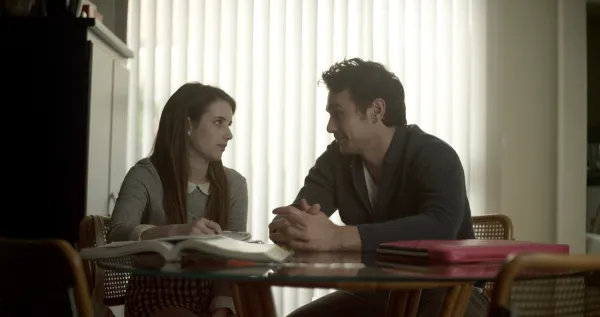
Remember the brouhaha that erupted when James Franco engaged in online flirting with a 17-year-old girl?
Franco blamed his own carelessness, saying he didn’t know she was underage, and I’d like to believe him. I certainly don’t want to believe, as has been suggested, that he cooked up the whole incident as a way to publicize his turn as a student-chasing high school teacher in Palo Alto.
If he did, he would be exhibiting the kind of faulty decision-making that marks just about everyone in the flick, which is based on Franco’s 2010 collection of stories about his California hometown.
Co-written and directed by Gia Coppola (granddaughter of Francis Ford and niece of Sofia), Palo Alto shows teens smoking, drinking, taking drugs and engaging in meaningless sex. And that’s on their good days. On their bad days, they destroy property, drive recklessly and generally endanger themselves and those around them.
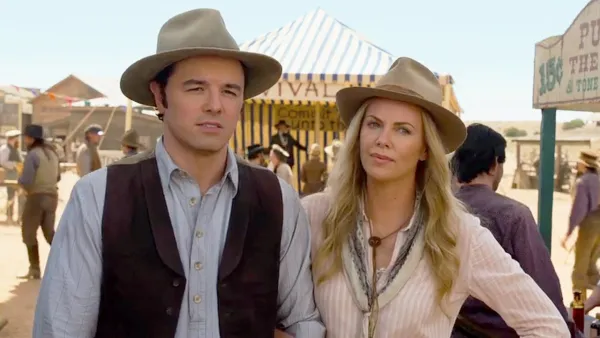
According to Seth MacFarlane’s new comedy, there are A Million Ways to Die in the West. Most are pointless (being shot over a jostle in a bar), many are gruesome (having your head bashed in by a giant block of ice), and some are the kinds of things that could only be thought up by an unusually immature first-grader (farting yourself to death).
Pointless, gruesome and immature: That pretty well sums up this latest effort from the maker of Ted and TV’s Family Guy.
The flick starts out promisingly, superimposing the opening credits over shots of Utah’s majestic Monument Valley while Joel McNeely’s equally majestic score plays in the background. Director/co-writer MacFarlane seems intent on capturing the look and feel of classic Westerns, many of which were shot in this same location.
Then, unfortunately, actor MacFarlane enters the scene as an Arizona sheep rancher named Albert, and cinematic nostalgia rides off into the sunset.
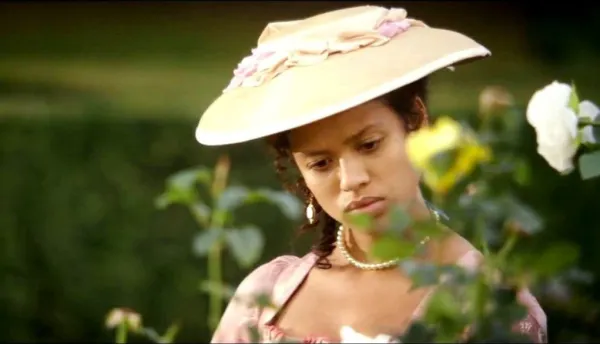
In 1769, a British naval officer brings his daughter to live at the palatial home of his uncle and aunt, Lord and Lady Mansfield (Tom Wilkinson and Emily Watson). The couple are concerned that the girl’s presence will compromise the family’s reputation, as not only is the girl illegitimate, but her mother was black.
Nevertheless, they agree to take the girl in and raise her alongside her white cousin.
Though England was then the center of the world slave trade, Belle’s opening suggests that its titular heroine—whose full name is Dido Elizabeth Belle Lindsay (Gugu Mbatha-Raw)—will be sheltered from society’s racist attitudes and abuses. As the story skips forward to her emergence as a young woman, however, we learn that’s not the case.
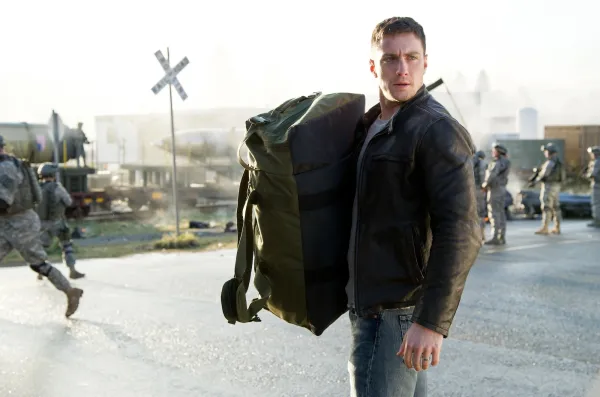
Godzilla is back and he’s not alone
Three years ago, thanks to the Wexner Center, I witnessed something that few people in this country have had a chance to see: the original 1954 version of Godzilla. Unlike the Americanized edition that was released in the U.S., it had no Raymond Burr reporting on the mayhem for the folks back home. There were only thousands of scared Japanese citizens trying to avoid being crushed by a prehistoric creature that nuclear weapons had brought back to life.
It was a startlingly grim experience.
Now a special-effects veteran and relatively unknown director named Gareth Edwards (2010’s Monsters) has revived Japan’s favorite beastie. Though the overall tone is quite different, this Godzilla also has its share of grimness.
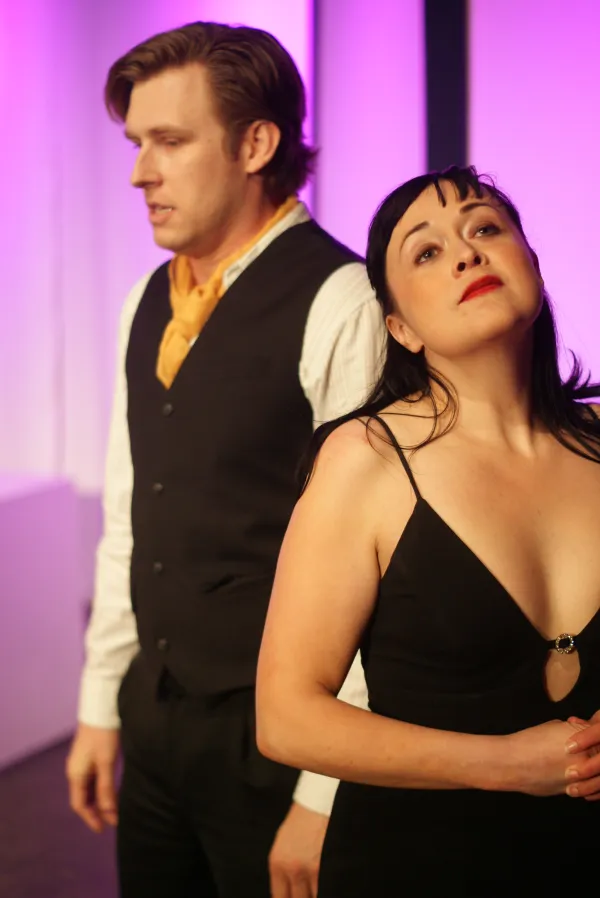
Theatre Roulette has always stuck to the same template: It consists of three collections of short plays, and each collection is rotated to a different day each week, thus giving the annual festival its name.
Beyond that, MadLab has been steadily honing the Roulette format. The shows once tended to be endurance contests, slowed down by lengthy scene changes and long-winded previews of the other nights’ offerings. Recently, though, MadLab has worked to streamline the product.
Open Book, the collection that launched this year’s festival, may be the most streamlined yet. Efficiently and competently directed by Jim Azelvandre, it wraps up its seven plays in a mere 70 minutes.
Are the plays worth the modest investment in time and money? It all depends on your taste and temperament.
Those who eschew (rather than chew) animal products may not be amused by Alex Dremann’s Agnes and the Vegan Burrito, about a man (Chad Hewitt) who suspects his friend (Andy Batt) is having marital difficulties. Others will likely enjoy the wry piece, which asks whether blissful home life is possible when spouses don’t share dietary philosophies.
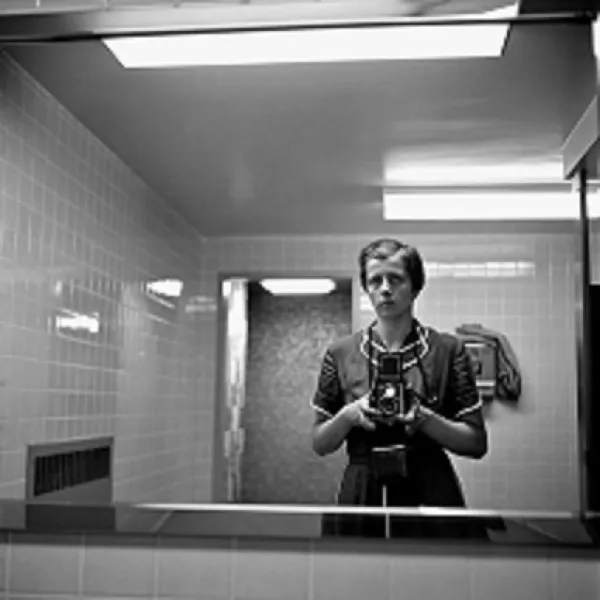
I’ve long admired street photographers, those expert snapshot takers whose images somehow combine transient beauty with eternal truth. At the same time, I’ve wondered what kind of personality you’d need to be one.
You’d have to be warm and sensitive enough to notice the human drama unfolding around you, but you’d also have to be callous enough to record that drama regardless of how it affects the people involved.
It sounds like a contradiction, and that’s the perfect description of the subject of Finding Vivian Maier, a film written and directed by John Maloof and Charlie Siskel.
Well, that’s one of two perfect descriptions. The other is “enigmatic.”
The documentary recounts Maloof’s effort to track down the secretive photographer whose work has drawn posthumous comparisons to Diane Arbus and other such luminaries. Maloof’s quest began after he purchased boxes of Maier’s negatives that were put up for auction following her death in 2009.