
Editorial
Suggestion to Ohio State University:
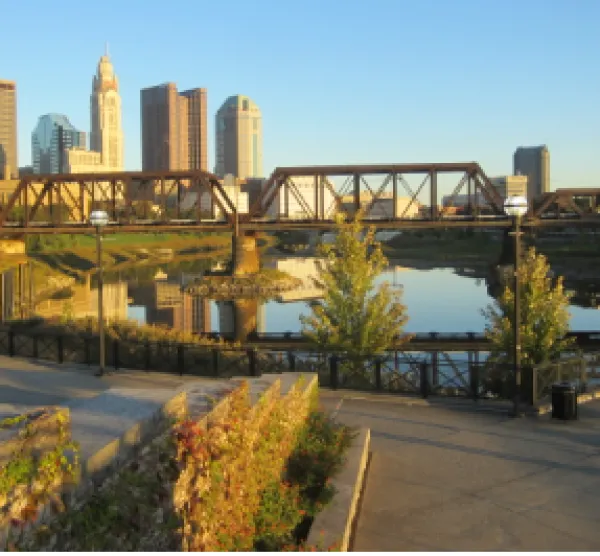
To pay for owing the former basketball coach $13 million for firing him with years remaining on his contract (and not waiting a few weeks until the season ends), sell the president’s house in Bexley. This is the most distant from campus presidential residence in the United States. Top Gun Carter can move into University Square South, near his office, across the street from the campus itself.
In so doing, OSU would follow the lead of the New School for Social Research in New York City, multiple campuses of the City University of New York, and others: all to meet university debt.
Follow the lead, Bucks.
Fourteenth largest city in the US, endlessly touted from New Albany—from which Columbus is actually governed--through Bexley to Westerville, Worthington, and Dublin, Ohio, all outside the city’s borders—to City Council, the “mayor’s” office, and the so-called media from the non-news, non-daily USA Today/Gannett outlet to NPR’s WO-SU, Fox, and Sinclair Broadcasting: Columbus, Ohio, is now a big city.
No one can find it.
Reprinted with new introduction for the elementary literacy education of the Ohio State Legislature, February 2024
As a historian of literacy, I published this critique of so-called “financial literacy” on January 23, 2022. There is no such subject or object as “financial literacy.” There is reading, writing, and arithmetic together brought together to understand economic matters within specific historical, social, political, and cultural contexts. “Financial literacy,” as I made clear below, is a false product sold by marketers and bought by state legislatures like Ohio’s.
It almost certainly does little good especially for high schools. It is divorced from the study and teaching of history, economics, politics, and arithmetic itself. It is orthodox right-wing ideology, not a “life style” or “preparation” for work. It is the sold and bought and product of fears of decline.

I published my first single-authored book in 1979, my first edited book the same year. Although there never was “a golden age” of scholarly publishing, many elements have deteriorated significantly since that date.
The greatest decline has come in the past five to ten years. My students, colleagues, and I all experience it. Among many factors, including changes among editors and reviewers, economic calculations rose to rule.
The major forces are not peculiar to scholars but hold true across the spectra of professional writers. Not only do often wholly ignorant economic guesses rule, but almost all major commercial publishers now require the intermediation of a paid agent rather than direct communication with prospective authors.
Self-publishing and hybrid presses are more often than not—although not always—bottomless, deceptive, unregulated profiteers.
In the spirit of academic freedoms—plural, I propose for discussion an Academic Authors’ Bill of Rights. (For context and detail, see my essays under References below)
I published my first single-authored book in 1979, my first edited book the same year. Although there never was “a golden age” of scholarly publishing, many elements have deteriorated significantly since that date.
The greatest decline has come in the past five to ten years. My students, colleagues, and I all experience it. Among many factors, including changes among editors and reviewers, economic calculations rose to rule.
The major forces are not peculiar to scholars but hold true across the spectra of professional writers. Not only do often wholly ignorant economic guesses rule, but almost all major commercial publishers now require the intermediation of a paid agent rather than direct communication with prospective authors.
Self-publishing and hybrid presses are more often than not—although not always—bottomless, deceptive, unregulated profiteers.
In the spirit of academic freedoms—plural, I propose for discussion an Academic Authors’ Bill of Rights. (For context and detail, see my essays under References below)
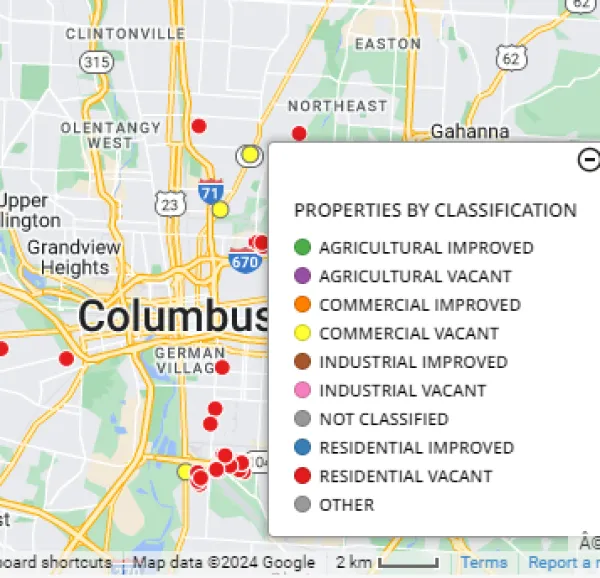
The City of Columbus Land Bank’s purpose is to bring vacant land and structures back into productive use. It often collaborates with the Franklin County Land Bank. Most Land Banks acquire properties that are abandoned or seized for unpaid taxes. Occasionally, property is donated. Newly acquired structures are inspected to determine if they should be demolished or rehabilitated.
Technically, taxpayers own land bank property. However, The Land Bank in Columbus determines to whom they sell property and are tasked with ensuring the planned use complies with their own rules, city environmental code and ultimately to benefit the community. In blighted, poverty-stricken neighborhoods, the Land Bank can promote positive improvements. Yet, it seems to fail repeatedly.
The Land Bank’s process to buy their properties is complicated and exhausting – many individuals give up along the way. However, properties are being sold to investors whose job it is to master the process, then sit on property for years if not decades and resell at a profit. Some applicants pose as a single family home builder or seller then build rental units instead.

Will new president Ted “Top Gun” Carter finally announce that the senior administration moved across the street from the campus itself in July, and place a sign on 15 E. 15th Ave., other than Smashburger’s and Chicken Tenders? And on Bricker Hall, now unannounced home to the Department of Economics?
His opening remarks to the Columbus Dispatch (Jan. 12, 2024): “I believe I’m where I’m supposed to be.” “Carter said he now gets to the chief spokesperson for Ohio State and what it stands for…. ‘I’m looking forward to making sure [Ohio elected officials] know that we’re going to be doing the right things for the right reasons here at Ohio State.’”
Will OSU finally turn off the indoor lights overnight at 15 E. 15th Ave., and reduce its use of fossil fuels across campus, despite years of promises? And finish the first floor of University Square South which is now unsuitable for human use including for Buckeyes’ scrimmages?
Especially in the United States but across the world, we witness a stunning recurrence of an at least 60 year old tradition. University presidents, most loudly former university presidents, publicly blame faculty—most directly tenured professors-—or the many problems of higher education today.
There are many motivations. Prominent today are selling books, deflecting all responsibility for their own and other institutions failings away from themselves and on to anyone else; and running for elective office.
In the 1960s and 1970s, faculty and also students were blamed for universities’ awkward and contradictory stances on civil rights and then anti-war movements. Later, it was affirmative action broadly defined from equal opportunity to Diversity-Equity-Inclusion, among many manipulated themes, intended to distract attention from administrative failures of leadership and refusal to accept responsibility. These illegitimate, unprofessional manipulations typically contradict administrators’ wholesale statements about the roles of colleges and universities in the social, moral, and civic orders.
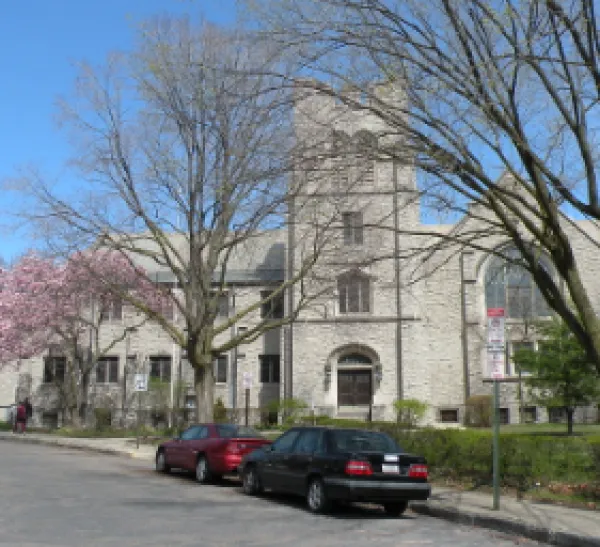
The Indianola Presbyterian Church was built in 1916 in the center of Columbus’ historic, once noted and desirable University District. It was known for its architecture (the architect is not named on its website). Its congregation largely consisted of nearby homeowners, many of whom rented rooms to Ohio State University students at a time that OSU had no dormitories. OSU did not build residences on campus until after World War II with its GI Bill-fueled growth.
Contrary to local dangerously misleading mythologies, the area was long shared by homeowners and student tenants. There was no “golden age” of a middle-class mecca of homeowners. There were many students. But there were no large absentee landlords, and the city’s zoning codes regulating the number of properties an individual could own and the number of unrelated individuals living under one roof were actually enforced.
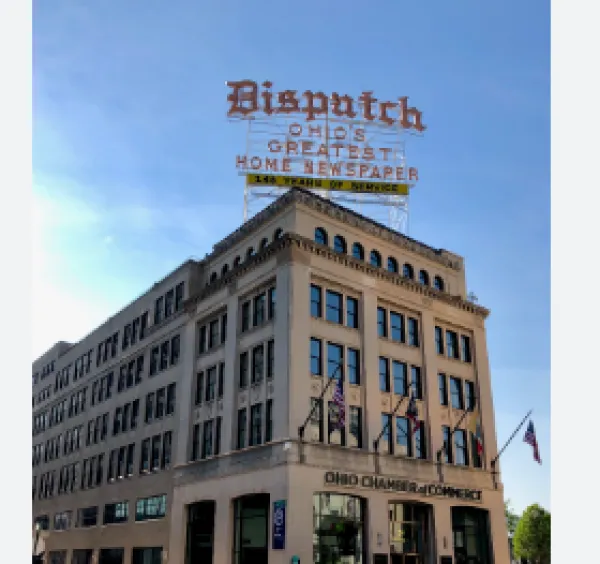
I have received and read a daily printed newspaper since I was learning to read more than 70 years ago. I grew up with the print edition of the Sunday New York Times, and the daily morning Pittsburgh Post Gazette and afternoon Pittsburgh Press. When I moved to Evanston, Illinois for college, there was the daily delivered Chicago Sun Times as well as the New York Times. And the equivalent in Toronto (Globe and Mail, Star), Dallas (Morning News, Times Herald), and San Antonio (Express-News).
And then we moved to Columbus, Ohio in 2004. Delivery was not a major issue until the right-wing-Heritage Foundation-supported and influenced, anti-editing and ideological USA Today/Gannett purchased the failing Columbus Dispatch from the Wolfe family. The Wolfes bled it into the red in part by never distinguishing between their own private development interests and owning the city’s only major daily newspaper.
I begin with a question to all residents of Columbus, Ohio. Was any one of you actually fooled by City’s Council several year campaigns of uncontrolled public deception that the rhetorical introduction of residential districts for each councilor and the increase from seven to nine would make any difference at all in the relationships between the undemocratically elected and anti-democratically operating City Council and those who live here and pay taxes and fees?
In the revision to the City Charter, “district representative” is a poor marketing, fraudulent exercise. It actually represents the fear of democracy—not its enhancement as Council President Hardin, President Pro Tempore (of 7) Dorans, and “Mayor” in name only Ginther repeatedly claimed, never with a word of explanation.
They know no more than failing political rhetorical. They know that they would have to be responsible to a defined constituency to be elected and repeatedly re-elected. They know that election about temporary appointment would be very uncertain. That is not the Columbus Way. But it is the constitutional American Way.