
Editorial

Part Two
Instead of actions that aid its too many, largely unadvised and unassisted students, several years ago, OSU changed the long-time traditional requirement that first year students live on campus in university-operated dormitories as part of their transition from home and socialization to college. With little advance notice and no responsible operational planning, one year became two years of mandatory on-campus housing and required university food contracts for all students who do not live with their families.
This was partly foreshadowed when OSU more than twenty years earlier removed full-time faculty from regular student advising. Only a handful of departments now assign new majors to faculty or have majors select their own advisors. For almost all students, as in first- and second-year general education, advising is conducted by full-time, non-teaching advisors. Many students, concentrating in certain colleges and departments, never or seldom speak to an advisor. Waiting time can be months not days or weeks and months.
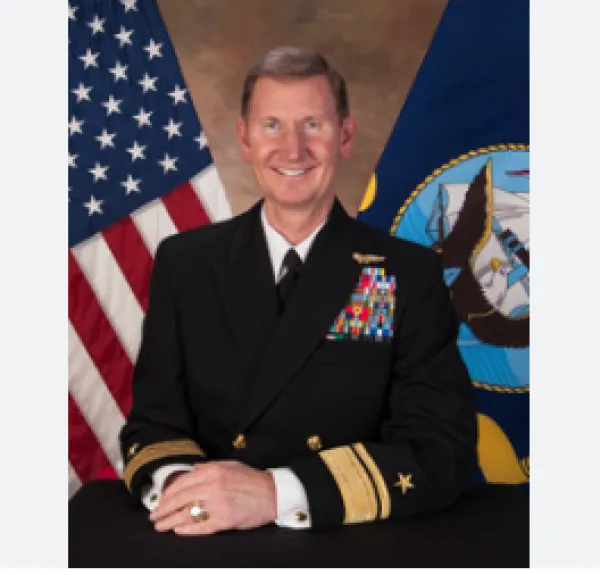
I am both stunned and unsurprised with the August 22 2:00 pm announcement of the selection of retired Vice Admiral Walter “Ted” Carter as OSU’s 17th president. For context: days before the first football game kick-off, OSU has no starting quarterback. The Athletic Director Gene Smith is retiring.
The same Boar of Trustees (BOT) recognized no need to appoint an acting president from the time of ordered-to-resign former president Kristina Johnson’s departure on May 7 until the first day of fall classes. Their ability to read a resume obviously challenged, the BOT’s five-person search committee with no actual or direct faculty, student, staff, or community involvement chose a former ice hockey player not a football player. This is The Ohio State University not Toronto or McGill. Is the BOT confused, or is this the closest they could come? Kristina Johnson played field hockey in college.


There is endless chatter about the “decline of,” “loss of interest in,” or “end of” the humanities among and about college students and the never defined “general public” for decades, perhaps ever since the vague term “the humanities” came into general discourse. Notions vary and contradict each other. They range from those who confuse the arts and humanities with “the past,” “elites,” “bias of ‘Western Civilization’” regarding men, Caucasians, Christians, older people, and of course “the educated.”
Special censure contradictorily falls on academic humanists ourselves. Professors and our institutions are at once viewed as “conservative” enemies of “the people” or the “masses,” the upholders of traditions such as “the classics” and “great books” at all costs. At the same time, with no evidence—only cultural bias and guilt by association—many associate the humanities alternatively with “liberals,” “the left,” “radicals,” “socialists,” Marxists,” and so forth.
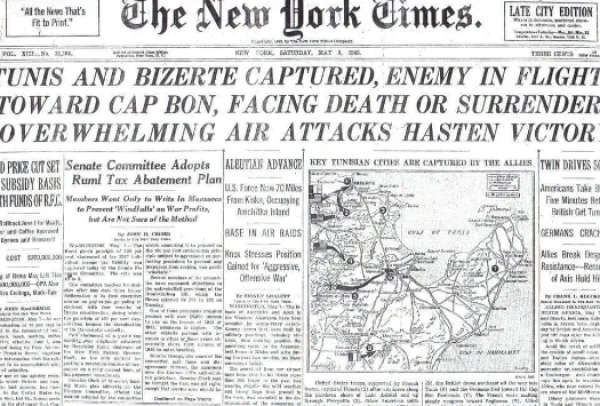
We live among swelling waves of misinformation and disinformation. This is sometimes by accident but increasingly by design in organized campaigns. The daily and periodic media remind us of this with respect to politics. But too often unremarked is that this radical attack on the foundations of our democratic mutual exchange of verified information is the undercutting of medical science—as well as climate and safety. Not without precedent, the frequency and threat are unparalleled.
Consider a major case in point:
The New York Times promotes a prominent misinformed challenge to scientific knowledge without any basic investigation.
In March 2017, the New York Times published an article that accused Dr. Carlo Croce of The Ohio State University Medical Center of blatant scientific misconduct. [(https://www.nytimes.com/2017/03/08/science/cancer-carlo-croce.html)] Clearly apparent, the accusations were based almost completely on the unproved claims of D.A. Sanders, a Purdue University virologist.
The Times report is notable for two main points.

Part Two
(Anti-)Zoning (Anti-)Enforcement, under the auspices of City Attorney and City Council, forms one leg of the evil, broken triangle, the misnamed Division of Public (aka Private) Service is the second.
Led by Jennifer Gallagher, an engineer not an administrator by background, the Division is devoted to private interests not the public. Gallagher herself, who responds to no communications from the public, is under longtime investigation by the Ohio Ethics Commission for awarding contracts for the controversial controversial Little Turtle redevelopment to her husband’s construction business. Even by Andy Ginther’s thin statement of ethics, Gallagher should resigned or been immediately removed from office following those revelations. (See my “J’accuse: The City of Columbus Division of Public (aka Private) Service,” Busting Myths, Columbus Free Press, Mar. 3, 2023 https://columbusfreepress.com/article/busting-myths-j%E2%80%99accuse-city-columbus-division-public-aka-private-service )

Part One
My focus in this essay is what I name “the broken—or the evil—triangle” of Columbus versus its residents. Let me be clear. Although many but far from all of my examples begin with my own neighborhood, the historic but City and OSU abandoned and destroyed University District, my object of scrutiny and criticism is the entire city. To a greater or lesser extent, all the issues—the crimes of commission and omission--exist throughout Columbus. If not recognizable at first or second glances, Weinland Park, Franklinton, Linden, The Hilltop, south Clintonville, the west and east sides excepting much of Victorian and German Village take their place in the puzzles of Columbus.
Indeed, my overarching argument is that recognition of the misconduct, often illegal actions of the Divisions of (Anti-)Zoning and (Anti-)Neighborhoods; Public (aka Private) Services; and the dis-connecting broken thread of 311, one of the City’s jokes on its residents, is critical to understanding Columbus’ public and private collusion and the anti-democratic administration’s priorities. (Every statement is factual and can be supported with documentary materials.)
ONE. The Ohio State legislature approved $24 million to establish “intellectual diversity” centers at five Ohio public universities. English translation from Right-Wing English: “radical right-wing indoctrination” centers with no actual “diversity” permitted.
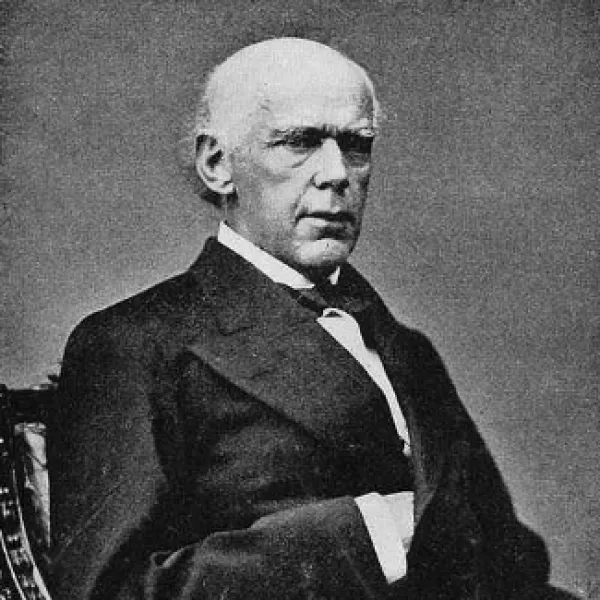
Ohio State’s fountain of right-wing ideology is named for Salmon P. Chase (1808-1873). Have any readers heard that name? Not likely in your high school or college U.S. history courses. Not even on AP History exams.
Chase was born in born in New Hampshire, not Ohio. He grew up moving between NH and western Ohio. Exceptionally rare for his time and for both lawyers and politicians, he graduated from Dartmouth College as a member of Phi Beta Kappa.
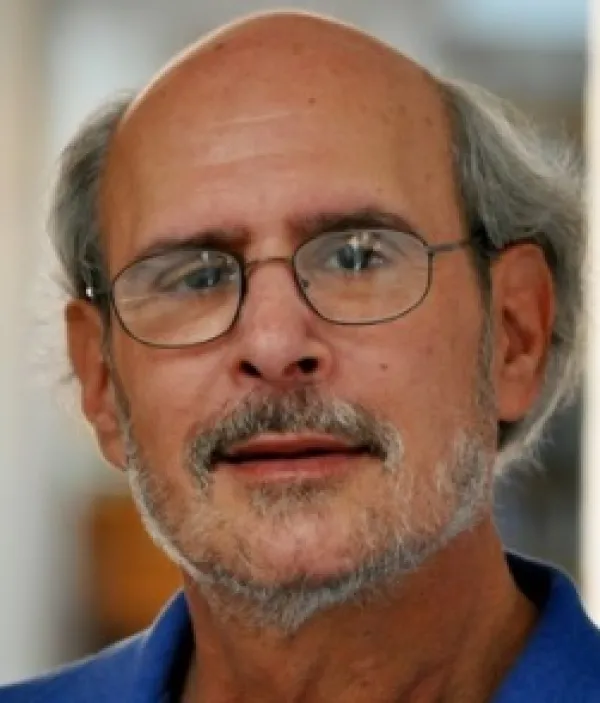
Reading the fascinating, apparently counter-intuitive report “Parched Peru is restoring pre-Incan dikes to solve its water problem” (Simeon Tegel, Washington Post, Dec. 12, 2022) helped me to crystalize and partially redirect more than 50 years of critical thinking as a scholar.
As a comparative historian, I taught, lecture, and write about the centrality of contradictions across many topics, in particular, the past and present of literacy, children and youth, cities, and interdisciplinarity. Among my books on those subjects are, for example, The Literacy Myth (1979 and 1991), The Legacies of Literacy (1987), and Searching for Literacy (2022); Conflicting Paths: Growing Up in America (1995); The Dallas Myth, 2008); Undisciplining Knowledge: Interdisciplinarity in the Twentieth Century (2015).

Part Three
Very real debates continue about appropriate expectations for children of different ages and for variations especially by social, physical, and intellectual conditions at each age. Astonishingly, human differences play no role in Reading Recovery. In fact, in their response to dyslexia educator, Reading Recovery actually attempted to deny that well-established, not uncommon human condition. Read their statements and especially the International Literacy Association’s ignorant and failing effort to defend them from well-documented criticism from the dyslexic community. (See International Literacy Association, Dykstra)
For at least two decades and especially since 2017, the most sustained criticism of Reading Recovery comes from dyslexia experts including teachers and parents. The most detailed and documented critiques come from Pamela Cook and her colleagues, especially their peer reviewed “The Reading Wars and Reading Recovery: What Educators, Families, and Taxpayers Should Know” (2017), “Effective Early Literacy Practices: What We’ve Learned and How to Replicate in Your District” (2017), and “Response to ‘The Truth about Reading Recovery” (2020).