
Editorial

There’s a cultural rule that holds one’s vote to be exceedingly private. The idea behind such secrecy is more than a matter of privacy: usually people refuse to discuss their political decisions because they lack the reasoning capability to justify their choices. Like the journalist’s pledge to objectivity, I’m breaking that rule.
To Hell with it. I’m a progressive advocate, not a journalist, so here goes: I officially endorse Yes votes on Ohio Issue 1 and Issue 2.
I’m voting Yes on Issue One. This Issue One enshrines certain reproductive rights into the Ohio Constitution in light of the US Supreme Court’s overturning of Roe v. Wade and Ohio’s increasingly draconian anti-birth-control measures. My reasoning for this is beyond the salaciousness of the story of the ten-year-old rape victim forced to carry a fetus to term here. For me, it’s an issue of human rights and self-determination, two tenets of which used to drive the political party whose extreme wing once used the issue as their primary recruiting tool.
Part Two
Private or Anti-Public Service is also responsible for public utilities of all varieties. This puts them in active relationships with private for-profit electricity, gas, and recycling companies.
In the Columbus Way, private interests trump public. Ginther is in close association with Rumpke Recycling who prevents any competitor from building a plant required to compete with them. Rumpke is best known for not completing its regular routes.
City Attorney Zach Klein only sues negligent private building owners for code violations after their buildings collapse or explode. He informed me that he is unable to sue grifting, consumer-violating electric utilities like American Electric Power after they repeatedly fail and make consumers pay for corporate malfeasance, while he sues Kia, Hyundai, and the State of Ohio.
One case in point: the eight young women who rent the HomeTeam property next to my house immediately learned that the house’s connection to the city water main did not work. Of course, there had been no inspection. After some days, the connection was repaired.
Part One
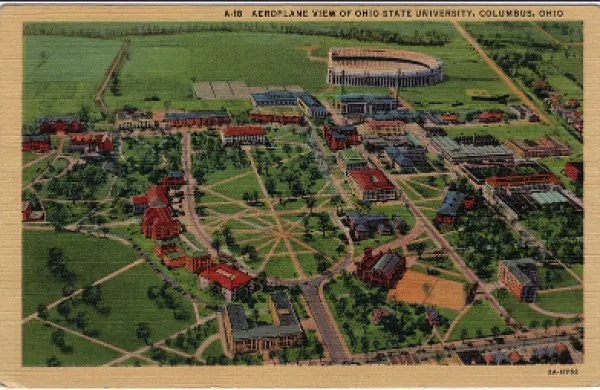
The “city” of Columbus searches in vain for an identity and a history. Its basic identity is its lack of an established, broadly accepted identity, by any accepted definition, however contradictory that may seem. In fact, the more than two centuries old, state capital city’s best-known identity is its very lack of an identity.
Columbus is known for its exceptionality. But this is not a “good thing,” especially not a saleable product for the city that is for sale to private profiteers 24/7. Nor for the only city of its size that lacks a representative city government, functional public transit, and neither professional football, basketball, or baseball teams.
No college football team, especially one with a cartoon mascot, can compensate for these absences. Of course, Columbus does have a well-deserved reputation as the franchise restaurant, hotel, and shop capital of North America. Those qualities are known widely as The Columbus Way.
Part One
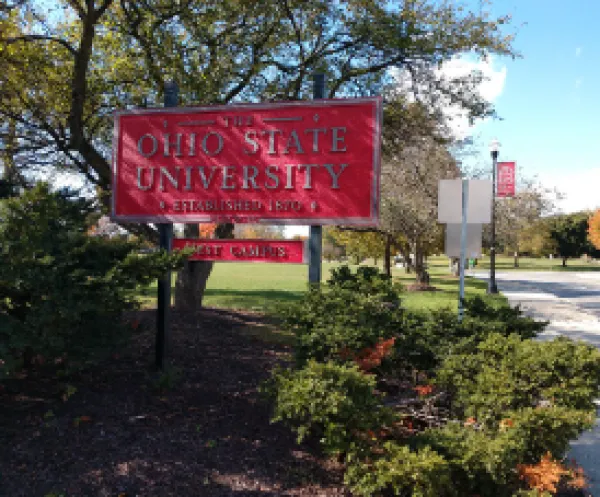
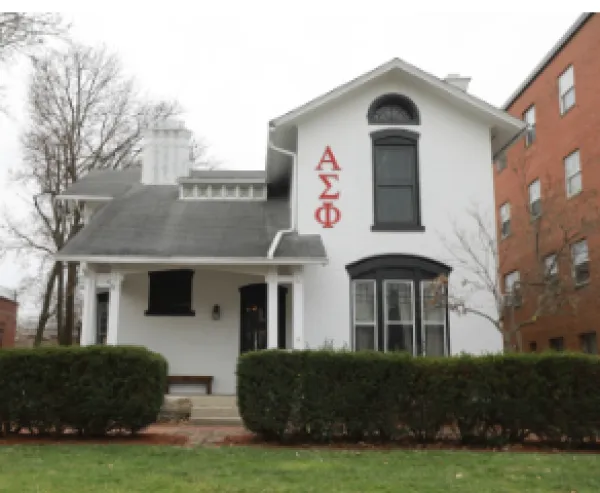
The Ohio State University in Columbus, Ohio is among the largest public universities in the United States. A minority of its undergraduates belong to fraternities and sororities whose number and membership ebb and flow over time. Regardless of those facts—or the national effort to supervise, reform and regulate, protect the rights and lives of their members from active harm, and the regular bursts of reports of illegal hazing and rape among other forms of law-breaking, fraternities and sororities rule the boost at OSU. The contradictions—and active damages to young people, their personal and intellectual development, and their incidental and purpose damage to neighbors and environment—are significant.
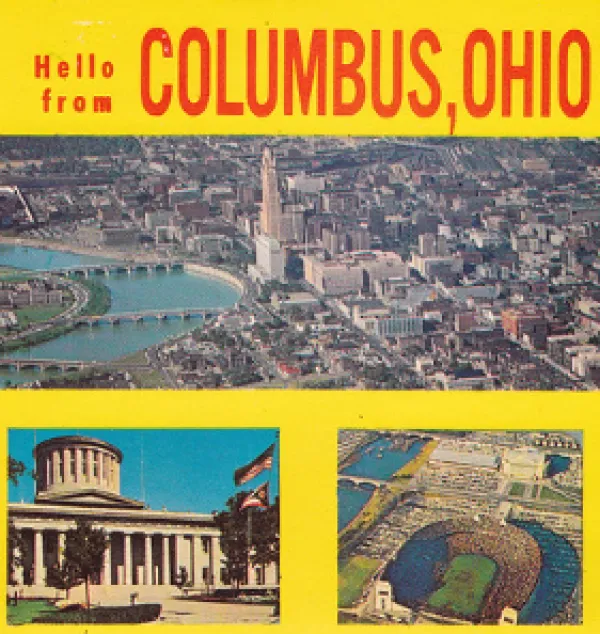
Standing out among Columbus’ multiple crises of identity is its refusal to make serious, accurate comparisons with any other cities anywhere: not in Ohio, the US Midwest, the US, North America, the world. This is a certain form of urban or place blindness, amnesia, and/or pathology—chose your metaphor and analogy. In other words, an unwillingness, even inability to find itself and therefore to develop and grow fully, responsibility, and honestly with respect to its human and physical resources, possibilities and limits.
This requires admitting and accepting all contradictions, limitations as well as strengths. The most distinctive cities admit the problems frankly. Most have a public sense of humor. Pittsburgh, for example, was long the pothole capital of the U.S. That is no longer the case. A local candy manufacturer now sells Pittsburgh Pothole Filler, an attractive box of popcorn dipped in delicious dark chocolate. Buckeyes, chocolate or plain, do not compare.
All knowledge including self-knowledge is comparative. Columbus’ willful blindness imprisons it.

Many thought leaders now recognize that incremental reforms, although useful, are not sufficient to propel the radical changes needed to transition to a future that avoids catastrophic climate chaos. As noted earlier, the poly crises we now face — income inequality, global warming, nuclear war, etc. are symptoms of the economic globalization that has emerged in the last 50 years. Corporate oligarchies now effectively “rule the world” with international trade agreements designed to manage the neoliberal order.

The present moment—2022-2023 or more broadly the last 4 to 6 years—marks an unprecedented period in American history. But not for the usually repeated reasons. None of the major factors is fundamentally novel. The challenge and the significance of our times lay in the conjunction of a number of elements. Together they make a unique challenge. This is not what journalists, politicians, or on-air “experts” regurgitate.
In my historian’s alternative construction, I do see our times as unprecedented but as a result of complicated, contradictory relationships. On one hand, almost none of the major elements factors are essentially new. On the other hand, the challenge to our understanding and strategic choices of responses lays in identifying and tracing the conjunction of a number of elements, larger and smaller, short- and long-term, that together uniquely challenge the American experiment and experience.
The present moment—2022-2023 or more broadly the last 4 to 6 years—marks an unprecedented period in American history. But not for the usually repeated reasons. None of the major factors is fundamentally novel. The challenge and the significance of our times lay in the conjunction of a number of elements. Together they make a unique challenge. This is not what journalists, politicians, or on-air “experts” regurgitate.
In my historian’s alternative construction, I do see our times as unprecedented but as a result of complicated, contradictory relationships. On one hand, almost none of the major elements factors are essentially new. On the other hand, the challenge to our understanding and strategic choices of responses lays in identifying and tracing the conjunction of a number of elements, larger and smaller, short- and long-term, that together uniquely challenge the American experiment and experience.
The present moment—2022-2023 or more broadly the last 4 to 6 years—marks an unprecedented period in American history. But not for the usually repeated reasons. None of the major factors is fundamentally novel. The challenge and the significance of our times lay in the conjunction of a number of elements. Together they make a unique challenge. This is not what journalists, politicians, or on-air “experts” regurgitate.
In my historian’s alternative construction, I do see our times as unprecedented but as a result of complicated, contradictory relationships. On one hand, almost none of the major elements factors are essentially new. On the other hand, the challenge to our understanding and strategic choices of responses lays in identifying and tracing the conjunction of a number of elements, larger and smaller, short- and long-term, that together uniquely challenge the American experiment and experience.
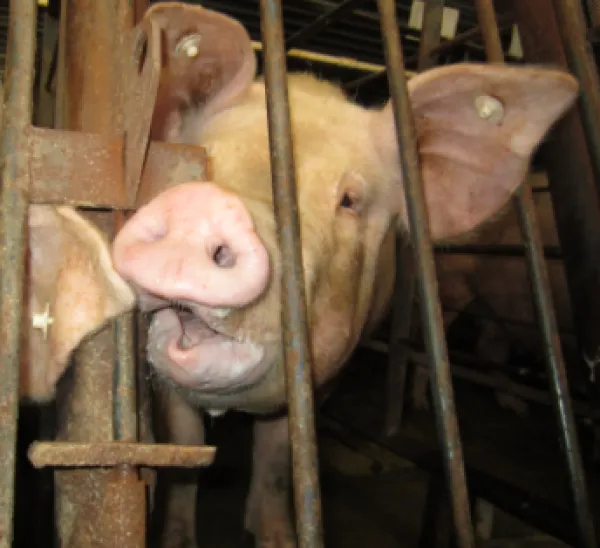
Despite recent House testimony by highly credentialed whistleblowers, we do not know if spacefaring extraterrestrial organisms have ever visited Earth. However, the mere possibility of their existence raises an important challenge for our continued exploitation of animals here on earth.