
Editorial
Part Three
Private (aka Public) Service
As the foregoing demonstrates, Zoning is central to The Columbus Way. So too is Jennifer Gallagher’s far too large, disorganized, uncoordinated, and city wrecking Division of Private (aka Public) Service. This division makes no organizational, operational, or logical sense, as it waddles from parking enforcement to right of ways (roads and sidewalks) inspection and maintenance, signage, street sweeping, construction of various kinds, awarding of contracts to short-term lease vehicles and electric scooter and bicycle rental companies for their objects to dangerously and harmfully litter the sidewalks and streets of the city,

There seems to be no political will to address the climate crisis with any meaningful measures. The science is crystal clear: human activity is the # 1 driving force of climate decline. We know this, it’s common knowledge. Yet the powers-that-be, the oil companies and their cohorts are determined to extract every last drop of oil, regardless of the impact on the planet.
We are seeing massive storms and tornados raging. The polar ice caps are melting at an alarming rate. This is a huge threat to the quality of life for future generations.
Scientists predict that by 2040-50, if things don’t change, the polar ice caps will have melted and coastal communities will be under water.
The famous psychic Edgar Casey predicted that the Ohio River valley would be coastal! Think of your favorite beach or island – gone forever. If we all don’t demand action now, that startling scenario will unfold. The melting is happening faster than expected, as we speak.
A council and mayor of anti-democratic, unrepresentative, unknowledgeable empty sloganeers is bad enough. But they oversee a City government uniquely lacking in both expertise and ethical concern for either residents or the laws. Walk or drive around the city. There is no evidence that the City employs a qualified, certified, experienced urban planner, traffic engineer, zoning inspector or enforcement officers, city attorney, or neighborhoods services. Columbus has none.
Trash, broken pavement, and out of control scooters and motor vehicles are the first things that visitors to the city notice. They rank high in framing Columbus’ identity and identification. That is, other than the many visitors who only see Ohio Stadium or the Convention Center for the illegal steroid spewing The Arnold.
In order to witness firsthand Andy Ginther’s show of force and willingness to “spend whatever it takes to make our city safe” I walked the sidewalks of the Short North for nearly one hour on Friday night.
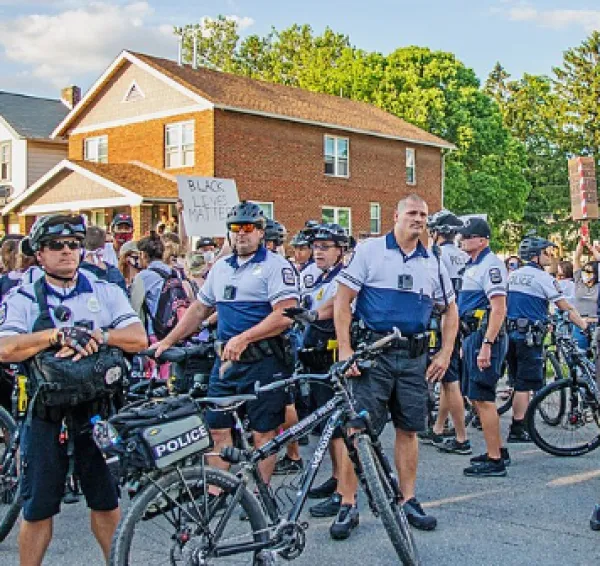
The police presence was overwhelming. I was informed that 150 members of law enforcement were present. Motorcycles, bikes, foot patrol, horses, canine units, helicopter, and cruisers. And it was also reported that drones were used. And I am certain that many Short North residents were not thrilled about the hours of constant noise from a helicopter. One officer told me he was being paid double time. $120 an hour. And although the Short North was probably the safest place to be in Columbus last night, the excessive use of law enforcement along with the sound of a police helicopter overhead presented a feeling of uneasiness.
What did all of this accomplish and was it worth the cost? Did the Short North business district warrant heightened police presence after back-back weekends of violence? If I were Mayor I would agree. But to the extent of Friday night? No way.
By Colemanville, I refer to undemocratic, unrepresentative ragged-edged principality of Columbus’ power elite dominated by the now more powerful former mayor Michael Coleman and his self-appointed Columbus Downtown Development Commission; the Columbus Partnership (whose leaders live outside the city): their promotional agents the Columbus Dispatch and Columbus Metropolitan Club, who dictate commands to Andy Ginther and the now minority-majority city council. They undemocratically rule the City but willingly remain almost completely unknowledgeable about it.
(Against all understanding, council president Hardin and now President pro tempore Dorans dizzyingly declare this unacceptable cosmetic change to be a genuine advance in Democracy, if not democracy, if I understand them correctly. It is often difficult to do so.)
Together, these self-appointed dictators maintain the power of the few, all profiteering private interests who pay for play in the long traditions of The Columbus Way. Together with the mayor and city council, they neglect the publics of Columbus. They rule by secret collusion and weak anti-factual slogans.
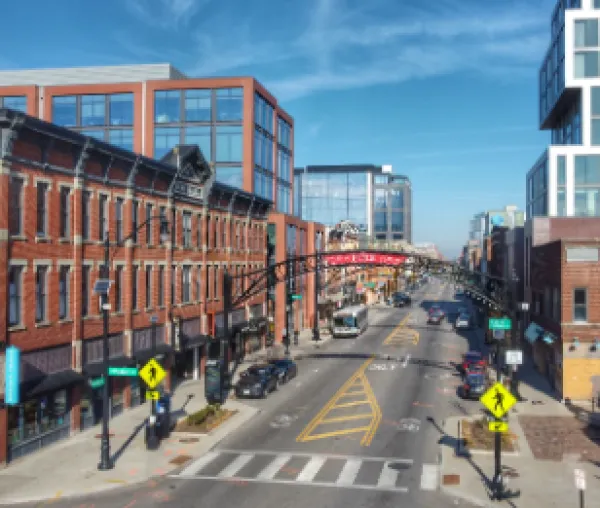
Is it an accidental that the stack of tourist literature I found recently at rest stops on the Pennsylvania Turnpike included Youngstown and the Hocking Hills but nothing from Columbus, Ohio? Or should that be expected?
Columbus’ more than two century long crisis of identity and inferiority complex again makes its periodic eruption. Inseparable from its lack of documented history, unrepresentative and undemocratic city government, absence of signature physical or human-made structures, and lack of constructively critical responsible media, these stand out among its claims for uniqueness and exceptionality.
At its core, however, lies the city’s refusal to learn from its own experiences and from any others’. In the 21st century, this is a paralyzing urban condition untreatable in the Les Wexner Medical Center of The Ohio State University. Those two city anchors are known for corporate bankruptcy and close friendship with sexual abuser Jeffrey Epstein, on one hand, and semi-pro football and alienation from its home city, on the other.
After more than 150 years, The Ohio State University (OSU) does not understand that it is now completely within and surrounded by – and has legal responsibilities to – the city of Columbus and its residents.
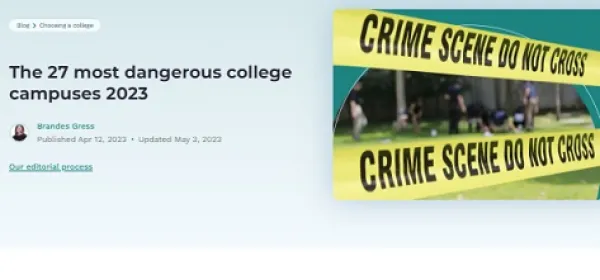
Among large urban university campuses and their adjoining residential districts, OSU and the University District are among the most dangerous in the US. As I was in the process of submitting this article, DegreeChoices.com released a new national report that found OSU to be the second “most dangerous campus” in the United States, based on data from the U.S. Department of Education on violent crimes committed and/or reported in 2019-2021. OSU had 583 reported incidents.
OSU has a campus security force of less than 80 for a student, faculty, and staff campus of almost 90,000. The Columbus Police has no regular presence in the University District. For good reasons, students do not want to see them on campus. In 1970, for example, the Columbus Police Department (CPD) and the National Guard rioted on campus.
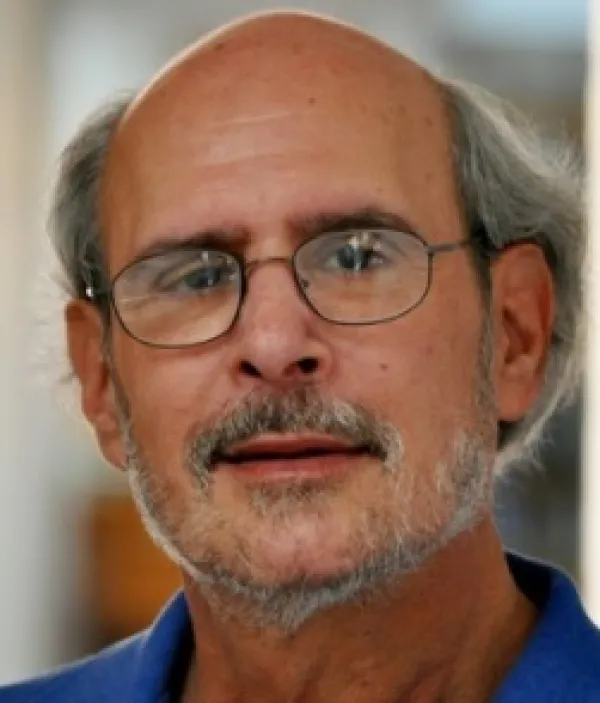
I live in a 110-year-old house on a corner lot in the historic but public- and private-destroyed University District (UD) of Columbus. The area is unsafe, filthy, in disrepair, and unpoliced by the City of Columbus, Ohio State University (OSU) that depends on it for housing a majority of its students since its founding in 1870, large corporate property owners whose very existence is technically illegal, and many but not all student tenants.
The UD is a mix of incompatible ingredients simmering at high temperatures on a front burner with no one near the controls. It sometimes burns; lives are lost. Among historic university adjacent areas across the US, it is an extreme example of active and passive neglect.
Consider a telling incident from overnight March 27-28. Our OSU senior tenant neighbors laboriously dragged seven rental electronic scooters and one rental electronic bicycle nto our private property and left them in a jumbled pile blocking our double garage. These students, I note, are 21-22 years of age, university students, allowed to own guns, and vote. But they refuse to follow the law, breaking it more often and violently when asked to respect it.
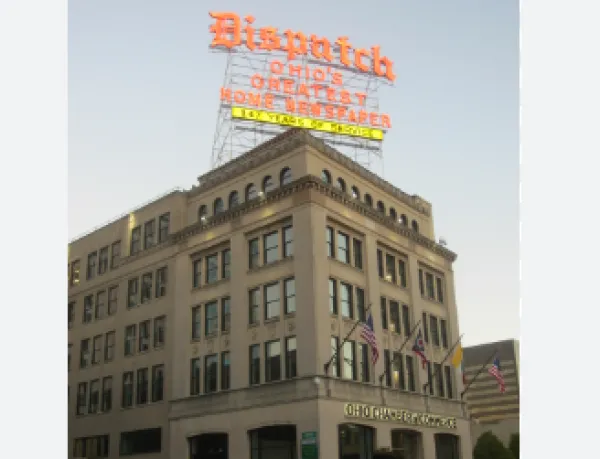
How can the US’s 14th largest city have the nation’s worst collection of what were once called “legitimate media”? I do not have a comprehensive answer, but I read major clues. Given the broken state of the City government and the physical and social city, and almost all of its major institutions, on one hand, we cannot be surprised. At the same time, the need for comprehensive, trustworthy news and commentary has never been greater.
I first wrote about Columbus media in July 23 in “Columbus’ identity crisis and its media,” Columbus Underground, July 23, 2021. This was an unexpected learning experience. I advanced the arguments that the city’s lack of identity was in fair measure a result of its media’s large-standing failure to engage in and support habits of responsible constructive criticism, and thus promote that kind of tradition. Instead, unchecked boosterism reign. This is especially true with respect to major institutions including the City itself, Ohio State University, and major powerful private interests. For more than a century and one-half, the Columbus Dispatch led in, and profited greatly from that.
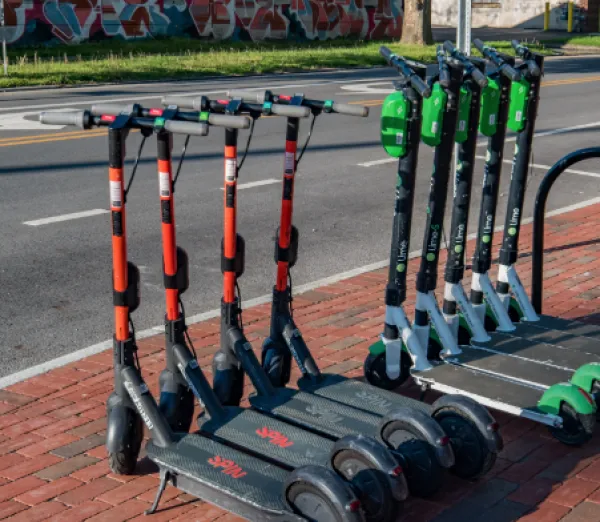
Detested by most residents, “hated” to use the word regularly repeated by Columbus Police, and used without obeying the law by relatively few, the plague of unregulated electric scooters is one of Columbus’ few marks of distinction. With almost all other distinctions, this is another grade of F for failure; P for profiteering; C for corruption; V for the City’s violation of its own laws and its residents’ rights. This is The Columbus Way.
Columbus is the largest US city with no policy for regulating electric scooters. See, for example, John Seabrook, “The E-Scooters Loved by Silicon Valley Roll into New York” (The New Yorker, Apr. 19, 2021; for related humor, Fred Noland, “The Scooter Menace,” Sept. 19, 2022). /Other cities pursue a variety of means of regulating scooters—with more or less success—especially for safety and the physical environment.
The slogans that scooters benefit the physical environment or “enhance mobility” (one of the Division of Public (aka Private) Service’s favorite self-promotional terms) are shown over and over to have no merit. That never matters to the City of Columbus.