
Editorial
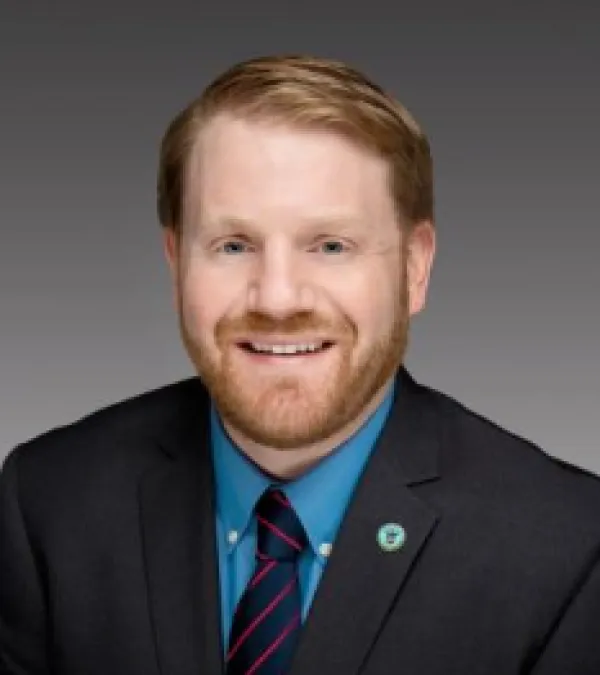
Dear unrepresentative council member Rob Dorans,
May I give you a tour of Columbus or any other city in the US or the world? Have you ever been to a functional city with credible urban planners and traffic engineers? Do you know what an actual neighborhood is? Have you or another employee of the failing city, and city of Columbus studied cities, and their histories? NO!
You and your city flunkies, the paid agents of out-of-control tax abatements and TIFs with no accountability demonstrate your profound ignorance with your latest uninformed and dangerous “Where Do We Begin? Identifying Initial Focus Areas for Modernizing the City of Columbus’ Zoning Code.”
Look at the rhetoric and grammar itself. Can you translate any of this poor sloganeering into communicable English, let alone urban policy? Where does who begin what? Identifying initial focus areas? Modernizing? What do you mean? None of these terms speaks for itself. Do you or your scribal aides have any idea? Has anyone taken freshman composition, let alone urban planning?

I submitted this “guest essay” to the New York Times following publication their fourth error-filled opinion essay about universities and the humanities in less than one month. Not surprisingly, they did not publish it. I turn to the Columbus Free Press because the issues are important to all of us.
I note that in late autumn 2021, under a new editor, the New York Times changed the name of its Opinion or Op-Ed essays since the 1890s, to Guest Essay. At the same time, they removed any mention of accuracy or factual from their criteria.
I take the unprecedented step in the history of the City of Columbus to voice a demand publicly for an apology and reparations for neighborhood destruction by the City in collusion with large corporate property owners and developers, and in the case of the University District (UD) and Weinland Park, The Ohio State University and its purposely misleadingly named Campus Partners for Urban Community Development.
This is one critical chapter in the long and continuing tragedy of the Columbus Way: private over public, for-profit developers and corporation over publics, and disregard and disrespect for residents’ legal rights including homeowners, taxpayers, and voters. It is no wonder that Columbus cannot define or delineate actual “neighborhoods.”
I am concerned specifically with the University District. But I urge residents of Weinland Park, Franklinton, Linden, and The Hilltop, at least, to follow suit (pun intended).
There are both very few and many take-aways from Andy Ginther’s non-State of the City fantasy tale on Tuesday, March 21. Three stand out:
First, Ginther cannot possibly live in the city of Columbus. He knows so little about it. But we do know that he inhabits, at least in his imagination and bank book, a ragged small broken, undistinguished patch that I renamed Colemanville. In fact, Ginther grew up in far north Columbus, not far from the Worthington border. He now lives in The Knolls, west of 315, close to closer to Upper Arlington.
Colemanville is an unenfranchised, undefined area bounded by several highways and the environmentally challenged Scioto River. It is the bought-and-sold preserve of Urban Empeor for Life Michael Coleman, Ginther’s keeper; Coleman’s unelected Downtown Development Corporation; and The Columbus Partnership whose leaders live outside the city they dominate. They all claim, misleadingly, to be “non-profit.” It is undemocratic, authoritarian capitalism, an unelected unrepresentative government for the few by the fewer. This is the historical practice of the Columbus Way.
Columbus, Ohio is the United States’ oldest and largest city that lacks both identity and history. By history, I mean a tradition of serious, researched, and documented historical writing by trained professionals, with or without advanced degrees. What passes for history in the Sunday edition of the Columbus Dispatch is not historical writing with close attention to context, relevance, and significance. At best, it is anachronistic antiquarianism.
Rooted in disconnected anecdotes, mainly discovered in old newspapers, it bears no relationship to the results of historical study and historical analysis. Let me be clear, this excludes The Ohio State University District: A Neighborhood History and The Ohio State University Neighborhoods—both vanity press publications; Ohio State University Press’ volumes on university presidents and selected decades; Ed Lentz; and the Ohio History Connection.
Underscoring my conclusion is that the city of Columbus has no history—human or natural—museum. That’s a major absence for a 225-year-old city with more than 900,000 population.
On March 14, 2023, a day that will live in infamy in Columbus and across the Oval, The Ohio State University filed the petition to the US Supreme Court that it foreshadowed the moment the federal District Court of Appeals ruled against its previous attempt to escape responsibility for the criminal misconduct of Dr. Richard Strass and its refusal to respond responsibly to the more than 600 documented victims of Strauss’ sexual abuse.
It is no accident that OSU’s unnamed attorneys file their brief with the right-wing ideological and anti-Constitution majority United States Supreme Court. They purposefully and blatantly misrepresent the case and the issues. The University declares that it asks, “the justices to review at divided decision by the US Court of Appeals for the Sixth Circuit in order to preserve the statute of limitations for Title IX claims, which is foundational to the nation’s shared rule of law, and affirm the scope of federal education protections under Title IX.”
Let’s begin with this summary statement. I note:
1. “Divided opinion” = 24 against OSU; 4 in favor. In today’s wording that is called a super-majority, not a division.
Surprisingly or not, the Columbus City Council, apparently with the advice and consent of the City Attorney’s Office, publicly decreed at its Monday, March 6, 2023 meeting that the First Amendment of the United States Constitution does not apply to Columbus residents especially any who dares to speak honestly and openly about any element of the City itself. This is obviously not a problem for mayor, City Councilors, Council’s Chief of Staff, and major division heads.
On one hand, it is curious because City Attorney Klein likes to struggle very publicly and politically with the alternatively ignorant of and anti-Constitutional state Attorney General David Yost and Secretary of State Frank LaRose, all of whom aspire to higher office. LaRose just returned from hobnobbing with 2020 election deniers at the Trumpist CPAC meeting. These two are busy suppressing voting and many other legal rights in Ohio.
Columbus’ reigning Democratic political class falsely presents itself as progressive and democratic. This seldom goes beyond empty, poorly formulated and awkwardly articulated slogans. Their uninformed rhetoric is contradicted at least weekly when not more often by their policy- and program-free actions and especially inactions.
It is astonishing to me as historian and life-long urban resident that Columbus is the only city in the US of any size and self-proclaimed (if exaggerated) significance that proudly lacks representative, democratic city government. Almost all US cities moved from lack of representation or at-large city coucils in the second half of the 19th century, not the 20th century. Along with its lack of an identity, this is Columbus’ only justifiable claim to uniqueness or exceptionality.
Rather than taking humor again as the genre for this essay, I follow French author Emile Zola’s classic 1898 open letter to the President of France as my model and metaphor. For readers unfamiliar with European history, Zola accused the French national government of antisemitism in its the unlawful prosecution and imprisonment of French Army General Staff officer Alfred Dreyfus. Falsely charged and sentenced for life for alleged espionage, he was denied all legal rights.
Zola identified judicial errors and lack of evidence in his front page “J’Accuse” in the major daily newspaper, L’Aurore. In retaliation, the government prosecuted Zola for libel. Found guilty, he fled to England for 15 months. Zola’s and others’ denunciations of the government’s blatant dishonesty and illegal actions led to the French Supreme Court’s annulment of both convictions following thorough investigations.
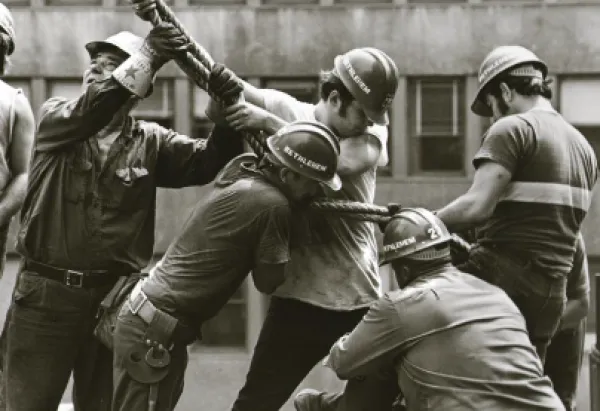
When I hired into the steel mill, Lorain Works, US Steel, in 1970, it was a monstrous place, smoking, churning out tons of steel, with thousands of workers going in and out almost constantly. Around 9,000 workers they said.
The town of Lorain was/is an old mill town, with more bars than churches and more churches than whatever was next. I hadn’t known then there were as many different nationalities on earth as the number of different nationality clubs that were there, supporting the many nationalities of the workers recruited by U.S. Steel to work there (always looking for ways to pit one against another).