
Editorial
Part Two
Campus Partners for Urban Community Development
Among OSU’s most glaring if rarely noticed institutional failures is its so-called Campus Partners for Urban Community Development. As I demonstrate in detail in a forthcoming study, this almost 30 year front partners only with developers, never with or for urban community development. It actively neglects the University District whereby any measure of vision, planning, or common sense, its attention should focus.
Its series of contradictions is encapsulated in its self-presentation or identity as a university-based but independent non-profit organization to beneft private developers. Always lacking in planning and direction, it does just that, to the cost of the university’s losing millions of dollars.
Author’s note: occasionally in Columbus and especially by OSU football fans, I am alleged to be anti-OSU. Nothing could be farther than the truth—I strive since 2004 for students, faculty colleagues, and highly qualified staff, none of whom receive the respect and rewards they deserve. That remains my goal.
Part One
The president and the university: Who fails whom?
In a typically flawed effort at reporting or explaining Ohio State University president Kristina Johnson’s pseudo-sudden resignation under orders from the Board of Trustees (BOT), the Columbus Dispatch inexplicitly turned to two unknowledgeable right-wing Schar School of Policy and Government at George Mason University faculty members. They purport to study university presidents’ “contracts,” an odd field with no criteria or standards.

The lame duck Ohio legislature accomplished little because the majority Republicans were only interested in one thing – solidifying their hold on state government.
Action further restricting abortion flamed out.
Action handing over control of public education to the governor flopped.
Action raising the percentage needed to pass a constitutional amendment to 60 percent fizzled.
The right-wingers desiring the above three issue outcomes were left at the altar. Measures passed one house only to die in the other. Republican legislative leaders could tell the constituents to whom they promised action, “Sorry, we tried. Maybe next year.”
So what big controversial measure got passed?
A bill that further suppresses voting – by Democrats -- made it through pending Governor Mike DeWine’s signature because the Republican brain trust wanted to make it even harder for Democrats to win election to the state legislature, to Congress and to statewide office.

Remember Texas of another sort. With the coldest Christmas this side of the Solar cycle, people in Ohio are being asked to cut back on energy usage with the possibility of outages.
Almost all visitors to Columbus comment with surprise about the city’s dirtiness, trash, broken streets and sidewalks, confusion about parking, and uncontrolled vehicular traffic including bicycles and especially electric scooters.
With no recognized identity or documented history, I dub Columbus, Ohio, the United States’ “plague city.” Knowledgeable residents may first think that I refer to the city’s nationally high rates of racially and economically-linked infant and maternal mortality, or police murders (with judicial and City impunity) of unarmed young Black men. Or the incomplete, unknowledgeable, and too brief responses to Covid and tardiness with the measles outbreak now.
But my identification pertains primarily to the city’s unsafe and unsanitary physical environment. We hear little to nothing from the “mayor” or our unrepresentative city councilors about this, despite its dramatic contradiction to their unusually poor and out-of-touch sloganeering. Of course, “contradiction” is not a concept with which they are familiar.
Note: I refer any one skeptical of what follows, including the subjects of the report, to the public record, OSU Student Legal Services, records of past and current court cases, conversations with current or recent OSU students, and to their own visual inspection of the District and the properties
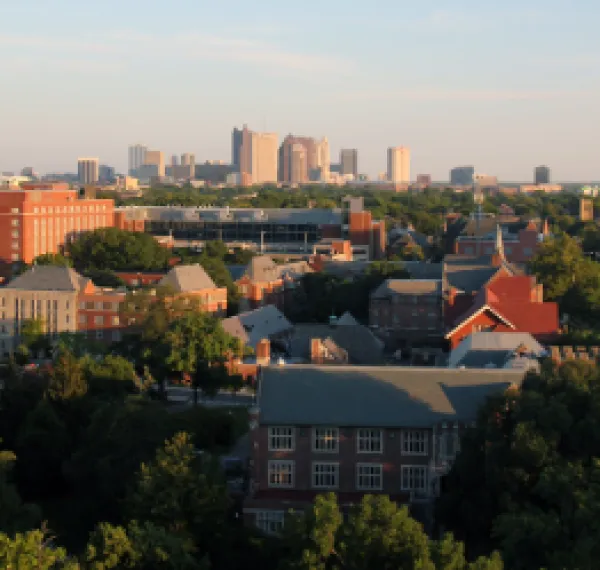
Columbus, Ohio, and especially its historic, residentially-zoned University District, is a national hotspot for criminal—literally-speaking—landlords. This is widely known in City Hall and The Ohio State University, both of whom aid and abet neighborhood destruction and uncontrolled profit-taking by circumventing their own laws and guidelines. They fail to protect the lives and well-being of homeowners and students alike, allowing a large catalogue of property-owners malpractices and criminality to continue unchecked.
Too much money changes hands. Caring for the lives of its students along with home-owning, older, most often OSU-related neighbors is too much for OSU’s sprawling and disconnected Offices of Student Life or Legal Services (the one overfunded and the other underfunded), and law enforcement by the City of Columbus or the City Attorney’s office.
Just as City Council works against public safety and the Columbus Police—reducing the force, under-funding, spouting slogans instead of policy, and refusing to conduct serious gun buy-back programs; the natural environment by approving oversized developments; the public schools by tax abatements and worse; and the city’s publics in general, on Monday, Oct. 25, 2022 council acted out against art in the little city that can’t.
Like the Columbus Dispatch and OSU’s president, it is often too easy to caricature Columbus’ City Council and the mayor, “Mr. Opportunity—for some.” It is hard to parody self-parody, but we must persist. The fate of Columbus’ ever-slight democracy depends on it.
With no debate but unblushing exhortations purportedly about cities, art, economics, and whatever doesn’t fit--free of knowledge, understanding, or meaningful context, City Council approved $250,000 to “create its first-ever ‘Public Art Master Plan,’ for the development, improvement and enhancement of public art and cultural arts programs in the community.”
In its continuing private interest- and large public institution-dominated efforts to avoid the popular democratic reforms that remade almost all US cities in the second half of the nineteenth century and even more in the early twentieth-century Progressive Era, Columbus, Ohio (which continues to need its state’s name to be recognized) created “area commissions” and “district organizations” in the early 1970s. It was one of many anti-public dodges to avoid representative democracy and maintain private interests, often bought and sold with mayors’, city councils’, and major departments’ participation. This is the well-known Columbus Way.
These are strange entities, full of contradictions, pursuits of self-interest, and both active and passive deceptions. The only serious commentary I have found is a few pages in geographer Kevin Cox’s Boomtown Columbus: Ohio’s Sunbelt City and How Developers Got Their Way (2021), the only scholarly documented study of Columbus in print.
Cox highlights the complications and contradictions:
In this essay, I continue my comparative analysis of Columbus, Ohio, among other North American “we’re a big city now” cities (in the words of one City Councilor). My detailed focus began with “Columbus, meet a ‘real’ city: Toronto,” Busting Myths, Columbus Free Press, Oct. 1, 2022.
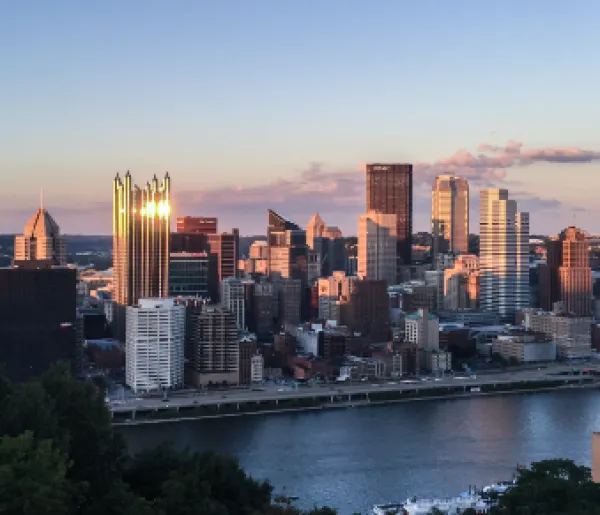
To escape the sanctioned mayhem of Michigan “The Game” weekend in and around my University District home, with Columbus Police either or both ignorant of the law or unwilling to enforce it, especially on game days, and OSU aiding and abetting illegality among students and alumni families—much more like a college town, not a 900,000 person city, my wife and I spent November 24-27 in Pittsburgh. Only a three hour drive to the east, Pittsburgh is a revealing, instructive set of contrasts with Andy Ginther’s unique “Opportunity—for a few--City.”
In a continuing series of explorations, I probe US universities and especially the example of The Ohio State University’s sloganeering, marketing, and self-promotion, most recently in “The OSU Way: Slogans Over Truth and Honesty in Graduation Rates and Student Well-Being” (Oct. 27, 2022) Let me repeat, I am not on a singular campaign to tarnish the mixed images of the local mega-university. Rather I explore the largest case at hand.
This chapter’s update progresses chronologically over the past month or two. I begin with new (one of countless cohorts) Vice Provost James Earl Orr, Jr.’s undated “Enrollment Report 2022.” Orr is Vice Provost for Strategic Enrollment Management which must be different from nonstrategic Enrollment Management.