
Editorial

I’m looking right now at the Ohio River, that great and beautiful stream whose name is said to mean just that, in poetry and on place mats. But has anyone heard that explanation and seriously believed it? Perhaps many Ohioans do believe it, and that is why we have the state legislature that we do.
As is typical of American place names claimed to come from native languages, the story of the name Ohio is a fish tale, so to speak. The state name came from the river, of course. But there has not been scholarly agreement on what the name is supposed to mean, though there is consensus that it comes from Seneca language. The Seneca have long lived nowhere near the Ohio River, and once occupied the Ohio Valley for only a short time, as invaders, so this is reason for suspicion off the bat.
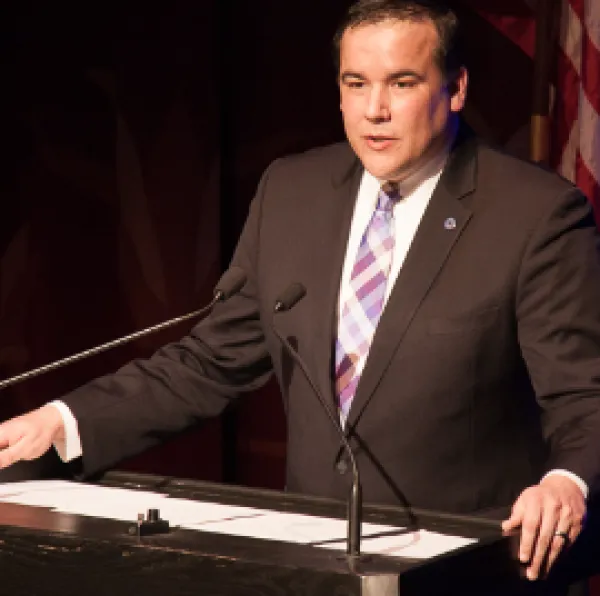
Foreword: Columbus, Ohio, exposes itself embarrassingly….
If I, as the holder a Ph.D., am barely able to comprehend the intentionally garbled and misleading rhetorical constructions of all of the City of Columbus, Ohio’s purposefully overwhelming number of off-year propositions and charter amendments in the November 2022 election, the City itself violates the newly-approved charter amendment outlawing self-dealing voter initiatives and dropping the 1914 stipulation that competitive testing must be part of the city’s hiring process.
Indeed the number, the linguistic misconstruction, the disorganization, and the mangled presentation of the bond proposals is itself a clear and compelling example of City Council’s purposeful “self-dealing.” Or shall we say “double-dealing”?

Part Two
Across the board, budgets and staffing are insufficient for the City to meet its legal obligations. As a result, the city is a dirty, physical wreck. Visitors who venture beyond the steroid-spewing The Arnold Classic in the Convention Center, within a few blocks of OSU’s football or basketball stadia, or venture into the city for an overpriced steak from the Memorial golf tournament almost universally comment on this.
But unable or unwilling to “see” their city or govern it, Council and mayor give away 100s of millions of dollars indiscriminately to special interests private and pseudo-public groups and individuals. They act as if a full proposal with specific plan, budget, timetable, and measures of accounting and accountability were themselves illegal, rather than the opposite.

Part One
Less than two months ago, pushed by two friends who read my essays, I published “Why I remain in Columbus despite Columbus. . . .” (Busting Myths, Columbus Free Press, Sept. 16, 2022). Events during the past month have me seriously reconsidering that judgement.
I voice my heightened doubts in this essay. The factors driving my self-reflections, in a few words, are: major officials of the City of Columbus, Ohio elected and appointed, knowingly violate the letter of the law and regularly mislead the city’s residents among the contents of their actions including City Council proposals and initiatives put to the public.
If that were not enough, the beleaguered Columbus Police Department (CPD), materially weakened by leading elected officials, and rudderless, does not enforce the law. Officers admit this to me, that is, when they don’t dismiss my documented complaints on false grounds.
Fundamentally, residents who don’t work for the City, or live in the Short North, have no rights in Columbus, Ohio.
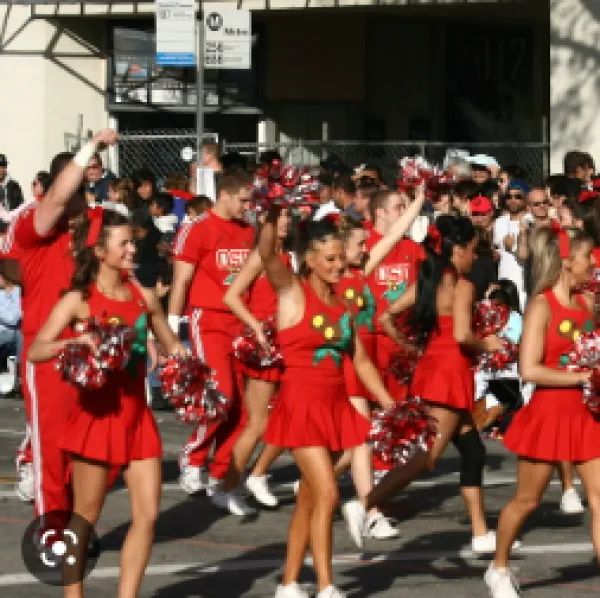
I argue in recent essays that the currently unbridged and apparently unbridgeable gulf between college students’ academic--including classroom--lives, and the anachronistically- termed “extracurricular life”--once actually called the “extra-curriculum” as opposed to the curriculum--is almost as difficult to talk about as to take reconstructive measures. Critics who ignorantly see Student Affairs or Student Life programs as a “shadow curriculum” competing with “THE Faculty” exacerbate the sense of conflict. As usual, the ever-rising tuition-paying students suffer.
Over time, this opposition is embedded into the structures and functions of almost all institutions of higher education, regardless of how contradictory it is, and how negatively it functions.
Student Life without student lives

Never a responsible, reliable, or honest newspaper, the Columbus Dispatch, Columbus, Ohio’s only mass—if declining by the day—circulation, no longer daily and no longer news-paper, no longer resembles a legitimate element of the media. Other than gross profiteering, it no longer has a reason to exist. I strongly suggest that it closes its doors, refund its subscribers, and compensate the remaining 70 of its recent 200 employees.
Let’s count the reasons:
1. It is part of the monopolistic, profiteering, unadmitted right-wing, and anti-news USA Today/Gannett chain of more than 230 no longer daily newspapers plus many other online sites. It no longer has any editorial, contents, copy, layout, or website independence.
Chaotic page and section layout is done in Austin, Texas.
Selection of articles and some opinion essays is done by USA Today/Gannett. Thus, readers are not permitted to comment on selected right-wing essays that come from such operations as Heritage Foundation, one of USA Today’s funders and a holder of a seat of its Board of Directors.

Part Two
The far greatest numbers of students want to do the right thing including obeying laws and respecting neighbors while also having fun and being in their early 20s. No one tells them that the University District is a residential, historical district with remaining homeowners, mainly with OSU connections. Or anything else of value.
Not OSU Student Life with its growing Off-Campus division. Their main activity is a periodic free food truck, with tiny participation, for grab-and-snacks, handing out brochures too late with out-of-date or incorrect information, and planting ridiculous, juvenile, often false slogan-bearing signs on private property without permission. They range from “Over 60,000 students from more than 90 countries live in the University District.” Wrong. “If you need to know something, ask Brutus Buckeye (cartoon character team mascot).” Huh? How? “Most OSU students don’t drive after having 5 or more drinks.” Isn’t that comforting?

Part One
On Wednesday, September 28, after an early morning medical appointment, I planned a day of writing, punctuated by coffee with a friend and my daily walk. I have books and essays in progress. Instead, I spent most of the day emailing and responding to city staff—that minority with the courtesy even to acknowledge my communications—and talking on the phone with one department head who attempts to explain to a confused resident what specifically his neighborhoods department actually does.
I began with my regular requests/reminders to a long list of City Council legislative aides; members of the City Attorney’s office; and various department heads to respond, or at least confirm receipt, to a growing roster of basic City issues, City failures, and criminal offenses especially in my residentially-zoned University District. The University District is not unique.

You won’t read this in the Columbus Dispatch or hear it on WOSU. NBC Channel 4 misreported this story on Oct. 17, either purposefully or ignorantly by their “investigative reporter, who doesn’t’ actually investigate. But as usual, truth speaks far more loudly and clearly than either than silence or distortion.
The issue in question is important to all Ohio taxpayer, students and supporters of public higher education, and to at least some Buckeyes. This compelling matter is the tricky question of six-year university graduation rates, what drives them, and what they mean. A more complicated problem than the seemingly simple percentages appear to signify, understanding them is like peeling a piece of fruit’s layers of skin.