
Editorial
This essay grows from an informal conversation over coffee with a friend. As I criticized the former mayor, but far more influential chair of the self-appointed and uncontrolled Downtown Development Commission’s unembarrassed promotion of an imaginary non-plan for a fictional downtown in 2040, they looked at me and asked: why can’t this city accept itself and build on what it is?
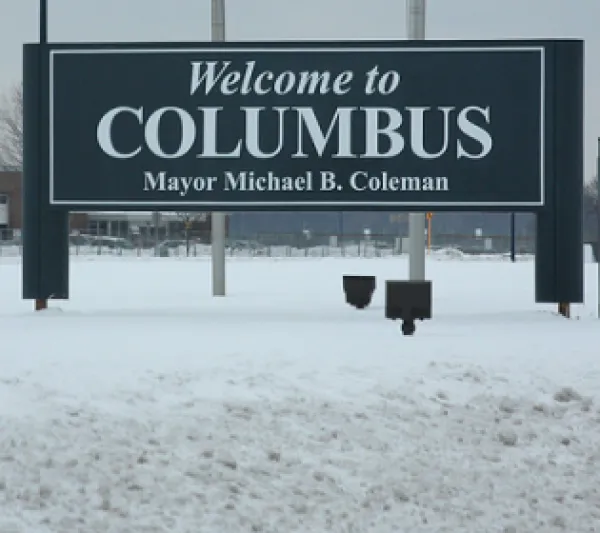
Columbus, Ohio, is more than 200 years old. But it won’t grow up. Immaturity characterizes every dimension including its illogical obsession with size. Today, this overflows in the pseudo-celebration of a convention center hotel new tower—too tall for the area—making it “the largest hotel in Ohio.”
Despite its age, the city functions like an awkward, sometimes self-destructive child. For clues, watch the mayor sputter and inarticulately blurt out meaningless slogans never associated with proposals, let alone policies. Councilors and department heads chime in. What has happened to speech classes?

Part Two
Failure of internal and external communication
Part and parcel of the foregoing is the lack of effective communications systems and open, integrating, and supporting cultures that modern institutions require. The City of Columbus admits that its comms systems are a disaster, from website to online to telephone. When I first attempted to communicate with both staff and Council, one legislative aide came to my home to explain how I might try to contact appropriate parties for different issues and problems. They began by stating “it’s impossible to learn this from our website.”
I share what they taught me as widely as possible. Everyone I have spoken or written to within the City agrees: all City of Columbus communications systems need to be scrapped and rebuilt from the ground up. I have proposed that they publish a guide or handbook to the City. All agree.

Part One
The proximity of “Buckeyes” and “America’s Opportunity--for a Few--City” is partly historical accident. Although main campuses of some American state universities originated in their states’ capitals, OSU was sited outside developed Columbus on land stolen from Indigenous Peoples following passage of the segregationist agriculture, manufacturing, and mining-focused Morrill Land Grant Act.
In the twentieth century, the city steadily expanded to surround the large, rural-landscaped campus. OSU never adapted to its home town or became an urban university. It never routinized more than superficial connections with the city or pursued excellence in urban studies despite now having many uncoordinated, competing “centers,” “schools,” “colleges,” and departments. These have never been campus strengths.

Should we take up a public collection to send Columbus’ “mayor,” at-large unrepresentative city councilors, and non-expert department heads to visit Toronto? Every Columbus resident and voter suspicious of the “Columbus Way” and “Opportunity for ‘a few’ city” should spend time just north of the US-Canadian border in Toronto, Ontario, now the 4th largest city in North America. Canada’s largest city and Ontario’s capital is at once a great city and a challenged city, with countless lessons to teach the much smaller, alienating, undemocratic city with no identity and no history, Columbus, Ohio. We could require our “leaders” to pass a course on cities and urbanism 101 before taking office and for continuing in office.
Two weeks ago, I visited the city where I lived from 1970-1975 while I completed graduate studies at the University of Toronto. To add context, my partner and I were Landed Immigrants, not Resident Aliens, and received free health care instituted not by socialists but by Ontario’s Progressive Conservative party. Tuition at one of the hemisphere’s premier public universities was (and is) far less than comparable US institutions.

Experts on children, youth, and college students never tire of spouting superficial generalizations about the relative ease or difficulty of growing up over time. They seldom define their terms, specify age ranges, present systematic data, or pay attention to either socio-historical context or patterns of difference.
This issue is central to our understanding of higher education and its current challenges. In his Higher Ed Gamma Blog, Inside Higher Education, July 26, 2022, Steven Mintz asks, “Has Childhood Changed?” Mintz counters Larry Cuban’s confused response to the ill-formed question “Are today’s children different than children in the 1890s?”—No. (Cuban, “Are Today’s Children Different than Children in the 1890s” (https:larrycuban.wordpress.com/2022/07/25/are-todays-children-different…)) Mintz outlines some of the changes to which Cuban alludes that contradict his overall assertion. Both historian Mintz and educationist Cuban confuse basics.
Anti-DeWine PAC Releases New “Democrats for DeSwine” Ad Questioning DeWine’s Relationship with Biden

Homebound Entrepreneurs Against DeWines goes after Republican Governor Mike DeWine for avoiding former President Donald Trump, embracing President Joe Biden
To keep the general election season interesting, the anti-DeWine PAC Homebound Entrepreneurs Against DeWines has released another quirky ad called “Democrats for DeSwine,” which takes on Governor Mike DeWine’s real relationship with President Joe Biden. The ad features the vocal talents of comedian James Adomian.

Readers of my Columbus Free Press essays, especially those who live far from the city, ask me why I remain in a city without history, identity, city services, or democratic government; in a neighborhood whose decline is fostered by the City and the adjacent mega-university; and in association with the large mismanaged and disorganized university. After 18 years, I first reacted with surprise. Our daily lives are mostly comfortable, especially outside the weekend rumbles of OSU undergraduates. We are settled as retired professionals who planned responsibly. But direct questions from long-time friends give me pause.
It’s hard to qualify the events of the last two weeks, so I’ll try to recount the first as best as possible and hopefully someone who reads this can decipher their actual meaning. I’m not ready for the most recent week yet:
Two Sundays ago—August 28th, 2022—a group of protestors were arrested at the homes of two Columbus City officials for protesting the proposed September 14th clearing of Camp Shameless. (You might have read about that in my last column, but bear with me here.)
Everyone who’d been detained from that action was released by early morning Monday with no bail set. Court dates for the two arrested at the Council President’s house (who’s since been dubbed Shannon “Get off my Lawn!” Hardin in some circles,) was set for Thursday, the 1st, which was the original date of eviction for the camp. One of the Mayor’s staff attempted to dismiss the action as “political theater.” I don’t think he and I have met yet.

As expected, the “bad mayor” ads launched against Democratic gubernatorial candidate Nan Whaley by backers of her opponent Gov. Mike DeWine in early August are driving up negative sentiment toward Whaley, the former Dayton mayor.
According to CrowdSense.Live, a web site devoted to examining the metrics of political contests, the net social media sentiment on Aug. 1 was -58.2% for DeWine and -0.4% for Whaley. In other words, the public was down on DeWine while Whaley was breaking even.
But by Aug. 30 it had all changed, most likely because of the monthlong heavy rotation of the ads demeaning Whaley and her performance as mayor. DeWine improved to -38.5% while Whaley sank into negative territory at -31%.
Now a second bad mayor-themed ad campaign is running on Ohio TV screens, declaring that Whaley as governor would be “dangerously expensive.”
To Whaley’s brain trust’s discredit, they have chosen not to respond directly to the bad mayor charge. Ask Ted Strickland and Richard Cordray how not bright their failure to respond to critical ads was when they ran for governor.

A few years ago, when a very bright and avidly reading eight-year-old friend announced that she had named her new stuffed bear and its cub Bakey and Bearey, I asked her how she spelled the words. Memorably and instructively, she replied, “I don’t worry about spelling.” She shed more light on questions of literacy than she realized. Spelling does not equal literacy. It is not the same as reading and writing.
Popularly and politically, literacy is synonymous with culture and progress for individuals, societies, nations. It exists in dizzying promoted varieties; there are hundreds of proclaimed literacies. But literacy also resists transmission to everyone. The reasons why are as many as they are contradictory. They range from individual to institutional and political failings.
Literacy’s place in popular culture is one telling sign of confusion. Corporations celebrate reading and writing in normative, consumer, and durable terms—for their own profit. So do fields and disciplines, and identity groups. Their endless proclamations are revealingly, though poorly expressed.