
Editorial
Ohio lawmakers met at 1:00 in the morning Friday to sneak their pay raises into a Widows and Orphans bill. Besides providing cover for their raid on the taxpayers, the action also prevents Governor Kasich from using a line-item veto . which is only available on appropriations bills for special projects. He is now forced to either veto the bill completely and expose himself to charges that he is against widows and orphans or give the politicians their pay raise. Under the bill legislator’ salaries would rise automatically over the next 10 years from $60,584 to $73,167, the politicians thus spare themselves from having to vote each year to increase their pay. This is good money for a part time job. The legislature is only in session a few months of the year and most of the lawmakers hold full time jobs outside politics. These same lawmakers who can not find funds to repair Ohio’s roads and help the homeless had no trouble finding money for themselves. By trying to use widows and orphans as a vehicle for their pay raises, politicians only confirm the opinion of most Ohioans that they are using their offices for personal enrichment not public service.
George Moss
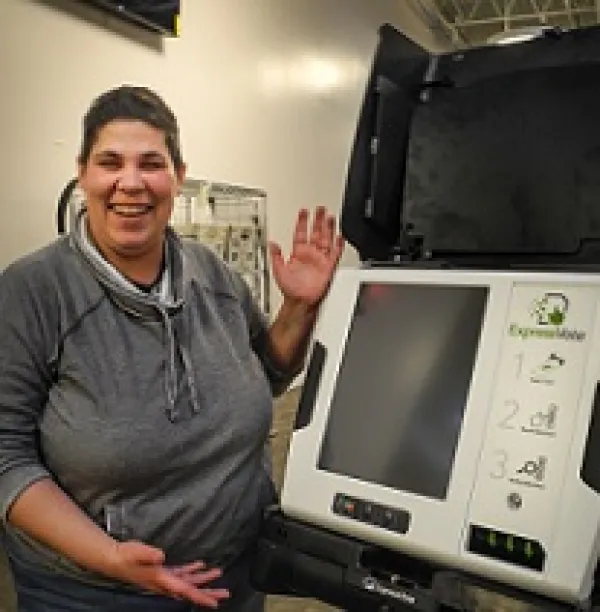
Well it took all of two weeks after the election, but as expected, our newly-elected Lieutenant Governor and objectively racist Ohio Secretary of State Jon Husted has pledged to continue the mass purging of black, minority, young and poor voters.
Husted speaks with smug hypocrisy when he says “…we must also preserve the integrity of our elections.” Our ultra-conservative US Supreme Court in another of its infamous 5-4 decisions granted Husted the power to throw people off election rolls after missing two federal elections. The final verdict comes when the wayward voter fails to respond to what looks like a piece of junk mail sent by Husted.
The Sixth Circuit Court of Appeals stopped the purge-crazed Husted from eliminating more than a million voters prior to this November’s election. Their ruling reinstated voters who had been purged going back to 2011, when Husted first took office.
In a just and democratic society, Husted would be serving time in prison instead of second in command of our state.

In starting an organization, the first thought for many is, “Where do we get the money?” The answer doesn’t have to be that hard. Why not create a dues system? Seems obvious, doesn’t it? Why not have the people who are participating in the organization, many of whom will benefit from the work of the organization, “pay to play,” and have membership dues?
There is actual only one big obstacle: asking!
Many who desperately want to create an organization that would make change and build power are stymied by the cultural restraint that has been built around the simple problem that people are not comfortable talking about money. To be more specific, many are not as uncomfortable asking churches, unions, and of course charitable foundations for money as they are asking each other for money.
In building ACORN, we found that ironic. Most people don’t mind being asked for money, as much as others resist actually doing the asking.
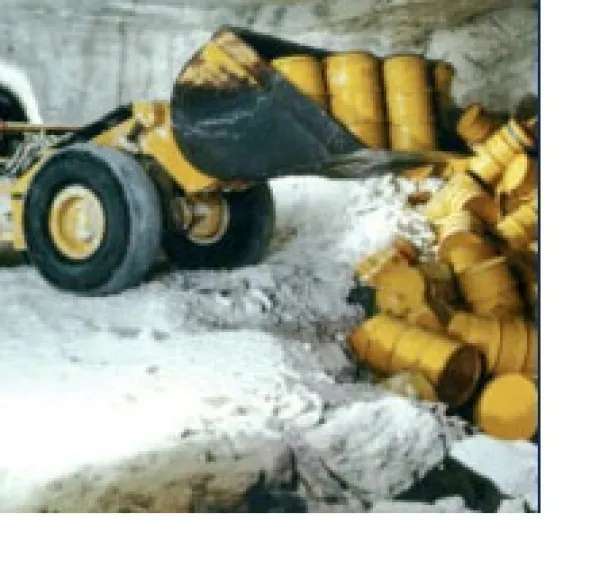
Please help us generate a large number of quality public comments to the U.S. Nuclear Regulatory Commission (NRC) in opposition to a 40,000 metric ton highly radioactive, irradiated nuclear fuel, centralized interim storage facility (CISF), proposed by Interim Storage Partners (ISP), at Waste Control Specialists (WCS) in Andrews County, West Texas. NRC's deadline for public comments on environmental scoping has been extended to November 19th. (Please be sure to submit your comments by 11:59pm Eastern time, Monday, Nov. 19, in order to make sure they make it onto the official record!)
It'd be great to set a new record for number of public comments on this subject matter -- to submit more than the 30,000+ public comments submitted last spring and summer, in opposition to a similar CISF, targeted just 40 miles away, at Holtec International/Eddy-Lea Energy Alliance, in southeastern New Mexico. And we're already well on our way to doing that!
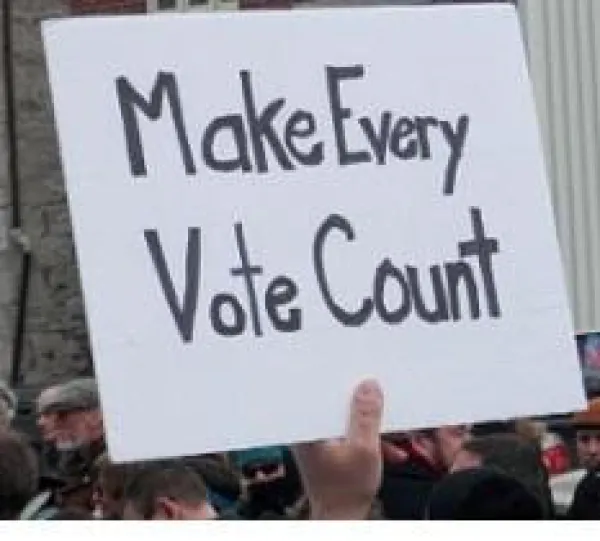
Donald Trump is in power in large part because Democrats have repeatedly conceded elections they really won. On Tuesday, that MUST change.
Anyone deemed a close loser MUST fight. Every tally must be contested, every denial challenged, all missing ballots found, every provisional honored.
What could bury our democracy? Stripped voter rolls, erased precincts, lies about where to vote, voting stations moved out of town, intimidated voters, impossible-to-get ID, street addresses required on reservations, lies about eligibility, unsent absentee ballots, suppressed registrations, hacked electronic machines, hidden source codes, trashed provisionals. It’s all been happening since at least 2000. Highly qualified teams of election protection specialists all over the country (www.freepress.org and many more; the state and national Democratic parties have hotlines) are ready to fight.
This essay poses reply to the polemics being waged against Ohio Issue 1, which are gaining strong momentum across media channels in the run-up to the election. These include the Issue’s rejection by judges of the Montgomery County Court of Common Pleas, reported on the front page of the Dayton Daily News on Oct. 29, in lamentably one-sided coverage; State Rep. Jim Butler’s blunt stance voiced at a recent Oakwood City Council meeting; and Dayton attorney Diane DePescale’s oversimplified editorial in the Oakwood Register on Oct. 24; to name a few.
These criticisms do give voice to some nontrivial arguments and concerns inherent in an amendment initiative, and deserve our full attention. But too many of these are tableaux of selective truths designed to stoke fear or appeal to the comforts of status-quo, pass-the-buck politics. We would be served better by recommitting the conversation to honest critical debate based on facts, intellectual bona fides, and reasonable discussion of the amendment’s social-legal purposes and consequences.
It’s time for America to get ready for the November ballots. Time to vote! Vote for your favorite person to represent you and your family when it comes to paying taxes, getting your street repaved and the potholes repaired. We vote for people we know personally and people we don’t know at all. We get our information from the formal and informal “meet your candidates” receptions that are held generally during the pressing weeks up to election day.
We watch the media news, the rampant rush of commercials that talk about what the “opponent” is not doing or are doing if its of a criminal nature. We only see images of the candidates wearing freshly pressed clothing, walking hand in hand with their spouses and children, shaking hands of people who mostly look just like them, and telling us only the good news that they will treat our family as if it were their family.
To vote is a privilege to some and a necessity and a right to others. African Americans and women have not always had the right to vote. Where is the power in the vote of a group of people who have, nothing to gain, it seems, when they do vote? Is there power in the vote?
The "[l]ongest bull run in the history of the stock market, congratulations America!" tweeted President Donald J. Trumpone day in August. But there are two Americas, and only one of them owns any stocks at all; and the richest 10% own 84%of all stocks owned by Americans. What is a stock anyway? A stock is a claim on a company's profits and assets, both of which are products of workers employed by the company. The America of the owning class lives off the labor of the other America and the rest of the world. On another day in August, President Trump tweeted: "For all of you that have made a fortune in the markets, or seen your 401k's rise beyond your wildest expectations, more good news is coming!" You know to which America the president intends to bring "more good news."

The Columbus Dispatch's opinion writers do not take its news coverage seriously.
A few weeks ago, the newspaper/website took down four Republican candidates for statewide office for being asleep at the switch while ECOT and its charter school kin ripped off Ohio taxpayers and Ohio public schoolchildren for $1 billion.
Taken to the woodshed were Attorney General Mike DeWine, Secretary of State Jon Husted, Auditor Dave Yost and State Rep. Keith Faber.
On Sept 9, the Dispatch endorsed former Congressman Zack Space, a Democrat, for state auditor over Republican Faber, while tagging the latter for his ECOT failures.
Two Sundays later, on Sept. 23, the Dispatch put on the blinders and ignored Yost's abject failure in policing ECOT while endorsing Yost over Democrat Steve Dettelbach for attorney general.
The Dispatch had little bad to say about Dettelbach, but forgot to mention that as U.S. attorney in Cleveland, Dettelbach brought down corrupt Cuyahoga County elected officials and sent them to jail.
The states have the power to regulate the practice of law and discipline attorneys
What many Americans do not realize is that the States have the power to regulate the practice of law and discipline attorneys. The following is primarily taken from the American Jurisprudence 2d Law Encyclopedia (the theory and philosophy of American law), Vol. 17 Attorneys at Law, Section 2 Power of state to regulate the practice of law, unless otherwise stated. Citations have been omitted for ease and clarity of reading.
The responsibility of regulating lawyers is an important governmental function in the administration of justice and the responsibility has historically been reserved to the sovereign states. Thus, a state’s authority regarding an attorney’s license to practice law is not preempted by the Federal Constitution, notwithstanding that the licensed attorney may also be a federal judge.