
Editorial

For the past six months, I have had the pleasure and displeasure of working at The Neighborhood House (NHI). The pleasure has been in working at a settlement house that was established in 1902 to serve the homeless, jobless, hungry, adults, children, pregnant mothers, families and people of all races who need community services to become and remain self-sufficient. The pleasure was in providing hope and encouragement as well as resources to meet the settlement goals in Franklin County.
The displeasure was in watching the NHI become extinct as programs were cut and ended at a pace that showed no compassion for the people that it served or the employees that worked at the NHI, some for several years.
Let’s start with the first deception which clearly rests with the NHI Board Members. Now I’m going to assume that the NHI board has a job description in place, which is a standard practice with non-profit organizations. However, if it does have a job description, then the question that arises is: what are they doing or what have they done to “save” the NHI from failing after 114 years of service.

Dear members of the Electoral College,
You have a momentous decision in front of you. That your upcoming vote for the President of the United States on December 19, 2016 matters is an understatement. Your choice magnifies not only your duty to uphold and defend the Constitution of the United States, but also your conviction that the next president will in good faith do the same.
Many of you reside in states where “winner take all” prevails, but in truth, no federal law requires an elector to honor that pledge. The Electoral College provides mechanisms by which you can decide what’s best for our country based on your conscience and your duty.
No doubt, President-elect Donald Trump is a controversial figure. By what measures might you logically decide whether or not he deserves your vote? The three-part test – Right, Moral and Good – can be applied to many difficult decisions in life. (See original essay below.) Let’s put Mr. Trump to the test.
I am an elected member of the Franklin County Democratic Party (FCDP) Central Committee. On Wednesday evening, I got an email on FCDP letterhead with an announcement from Columbus City Attorney Rick Pfeiffer. His message to the Democratic Party Executive Committee was that he will not be seeking re-election for City Attorney. He closed with an endorsement for his successor, City Council President Zach Klein.
I read this not so much as an endorsement, but as marching orders to support the candidate hand-picked by the party elite.
This morning I got confirmation. I received an email from Mayor Andrew Ginther announcing that he is also endorsing Zach Klein for City Attorney. There hasn’t been any Central Committee or Executive Committee meeting to discuss, and there certainly hasn’t been a broader conversation to get feedback from the public. This is what our democracy looks like in Columbus. I wish I could say I was surprised.

This year's election taught us that big money has taken over Ohio politics and that the news media's role in influencing election outcomes has become insignificant. Consider the following three cases in point:
1. Rob Portman and his backers spent $50 million in television ads making exaggerated, deceptive claims that Ted Strickland was a bad governor. Before the ads started to run, Strickland was ahead by 15 points. Three months later, Portman was ahead by 15 points and won going away. In other words, 30 percent of the Ohio electorate is so gullible that it can be swayed by a barrage of misleading unanswered ads.
Aside: Portman featured his wife in television ads. Jane Portman told the camera: "Rob has a good heart." Sorry, Jane, your husband Rob, who orchestrated $50 million in lies about Ted, has a "dark heart."

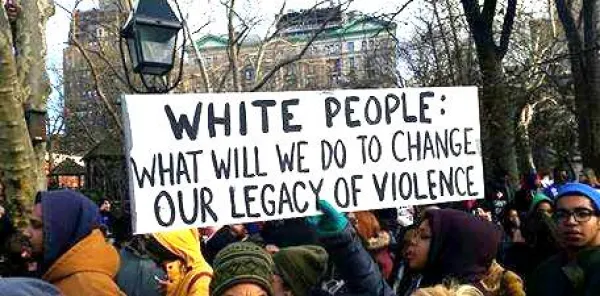
We live in a racist patriarchy. If you followed the 2016 Election and possess any sense of social justice, that is obvious. Those of us who are white and heterosexual have a distinct advantage over those who are not; those of us who are cis male are even more privileged.
Many of us who possess such privilege are deeply troubled that our friends without privilege are discriminated against. Many people like me have expressed interest in moving to Canada to escape the current political climate of hate. However, moving to Canada is the pinnacle of privilege. If the we move to Canada, we are abandoning our friends to avoid witnessing their suffering.
Trump’s appeal is based on privilege.
Trump’s hate machine is focused on people who do not possess privilege. If you would actually be able to move to Canada, you are privileged. You will be fine. The non-privileged need you here. (With that said, there are certainly exceptions to this, especially within the LGBT community.)

Last Wednesday morning, Donald Trump defeated Hillary Clinton in the presidential election. On Wednesday night there began protests against the idea of a President Trump all over the country. These demonstrations have spread here to campus.
There are protests because people feel like they have something to say. Or at least, that they have to say something. What is being said is not groundbreaking, but it serves as an affirmation that the words have not lost meaning since Nov. 9. People shouting at Trump Tower and proclaiming “#NotMyPresident” know both that this will not cause him to change his behavior, and that he actually is their president. But they also know that the most feasible future for Progressives is a remaking of the Democratic party. And considering the cluelessness of party “elites” (to adopt the nom de guerre of the campaigns) on Tuesday night, it must be a remaking by the people.
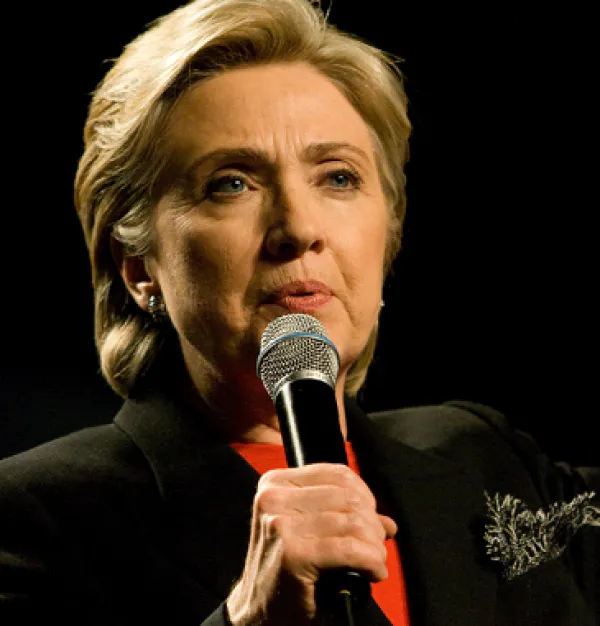
Why, why, why, are people saying that we should prepare to hold Hillary Clinton accountable once she is in office? Why on Earth isn’t everybody doing that right now? Are we seriously going to gift her the White House and then expect her to listen to us?
If she is elected on her current platform, she will have a mandate to remain moderate for the next four years. The people will have given their approval of her ideas, and handed her permission to act on them throughout her term. Should she be moved to the left before election day, she would have a more progressive mandate to govern. Electing Hillary Clinton after she agreed to offer free pre-K classes to all children would let the people hold her accountable for actually doing so. It would be ridiculous to vote for her platform in November then kick and scream for something different in February.

John F. Kennedy once said: “There is no city in the United States which I get a warmer welcome and fewer votes than Columbus, Ohio.”
Even if you live on Mars you probably know, “As goes Ohio, so goes the nation.” Yet in 1960, Nixon took Ohio, but Kennedy won the election – the last time a candidate from either party won the White House without carrying the Buckeye State.
Incredibly, if the polls hold true, this could happen again nearly half a century later. Don’t pinch yourself, this is no nightmare.
Behind the scenes, however, the reality of Ohio going red for Trump undoubtedly has some wringing their hands and sweating buckets. From Gov. Kasich’s office to Ohio Democrats, to our own city’s effort to attract young professionals, and last but not least, for a lot of Ohioans, the thought of a Trump victory for either Ohio or the White House is a reality that has some wondering what the future consequences could be both culturally and financially. Certainly Gov. Kasich is worried about it. He voted early and wrote in Sen. John McCain.
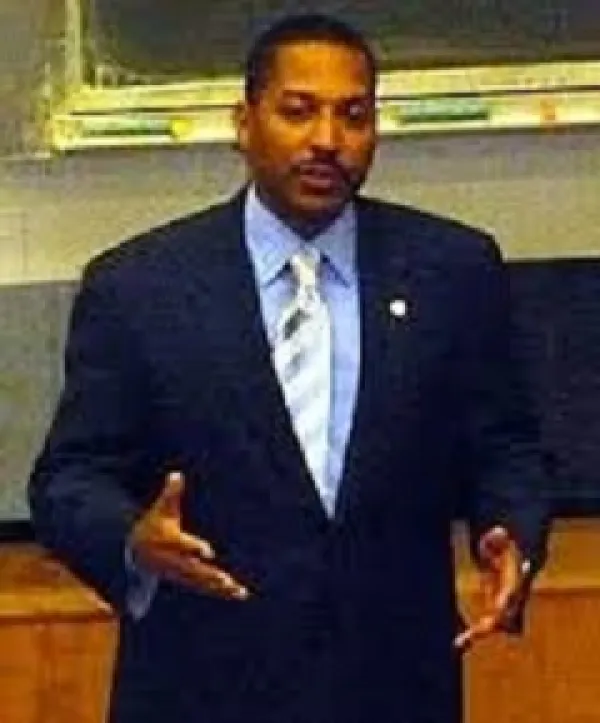
Although Kevin Boyce’s tenure as Ohio treasurer from 2009-2010 was riddled with scandal, Boyce claims he knew nothing about the corruption carried out by his deputy treasurer, Amer Ahmad, who is now in federal prison. Boyce’s claim was called into question this year by federal Securities and Exchange Commission filings.
Those filings are against others and don’t charge Boyce with any legal violations. But the allegations in them, along with Boyce’s responses, deserve to be considered by voters in deciding whether to make Boyce a Franklin County commissioner in the November 8 election.
The filings involve State Street Bank and Trust Company. According to the SEC, the Massachusetts bank in early 2010 paid not only kickbacks to Ahmad but also contributions to Boyce’s campaign in return for lucrative state contracts to provide custody services for three Ohio pension funds.