
Feature

Stop Ohio’s Investment in Israel Bonds (No New Bonds)
Campaign focus: Ohio State Treasurer & public funds
Primary demand: No new investment or reinvestment in Israel Bonds
Opportunity to address the treasurer directly
January 21st at 10am Rhodes tower
**Even if you do not want to speak, please try to attend! We need to have a large turnout to show the treasurer that our movement is growing and that the pressure to stop investment in Israel Bonds is not going away.
How to Prepare testimony: https://docs.google.com/document/d/1862bnwXU7h4j5Wdekkdy-q331oeBITE8dsDwBRrgiWg/edit?usp=drivesdk
Zoom Testimony training Jan. 15th 7pm est. : https://zoom.us/j/92021624402?pwd=PffWudbfBcv7I3M56TNKn2VgvFjnfJ.1
📄 Ohio Divest Resource Page:
✉️ Email the Treasurer Action:
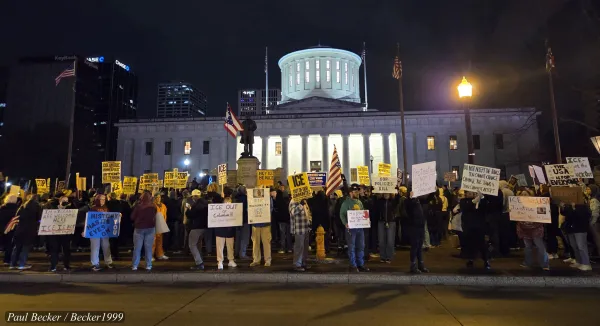
ICE is playing catch-up to the Ohio Immigrant Alliance, finally publishing numbers about arrests during Operation Buckeye weeks after we did.

The U.S. grid is currently flooded with data center proposals that will never get built according to a recent whitepaper from Schneider Electric. The paper argues that only 10-20 percent of all proposed data centers will ever get beyond permitting. If true, the report argues, this may lessen the projected impact from load demand growth, but it makes it more difficult for utilities and grid operators to plan for the future.
Last year, RAND Corporation's "upper confidence" forecast projected 347 GW of AI-sector power consumption by 2030. But Schneider Electric called that prediction "extreme" and cited more modest forecasts of under 100 GW.
Such claims echo a 2018 Lawrence Berkeley National Laboratory study that compared load forecasts and actual growth for 12 Western U.S. utilities in the mid-2000s and found most overestimated future demand.
Haga clic aquí para español
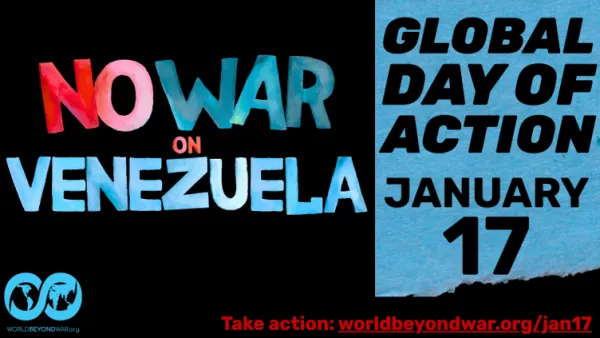
The U.S. government is now attacking the capital of Venezuela. If the murderous sanctions were not enough to mobilize the people of the United States and the world to put a halt to this, if the various coup attemps were not enough, if the ongoing brutal murder of over 100 boaters didn’t do it, if the no-fly-zone and naval blockade and pirating of oil tankers didn’t hit the threshold, can this do it? Can we mobilize a massive nonviolent movement against this war now? Can we bring pressure to bear on the pretense of a government on Capitol Hill in Washington DC, where the Senate has twice and the House once voted down resolutions to put a halt to the criminal action of the U.S. military? Can we shame so-called legislators who were told by the White House that there would be no war and that there was therefore no need to oppose one, and who pretended to believe that?

Columbus did not simply “have a year” in 2025. It ran an experiment.
The experiment was straightforward: Can a region stack national-scale industrial development on top of local-scale fragility and call it progress? It can — if the definition of progress is press conferences, ribbon cuttings and renderings that stop before the line item titled “who pays.”
A year-end recap that reads like a scrapbook misses the point. Columbus is a paperwork town pretending to be a destiny town. The only way to understand 2025 is as a ledger — what happened, what changed, and who absorbed the cost.
What follows is not a countdown. It is a map of the stories that defined Columbus in 2025.
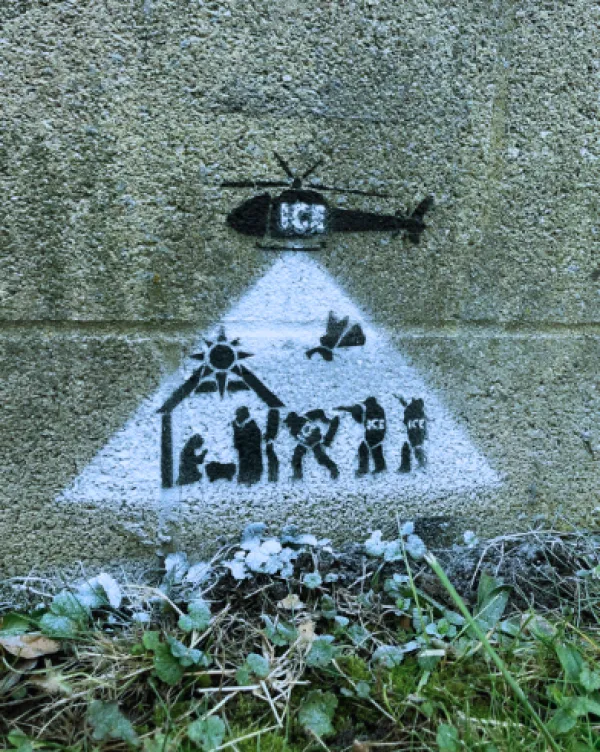
Ohio Immigrant Alliance (OIA) just released a report, based on publicly-available data, showing that more than 214 people are currently behind bars due to the ICE raids in Columbus — and 80 percent are Latino.
Haga clic aquí para español
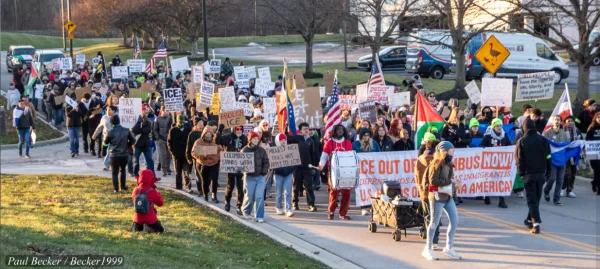
In Central Ohio, the federal government has unleashed untrained individuals from outside the community, who think they are unaccountable. But greater Columbus has responded in one voice. From the grassroots, which quickly organized itself in sophisticated ways, to civic leaders and faith-based institutions, Columbus is sending a unified message: Immigrants are welcome, ICE is not. Read on for quotes from leaders; more examples of ICE brutality; and resources keeping the community safe.
Columbus Responds With One Voice
From disrupting ICE agents’ sleep, to documenting abuses and holding them to the Constitution, Central Ohio activists, lawyers, and organizers are mobilized around the clock.
ICE has got to go. That is the message Columbus residents have been sending since a couple hundred agents descended on the city and began to hunt people on the streets. They immediately began mobilizing neighborhood watches and alert systems, keeping agents awake all night at their hotels, and setting up food delivery chains.
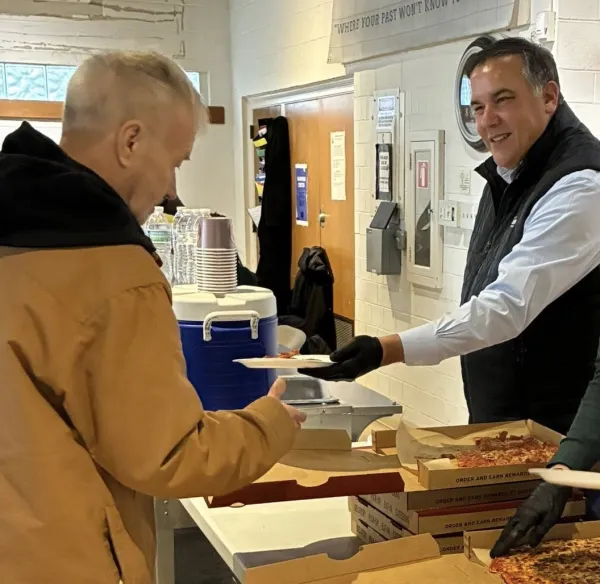
I learned that Columbus mayor was going to visit the 3rd Shift Warming Center and I was suspicious that he was doing so just for another Facebook “photo opportunity.”
Yeah, I was correct. He and his staff members (plus police bodyguards) arrived with pizzas so that he could be photographed giving them out. He also walked around to shake hands, but I don’t think he learned anything from the experience.
I sat at a round table watching his entourage coordinate his movements, all while a few boxes of pizza were sitting on a table. The smell of the pizza was everywhere, but instead of allowing people to eat they had to wait for the mayor to get photographs of himself walking around. Ever movement was choregraphed.
The funniest thing I heard was from an older man sitting next to me, “Great. We have to sit here smelling pizza and on top of that I’m allergic to tomatoes!”
The mayor’s chief of staff made sure that he made contact with specific people, but it was 3:30 in the afternoon and not late at night when the basement would be packed.

You’re one of the thousands of homeless in Columbus. You own a tent and found the perfect isolated location, but it’s getting cold. Very cold.
Neither City Council nor the Mayor invest much time thinking about how to solve this problem. They talk about how much they care and post videos online, but have no long-term strategy. Or, maybe it’s that I started to think about it and noticed how little they (and Franklin County) actually do to help the homeless; especially compared to a Woman’s Volleyball Team.
I assumed that there were dozens of shelters and “warming centers” around Columbus to allow people to survive this level of cold. I was wrong.
During the day the homeless are encouraged to visit a public library to get warm (a completely different problem), but at night?
There’s only one “warming center” that operates 24 hours a day.
Read the previous sentence again.