
Feature
Many people are not aware that Columbus is home to several community owned radio stations that offer programming you will not find on mainstream stations.
Everyone is aware of our excellent public radio stations WOSU.org and WCBE.org. WOSU is well known for NPR news and the locally focused All Sides with Anna Staver (formerly Ann Fisher). WCBE’s focus on music and the arts includes Studio 35 and generous offerings from local bands.
They should be on your car radio presets but I hope this article will convince you to add 91.9, 92.7, 98.3, 98.5, and 102.1 – all “low power” non-profit radio stations available over the air in most of Franklin County and streaming online from anywhere! Note: newer cars often cannot pick up low power stations using the scan function. Try disabling the auto scan and go directly to the call number.

As Ohio’s cannabis industry grows, it's time for lawmakers to take the next logical step: launching a pilot program for cannabis social lounges. By looking to the successes of other states, Ohio can create safe, legal spaces for public consumption while supporting small businesses and enhancing public safety.
Currently, cannabis use is largely confined to private residences in Ohio, leaving renters and residents in public housing, where landlords may prohibit cannabis use, with few options. This forces many to resort to consuming in less-than-ideal locations like cars, public spaces, or hotels, increasing risks and public safety concerns.
Designated social lounges would help mitigate these issues. Just as Nevada reduced public consumption problems in Las Vegas by introducing lounges, Ohio could do the same, keeping cannabis off the streets and out of parks in popular areas like the Short North and Easton.
Jim Jordan is best known for kissing Trump’s ass, being an egomaniac, and a serial abuser of those he believes are below him. Jordan once said, “vaccine mandates are un-American.” Try telling that to all the families of the deceased, and to their faces.
The Ohio congressman is up for re-election this November in a gerrymandered mess of a district which includes small parts of Columbus, including a district (District 4) for which he’s done nothing. If you have any doubt about Jordan’s record, just ask his Democratic opponent, Tamie Wilson.
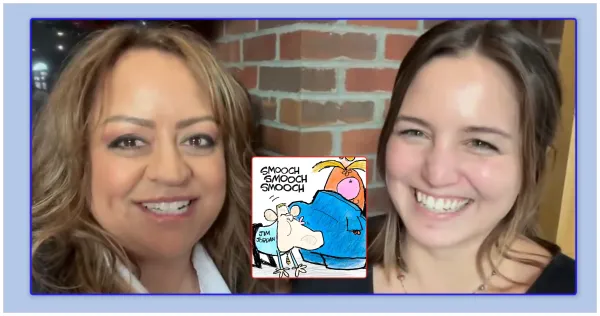
Wilson, while campaigning last week, met up with Gabby (pictured above on right). Gabby is a former waitress who unfortunately had to wait on Gymmy’s, er, Jimmy’s table one very uncomfortable and unforgettable evening. Wilson put their conversation on Twitter, which now has over 1 million views.
If there is anyone who can protect Central Ohio’s water supply from Intel, it is the grassroots environmental group the Columbus Community Bill of Rights (CCBOR).
For years they have warned that toxic radioactive fracking wastewater has been leaking out of 13 storage chambers located above the region’s watershed. And even if the proof is not definitive, it is likely an unknown amount of this fracking “brine” has moved down through the area’s five major rivers.
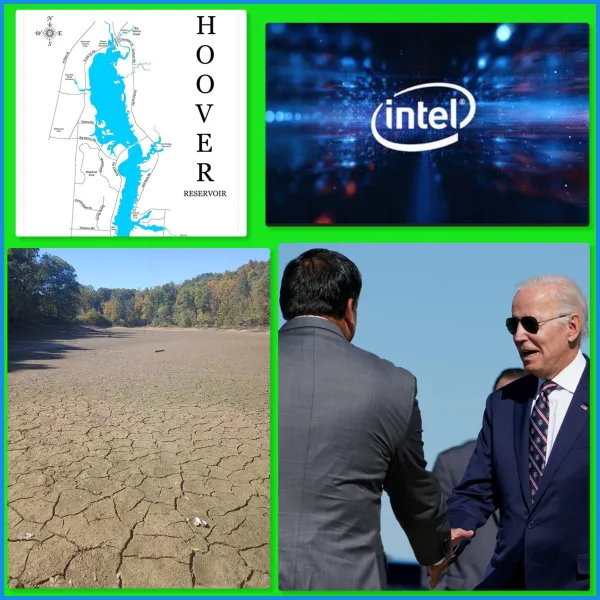
The oil and gas industry is not to be trusted, but on the horizon is perhaps the Columbus CCBOR’s greatest challenge. Intel’s massive New Albany campus which will be sucking 1.5 million gallons or more of water per day out of the Hoover Reservoir – a major source of water for the City of Columbus – beginning in 2027. Apparently this is needed to make their advanced microchips, as the tech giant demands.

“Ohio Students Unite to Reject Project 2025 and Rally Against Hate,” hosted by Ohio Student Association, Thursday, October 3, 4pm, outside of Greater Columbus Convention Center, 400 N. High St.
Watch video here
Video by Scot Lacy, Milopictures

The title is Hoodwinked in the Hothouse: Resist False Solutions to Climate Change, and it is now in its third edition and can be accessed—for free—online. The book was put together by “an international coalition of organization and activists,” relates the “Hoodwinked Collaborative” that “was convened to produce and distribute the groundbreaking publication on false solutions to the climate crisis.”
When bloodshed of inhuman war is ceased,
And peace endure.
So says the last poem written by Ukrainian writer Ivan Franko; he desired to end the first world war, but didn't lived to see the Peace of Versailles. If he would, he might be disappointed by short-sighted plans of peaceful life written by victors who never seriously considered life without wars and because of that failed to build sustainable peace.
Of course, in most places, most of the time, people always live in peace, because peace is the need and natural right of every person and every community, including the people of Ukraine. Restraint, truth and love, good trusting relations for centuries and millennia allowed people to live peacefully on the common planet Earth and in each of its countries, including Ukraine.
Peace, rooted in every particle of existence, always surrounds us. Even when we don't notice it. Even when injustice and evil far or near disturb us, cause pain and loss.
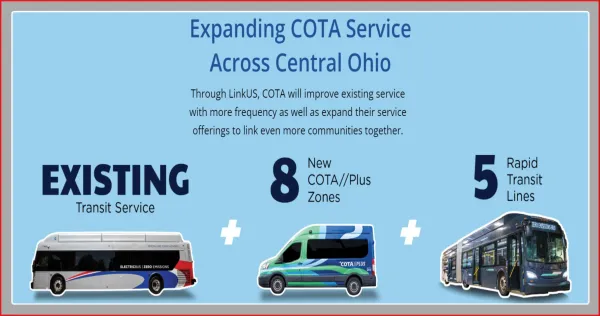
The City of Columbus, the Central Ohio Transit Authority (COTA), and the Mid-Ohio Regional Planning Commission (MORPC), as some would argue, are making a $6 billion dollar bet on the LinkUS November 5 levy vote. More specifically, that dudes are going to give up their monster trucks or Dodge Chargers for “BRTs” or Bus Rapid Transit. While others are going to relinquish their Audis, Mercedes and Tesla’s, even as the numbers of these luxury cars are increasing on Columbus freeways and streets.
Ditching your ride for a bicycle and a bus will not apply to everyone, insists COTA spokesperson Jeff Pullin, but they’re hoping many Columbus residents get on board and leave their car in the garage or forgo a car altogether.
“We are not asking everybody to give up their car, but we know there are people out there, especially people who are younger, who are not really wanting to take on that cost of the car. It costs upward to $600 to $700 a month to have a car in some cases,” he said to the Free Press.
When my dad moved to southwest Ohio in the early 1970s, the Dayton-Springfield area’s second city was home to over 80,000 people. When I was growing up nearby in the 1990s, it was 70,000. Today, it’s less than 60,000.
Springfield’s decline looks like an awful lot of Rust Belt cities and towns. And behind those numbers is a lot of human suffering.
Corporations engineered trade deals that made it cheaper to move jobs abroad, where they could pay workers less and pollute more with impunity. As the region’s secure blue collar jobs dried up, so did the local tax base — and as union membership dwindled, so did social cohesion.
Young people sought greener pastures elsewhere while those who remained nursed resentments, battled a flood of opioids, and gritted their teeth through empty promises from politicians.
The Center for Election Innovation & Research (CEIR) has some good news and a few pointed critiques ahead of this November’s election. In a survey of states’ efforts to protect their voter registration databases from cyber-attacks, the group found election administrators have made great strides in protecting the voter rolls from outside threats.
CEIR executive director David Becker explained that in 2016, Russian actors briefly gained access to Illinois’s voter registration database. His organization has been surveying states about security protocols every federal election cycle since.
“Our nation and the 50 states are doing a very good job with voter registration database security,” he explained. “I think it’s one of the reasons that we’ve seen, to my knowledge, no real successful efforts to breach voter registration databases over the last several election cycles after the 2016 wakeup call.”
But at the same time election officials are thwarting threats from without, they’re also undermining voter confidence from within through last-minute, legally dubious audits and policy changes.