
Feature
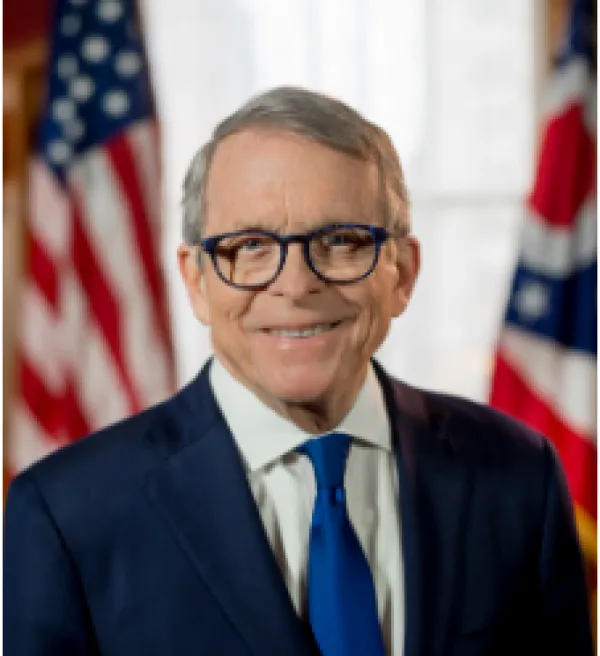
(The following is a fictitious memo from Gov. Mike DeWine’s campaign manager to the governor. It is make-believe, but it contains much truth.)
Good morning, Governor!
It is another lovely fall day in Ohio. The leaves are turning. I am sure there is lots to be done on your farm, but it will have to wait until after Nov. 8.
Things are looking very good, governor, as you have lengthened your lead in the public opinion polls over you know who since the primary.
Your opponent and her advisers apparently had no plan beyond winning the May 3 primary over the upstart John Cranley, and they had to turn to Sen. Sherrod Brown to do a million dollars’ worth of TV ads to defeat Cranley.
While your foe was figuring out what to do next, you were quietly mending fences with the misguided Republicans who did not vote for you in the primary. That effort was advanced when you had to make that inconvenient trip to Youngstown airport to receive the blessing of none other than Donald J. Trump. How you managed to keep him from endorsing one of your opponents in the primary is a secret that I am happy to let you keep!

Do bosses trust employees to be productive when working remotely? Not according to a new survey by Citrix of 900 business leaders and 1,800 knowledge workers - those who can do their job remotely.
Half of all business leaders believe that when employees are working “out of sight,” they don’t work as hard. Yet this belief contradicts the facts.
Do bosses trust employees to be productive when working remotely? Not according to a new survey by Citrix of 900 business leaders and 1,800 knowledge workers - those who can do their job remotely.
Half of all business leaders believe that when employees are working “out of sight,” they don’t work as hard. Yet this belief contradicts the facts.

JPMorgan CEO Jamie Dimon recently claimed that returning to the office will help improve diversity. And if he’s right, that’s an important argument for office-centric work. After all, extensive research shows that improving diversity boosts both decision-making and financial performance.
Yet does office-centric work really improve diversity? Meta Platforms - the owner of Facebook and Instagram - decided to offer permanent fully-remote work options after COVID hit.
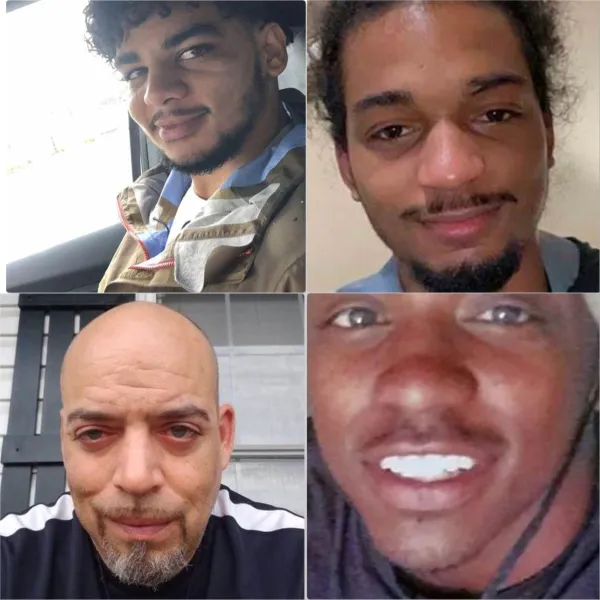
In the aftermath of the Donovan Lewis shooting, Cynthia Brown, a past Free Press Hero, traveled to eastern and northeastern Ohio seeking signatures and support for her effort to put a citizen-led initiative on a future statewide ballot. The initiative will let Ohio decide on whether it should change the Ohio Constitution by eliminating qualified immunity for law enforcement and other professions.
When Brown was in Akron, word got around to a local group of nuns she was advocating to end qualified immunity. The convent where these nuns live will go unnamed for fear of retaliation.
Not only did the nuns want to sign the petition they also wanted to collect signatures. Brown and her umbrella organization, the Ohio Coalition to End Qualified Immunity, gladly handed over a stack of petitions.
“I’m Catholic,” said Brown, “I should have pitched it to the church myself. But the Catholic church [in Akron] reached out to me first.”

In the aftermath of the pandemic, a worker uprising could soon boil over at Kroger stores throughout Central Ohio. The uprising is not only in response to their ultra-wealthy corporate leaders, but also towards their union, United Food and Commercial Workers (UFCW) 1059, headquartered on Columbus’ far east side.
Over the previous 45 days, Kroger associates, who’s current contract ended August 6th, twice voted ‘No’ to a new three-year contract. The “No” vote happened even though both contracts had been endorsed by UFCW 1059, as first reported by World Socialist Web Site or WSWS.org.
“This [second contract] was just reworded, but we all knew it was the same contract as the one we just turned down,” said a Kroger employee who refused having their name published out fear of retaliation.

Now that Columbus City Schools (CCS) teachers are back in schools, they have a simple request of Superintendent Dr. Talisa Dixon and her allies on the Board: "Please come to my school, a football game, an orchestra concert, and get to know us and what we do for the district."
But from what the Free Press has heard repeatedly over the summer – as the paper has been speaking regularly with a dozen teachers or so – is that Dr. Dixon has been, in many ways, not accessible to teachers and seemingly disinterested in their day-to-day efforts.
True, the virus forced schools to go remote in 2020, but these long-time teachers say there’s a tangible difference between Dr. Dixon and one past Superintendent, in particular.
CCS teachers told the Free Press they like to reflect on how Superintendent Dr. Dan Good treated them. Dr. Good ran the district from 2013 to 2017.
“He came to your school, walked the hallways, and he wanted to know your name and he wouldn’t forget who you were,” said one teacher.
We are quoting all teachers anonymously as they fear retaliation.

A resource you can use for talking points, conversations and letters to your legislators.
Sources are linked.
The War on Drugs, and in particular the war on cannabis, must be the most ill-conceived public policies ever undertaken by the United States. Covering one hundred plus years and costing one trillion plus dollars, the war’s luster has been largely lost. With the recent introduction of the federal Cannabis Administration and Opportunity and Act, full legalization feels tantalizingly close. What are the most persuasive arguments for change and what facts support them? Here are ten constructs concerning cannabis – prevalence, history, opposition, racism, medicine, safety, penalties, enforcement, federalism, and freedom – that make the case.
PREVALENCE. Millions of Americans break the law every day when they consume cannabis. In the eyes of the feds, even medical marijuana patients are labeled lawbreakers.
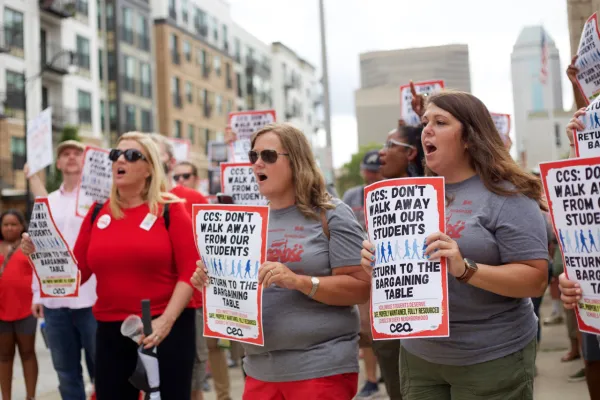
"Developers get handouts, kids get sold out!" rang out from the crowd gathered in front of the office of the Board of Education for Columbus Public Schools on Wednesday evening, July 27.
Members of the Columbus Education Association (CEA), a union representing more than 4,500 teachers and staff members of Columbus City Schools, have mounted a series of demonstrations this year as tensions have escalated between the union, the school district's administration, and the city government. With time running out before the start of a new academic school year in Columbus and negotiations between the union's membership and school officials stalled, members of the union have called for a vote to recommend a strike.. That recommendation could come as soon as August 4.

The monumental battle over remote work in Columbus and elsewhere is heating up this summer as more traditionalist business leaders are demanding that their employees come to the office much or all of the time. Google maps workers, asked to come back to the office full-time recently, fought back with a petition and threats of a strike, and won a reprieve of 90 days.