
Human Rights
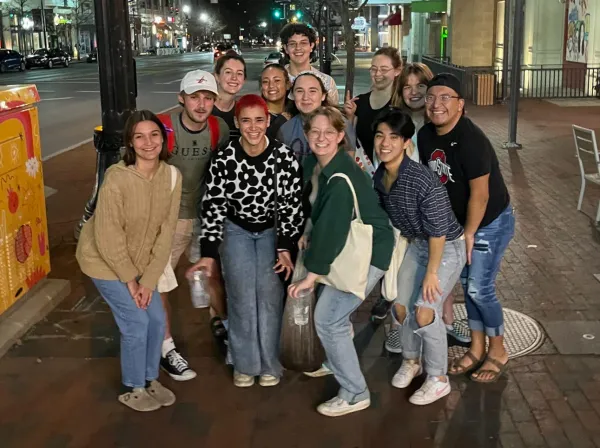
Early Monday morning, the hourly workers at Starbucks, located at 1784 North High St., petitioned the National Labor Relations Board (NLRB) for an election and demanded union recognition from CEO Howard Schultz and local management. An overwhelming majority of workers at the store signed union authorization cards and a petition demanding union recognition.
These baristas are the third in Columbus and the ninth in Ohio to join the Starbucks Workers United movement that has swept across the country. Workers at the international coffee chain have filed for elections at hundreds of locations across the country and have won representation in over two hundred and fifty of them.
These coffee workers join with their union siblings downtown at the 88 Broad St. location and in Westerville at the South State St. store in demanding dignity, respect and improvements at their workplace. This petition highlights the growth of the movement in the Midwest, where union density among Starbucks shops in Ohio, Michigan and Illinois grows to rival the spread of the campaign in the company’s historic strongholds of Seattle and New York.
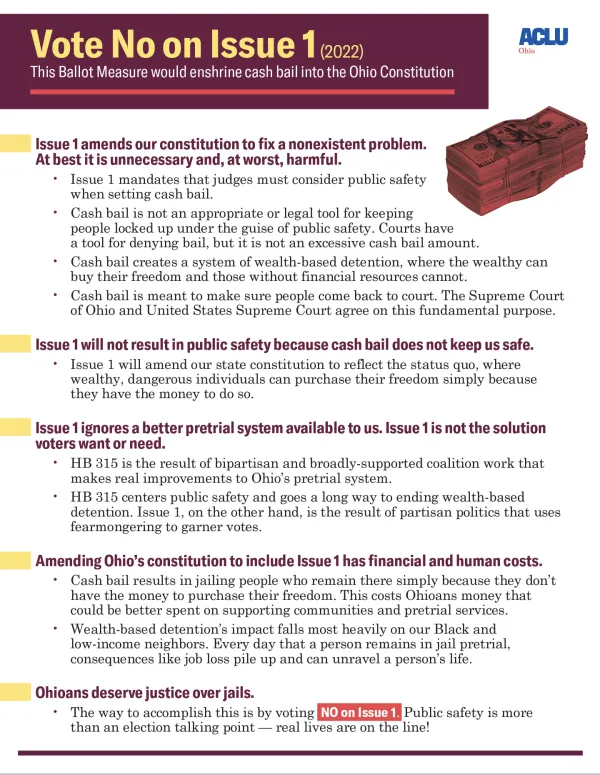
Both Policy Matters Ohio and ACLU Ohio support the coalition working to defeat Issue 1 — a proposed amendment to the Ohio Constitution which would double down on inhumane and ineffective wealth-based detention.
Policy Matters Ohio’s senior researcher Piet van Lier released the following statement:
“Most Ohioans believe that liberty and justice for all means everyone, no matter their race, gender, or income. But under Ohio’s cash bail system, people accused of a crime can be held in jail for days, weeks or months while awaiting trial simply because they can’t afford to buy their freedom. In fact, on any given day, more than 12,000 Ohioans are incarcerated before their trials, the majority not because they pose a threat to anyone but because they can’t afford to pay their way out of jail.
“Ohio lawmakers from both sides of the aisle recognized that holding people in jail simply because they cannot afford bail is not only unjust, it actually places more stress and strain on our communities. That’s why a group of legislators proposed a bipartisan plan to end wealth-based detention in our state.

I’m a leftist. Not a Democrat, but an actual leftist. The type that Trump and all of the other Fascists think of when they refer to center-right “liberals” like Joe Biden. I have become so disengaged with modern politics that if either of the main political parties this nation has to offer are involved, I tune out.
They sold me out long ago. I once was struck briefly by the vision I thought Obama represented but, despite super filibuster and veto proof majorities and control of the executive branch, they did virtually nothing. I have stated aloud that I sometimes prefer Republicans to Democrats because at least they are honest and upfront in their support of the status quo oligarchy the US has become. The Dems will tell me they support things like Black Lives Matter, student loan erasure, Medicare for all, and on and on, and then sit on their hands while nothing changes for the better. Usually, it gets worse.
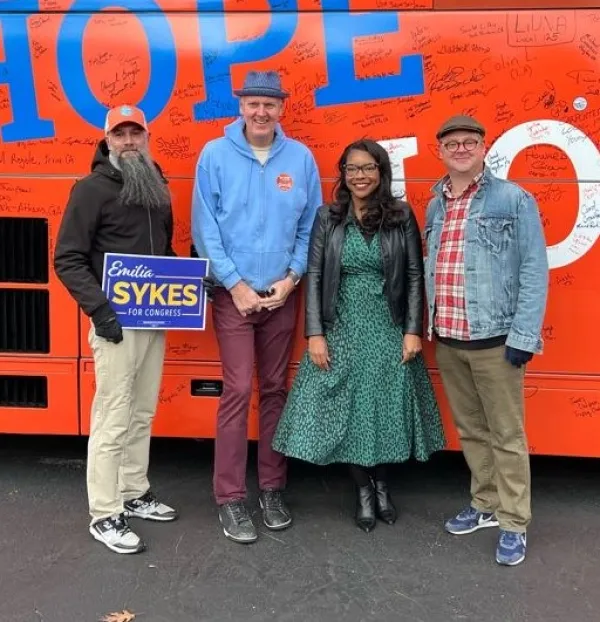
The national evangelical group Vote Common Good swept through Ohio this week urging fellow Christians to defeat election-denying, insurrection-supporting candidates in November.
Vote Common Good (VCG) has been trying to educate Christians about the dangers of Christian Nationalism since 2018, and while it is a nonprofit, VCG is focused on opposing Trump’s mastery over many Evangelicals.
“We are in a fight to protect our democracy from election-denying, insurrection-supporting, law and order-attacking, democracy-downgrading candidates and movements,” VCG Executive Director Doug Pagitt said. “Voters of faith can and must choose the common good, not political party, when heading to the polls this November.”
According to Pew Research Center, 29 percent of Ohio adults identify themselves as Evangelicals. And in the heart of it all, Central Ohio is considered by many a hotbed of Evangelism, home to Rev. Rod Parsley’s World Harvest Church, for example, with a congregation over 10,000 strong.
In January of this year, a Columbus Charter Review Commission was appointed to review and recommend changes to our city charter that will go on the ballot this November. One of the proposed changes, which came from the City Attorney’s office, was going to make it even more difficult for citizen initiatives - true democracy of, by, and for the people - to get on the ballot. Well, I am happy to report that through grassroot, citizen advocacy, this was thwarted and better conditions were won that will make it easier for citizen initiatives to make the ballot in the future. The ultimate decision will be the Columbus voters on November 8th.
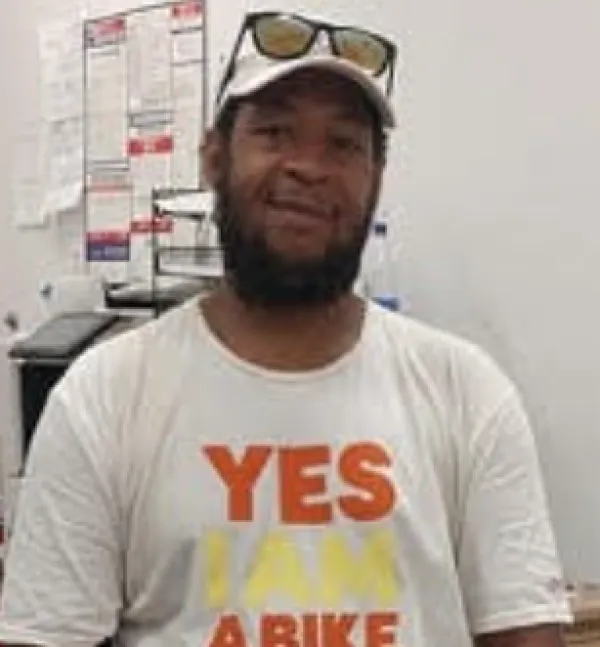
WHAT LED YOU TO THE OPEN SHELTER?
“I asked some homeless guys where to get stuff at and they told me the location. They showed me where to go and ever since I have been coming here. It was about eight or nine years ago. I didn’t have anywhere to go. I didn’t want to live with my family. I needed to go away and get my stuff together. There was drama. I wanted to be by myself. I was staying in a tent in downtown.”
“I would get up at 7 in the morning. Trying to find places to eat, get clothes and stuff I need. I never had any real problems except for the city coming down and tearing people’s tents down for no reason. I lost a lot of things. Sometimes other campers won’t tell you if the city is coming. So if you go away for a couple of days, your stuff could be gone.”
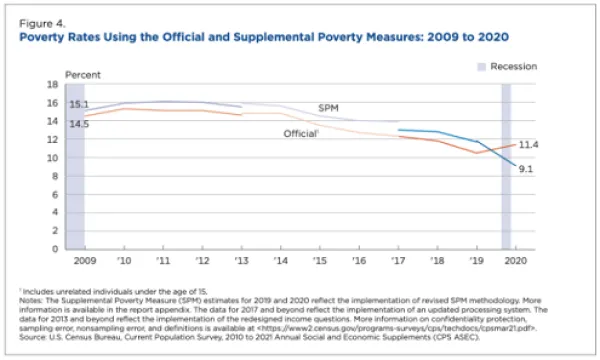
Some great news for a change: the United States hit a record low rate of poverty with a decrease from 9.2% at that level to 7.8%, according to the Supplemental Poverty Measure that pretty much counts everything from all governmental aid to wages and so forth. Additionally, child poverty was only 5.2%, a drop of 4.5 percentage points from 2020.
How did it happen? Simply put, low-income families were given more money by the federal government. For a change, the money went directly to families through various benefits, special guaranteed family allotments for children, and unemployment benefits increases. By directly, I mean that for the most part the states, red or blue, were not able to prevent families and workers from receiving the benefits by diverting the money or requiring burdensome tests and disqualifications. There’s no question that it cost big money for the Biden administration to make this happen and a huge pandemic-level crisis to force the hand of Congress, but it confirms what National Welfare Rights Organization leaders just to say repeatedly: money is what ends poverty. Period. Full-stop.
Some great news for a change: the United States hit a record low rate of poverty with a decrease from 9.2% at that level to 7.8%, according to the Supplemental Poverty Measure that pretty much counts everything from all governmental aid to wages and so forth. Additionally, child poverty was only 5.2%, a drop of 4.5 percentage points from 2020.
How did it happen? Simply put, low-income families were given more money by the federal government. For a change, the money went directly to families through various benefits, special guaranteed family allotments for children, and unemployment benefits increases. By directly, I mean that for the most part the states, red or blue, were not able to prevent families and workers from receiving the benefits by diverting the money or requiring burdensome tests and disqualifications. There’s no question that it cost big money for the Biden administration to make this happen and a huge pandemic-level crisis to force the hand of Congress, but it confirms what National Welfare Rights Organization leaders just to say repeatedly: money is what ends poverty. Period. Full-stop.

What it is. What it does. What happened to it. Is there hope for it?
Cannabis in Ohio has suddenly gone quiet. For a time, the Statehouse buzzed with action. The House had H.B. 60 (medical marijuana for autism), H.B. 356 (lower marijuana penalties from felonies to misdemeanors) and H.B. 210, 382, 498, and 628 (all to permit adult use cannabis). Late last year, the upper chamber fast tracked its approval of Ohio Senate Bill 261 to improve the current medical marijuana program, sending the bill to the House where four hearings were held in the Spring. Nothing since. What happened? The game is called stall ball.
Where did S.B. 261 originate?

109 Palestinians killed – 0 Israelis killed – definitely a large increase in lethality in the West Bank, but the recent incursion in Gaza killed 35 Palestinians compared to 263 in 2021.
6,972 Palestinians injured – I Israeli injured
650 Palestinian structures demolished displacing 645 people.
483 Attacks on Palestinians by Israeli settlers were so far this year, almost as many as in all of 2021.
Source: UN Office for the Coordination of Humanitarian Affairs – Protection of Civilians report.
When you compare these statistics for killing/injury of Palestinians and Israelis, it becomes clear that despite the constant reporting of 1,000s of missiles from Gaza, these are not warranted for the defense of Israel.
In the last three months Israeli forces have killed approximately 70 Palestinians –13 of them minors, including two five-year-old children.