
News
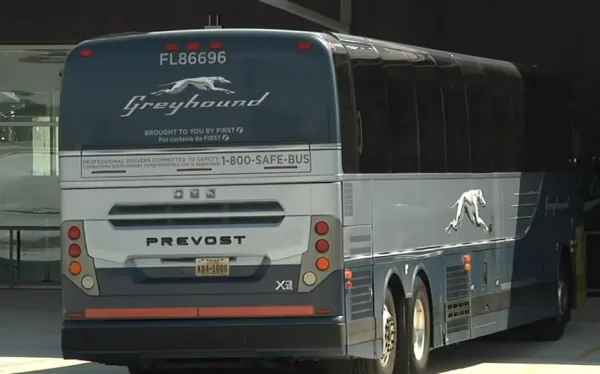
Several major Columbus news media reported this past week that Greyhound buses are leaving their central location from downtown Columbus and are opening a new terminal at 845 North Wilson Road in the Hilltop neighborhood.
A June 27 Dispatch story stated, “Greyhound’s new terminal, in the site of a former Shell station, features indoor and outdoor seating, ADA accessible restrooms, a ticket kiosk, and round-the-clock live ticket sales. The new site doesn’t offer food but is within walking distance of a Waffle House, Wendy's and McDonald’s…The Greyhound station Downtown has moved nearly 10 miles west of the city’s center.”
The decision to move the Greyhound terminal drew harsh criticism from numerous transit advocates. One stated, “Columbus is a joke of a city. The new location is wildly inaccessible without a car. Just getting to the new station via COTA will add an hour to any trip I take.”

Quarry Trails is Central Ohio’s newest Metro Park, but it is also becoming the area’s latest mixed-use extravaganza. The initial reviews of the park are mixed (so to speak). But this is certain, some Metro Parks fans still want answers to how Quarry Trails – which was promised to be a world-class park – came to be.
Quarry Trails is a hybrid of sorts. A park with homes, condos, and retail. Some embrace a waterfall within walking distance from a spa, but others are critical, saying the entire property should have been made into a park.
One critic is certified naturalist Don Kloss, president of Central Ohio Nature and a Metro Parks volunteer. Kloss also has concerns about RAPID 5 (“Rivers and Parks Imagination Design”). The massive private and public “vision,” not a plan yet, to remake Central Ohio’s five major waterways: The Big Darby, the Scioto River, the Olentangy River, Alum Creek and the Big Walnut.
Kloss is convinced Quarry Trails is a prototype for RAPID 5. It is just off the west side of the Scioto River in Grandview. A test-run, he adds.

The freedom of reproductive choice in Ohio. Legalizing recreational marijuana in Ohio. Ending Qualified Immunity in Ohio.
Those are all citizen-led ballot initiatives currently seeking to amend the Ohio constitution, and one initiative that may someday be jumpstarted by (progressive) Ohioans is ending the sales of Army and mass shooter guns.
As many know, the GOP-besieged Statehouse is trying to stop these citizen initiatives with Issue 1, which will be put to a statewide vote in August. If Issue 1 passes a 60 percent supermajority will be needed to change the Ohio constitution instead of a simple majority rule of 50 percent (among other changes making it more difficult to get a citizen initiative on a ballot).

Ohio Attorney General David Yost earlier this week rejected the Ohio Coalition to End Qualified Immunity’s (OCEQI) summary of petition yet again. This will be the fifth time the AG’s office has denied the OCEQI’s ballot language to amend the Ohio Constitution, but these activists are refusing to take ‘No’ for an answer. The OCEQI is re-starting signature gathering this weekend and their legal team has begun re-writing their amendment.
OCEQI spokesperson Cynthia Brown, who lost a nephew to Columbus police, says their Coalition partners – such as the Van Jones Institute for Justice and Campaign Zero – also remain determined to have Ohioans make their own decision at the ballot box to end Qualified Immunity.
“We strongly disagree with Dave Yost,” said Brown. “We can protest in the streets all we want, but if the laws are not on our side this will continue to happen.”
Ohio Attorney General David Yost earlier this week rejected the Ohio Coalition to End Qualified Immunity’s (OCEQI) summary of petition yet again. This will be the fifth time the AG’s office has denied the OCEQI’s ballot language to amend the Ohio Constitution, but these activists are refusing to take ‘No’ for an answer. The OCEQI is re-starting signature gathering this weekend and their legal team has begun re-writing their amendment.
OCEQI spokesperson Cynthia Brown, who lost a nephew to Columbus police, says their financial supporters – such as the Van Jones Institute for Justice – also remain determined to have Ohioans make their own decision at the ballot box to end Qualified Immunity.
“We strongly disagree with Dave Yost,” said Brown. “We can protest in the streets all we want, but if the laws are not on our side this will continue to happen.”
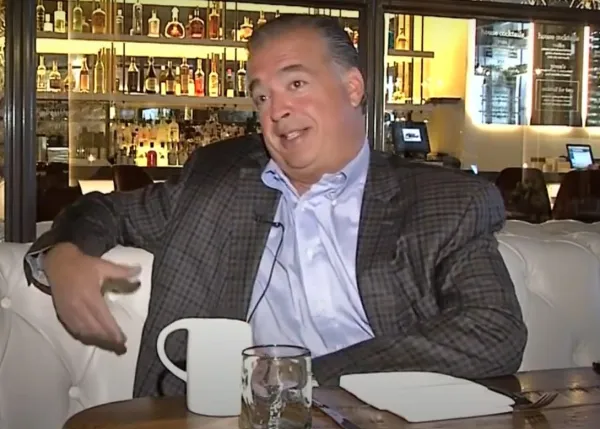
Everybody in town knows who Cameron Mitchell is and many have dined at his local establishments, such as Cap City Diner. His meteoric rise from dishwasher to nationally recognized restaurateur is also well-known. His restaurants, while pricey and bougee for some, have given Columbus a je ne sais quoi flavor (kinda).
Ask anyone who has worked in one of his kitchens or carried his golf clubs at a local country club and they’ll tell you he’s a down-to-earth guy. Cameron also has significant influence over Ohio’s restaurant scene. The Free Press heard he had a big say on re-opening protocols during the pandemic. His restaurant group, Cameron Mitchell Restaurants, sits on the Ohio Restaurant Association’s board, as does Wendy’s, White Castle and the ole’ Rusty Bucket, which Cameron is part owner.
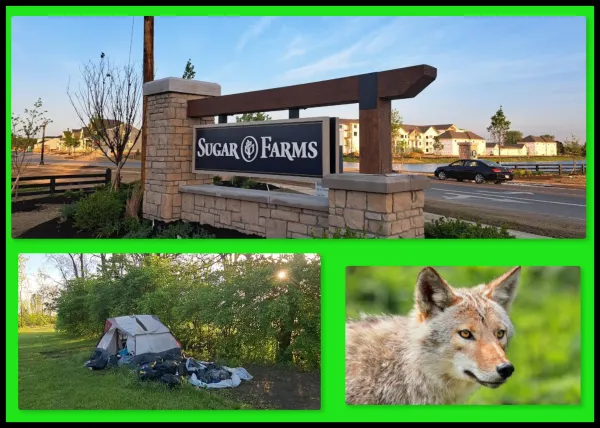
On the farthest western edge of Columbus, in a patch of forest which days are probably numbered, several coyotes howl in the night. These same coyotes, believed to be three brothers, were recently witnessed dashing across 70 West near 270.
The coyote’s patch of woods is connected to a subdivision where the houses look alike. Of late there’s more “Missing Cat” signs taped to lamp posts (sushi for coyotes, believe some).
Also being squeezed out are the houseless, but their tents remain. “Brett,” who bought a 100-year-old farm house near here, said he’s called 311 nine times over the past year to have an abandoned tent (pictured above) removed from Clover Park, but no City employee has ever shown.
When the relatively unheard of IQAir released its annual “World Air Quality” report earlier this year, it found the “most polluted major U.S. city was Columbus, Ohio.”
Equally alarming and unbecoming is how IQAir said Columbus has a high concentration of PM 2.5, described as some of the worst inhalable particles, which can cause depressed lung function and premature death.
PM 2.5 (particle matter) is mostly created by burning fossil fuels. Some claim automobile-centric Columbus “smells bad” around 9am, just after rush hour. But worse air quality than Los Angeles?
“Usually, Los Angeles is up there. But Columbus beat Los Angeles,” said IQAir’s CEO of North America Glory Dolphin Hammes to WOSU back in March.
Both the Mid-Ohio Regional Planning Commission and the Ohio EPA told WOSU the methodology IQAir followed is providing inaccurate data because some of their air sensors are not up to federal EPA standards.
The Central Ohio Reuse Coalition (CORC) will proudly join Columbus City Councilman Emmanuel V. Remy at this evening’s council meeting where Councilman Remy will sponsor a resolution committing the city to a reduction of plastic in Central Ohio and to encourage community members, organizations, and businesses to commit to plastic reduction. This follows CORC’s meeting with Councilman Remy where coalition representatives presented Remy with a draft resolution and requested his sponsorship.
The resolution comes just after Earth Day, and demonstrates the city’s commitment to reducing plastic, protecting the health of its citizens, and diverting waste from the landfill.
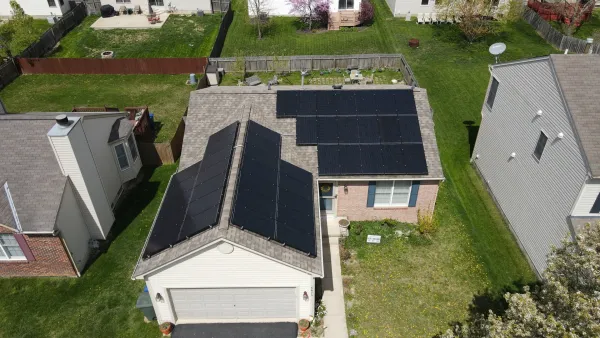
Sustainable Columbus and nonprofit group Solar United Neighbors (SUN) will announce the launch of the Columbus Solar and EV Charger Co-op on April 19th. The group will help Franklin County residents, small businesses, and nonprofit organizations go solar. The co-op is launching off the heels of the city announcing that Columbus received a Gold SolSmart Designation Award. The Award recognizes the city’s expansion of solar energy use in their jurisdictions.
"Columbus is proud to continue our partnership with Solar United Neighbors to help residents understand and realize the benefits of going solar,” said City of Columbus Mayor Andrew J. Ginther. "Equitably transitioning to clean energy sources is critical to the Columbus Climate Action Plan, and this co-op is helping our community reach our goal of becoming carbon neutral by 2050."
The co-op is free to join and open to homeowners in the greater Columbus Area. Together, co-op members will learn about solar energy and leverage their numbers to purchase top-quality individual solar systems at a competitive price.