
News
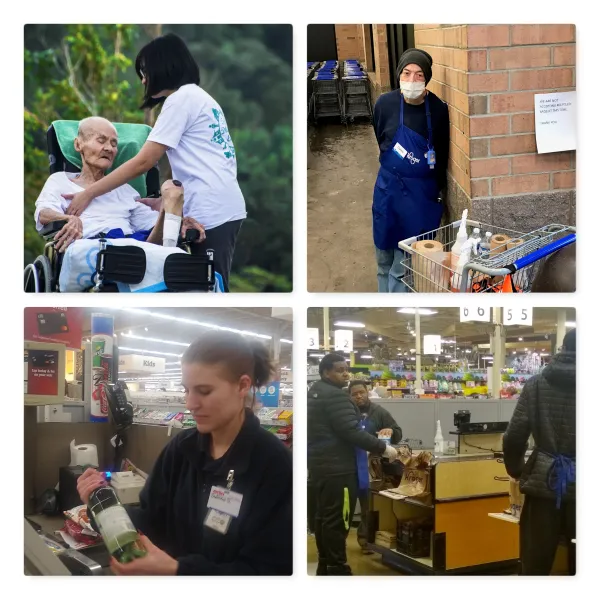
A few tears before the pandemic struck, the Free Press covered the small group of local Walmart workers who were fed up with making $9-an-hour and forced to work on Thanksgiving night and well into Black Friday.
Aligning themselves with the national movement OUR Walmart or the Organization United for Respect, which was funded by the United Food Commercial Workers union (UFCW), this small bunch protested on Black Friday at their East Main and Bethel stores.
OUR Walmart has gone away unfortunately, and the drive unionize to Walmart has stalled.
Nevertheless, Walmart has decided to close this Thanksgiving, but they are opening their doors at 5am on Black Friday. When an avalanche of deal seekers will pour through, a nightmare working-at-home community members never have to deal with.
But this bad dream continues for hundreds-of-thousands of retail workers. It couldn’t possibly get any worse for them, or could it?
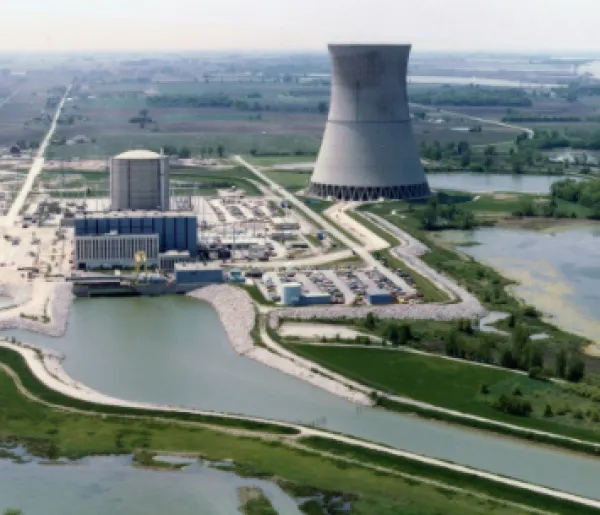
More than a dozen members of the Ohio business community and regional developers came together yesterday for a virtual panel discussion to share their perspectives on the need to repeal House Bill 6, the coal and nuclear bailout legislation at the center of a $61 million bribery scandal currently under federal investigation.
“House Bill 6 was a blow to Ohio’s economy, livelihoods, and clean energy future,” said Alli Gold Roberts, director of state policy for Ceres and moderator of today’s event. “We urge lawmakers to heed the call for action from a diverse group of businesses and stakeholders on Ohio’s clean energy future.”
With no opportunities available for virtual testimony on House Bill 6 repeal legislation, yesterday’s panel offered a safe option for business leaders to deliver remarks. Representing businesses from every corner of Ohio, participants highlighted the impact of House Bill 6 on job creation, economic development, and future clean energy investment in Ohio. Ohio lawmakers received an invitation to attend the discussion and hear from these businesses directly.
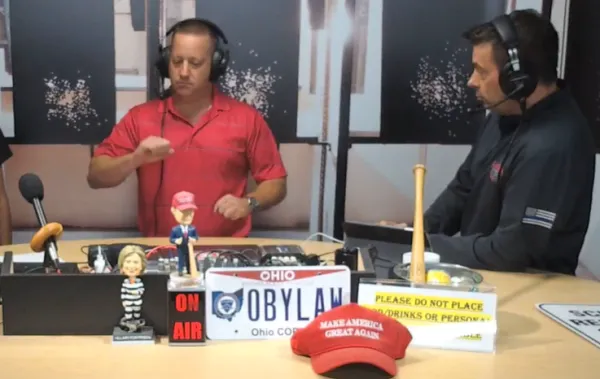
Activists hope Election Day in Columbus brought more accountability and transparency for the Columbus Division of Police. Columbus city leaders and the county’s newly elected county prosecutor Gary Tyack talk the talk, but will they follow through on promises of investigating and challenging the police when called for?
Issue 2, establishing a Civilian Review Board (CRB) with oversight over the Columbus police, won in a landslide. The bar for greater police accountability was raised even higher after long-time Republican County Prosecutor Ron O’Brien was defeated by Tyack, a Democrat and the former 10th District Court of Appeals (Franklin County) Court Judge.
O’Brien’s support for police and the cold, statue-like approach he exudes towards any victims of police is reflected in his record and highly criticized by local activists. During his 20-plus year tenure, only one case of police misconduct – resulted in criminal indictments. This case came from within the VICE unit, as one officer repeatedly abused sex workers, eventually killing one. Yet from 2013 to 2019, Columbus police killed 40 people, 27 of them Black.
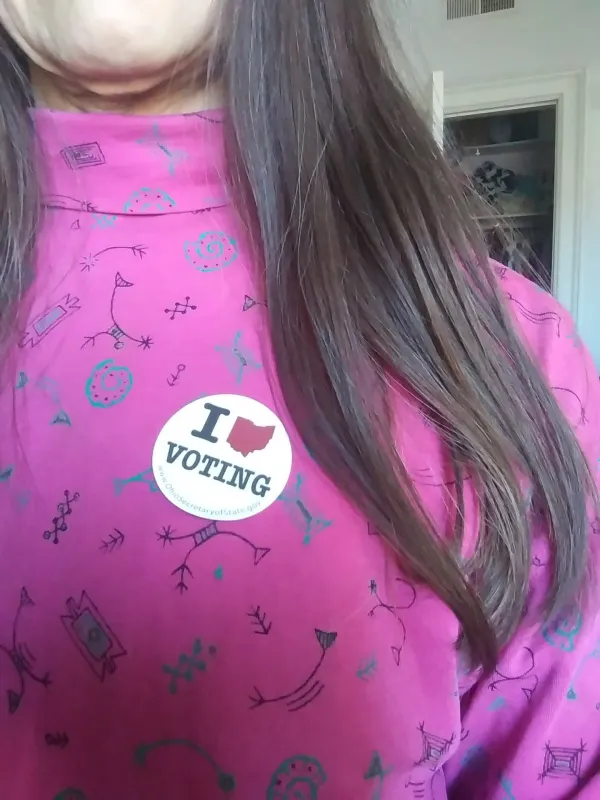
Mostly quiet on the midwestern front.
The usual Republican lie was put forward in Akron. The Akron police warned the public about robocalls telling them the voting lines were too long today and they should wait to vote until Wednesday, according to a See Say 2020 post. The FBI is reportedly investigating the robocalls, according to USA Today.
Also, the perennial election official problem of simply not having the proper paper backup ballots happened when voting machines stopped working in Reynoldsburg, Ohio, someone posted on See Say 2020.
My wife and I found it a little more difficult than expected to vote on paper in Columbus’ 55 Ward precinct. First, paper wasn’t offered as an option, and when we asked for a paper ballot, their initial impulse was to give us a provisional ballot. One of the poll judges thought we were breaking the rules until another one interceded and explained that we were allowed to fill out a paper ballot and feed it into the digital scanner. Also, the pollworker writing down our names managed to spell both of them wrong.
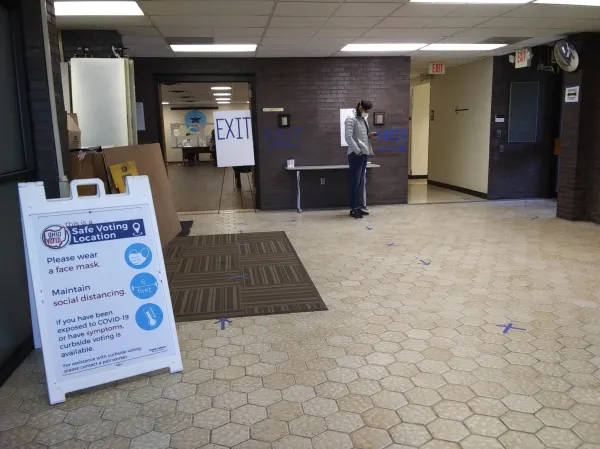
The big news is that the electronic pollbooks in Franklin County, Ohio (Columbus) provided by the vendor KnowInk crashed due to problems uploading data overnight, according to the Franklin County Board of Elections.
Thankfully all polling places had back-up paper pollbooks when I voted this morning. I was checked in the old-fashioned way.
There was some concern that paper sign-in would be slower, but due to record early voting the lines were nonexistent at the Near East side inner-city Ward 55 at mid-morning.
Election integrity activists, including myself, generally favor paper pollbooks over electronic “black box” pollbooks. For one, it is much easier to match your signature with a pen and paper than with a stylus, which might cause a challenge by election workers. Electronic pollbooks are easily hackable, can be programmed with incorrect information that only shows up Election Day, and often go down at inopportune times – like today.
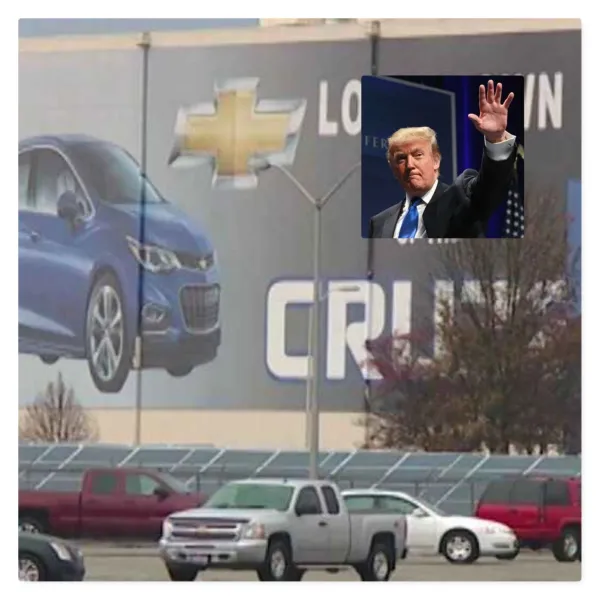
The heated 2020 presidential election incites the question for Ohioans: what has Trump done for the people of Ohio?
We have indeed set records these past four years – from jobs to factories and agriculture – and why are we tired of these records being broken? Because they’re all going in the wrong direction.
Economic inequality, unequal development, and leveling of labor has plagued the rust belt the past 40-plus years. This is the understandable context for rural Ohio, some of suburbia and some blue-collar pockets of Ohio’s turn to populism when it was presented with a right-wing, anti-establishment populist candidate promising an alternative to the “status quo.”
Trump has proved, however, to be a hollow right-wing populist in the lack of real economic development outside of the tax cuts and deregulation (a very mainstream conservative political strategy) that mostly benefited the top income brackets. His promises to revitalize some of Ohio’s most struggling working-class regions, like Northeast Ohio, have fallen short.
The heated 2020 Presidential Election incites the question for Ohioans: what has Trump done for the people of Ohio?
We have indeed set records these past four years – from jobs to factories and agriculture – and why are we tired of these records being broken? Because they’re all going in the wrong direction.
Economic inequality, unequal development, and leveling of labor has plagued the rust belt the past 40-plus years. This is the understandable context for rural Ohio, some of suburbia and some blue-collar pockets of Ohio’s turn to populism when it was presented with a right-wing, anti-establishment populist candidate promising an alternative to the “status quo.”
Trump has proved, however, to be a hollow right-wing populist in the lack of real economic development outside of the tax cuts and deregulation (a very mainstream conservative political strategy) that mostly benefited the top income brackets. His promises to revitalize some of Ohio’s most struggling working-class regions, like Northeast Ohio, have fallen short.
Dayton - As part of a new national campaign to deliver better treatment and pay to all “essential workers,” the Dayton City Commission unanimously passed a resolution supporting an Essential Workers Bill of Rights on October 12. Essential Worker resolutions have passed in Lakewood and Toledo, and are under consideration in Fremont. Other cities across Ohio are starting the resolution process.
Mayor Nan Whaley said: “Of course Dayton is going to stand up for our essential community members: our government workers, health care workers, farm and factory workers, drug and grocery store workers, and others in the care, service, transportation, cleaning, and food industries. They can’t ‘work from home,’ they are needed in their workplaces to keep our society running. They have our backs, and we have to have theirs too.”
A Note on COVID-19 and Voting
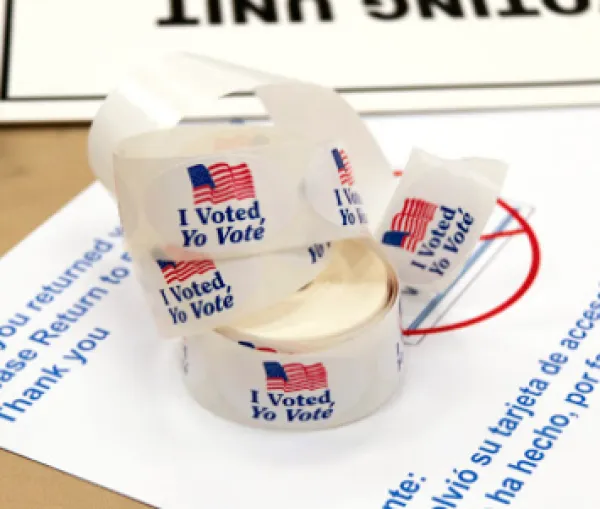
In-person voting may look different this year in response to COVID-19. Be sure to check your polling place in advance, as it may have changed. You may also be required to wear a face mask, and there will likely be markers to keep you distant from the other voters. If you have questions, be sure to check with your county’s Board of Elections. For more information about voting by an absentee ballot, read this article.
Turn on the news or read a newspaper today and you will see political candidates and public officials making the rounds throughout the country trying to earn your vote. While the issues and formats are much different today, those candidates and public officials are participating in America’s time-honored tradition of democracy.

Columbus is now honoring the legendary rock god Willie Phoenix by renaming 16th and High Street “Willie Phoenix Way” in Columbus.
Willie has been a legend in the local rock scene. His band was the very entertaining featured act at the 2018 Free Press Annual Awards Event at Woodlands.
“Willie Phoenix has burned brighter than anyone in the history of Columbus rock music,” said Free Press Editor, Bob Fitrakis. “Not only is his own work stunningly brilliant he has fostered innumerable artists and groups that have shaped the music scene in the capitol.”
Long-time activist and local musician Brian Clash stated: “I celebrate the life force that is Willie Phoenix. I have enjoyed knowing him over 40 years; first as an awestruck fan and later as my musical mentor, songwriting partner, and most of all dear friend. This exciting honor being given to him is only a reflection on what he has given to all of us. Congratulations Willie!!!”