
News
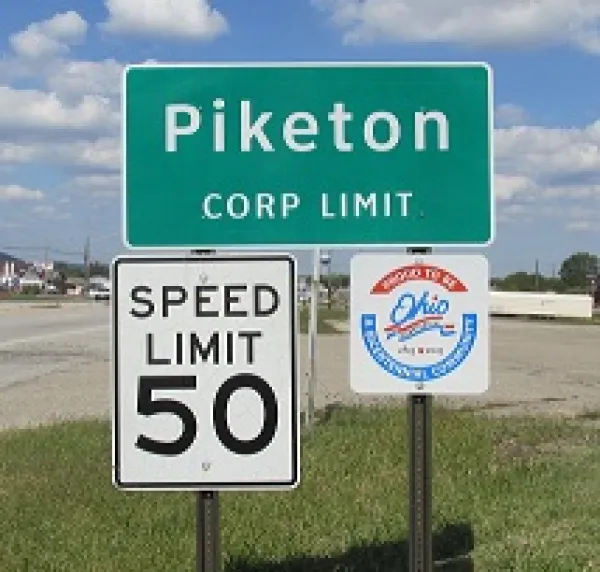
Nearly 50 years of uranium enrichment have brought serious radioactive contamination to what was once lovely countryside at Piketon, Ohio. The misidentified Portsmouth Nuclear Site (PORTS) at Piketon is operated by the U.S. Dept. of Energy (DOE.) The DOE unbelievablely brought reprocessed high-level radioactive waste to the site and ran it through the enrichment buildings for years, contaminating PORTS with plutonium and other transuranic elements – some of the most dangerous entities on earth.
Cleanup of the site has begun, but it has uncertain funding and may not be completed for years. The DOE is violating its own requirements by refusing to perform an Environmental Impact Statement to determine the necessary depth of cleanup.
The Southern Ohio Diversity Initiative (SODI) was designated by the DOE as an Ohio nonprofit Community Reuse Organization in 1997. The purpose of SODI is ‘to advance, encourage, and promote the industrial, economic, commercial, and civic development of Pike, Jackson, Ross, and Scioto Counties.” They are looking to bring new industry to the PORTS site.

JP Morgan Chase is one of Central Ohio’s largest private employers with over 20,000 workers, and several told the Free Press they’ve been told to expect raises and a one-time cash bonus this year as a result of the tax bill corporate giveaway. Fifth Third Bank and Wells Fargo have also promised to boost salaries and issue bonuses, and even Walmart has said it will increase its starting hourly wage from $9 to $11, which as far as the Free Press is concerned, is still peanuts.
Nevertheless, it’s a start. But other industries have been deafeningly silent about raising pay, such as the fast-food industry. There are nearly four million fast-food workers nationally, and in Columbus they account for about seven percent of the employment or about 80,000 workers, this according to the progressive non-profit Policy Matters Ohio.
JP Morgan Chase is one of Central Ohio’s largest private employers with over 20,000 workers, and several told the Free Press they’ve been told to expect raises and a one-time cash bonus this year as a result of the tax bill corporate giveaway. Fifth Third Bank and Wells Fargo have also promised to boost salaries and issue bonuses, and even Walmart has said it will increase its starting hourly wage from $9 to $11, which as far as the Free Press is concerned, is still peanuts.
Nevertheless, it’s a start. But other industries have been deafeningly silent about raising pay, such as the fast-food industry. There are nearly four million fast-food workers nationally, and in Columbus they account for about seven percent of the employment or about 80,000 workers, this according to the progressive non-profit Policy Matters Ohio.
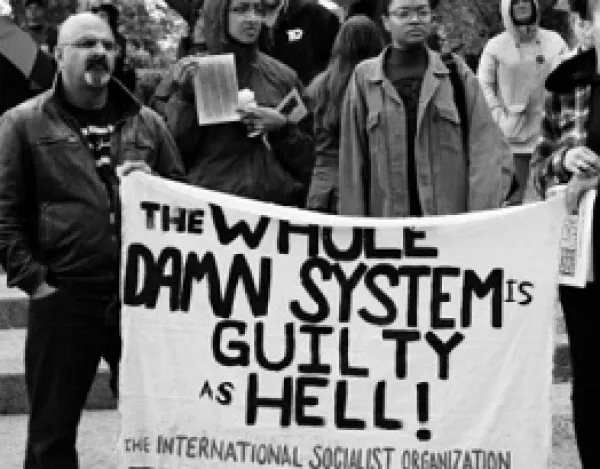
Who knew there were so many socialists and anti-capitalists in Columbus, Ohio?
If you go to rallies and demonstrations and meetings across this city, you’re sure to see the participation or leadership of one socialist group or another.
Indeed, the general interest in socialist ideas includes a wider pool of people than those who are formally members of socialist organizations.
Talk to activists in the burgeoning social justice communities in our city and you’ll see much criticism of capitalist greed and stark inequality. Many consider themselves socialists of one kind or another. Certainly not what the mainstream media means when it calls Ohio a “red state.”
Nevertheless, the explosion of interest in organized socialist groups right now is remarkable in a time when there are many other avenues for expressing resistance to the atrocities and inequalities of society, from non-government organizations to electoral campaigns to service-oriented groups. And at a time when the far-right has seen resurgence, encouraged by Trump’s campaign and presidency.
By all accounts, the reds are thriving.

You’re busy and don’t have time to look up the details on Ohio’s new medical marijuana program. We’re here to help with, well, a cheat sheet. You know, that quick fine print synopsis hidden under your sleeve. Destruct once done. Let’s apply the concept to a quick update of the program thus far. Just the facts, ma’am.

We are currently in the political twilight zone. Nothing concrete has been affected since the tax reform vote, and Congress hasn’t been back in session long enough to do its usual damage. Plenty has been said, but it is not yet clear exactly what will happen, or in which direction each action will cause the nation to move. We are effectively stuck between optimism for the new year and a gnawing fear of what is likely to occur.
Resident Donald Trump’s highly criticized so-called Election Integrity Commission, looking into supposed “voter fraud,” was disbanded Wednesday, January 3. The Commission was forged by fire in the tweets of Trump and his bizarre claim that Hillary Clinton’s more than 3 million popular vote win was based on votes by illegal immigrants.
Recently the Commission was in a spat with a dozen or so states when it demanded they submit all of their voter data to them. including partial voter Social Security numbers. Matthew Dunlap, Maine’s Secretary of State and Commission member, sued the commission claiming he was being kept in the dark on the group’s activities.
Ohio’s former Secretary of State Ken Blackwell’s appointment to the Commission resulted in open derision since he best known for suppressing votes in the notorious 2004 Ohio presidential election. Before Election Day, Blackwell rejected voter registration forms that weren’t submitted on 80-bond paper used prior to the advent of computers, instead of today’s standard 20-bond paper.
Millions of Ohio voters have tried to vote on Election Day over the past 15 years only to find their names were erased from the pollbooks.
The American Civil Liberties Union (ACLU) brought suit against the State of Ohio and Ohio Secretary of State Jon Husted to protect voter’s rights to remain registered. At the crux of the ACLU’s lawsuit were 385,065 registered Ohioans who were refused absentee ballots in 2016 because they had failed to vote in the 2012 or 2014 federal elections.
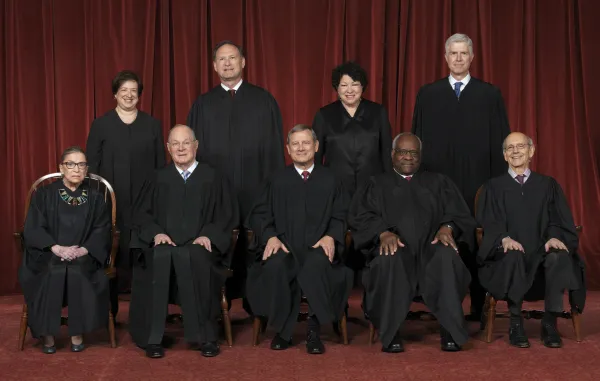
The United States Supreme Court will now decide whether voting in Ohio is a constitutional right like free speech or a more limited right controlled by the Secretary of State’s office. Oral arguments begin on Wednesday, January 10.

Medical cannabis laws were signed into effect in June of 2016 and Ohio has been working on the rules, regulations and guidelines since. The Ohio State Medical Association has approved Extra Step Assurance’s division, Cannabis Expertise, as an approved training provider for all medical professionals in the State of Ohio. Extra Step Assurance is an Ohio based company having offices in Bellefontaine Ohio and Farmingdale New Jersey. All doctors looking to recommend medical marijuana in the state must have the state approved two-hour training and education beforehand.