
News
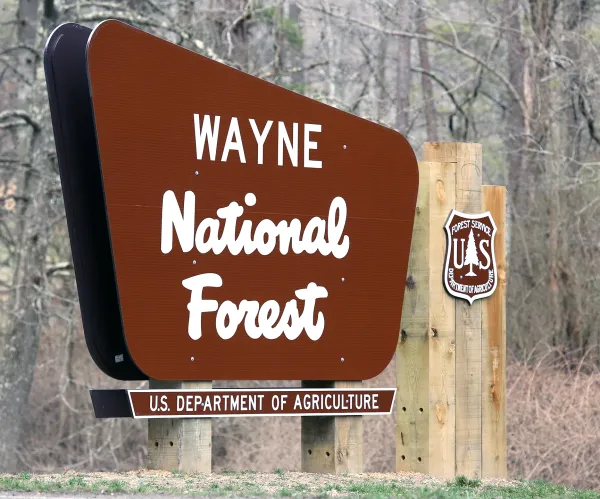
Monroe County, Ohio. After a three-day long action training conference near the Wayne National Forest, organizers from multiple groups have launched a long-term resistance encampment to defend the Wayne National Forest from fracking and fracked gas pipelines.
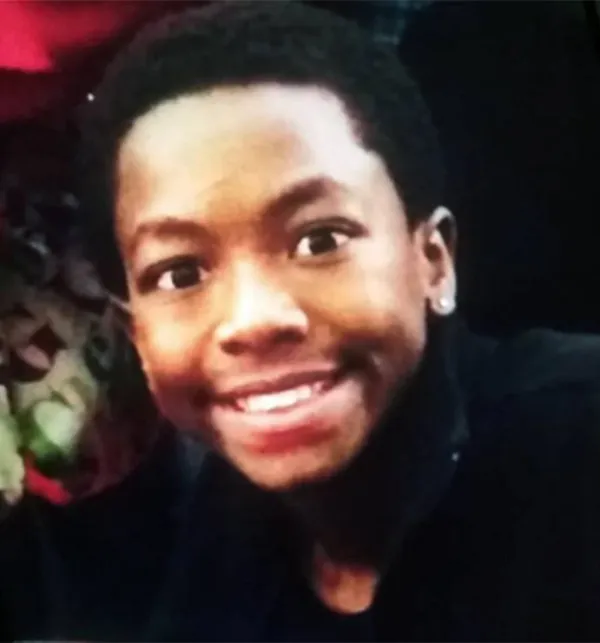
MAY 19, 2017 - COLUMBUS, OHIO: Today, a Franklin County grand jury found that after a presentation by the Franklin County Prosecutor’s Office there was not probable cause to indict Columbus Police Officer Bryan Mason in the shooting death of 13-year-old Tyre King. The grand jurors declined to charge Officer Mason with any crimes stemming from the incident. Tyre’s family is saddened and completely dissatisfied with how the entire investigation was handled by the City of Columbus, the Columbus Division of Police and the Franklin County Prosecutor’s Office.
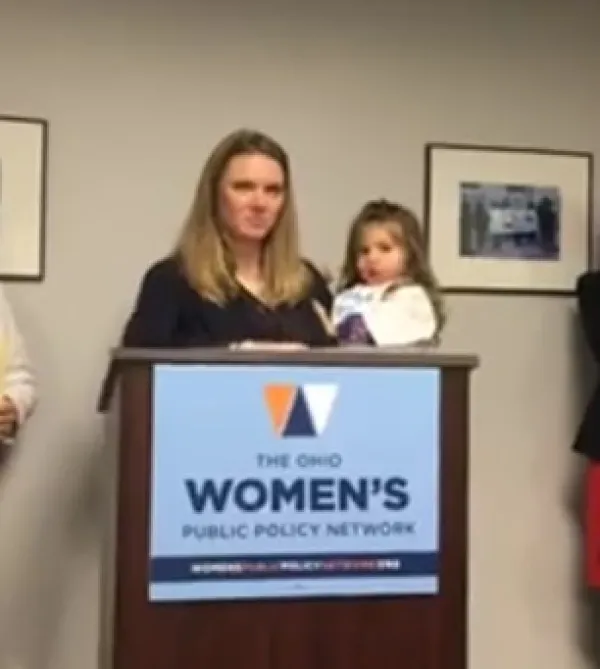
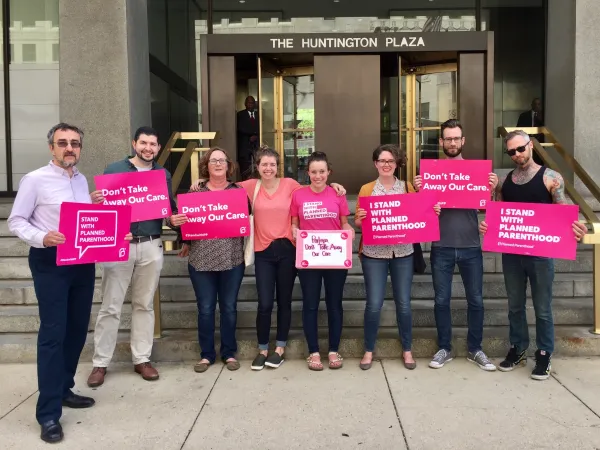
Earlier today, Wendy Patton of Policy Matters Ohio joined Innovation Ohio, Ohio Women's Public Policy Network, Planned Parenthood Advocates of Ohio and For Ohio's Future for a press conference on how the AHCA would harm women's health. Patton drew her remarks from the following statement. View the press conference here.
By helping low-income people purchase insurance and those living in or near poverty to access health care through Medicaid, The Affordable Care Act (ACA) has been a remarkable demonstration of what public policy can do for public health and the well-being of Americans. The protections it offers to women prevent inequity in insurance coverage and assure that health care coverage includes essentials like preventative care, contraception and maternity benefits.
The recently-passed House health care plan (“American Health Care Act” or AHCA) rolls this back. It would have devastating consequences for the nearly 40 million women across the country who rely on Medicaid.[1]

We have no evidence at this point that the Russians, or global hackers, hacked our electronic voting machines to put Donald Trump in the White House.
But we are 100% certain our electronic voting machines have been hacked by many many others, and could be in the future by virtually anybody with entry-level computing capabilities. As the New York Times and others have reported, cyberattacks have now become an integral part of the modern landscape. A tool stolen from the very National Security Agency meant to protect us has been used to perpetrate more than 75,000 recent hacks—-and those are just the ones being reported.

Also online at Reader Supported News
Corporate Democrats and liberal commentators love to scapegoat the activist left for their catastrophic failures. The blame game just fell to a new low with Bill Maher’s latest attack on Jill Stein.
Like Hillary branding Trump supporters as “deplorables,” Bill tells American grassroots activists to “go f*** yourselves with a locally grown organic cucumber.”
Hillary says she was “on her way to victory” when FBI Director James Comey and “the Russians” intervened. Maher and others say Stein caused her defeat, as they blamed Ralph Nader for George W. Bush in 2000.
Hillary now pledges to “resist” Trump Fascism. Maher and other liberal pundits have been relentless in their attacks on him.
And the rest of us struggle with the keys to nonviolent resistance in the Dark Age now upon us.
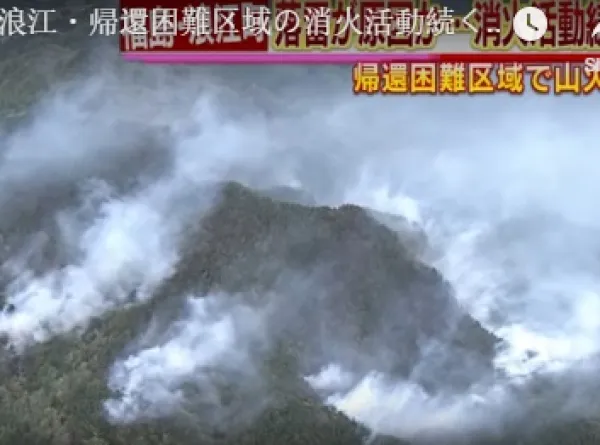
TAKOMA PARK, MD, May 2, 2017 --A raging wildfire in the Fukushima radiation zone not far from the March 2011 Japan nuclear power plant disaster, demonstrates that a nuclear accident has long-term and on-going effects that can worsen over time, says Beyond Nuclear, a leading national anti-nuclear advocacy group.
The fire, which began on April 21 in the mountains outside Namie in Fukushima Prefecture, Japan, is in an area where human entry is barred “on principle” because of high radiation levels resulting from the Fukushima nuclear triple meltdowns and explosions. The fire is being fought from the air with helicopters spraying water.
“Just as high radiation levels barred rescuers from retrieving many earthquake and tsunami victims five years ago, today firefighters are being hampered from battling the blaze in the still contaminated area,” said Paul Gunter, Director of Reactor Oversight at Beyond Nuclear. “This makes extinguishing these radioactive fires more difficult which can have far reaching effects,” he said.
Ohio legislature considers bills to prop up nuclear, tamp down renewables
FirstEnergy has gone to the Ohio legislature for bailouts for their two nuclear reactors (power plants) on Lake Erie: Davis-Besse east of Toledo and Perry east of Cleveland. SB 128 was introduced in the Ohio Senate on April 5, 2017. This bill would give Zero Emissions Nuclear Credits (ZENS) to these 2 reactors. The subsidy would raise Ohio electric ratepayers’ bills by about 5 percent, amounting to around $300 million/year.
Ohio has excess electric capacity: Ohio does not need electricity from Davis-Besse and Perry. About 3000 megawatts of new gas plants are in the works in Ohio, more than compensating for the 2000 or so
Renewables are now cheaper and less polluting, with no radioactivity and much less carbon. There are now more jobs in solar and wind than in nuclear or coal. Solar deployment numbers for 2016 show a 95 percent growth.

Excerpts from remarks made by Dennis J. Kucinich Monday, April 24, 2017 to the Ohio Legislature, Columbus, Ohio
Privatization of public assets is a major issue in America, and, in the case of education, the federal government provides billions to privatizers in the charter industry… The privatization of public education in Ohio has resulted in a wasteful, inefficient, duplicate school system, with duplicate buildings and a duplicate transportation system, paid for by the same taxpayers who have paid for public education in the first place.
Charter schools, which are falsely labeled as public charter schools, not only represent the privatization of education but the rejection of popular democracy and its connection to the education of its citizenry.
In the past year I have been meeting with representatives of public education organizations, gathering information on the impact of educational privatization, that is, charter schools, on the public education system, its integrity, its financing and its stability...

Many people agree the Short North is not what it used to be. Once upon a time it was cool, soulful and local. It was more Paul Volker than Thomas Kinkade. The independent art galleries took center stage, but now they are being overwhelmed by expensive condos, overpriced t-shirts, $10 cocktails, and a desire to attract people who have lots of money to burn.
“It’s not really an arts district anymore, a lot of uniqueness is gone,” says Allen Geiner, who is helping spread the hashtag #SavetheShortNorth across social media. “Easton is great where it is. We don’t need the Short North to turn into another Easton.”
The Short North’s trend towards becoming a gated country club is plowing forward as development up and down the strip explodes. There are over a dozen developments in planning stages or under construction. Most are mixed-used, meaning a combination of condos, offices, retail and parking. Within the next five years the Short North could see hundreds of new residents and over 50,000-feet of new retail.

The Columbus Police Department has undergone “a significant loss” in dash-camera videos stored from Columbus Police Division traffic stops and call responses, Police Chief Kim Jacobs announced Tuesday. An estimated 100,000 videos recorded in 2017, the entirety of videos recorded in 2015, and an estimated 500 video files from last year were deleted. This incident was the result of an officer’s blundering attempt to reclassify thousands of video files. The deletion occurred on March 8 and officers became aware of the missing files March 13.