
News
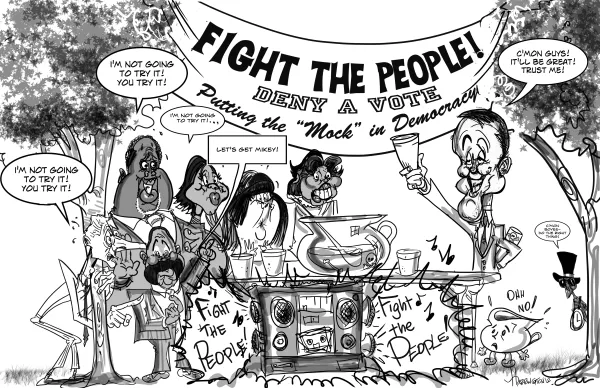
On August 2nd, in a Special Election with just one issue on the ballot – Issue 1, Columbus will vote on whether to adopt a more contemporary form of city council, where three members will be elected at-large in city-wide elections and ten members will be elected from smaller council districts that are clusters of neighborhoods. This format would replace the antiquated seven member all at-large elections (elected citywide) we have had since 1914.
The ten council districts will be developed by an independent apportionment committee, comprised of nine Columbus electors who submit applications and then are chosen to serve on the committee. The mayor and council will each choose three members of diverse political registration (majority party, minority party, third party or independent). Those six will then choose the final three again recognizing the diversity of political affiliation or non-affiliation and broadly reflecting the geographic and demographic diversity of the city. The committee will then elect a chairperson and hire a “districting master” who is qualified by experience and training to create an apportionment plan.
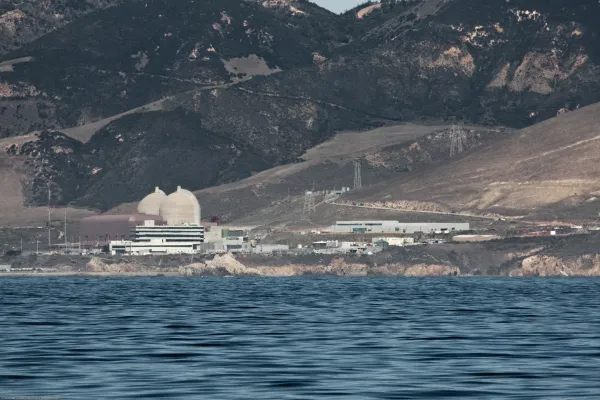
A rising tsunami of U.S. nuke shut-downs may soon include California’s infamous Diablo Canyon double reactors. But it depends on citizen action, including a statewide petition.
Five U.S. reactor closures have been announced within the past month. A green regulatory decision on California’s environmental standards could push the number to seven.

The summer solstice of course is June 21st and we need to honor those who perhaps best celebrated Mother Earth’s longest day: Native Americans. While not definitively known, the summer solstice’s most sacred Ohio celebration in antiquity probably took place at Serpent Mound in Peebles County. And again, because no one definitively knows how old Serpent Mound is, the celebration itself could be thousands of years old. This year’s celebration begins this weekend and of course hosted by Friends of the Serpent Mound.
The following feature on Ohio Native American history and Indian mounds by an Ohio Bear Clan Seneca is a message to today’s Ohioans. Simply put, we need to recognize our ignorant past and amend our future.
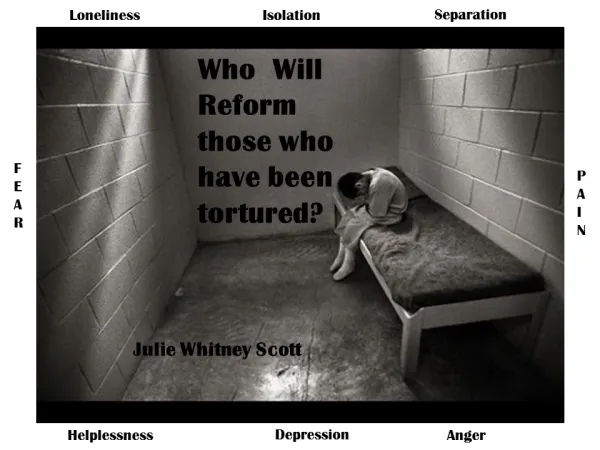
A joint report released in May by the American Civil Liberties Union of Ohio (ACLU) and Disability Rights Ohio informed us that “Solitary confinement is torture” and that “ninety-five percent of people who go to prison are one day released back to their communities.”
The American Friends Service Committee reports that today there are more than 40 states that have super-maximum security facilities “primarily designed to hold people in long-term isolation.”
The Bureau of Justice Statistics reports that ten years ago there were “more than 80,000 men, women and children in solitary confinement in prisons across the United States” and that “as with the overall prison population, people of color are disproportionately represented in isolation units.”
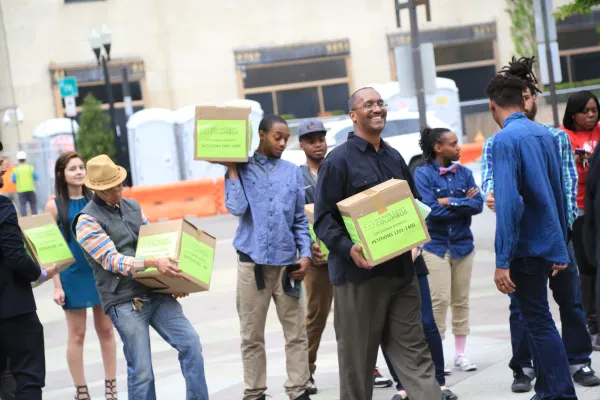
After a five-year long struggle, the grassroots effort to give a voice to more Columbus residents will finally come to a public vote at a special election on August 2 this year. The charter amendment would expand Columbus City Council from seven to 13 members and include representatives from city ward districts. This would break the all-at-large, one-party Council system and make Columbus’ city governance comparable to other U.S. cities its size.
Grassroots groups had tried twice since 2011 to get the amendment on the ballot, but were stymied by what appeared to be politically-motivated maneuverings by the current powers at City Hall.
Represent Columbus is a coalition of Democratic, Republican, Green and Independent grassroots leaders. Building upon previous work by the Columbus Coalition for Responsive Government, Represent Columbus submitted 39,308 petition signatures to the Columbus City Clerk on May 3. The Franklin County Board of Elections determined that 19,035 of those were valid – 1,200 more valid signatures than the 17,780 required. City Attorney Rick Pfeiffer found the petitions to be “legally sufficient.”
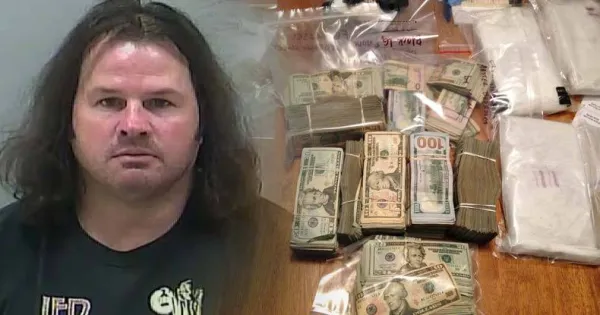
In a way, corrupt cop Tye Downard, along with his wife and children, are also victims of the war on drugs.
In 2013, a group of Columbus citizens became RadioactiveWasteAlert.org when we learned that the Ohio EPA had permitted a local business to “recycle” frack drill cuttings (the dirt, rocks, sludge from a frack bore hole) along the Alum Creek, next to our homes.
We got busy, got the word out, sold t-shirts, put up billboards, and brought in good science professionals: Soil and Watershed consultant -Julie Weatherington-Rice; Microbiologist -Yuri Gorby; Pediatrician -Larysa Dyrszka; and Radiochemist -Michael Schultz, to help us understand the threat. Turns out the Marcellus and Utica shale is naturally radioactive.

The medical marijuana bill passed May 25 by the Ohio Senate with a vote of 18-15 did not inspire ground swelling support from the cannabis activist community.

Dear Mr. Holland: After studying and assessing your work this semester, it is with deep regret that I have to inform you that you failed Social Science Statistics 101.
As you know, you have characterized us as “conspiracy theorists” because in our STRIP & FLIP SELECTION OF 2016: FIVE JIM CROWS & ELECTRONIC ELECTION THEFT, Harvey Wasserman and I have suggested that exit polls matter. You have also publicly denounced our colleague Richard Charnin, who has two separate Master’s degrees in Applied Mathematics, for his analysis of this year’s primary exit poll results versus election results.
Since you show so little interest in statistical analysis, let me briefly go over what you should know:

Just because a crisis situation seems impossible to address effectively, there is no reason to give up, but every reason to keep wheels turning--inside out, as does this masterful dissection of elections and voting as a system between the Civil War and today.
Quite a time period to cover in less than 100 pages, but authors Bob Fitrakis and Harvey Wasserman face this challenge, prefaced and introduced by the famed author and investigative reporter Greg Palast and actress and activist (head of Progressive Democrats of America) Mimi Kennedy.