
News
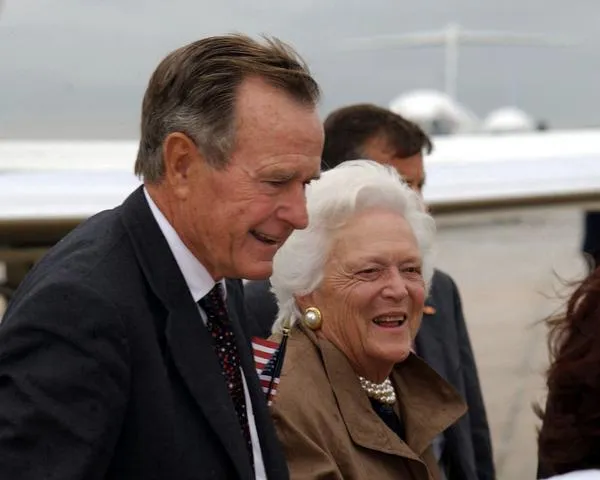
As the New Hampshire primary lurches toward the finish line, the reality of electronic election theft looms over the vote count. The actual computer voting machines were introduced on a grand scale in New Hampshire’s 1988 primary. The godfather was George H.W. Bush, then the Vice President. As former boss of the CIA, Bush was thoroughly familiar with the methods of changing election outcomes. The Agency had been doing it for decades in client states throughout the world.
In the Granite State, Bush was up against Bob Dole, long-time Senator from Kansas. Dole was much loved in hard-core Republican circles. But Bush had an ace-in-the-hole. For the first time, the votes would be cast and counted on electronic voting machines, in this case from Shoup Electronics.
Governor John Sununu, later Bush’s White House Chief of Staff, brought the highly-suspect computer voting machines into New Hampshire’s most populous city, Manchester.
The results were predictable. Former CIA director George H. W. Bush won a huge upset over Dole and the mainstream for-profit corporate media refuses to consider election rigging.

Ten years ago, then-26-year-old songwriter John Rohrer, troubled about loss of a recent job, was experiencing a delayed reaction to a street hallucinogen he had tried. Dazed, he went to visit a friend but entered the wrong house to wait for her. When the true owner returned to the unlocked house, he was not sympathetic as Rohrer tried to explain his confusion and leave.
Rohrer waited while police were called to arrest him. Ross County prosecutors soon swung into action, charging Rohrer with felony burglary, although no offense had been committed other than the entry. For some two years Ross County prosecutors pushed for incarceration for this first offense.
In June 2008, with no one understanding at the time that the offense was drug related, Rohrer was persuaded to enter a plea of NGRI – “not guilty by reason of insanity.” To Rohrer, who was terrified of the penitentiary, it seemed the only way. Ten years later he understands how this became his initiation into indefinite psychiatric lockup.

Back in 2008, when the Ohio State University began to rumble that sophomores would be required to live on campus, eight of the largest off-campus landlords commissioned a study to assess what could happen to their rental market. The study hypothesized if OSU were to pull the trigger it could lead to a “long-term collapse of the area,” and result in a “doomsday scenario.”
The landlords were talking about their own rental properties. And the trigger has indeed been pulled as starting next school year OSU is requiring all sophomores to live on-campus.
What the landlords and others didn’t see coming was that running parallel to the sophomore requirement is seismic change off-campus. Changes initiated over two decades ago by the city and university partnership that is Campus Partners, which redeveloped south campus by turning it into South Campus Gateway.

Black Americans spend over $1.2 trillion dollars every year – making Black America one of the largest economies in the world. Out 196 countries, Black America would rank 15th. However, currently only 3-5% of Black dollars are spent with Black businesses. This revelation is stated on the blackoutcoalition.org, a website promoting the new Black Power movement as an “economic revolution.”
There’s a resurgence of Black rights movements some of the largest and most militant since the 60s-70s? Proclaiming that Black lives matter is not only a demand for justice following police abuse and murders of Black citizens, but a call to the general society for economic justice in the Black community.

“If the physician presumes to take into consideration in his work whether a life has value or not, the consequences are boundless and the physician becomes the most dangerous man in the state.” Dr. Christoph Hufeland (1762-1836)
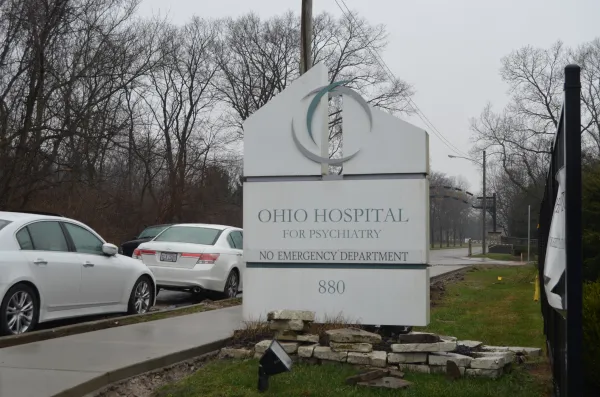
Before Reynoldsburg police broke down the door to her home November 19, 2015, Linda Leisure, long-time corruption investigator and whistleblower, thought she had seen it all – including previous police break-ins into her home. But she had no psychiatric history and never before witnessed “forced psychiatry” Ohio-style.
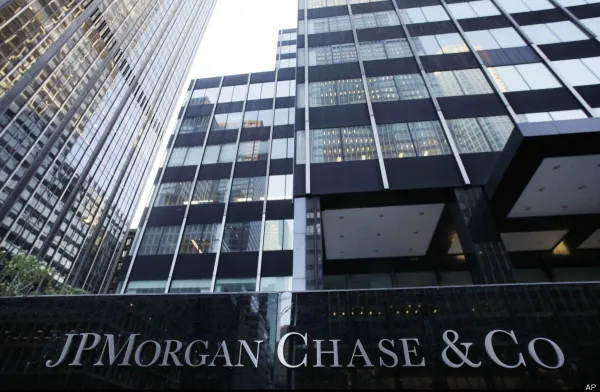
JPMorgan Chase and Co. is a bank “too big to fail,” and according to the G20 or The Group of Twenty, it is the bank too big to fail.
The G20 is an international forum of the world’s major governments and central banks, and recently published a report stating if JPMorgan were to get into trouble, the greatest global financial havoc could follow because the bank is interconnected with so many smaller banks and investors.
As Wall Street sputters into 2016 amidst global market volatility, many in Central Ohio and the rest of the state aren’t aware of how connected JPMorgan is to the local workforce and beyond. Way beyond, as in 200,000 state worker retirees and their beneficiaries.
JPMorgan is the region’s largest private-employer with more than 20,000 workers, and many are well-paid. JPMorgan is also the custodian of the Ohio Public Employees Retirement System’s international fund, which accounts for $21 billion of the pension’s total fund that’s currently at $87 billion.

Strong encryption in the age of terrorism has quickly become a major part of the debate on how safe we are. Intelligence agencies are saying strong encryption they can’t crack will result in more terrorist attacks. ISIS is encouraging its followers to use encrypt communication, but it hasn’t been proven that ISIS has actually ever utilized encrypted technology to commit an act of terrorism.
Nevertheless, more and more tech giants such as Apple and Google have strong encryption technology in the pipeline that will soon be available to everyone. Because of this, our government and nearly all of our presidential candidates are encouraging these tech companies to create and allow access to secret backdoors within their future encryption technologies.
Jeb Bush said stronger encryption makes it harder to catch “evil doers”. Hillary Clinton went further saying in a recent debate a “Manhattan-like Project” is needed to create encryption that allows for government access to backdoors.

On New Year’s Day, the first baby boomers will turn 70.
From Jan. 1, 1946, through the end of 1964, 76 million babies were born in the U.S., more humans than lived in this country in 1900.
With a little help from LSD and our friends, we’ve won a cultural and technological revolution.
But our earthly survival depends on beating the lethal cancer of corporate domination-and the outcome is in doubt.
The GIs coming back from World War II kicked Rosie the Riveter out of the factories and into the suburbs.
The GI Bill gave them cheap home loans and free college tuition, birthing one of the world’s great university systems and one of its best-educated workforces.
Millions of boomers entered those colleges in the early ’60s. They lit the torch for a cultural revolution. They also invented the personal computer and the Internet.
Pot and psychedelics were essential to both.

In November and December 2015, over 60,000 folks converged on Paris for the 21st United Nations Meeting of the Countries of the Partnership on the Kyoto Principles for Ecological Impact (COP 21 - UN Framework on Climate Change [UNFCCC]). The final accord agreed to at 7:36 p.m. on December 13, 2015 in Paris by over 185 countries,195 nations in all, is the first climate agreement that addresses, although voluntarily, fossil fuel impact on the global economies. In this accord, the Global South Nation-State leaders and the Developed Nation-State politicians devised a system to financially sustain (although voluntarily setting up a fund of $100B a year) a global development model that seeks alternatives to fossil fuel energy sources by 2050.