
News
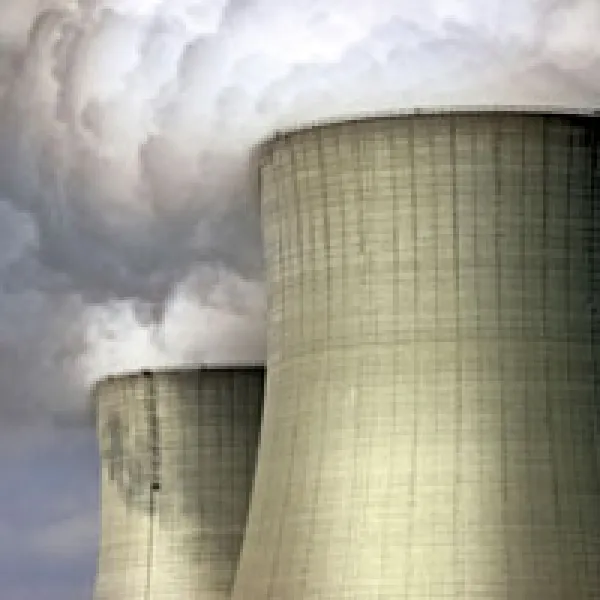
Oak Harbor, OH and Rockville, MD—A meeting held today by teleconference, between U.S. Nuclear Regulatory Commission (NRC) staff at the agency’s headquarters near Washington, D.C. and FirstEnergy Nuclear Operating Company (FENOC) officials from the Lake Erie shoreline atomic reactor in northwest Ohio, revealed that the problem-plagued Davis-Besse plant’s backup diesel generators (EDGs) likely would not work, if called upon to cool the overheating core in an emergency. The reason is the voltage setting has been set too low, for years or even decades. Watchdogs from Beyond Nuclear, Don’t Waste Michigan, Ohio Sierra Club Nuclear-Free Committee, and Union of Concerned Scientists listened in, and members of the public provided comments to NRC.
The voltage, as documented in the plant’s Technical Specifications, has long been set at only 4,031 volts, whereas a minimum of 4,070, or perhaps even 4,088, volts is needed. First in May 2012, and again in April 2015, FENOC has applied to NRC for approval of a License Amendment Request (LAR) to address the still unresolved problem.

Editor's Note: The following is an article from The Outsider, by Shawn Gaynor, that establishes connections between Hillary Clinton's presidential campaign and a vulnerable database should raise the obvious question: Is this another "Dean Scream?" The Clintons have a long history of political dirty tricks.
In 1992, when I was a platform spokesperson for Governor Jerry Brown's presidential campagin, Bill Clinton campaign operatives knowingly lied and claimed I forged signatures on a death penalty plank. They later apologized. Democratic Party insiders destroyed Howard Dean's presidential bid as an outside in 2004. The Clintons, as the consummate Democratic Party insiders, seem to be doing little more than illegally hijacking Bernie Sanders' campaign database. The irony, of course, is that this is coming from a candidate who was accused of far worse thing in the "Filegate" scandal and has recently had her own computer email problems. ~ Bob Fitrakis

As Columbus struggles with issues of public trust in government caused by the conduct or misconduct of elected officials,The Columbus Free Press takes a look at our local election system as evidenced by the 2015 election cycle. Recent years have provided some of the biggest public failures, including allegations and convictions of elected officials, including the school data scrubbing scandal, NCLB school tutoring fraud scandal, unvoted Nationwide Arena public purchase, undisclosed tax abatement and continuing financial losses, inflated priced home sales to foreign nationals, Redflex bribery scandal and the continuing F.B.I. public corruption investigations.
All this begs the questions, 1) does our electoral system produce the best pool of candidates and elected officials possible?, and 2) is it appropriate for citizens to find and demand better ways to ensure honesty and competence in local government? Communities across the country are wrestling with the same questions, and some are finding answers and working toward solutions.
The 2015 Election and Campaign Financing

Just how serious has the problem of heroin addiction become for Columbus and its suburbs?
Before a recent 60 Minutes story that exposed the local epidemic nationally, there were reports that Central Ohio rehabilitation centers were maxed out and putting abusers on waiting lists. But when The Columbus Dispatch editorial board called for a clean needle exchange program this past summer, it was truly eye opening. A double-take moment for many considering the paper has often promoted itself as a local mainstay of moral and conservative excellence.
Pressure from the Dispatch is apparently working. Mayor Michael Coleman announced in November the city with $280,000 in initial funding will begin a needle exchange program scheduled to start in January. Called “Safe Point,” the exchange will be administered by the AIDS Resource Center Ohio in the Short North.

The morning after Election Day 2015, I woke up suddenly. My mind was racing, “This isn’t right. This isn’t right. Something’s not right.” As an analyst, I’m used to working with mass quantities of data; I’m used to looking at patterns of numbers. Sometimes these differences just leap out at me. Such was the case on that morning.
The prior evening, Issue 3, which would have legalized marijuana in Ohio while according growing rights to just ten properties, went down in flames. Just 34 percent of voters supported the measure; a crushing 65 percent opposed it. So said Ohio’s election officials when the vote was called at 9:41 pm.
The defeat had opponents jumping for joy. Issue 3’s “deeply flawed, monopolistic approach failed garner broad support” said one. It “would have made a handful of rich celebrities and businesspeople even richer” mused another. Meanwhile, those who understand the sordid history of Ohio elections were witnessing the repeat of a troubling pattern.
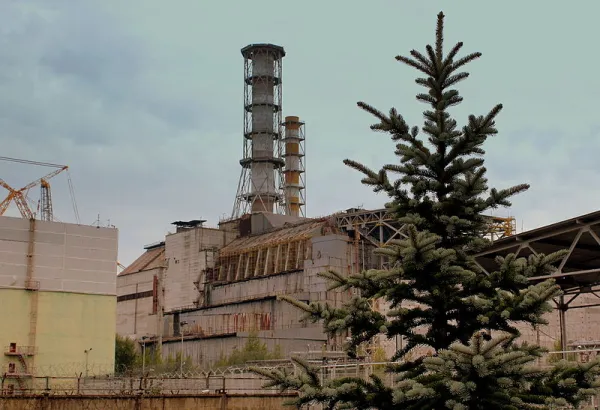
As you read this, a terror attack has put atomic reactors in Ukraine at the brink of another Chernobyl-scale apocalypse.
Transmission lines have been blown up. Power to at least two major nuclear power stations has been “dangerously” cut. Without emergency backup, those nukes could lose coolant to their radioactive cores and spent fuel pools. They could then melt or explode, as at Fukushima.
Yet amidst endless “all-fear-all-the-time” reporting on ISIS, the corporate media has remained shockingly silent on this potential catastrophe.
Nor has it faced the most critical step needed to protect our planet in a time of terror: shutting all atomic reactors.
The world’s 430-plus licensed commercial nuclear plants give terrorists like ISIS the power at any time to inflict a radioactive Apocalypse that could kill millions, destroy huge parts of the Earth and devastate the global economy.

As you read this, a terror attack has put atomic reactors in Ukraine at the brink of another Chernobyl-scale apocalypse.
Transmission lines have been blown up. Power to at least two major nuclear power stations has been “dangerously” cut. Without emergency backup, those nukes could lose coolant to their radioactive cores and spent fuel pools. They could then melt or explode, as at Fukushima.
Yet amidst endless “all-fear-all-the-time” reporting on ISIS, the corporate media has remained shockingly silent on this potential catastrophe.
Nor has it faced the most critical step needed to protect our planet in a time of terror: shutting all atomic reactors.
The world’s 430-plus licensed commercial nuclear plants give terrorists like ISIS the power at any time to inflict a radioactive Apocalypse that could kill millions, destroy huge parts of the Earth and devastate the global economy.

The “stolen election” controversy over this month’s officially defeated Ohio pot legalization referendum has gone to a new level.
“The results are not only impossible but unfathomable,” stated Ron Baiman, Assistant Professor of Graduate Business Administration at Benedictine University, where he teaches economics and statistics.
The Columbus Free Press asked Baiman to calculate the odds of the official vote count of Ohio’s Issue 3, to legalize marijuana, being correct – compared to the tracking polls charting voter preference leading up to this year’s November election. The Free Press supplied Baiman with poll results taken prior to the election by noted pollster Jon Zogby.
The polls leading into the November 3 vote showed the referendum passing. But the official results claim it lost by 2:1.
In the lead-up to the November 3 referendum on pot legalization in Ohio, reputable mainstream polls show it winning.
Then, amidst the usual “glitches” that distinguish the Buckeye State’s electronic elections, it officially failed by a 2:1 margin.
The outcome is a virtual statistical impossibility. But it fits a pattern that has made Ohio elections infamous since the 2004 “selection” of George W. Bush over John Kerry.
As in 2004, this year’s balloting was supervised by a Secretary of State with a heavy partisan stake in the outcome.
In 2004, the presidential voting was supervised by J. Kenneth Blackwell, who simultaneously served as the co-chair of Ohio’s Committee to Re-Elect Bush and Cheney.
In 2015, the general voting was supervised by Jon Husted, who vehemently opposed pot legalization and threatened legal action against the sponsors of the referendum.

When word began to spread on election night that Athens County – a long-time stronghold for Ohio marijuana legalization – was soundly defeating Issue 3 by nearly 30 percentage points the death knell for medical marijuana in the state became earsplitting.
The pro-legalization base in Ohio was mostly unified in their defiance of the oligopoly Issue 3 tried to create. An anti-corporate push back in the age of Occupy. The Free Press itself was critical of ResponsibleOhio and its big money investors who clearly had aspirations of astronomical profits for years to come.
But not all marijuana activists stood behind those who believed the issue was putting a massive marijuana industry in the hands of a few.
The activists who did support Issue 3 say the base’s outrage over marijuana corporatization may have blinded them. Building up enough contempt that it took away any compassion for the many Ohioans who use medical marijuana (illegally) for whatever ailment they have.