
News
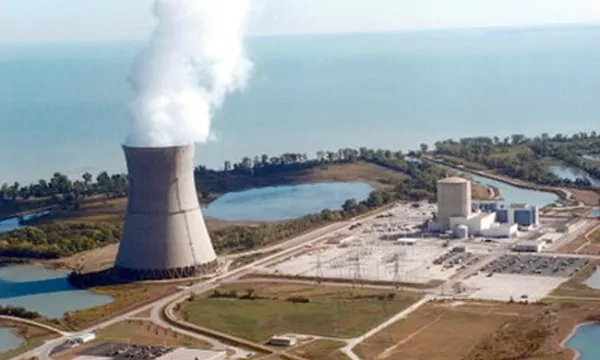
As the world’s nuke reactors begin to crumble and fall, the danger of a major disaster is escalating at the decrepit Davis-Besse plant near Toledo, Ohio.
Now the plant’s owners are asking the Ohio Public Utilities Commission to force the public to pay billions of dollars over the next 15 years to subsidize reactor operations.
The Davis–Besse Nuclear Power Station near Toledo, Ohio.
But Davis-Besse’s astonishing history of near-miss disasters defies belief. Its shoddy construction, continual operator error and relentless owner incompetence would not be believed as fiction, let alone as the stark realities of a large commercial reactor operating in a heavily populated area.

Noted climate scientist Ken Caldeira of the Carnegie Institute for Science at Stanford has finally popped the question. In an article entitled “One Known Way to Cool the Earth” on the February 16, 2015 USA Today opinion page, Caldeira writes: “There is basically only one way known to cool the Earth rapidly.” He explains the method “…is to reflect more of the sun’s warming rays back to space.”
What will it take to do this? According to Caldeira, only “A small fleet of airplanes could do what large volcanos do – create a layer of small particles high in the atmosphere that scatters incoming sunlight back to space. Cooling the Earth this way, could be fast, cheap and easy.”
The reality is that the U.S. government has been spraying for well over a decade and a half in plain view while attacking anyone pointing it out. They’ve been making a chemical haze of clouds and putting a sunscreen in the sky. Small white planes, some of them associated with Battelle Memorial Institute, have been creating clouds in a criss-cross pattern in the sky.


“…Cuba's voice is a voice that must be heard in the United States of America. Yet it has not been heard. It must now be heard because the United States is too powerful, its responsibilities to the world and to itself are too great, for its people not to be able to listen to every voice of the hungry world.” ~ C. Wright Mills, Listen, Yankee: The Revolution in Cuba, 1960.
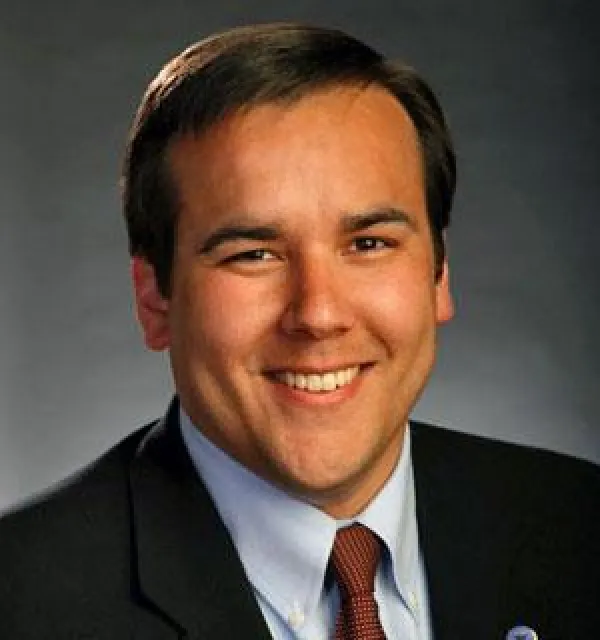
The anointed one, personally blessed by the presumed Mayor-for-life Michael Coleman, Andy Ginther, found the going tough as he faced his three opponents at an inner city forum on January 29, 2015.
More than one hundred residents, mostly black, gathered at the Corinthian Missionary Baptist Church on Columbus’ east side to hear the four potential mayoral candidates answer questions about the state of the city.
The four men who have announced their bid to replace Michael Coleman this year are:
Andrew Ginther, Columbus City Council President (D)
Terry Boyd, endorsed Republican candidate, former Columbus School Board president and Franklin University Professor (R)
Zach Scott, Franklin County Sheriff (D)
James Ragland, former Columbus City Council staffer for Charleta Tavares, now Catholic High School Development Director (D)
“Eighty percent of everything ever built in America has been built in the last 50 years, and most of it is depressing, brutal, ugly, unhealthy, and spiritually degrading” – James Howard Kunstler, from his book The Geography of Nowhere
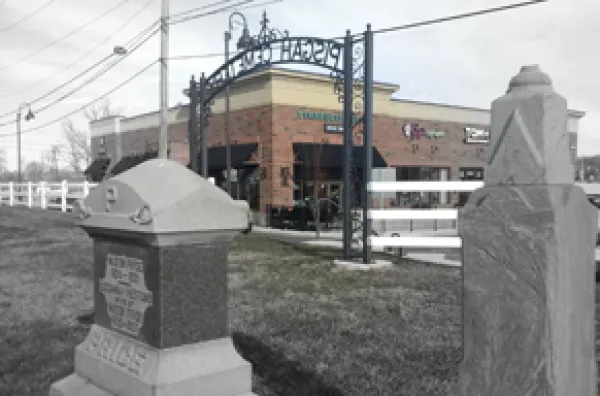
In the City of Pickerington the final resting place of a veteran who fought to end slavery has become surrounded by overwhelming traffic and besieged by over-priced coffee. A handful of living veterans grumbled, angered to see a Starbucks seemingly built over night was now practically on top of the Civil War veteran’s small cemetery. But once again the concerns of loyal and proud citizens were too late as developers and retailers had struck again.
It didn’t matter that the cemetery, Pisgah Cemetery on State Route 256, is one of the oldest in Ohio. What obviously mattered more was the traffic. According to Pickerington city officials, over 30,000 cars per day head south on State Route 256 during morning rush hour. Most access an I-70 on-ramp and head west to downtown Columbus. The cemetery is just a short walk from the on-ramp, but it’s not recommended because there are no sidewalks.

Since the beginning of the recent protest movement around the deaths of multiple unarmed African American men at the hands of police in multiple states there has been a push for police to wear body cameras. In the Tamir Rice and John Crawford III cases here in Ohio, video exists in the public sphere that clearly shows what happened. Yet in both cases the policeman who pulled the trigger is still free to roam the streets and still feeding at the public trough.
This push has come from within some sectors of the civil rights movement, from private police groups involved in repressing demonstrations, and from the White House itself. A closer look at body cameras, their packaging and companion products, and manufacturers yields a vista of constant public surveillance.
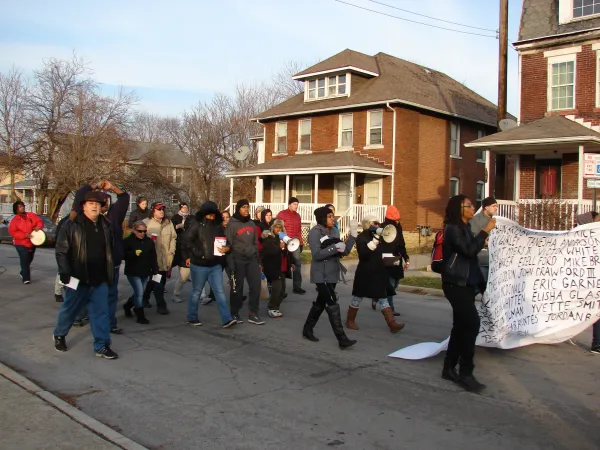
“Black lives matter!” became the rallying cry among activists calling attention to the recent police shootings of black citizens in Ohio and across the country.
Demonstrators against police brutality took advantage of the busiest holiday shopping day of the year by staging a “die-in” at Easton mall on December 20, the Saturday before Christmas. Sixty or so activists gathered in the Easton mall food court, unfurled a banner proclaiming “Black Lives Matter,” and struck death poses on the floor.
That same day, the usual holiday hustle at the Beavercreek Walmart was disrupted as nearly 200 protesters and activists took to the aisles to demand justice for the late John Crawford III, a 22-year old black man shot and killed by the local police department earlier this year, as reported by Reilly C. Dixon on columbusfreepress.com. A dozen protestors were arrested and charged with obstructing official business and criminal trespass.
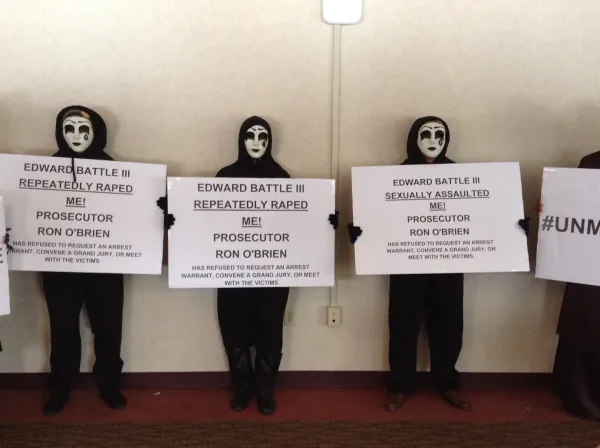
In response to the movement insisting “black lives matter,” three black child victims of rape held a press conference at the Martin Luther King, Jr. Center in Columbus on January 8, 2015. Their faces were covered with masks and it is the policy of The Free Press not to reveal the identity of underage rape victims. They remained silent throughout the press conference.
But, their advocates raised this theme: “Black child victims of rape matter.”
The three underage black girls have accused their uncle of raping them. The press conference was held to call attention to the fact that the rapes have been all but ignored by the Franklin County Prosecutor Ron O’Brien, and the alleged perpetrator is still a free man. Participant Bernardine Kennedy Kent of Parents Advocates of Students in Schools (PASS) insisted that the child rapes were not being properly investigated or prosecuted because of the victims’ race.
Kent Asad Shabazz of the Coalition of Concerned Black Citizens and Minister Donell Muhammad of the Nation of Islam all agreed that if these were three underage white girls, the alleged rapist would have been indicted and jailed.

Central Ohio is relentlessly expanding outward, leaving behind areas of undeveloped and developed land to essentially waste away; and, if no one acts, a future of super sprawl is in the cards.
The critical question is: Will regional planners take the necessary steps to reign in a metropolis once referred to as “Cowtown?”
The American population is trending toward greater numbers of young adults and retirees (Baby Boomers). Experts say this will spur demand for more and more single-occupant dwellings.
Taking this into consideration is the Mid-Ohio Regional Planning Commission or MORPC which predicts Columbus and its seven surrounding counties could expand another 480 square miles by 2050, adding 500,000 residents and 300,000 housing units. For perspective, 150 square miles (95,000 acres) of urbanized land was added from 2000 to 2010.
The numbers are alarming, and so are the consequences: neighborhoods without community, increased dependence on foreign oil, destruction of natural resources, rising taxes to pay for infrastructure and community services, and the stratification of class and race.