
Politics

Today, January 1st, 2025, is the first day in the new life of the Octagon in Newark (Ohio) as it opens to full public access after being besieged by a golf course over the previous century.
This Native American-built geometric structure, which has an adjoined circle with an observation mound, is arguably Ohio’s second most popular and mysterious First Nation earthwork when compared to Serpent Mound in Peebles, Ohio. Fascinating is how the Octagon, believed to be a ceremonial pilgrimage site used hundreds if not thousands of years ago, aligns with the northernmost moonrise which occurs every 18.6 years, and 2024 was that year.
Back in October at the Octagon during a public event on a night when the moon aligned nearly perfect with the Octagon (pictured above), the Ohio History Connection’s Dr. Bradley Lepper told the crowd those Native Americans who built and celebrated the Octagon did so to connect to the “rhythm of the cosmos so they would not feel alone.”
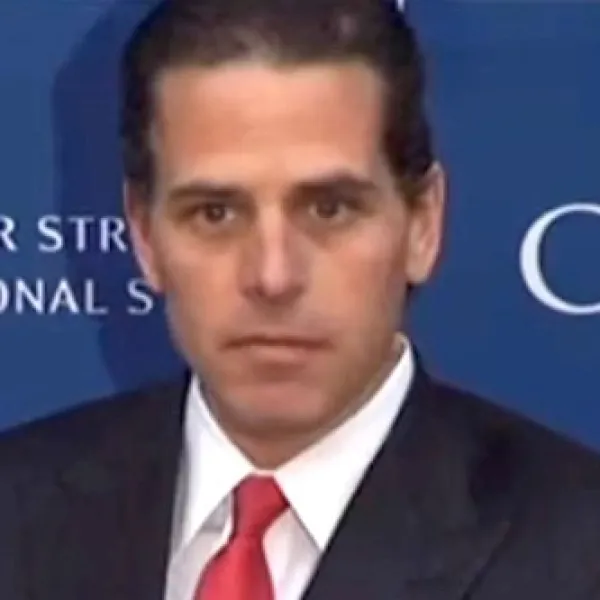
Article II, Section 2 of the U.S. Constitution grants the power of the pardon to the president--probably the most absolute power granted in the document. Designed as a tool for justice and mercy, it has at times sparked intense public controversy. The recent pardon of President Biden’s son, Hunter, and the commutations granted to federal death row inmates has, once again, rekindled the need to reexamine this power.
The concept of the pardon was adopted from the British monarchy, where it was a royal prerogative rooted in the belief that sovereigns could temper justice with mercy. In Federalist No. 74, Alexander Hamilton defended the power by arguing that the pardon was necessary to provide “exceptions in favor of unfortunate guilt” and to serve the public good, especially during times of rebellion or unrest.
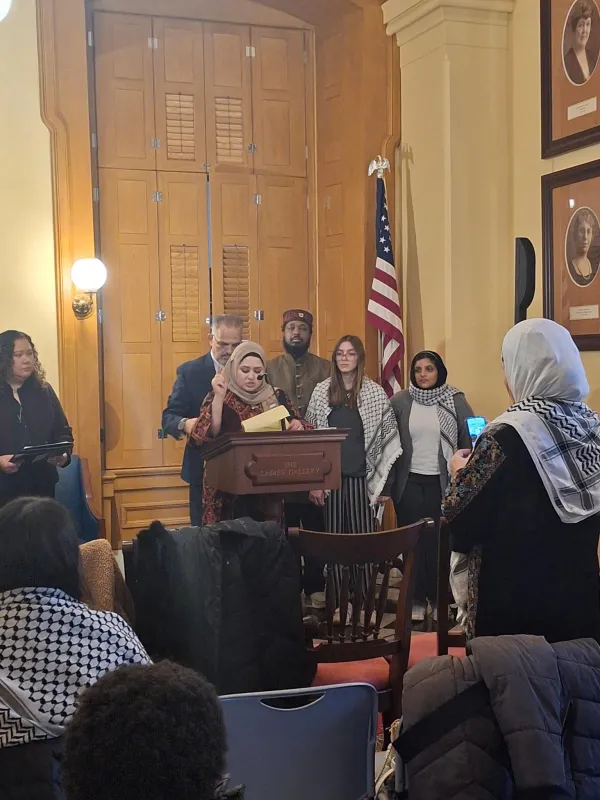
A broad coalition of democratic organizations from across the state have mobilized to protect free speech rights from a secretive attempt by right-wing lawmakers to make public criticism of the state of Israel illegal in the state of Ohio.
This is the story of how they did it – how people of all different backgrounds came together on short notice, learned to navigate the convoluted cutlure of the Ohio statehouse, and faced down a powerful lobby determined to shield the state of Israel and its supporters in the US government from accountability for the ongoing genocide in Gaza.
Faten Odeh, the executive director of the Cleveland chapter of The Council on American–Islamic Relations (CAIR-OH), had heard rumblings of states intending to codify the IHRA definition of antisemitism into law, but could have never anticipated how fast legislation around the definition would develop in Ohio. Perhaps a bigger surprise was how quickly she, along with Ann Ghazy, Jawhara Qutiefan, and a myriad of other organizers were able to mobilize large numbers of people to help protect free speech from government overreach.
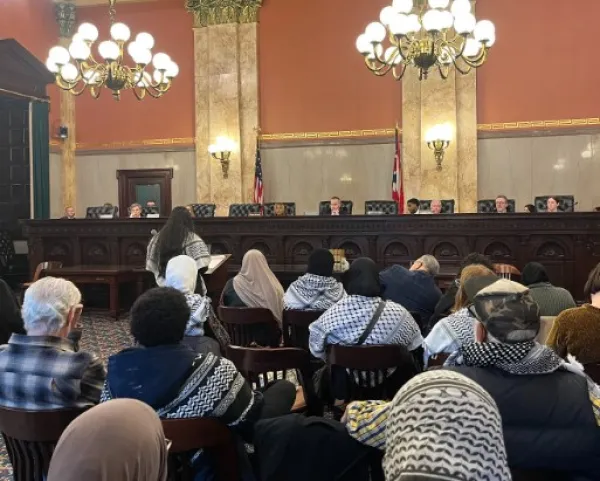
In an ongoing struggle for free speech, a dedicated coalition of Ohioans from across the state have worked diligently to defeat legislation that conflates criticism of Israel with antisemitism and ties it to heightened criminal penalties. Lawmakers attached the same provisions to multiple bills in a deceptive legislative bundling maneuver to fast-track controversial measures by contributing to ‘Christmas Tree’ bills during the lame duck session. Wednesday night December 18 marked the end of the 135th General Assembly and advocates remain energized and committed to protecting First Amendment rights in 2025.
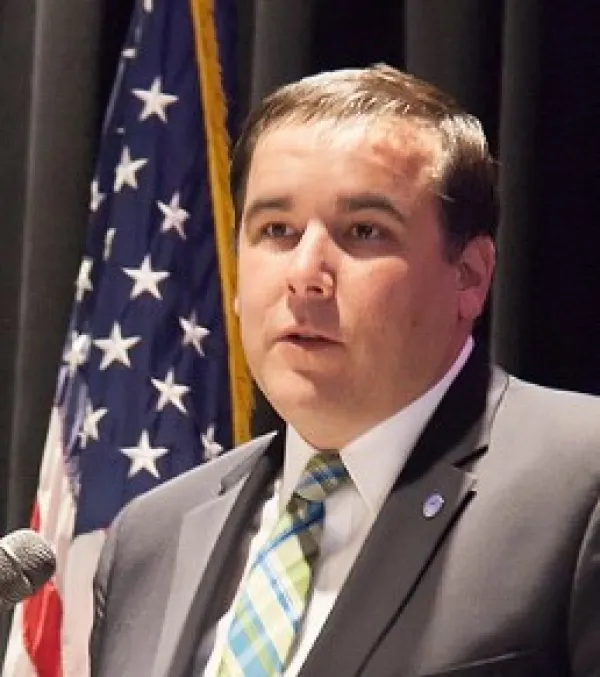
After nearly one year to the day when a signed agreement was made between City Attorney Zach Klein and the Whitehall City Attorney’s office for Whitehall to investigate Mayor Ginther’s exparte communication with Judge Stephanie Mingo, Whitehall City Attorney Brad Nicodemus finally disclosed his investigation report.
Mr. Nicodemus, in what many will view as a predictable biased decision, found that “with insufficient probable cause for obstruction of official business and interference with civil rights, neither charge will be filed with the court.”
The logic of his decision is not sound. Ginther obstructed justice and violated the constitutional rights of the parties by contacting the judge. In my opinion, the decision appears to be politically biased in favor of Mayor Ginther. This means the Mayor is free to interfere with any pending case.
This article first appeared in the Buckeye Flame
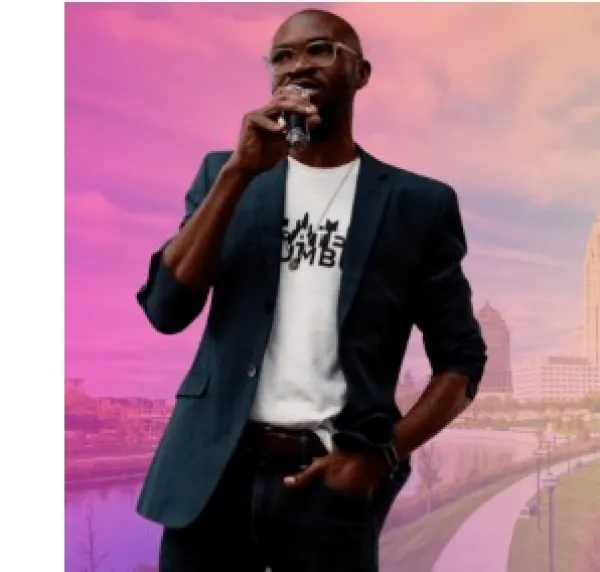
As one of the fastest growing cities in the country, Columbus is in for major changes in the coming years—and local queer community leader Densil Porteous wants to be a part of the conversation to fill the vacant District 7 representative on city council.
“We know we are going to continue to grow, and we have to be thoughtful, strategic and intentional about that growth,” he said.
As a queer Black man, a parent and a two-decade Columbus resident, Porteous believes he will bring a much-needed perspective to Council to ensure a bright and equitable future for the city. His platform is centered on affordable housing, inclusive economic growth, environmental justice and community-centered safety solutions.

A diverse coalition of Ohioans from across the state, including a caravan from Cleveland, is headed to Columbus today to testify against Senate Bill 297 (SB 297), a controversial piece of legislation being rushed through during the lame-duck session. The bill, endorsed by Ohio Attorney General Dave Yost, seeks to encode the International Holocaust Remembrance Alliance (IHRA) definition of antisemitism into state law, attaching this definition to heightened criminal penalties.
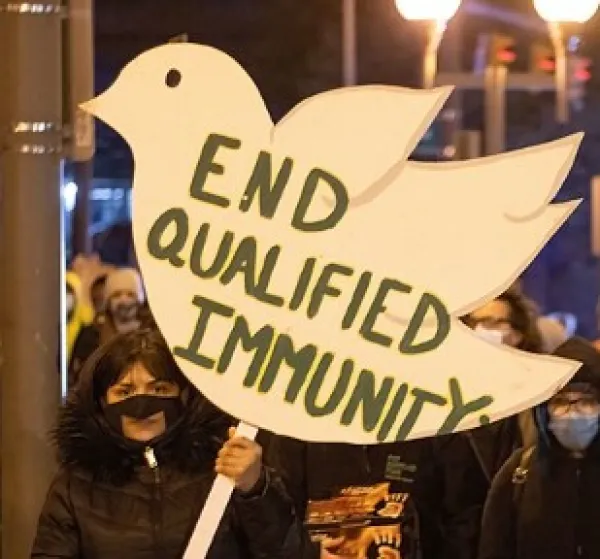
The Ohio Coalition To End Qualified Immunity (The OCEQI) announces serious concerns regarding Secretary of State Frank LaRose’s repeated public hostility toward the proposed initiative aimed at ending qualified immunity, prosecutorial immunity, sovereign immunity, and all statutory immunities enjoyed by the government to the detriment of the people.
Over the past two years, Secretary LaRose has engaged in a pattern of false and disparaging statements about the initiative and its sponsors, referring to it as an “assault on our state constitution” and accusing its backers of being financed by “the radical left.” In an article by the Toledo Blade on August 10, 2023, Secretary LaRose claimed the initiative “threatens to unleash a flood of frivolous, politically motivated lawsuits against the brave men and women trying to protect our communities.”

After several years of rejecting the Ohio Coalition To End Qualified Immunity’s (OCTEQI) petition summary, the Ohio Attorney General’s Office on Nov. 25 finally officially accepted their summary of its proposed constitutional amendment seeking to end qualified immunity for peace officers and possibly other government officials in Ohio.
The OCTEQI believes, as other activists do, that the only way to curb police brutality is to change policy. Qualified immunity shields law enforcement and other state actors from personal liability (civil suits).
A November 8 ruling by the Ohio Supreme Court prompted Ohio Attorney General Dave Yost to re-evaluate the summary and its title, “Protecting Ohioans Constitutional Rights.” His office had rejected the proposed constitutional amendment nearly ten times before, but the OCTEQI time and time again was unrelenting in its effort to gather the roughly 1,000 signatures for the AG to approve the next step.
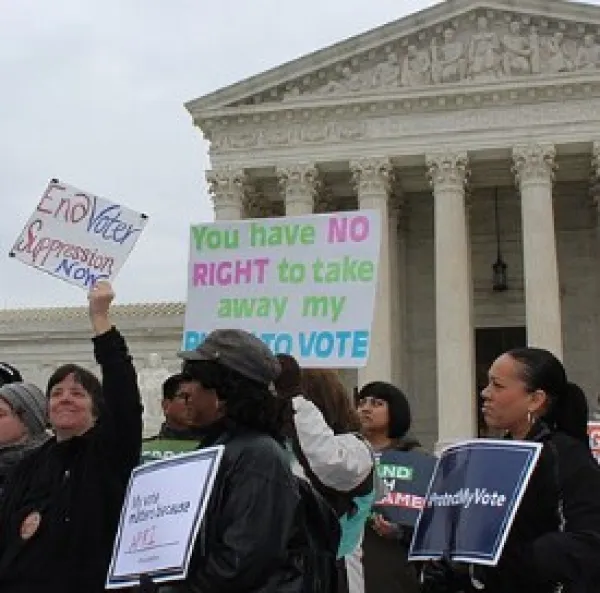
The coalition of voting and civil rights organizations behind the Ohio Voters Bill of Rights releases the following statement in response to the Ohio Ballot Board rightfully certifying its proposed ballot measure as a single amendment:
“We are grateful that the Ohio Ballot Board made the correct decision today to keep our proposed Ohio Voters Bill of Rights amendment intact. This ruling affirms our position that the amendment relates to a single purpose: voting rights for eligible Ohioans.
The decision marks another crucial milestone in our journey to put these popular and necessary pro-voter policies before the people of Ohio.
The Ohio Voters Bill of Rights is fundamentally about restoring and protecting the people's power. We remain unwavering in our commitment to enshrining voting rights into our state constitution, ensuring that every eligible Ohioan has the opportunity to make their voice heard at the ballot box. And the positive outcome from the Ballot Board brings us one step closer to placing this vital issue on the ballot.