
Politics
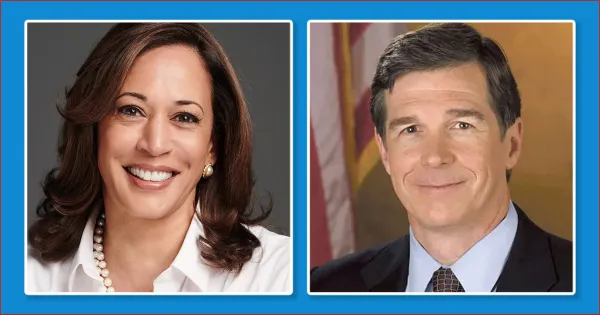
Joe Biden recently made history by endorsing Vice President Kamala Harris for the 2024 presidential race after dropping out. With Harris likely to secure the nomination, the focus shifts to her choice of running mate.
The list of potential candidates includes Governors Newsom (CA), Whitmer (MI), Beshear (KY), Shapiro (PA), Pritzker (IL), and Cooper (NC), along with Transportation Secretary Pete Buttigieg and U.S. Senator Mark Kelly (AZ). Although Newsom and Whitmer are strong candidates, Whitmer has reportedly declined the spot. Newsom, meanwhile, is from California, just like Harris. The Constitution prohibits a ticket with two people from the same state, and while they could solve that by having one of them change their official residence, it may come off as manipulative and unpopular, especially when MAGA Republicans paint California as a “woke” state.
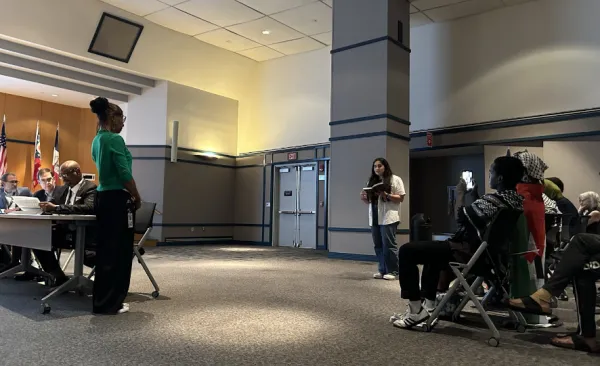
Last week community members made their voices heard at the quarterly Franklin County Investment Advisory Committee (IAC) meeting. Despite the public meeting being held at 2pm on a weekday, constituents filled the back rows of the Franklin County Government Center meeting room, many taking time off of work to show up.
This is the second consecutive IAC meeting to receive significant public scrutiny as a result of recent reports on Franklin County’s substantial investments in Israel Bonds.
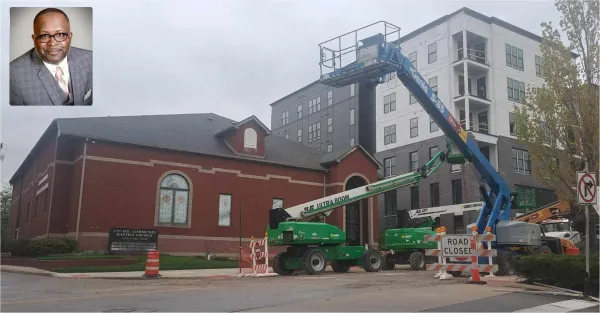
Pastor Roscoe D. Robey of the 7th Avenue Community Missionary Baptist Church has helped support the Weinland Park area with his spirituality since 2009. His church has tangibly been a part of Weinland Park’s revitalization, albeit in an aggravating kind of way. And what he’s had to deal with – mixed-use development crowding his church on both sides – could be a “Zone In” harbinger of things to come for those homeowners or small businesses in Columbus’s major corridors.
Just a short walk up from High Street, the church has been a source of help and inspiration for the Weinland Park community for roughly 60 years. The congregation’s summer project of raising money for school supplies is underway, and they are mentoring young boys from the neighborhood who are in trouble, Pastor Robey told the Free Press.
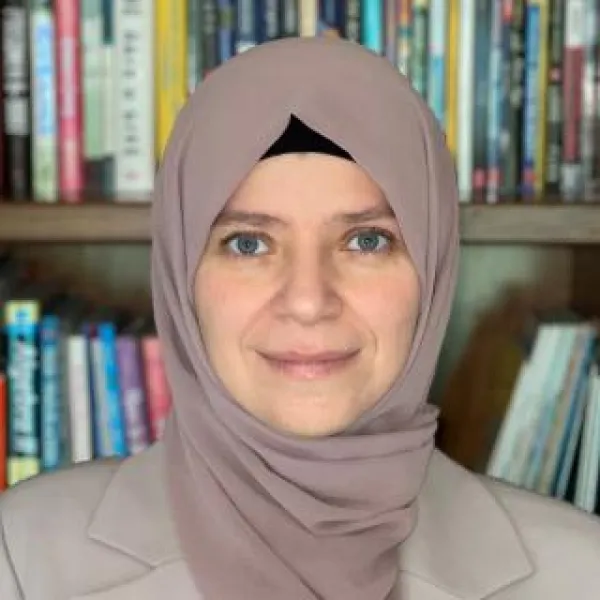
“We have a big thumbprint, and often times when folks get into trouble and need a little help, they can come to us, and they come to us, because I lobby for things downtown,” said the Pastor who is pictured above top left.
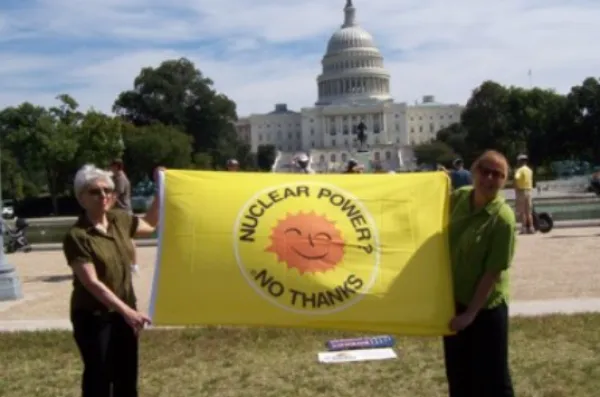
In a lopsided 88-2 vote (with 10 not voting, including Sen. Richard Durbin), the Senate passed S.870 – the so-called ADVANCED Act, a bill which quite literally takes the lid off of the nuclear safety box, both domestically and internationally.
So proud and confident were the Senators in nuclear power’s promises, rather than being introduced as stand-alone legislation, the 93-page bill had to be snuck into the three-page Fire Grants and Safety Act – a bill reasonably assured to pass at a time when huge parts of the nation are again in the process of burning to the ground.
Using the logic similar to that of an adolescent purchasing a first car (“If it’s red, fast, and a convertible – that’s it! What could go wrong?”), bill advocates trotted out the usual litany of at best contestable at worst discredited arguments for its passage: nuclear is clean and green, is needed to fight the climate crisis, creates jobs, and is over-regulated.

CSA – CAOA – UPDATES & OTHER TIDBITS
There’s a lot to report regarding the federal Controlled Substances Act (CSA). In fact, federal full legal has reemerged in the form of the proposed Cannabis Administration and Opportunity Act (CAOA), first introduced in 2022 and reintroduced in May this year. Updates below join a few other tidbits.
CSA (AKA CONTROLLED SUBSTANCES ACT)
Dear AG Dave Yost,
Ohio AG Dave Yost wants to criminalize free speech. Last week, he issued a "legal fatwa" where he threatened to invoke a 1953 law better known as "anti-KKK" against 41 brave OSU students and faculty who were arrested last April 25. Reason? The protesters were calling for their university to divest from Israel and an end to the Israeli genocide and starvation in Gaza. Simply put, he will charge OSU students & faculties fourth degree felony charge under his silly unheard-of law.
By cracking down on OSU students for protesting against genocide after 14,500+ slaughtered Palestinian children and billions in US aid, weapons, and political cover, that makes AG Yost as complicit.
Contrary to AG Yost "Yo Yost" TV campaign commercial in which he promised to protect Ohioans' religious freedom, AG Yost ordered his troops to attack students while they were praying and violate Muslim students' religious rights as they were exercising their First Amendment's rights at OSU campus. Furthermore, students and faculties who were arrested were subjected to illegal, inhumane, and degrading treatments such as:
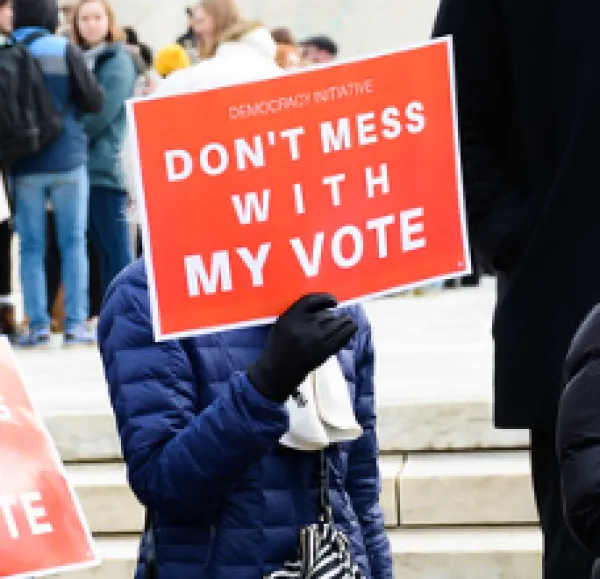
State Rep. Bride Rose Sweeney (D-Westlake) today responded to Ohio Secretary of State Frank LaRose’s plans for another statewide voter purge clouded in darkness that will happen two weeks before voting in the upcoming presidential election. The Cleveland-area lawmaker sent a third letter to LaRose’s office after his refusal to provide public records requested related to LaRose’s quiet 2023 purge of nearly 27,000 people from Ohio’s voter rolls six days after November absentee ballots were sent out and reiterates a demand for transparency and cooperation with the public to ensure that no voter is incorrectly removed from the voter registry.
“The secretary of state seems more excited about canceling Ohio voters than providing answers and transparency to his process, which seems plagued by politics and inexperience. That’s why I’ve repeatedly asked for an official audit and public records so we know exactly what’s going on, ”said Rep. Sweeney in her letter to Sec. LaRose’s office. “ The problem with purging is that it has removed eligible voters. That’s unacceptable. We need answers.”
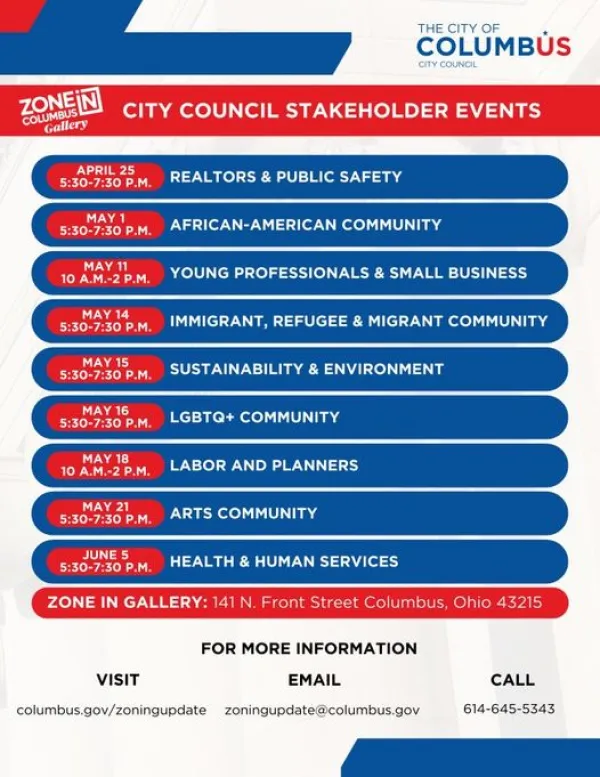
The “Old Amateurs” of Columbus – also known as those who do most of the hard work in the community – have not been invited by City officials to take personal tours beginning this week of the “Zone In” gallery which opened downtown at 141 N. Front Street. The gallery offers an opportunity for the public to see and comment on the zoning overhaul which could radically change Columbus’s major corridors.
To the City’s credit, members of our LGBTQ+ community, recent immigrants, and the arts community have been invited (pictured above). But those at the head of the line for a personal tour are “Young Professionals,” who are coveted by “Zone In Columbus” considering they’re the few who will able to afford the tiny condos and apartments in the tall towers which “Zone In” will green light for high-end developers to build in Columbus’s major corridors.
Columbus is a massive flat concrete and asphalt pancake on vast prairie land with one million new residents projected by 2050. Building new Metro Parks is essential to give the community more things to do and connect them to nature.
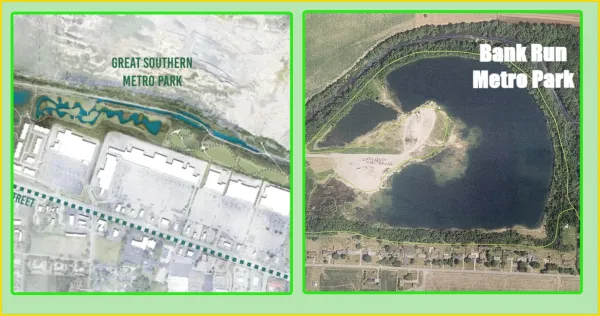
The good news is two new Metro Parks on the Far South Side are scheduled to open at the end of this year.
Under construction behind the Great Southern Shopping Center is the Great Southern Metro Park on the banks of the Scioto River. A bike trail down the river will connect to downtown. The Bank Run Metro Park was mapped out close to Big Walnut Creek within the Village of Lockbourne near several large dormant quarries now filled with rainwater once owned by Shelly and Sands Inc., a mining company.
Unfortunately, the two new parks may have some bad news baggage as well. Because a few Metro Park fans are wondering: Will the parks have a massive “mixed used” property connected or even in the park itself?
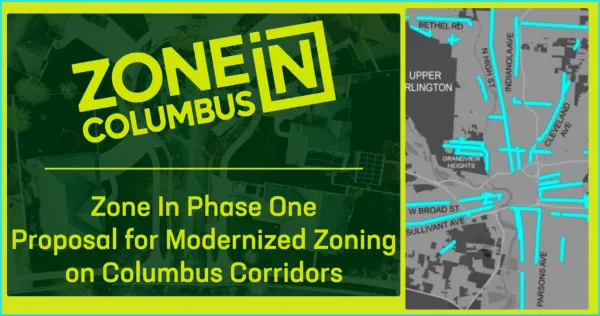
The City and its development offices have been working to overhaul the zoning code since 2021, but some local housing advocates say City officials made the changes “blind” in some respects, after they decided not to use area and neighborhood land use plans as guides.
“Zone In Columbus” – which was formally voted into existence Monday night by City Council – could radically change Columbus’s major corridors as the region continues to experience population growth with some estimates saying nearly 90 new residents a day are moving here.
But a few critics say “Zone In Columbus” is mostly about building taller apartment buildings with no parking options in these major corridors so to create more density. For example, “Zone In Columbus” states Clintonville and its High Street corridor are being “underutilized”.