
Politics
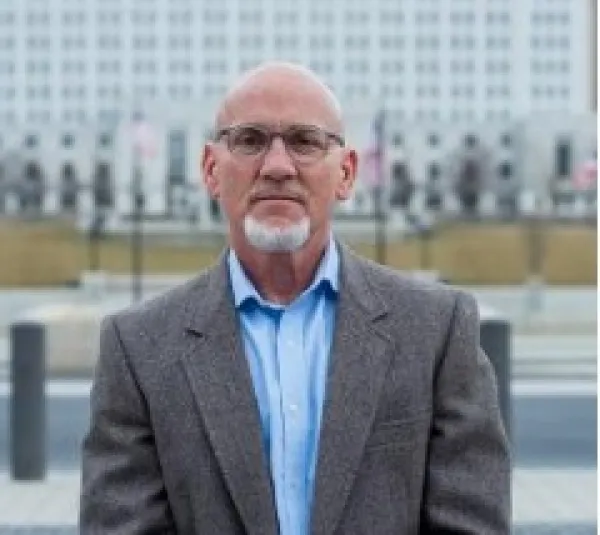
Joe Motil, former Columbus City Council candidate and 37-year community advocate who is circulating petitions to run for mayor in the 2023 May primary election states that, “As a [former] school board member, president of City Council and mayor, Andy Ginther’s decades-long practice of handing out hundreds of millions of dollars in tax abatements to corporate Columbus and luxury real estate developers has defunded public education to the point where CEA members have said enough is enough. If those on the receiving end of tax abatements and TIFs paid their fair share of property taxes, a bargaining agreement between the CEA and School Board would have been settled by now.”
Motil continues, “The CEA’s decision to strike has been a longtime coming. Ginther, City Council and School Board members for too long have sacrificed much-needed property tax revenue and the educational needs of our city’s public schools and children, to fill the bank accounts of developers and provide corporate welfare to our city’s wealthiest and most 'beloved' companies.”
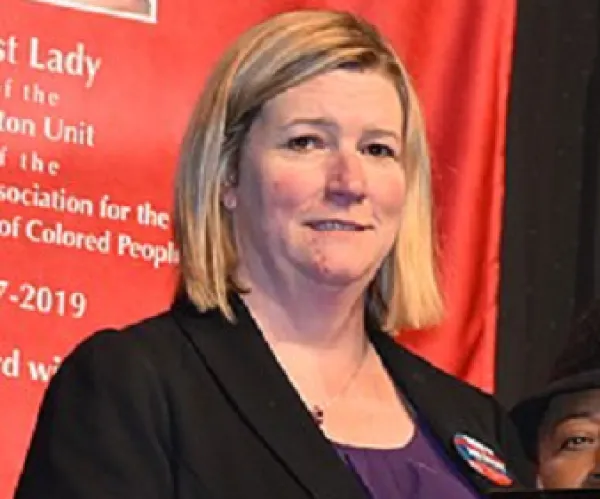
As predicted, Nan Whaley’s campaign is stuck in the mud having gained no ground and perhaps lost some to Mike DeWine in the three-and-a-half months after the May 3 primary. Only two-and-a-half months remain until the Nov. 8 election.
The Emerson College poll released by the pollster Aug. 18, showed Gov. DeWine, the GOP nominee, solidly ahead by 49% to Dem nominee Whaley’s 33%. The margin of error was 3.2% meaning that there is a high probability that DeWine has a 52.2% to 45.8% support while Whaley’s backing fluctuates between 36.2% and 29.8%.
The only other respectable poll in the gubernatorial race, The USA Today/Suffolk Poll, taken shortly after the primary, showed DeWine ahead by 15%, 45% to 30%, with a margin of error of 4.4%.
Any way you slice it, Whaley has not closed the gap in three months and may have lost some. The failure to gain has set off alarm bells among prominent Ohio Democrats who increasingly fear that Whaley’s campaign is cratering and will take the rest of the ticket down to an ignominious defeat on Nov. 8.

Only in Columbus, Ohio, can “ideas [be] considered for Downtown plan” without confronting the physical reality or the history of downtown. That, of course, is the Columbus Way. Historical and physical reality, including concrete, cannot interfere with fantasy or selling and buying.
If I didn’t know better, I would be surprised. But after all, this is Columbus, Ohio, with no identity and no history, no democratic governance, leadership, or urban expertise. I wrote in December 2021 that “Columbus searches for its Downtown with historical, urbanist, and developers’ blinders,” and in January 2022 that “Columbus, Ohio, searches to be a city: The myth of the Columbus Way.”
Columbus, Ohio is also geographically challenged. This is the city that can’t tell the difference between the Short North and Greenwich Village or Near North Side of Chicago, the Convention Center and Times Square; the Scioto Riverfront and Boston Harbor, Lake Michigan, or San Francisco Bay.

On May 17, I wrote a column titled “How Whaley Beats DeWine.” It contained my advice to Nan Whaley, the Democratic nominee for governor, on how to pull the upset of incumbent, entrenched Republican Gov. Mike DeWine. ColumbusMediaInsiderPoliticalOutsider: How Whaley Beats DeWine | ColumbusFreePress.com
At the time, 75 days ago, I gave Whaley 1 chance in 10 of pulling the upset. After the Roe decision threatening women’s right to choose brought many motivated women into the political marketplace, I revised my forecast to 3 chances in 10. I think the decision boosted Whaley’s standing by 3 percent, but it still leaves her 12 points behind (she was 15 points behind in the only post-primary poll) with 100 days to go. I give Whaley only 2 chances out of 10 of winning at this writing.
I am going to review each category I cited in my original analysis (first take) and tell you where I think Whaley stands (second take).
UNDERSTAND THE VOTERS
First take: Election after election show that Ohio voters are evolutionary not revolutionary.

Joe Motil, former Columbus City Council candidate and longtime community advocate who is now circulating petitions to run for Mayor in the 2023 May primary election states,” I have been publicly outspoken about wasting city tax dollars to purchase or lease state property. The development of this so called “sports complex” at the Mapfre site was an especially glaring example of such waste. My view is that the city needs to shelf this project and use these tax dollars on affordable housing, sidewalks and street lighting or drug treatment facilities. There are more important economic and social needs facing the citizens of Columbus today where these tax dollars could be better spent.”
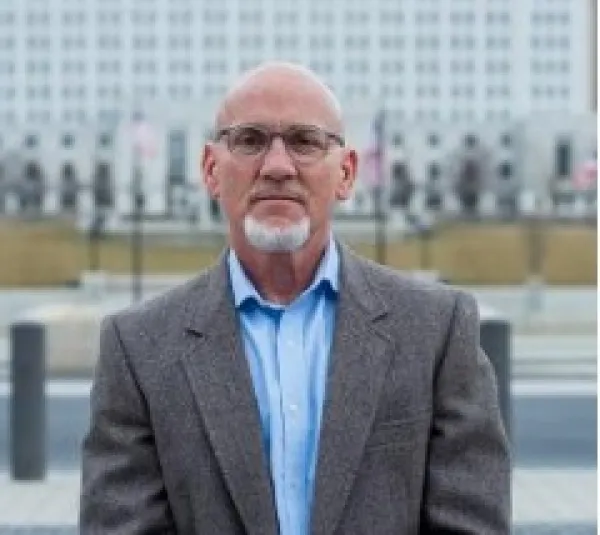
Joe Motil, former Columbus City Council candidate and longtime community advocate who has been circulating petitions to run for mayor in the 2023 May primary election stated that, “City Council and Mayor Ginther have not spent one dime of the taxpayers federally allocated $187 million of American Rescue Plan funds to help address our city’s affordable housing crisis, but without a blink of the eye will shell out $900,000 to upgrade the Convention Center's ventilation system.”

This column is painful to write. I have been putting it off.
Please understand that the minute I complete writing a column, I begin thinking about the next one. I do not immediately face deadline pressure because I only write once or twice a month. Imagine what it is like for a columnist or newsletter writer who files once a day. There is immediate, mind-numbing deadline pressure.
The late Mike Royko, who wrote several columns a week for the Chicago Tribune, was asked late in life by TV interviewer Larry King what his favorite column was. Royko replied, “The last one.”
I always have my next column in the back of my mind and have the luxury of having two or three weeks of contemplation time. Sometimes the idea for my next column will come to me while mowing the lawn, while falling asleep, while driving, or while having a conversation. I often scribble the idea on a piece of paper and put it where I keep my stack of clippings and printouts that become content for my next column.
Today’s column idea came to me at one of the most peaceful places on earth: Lake Tahoe.
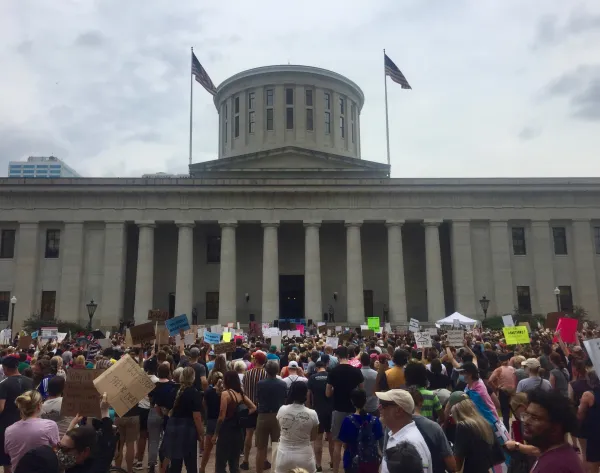
As our nation’s birthday rolls around again, there is a strange and eerie feeling about the country we’re living in these days. The U.S. Supreme Court’s recent decision to overturn Roe vs. Wade –– thus removing federal protections for abortion rights –– has sent shock waves across the country and unleashed a firestorm upon our political system. While abortion is often painted in the light of “left versus right” –– and Lord knows each side could not be more different on this complicated issue –– our binary way of political thinking obviously doesn’t always apply to everyone. But in light of other recent events –– insurrections, false claims of stolen elections, the erosion of our democratic processes and systemic erasure of constitutional rights –– it might be time for independent voters to pick a side.
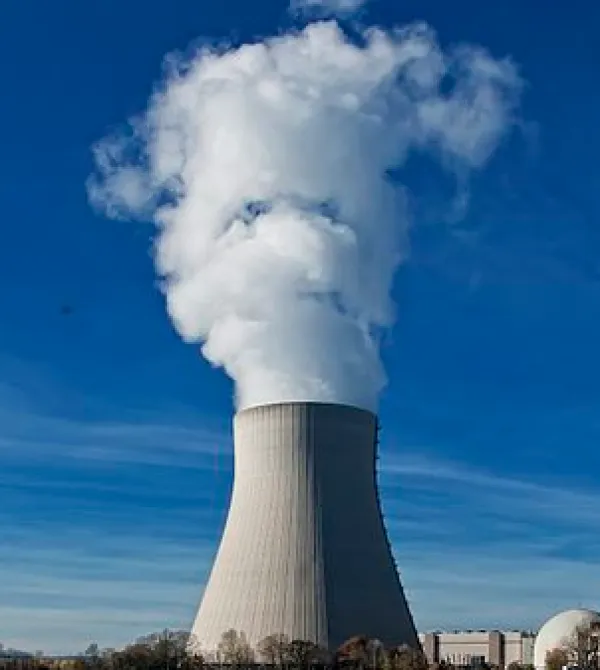
A Nuclear Nightmare Bill
Sen. Joe Manchin (D-W.Va.) has introduced S.4064 - International Nuclear Energy Act of 2022. Designed to spread American nuclear technology internationally and end prohibition on foreign ownership of nuclear in the US, Manchin’s bill would:
Create fast-track procedures for deemed civil nuclear exports for countries defined by the Secretary of Energy. Expand the Export-Import Bank program on Transformational Exports to include civil nuclear facilities and related goods. Create the U.S. Nuclear Fuels Security Initiative to reduce and eventually eliminate reliance on Chinese and Russian nuclear fuels.The proposed legislation – like the campaign to keep Diablo Canyon, California’s last nuke standing - is part of a current concerted push to resuscitate a moribund industry that should be allowed to die before it kills us.
A Mounting Pyramid of Catastrophes
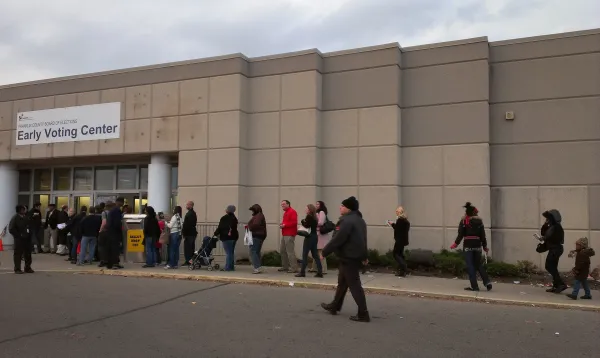
During the 2020 election, Joseph Enriquez took the most drastic measure most Central Ohioans can imagine. He tried to vote on a Saturday afternoon at the Board of Elections on Morse Road, during an Ohio State football game, hoping that his fellow Ohioans’ love of the Buckeyes would shorten the lines.
While Enriquez’s plan did not get him to the short lines that he hoped for, his plan speaks to Ohio voters’ commitment to exercising their right to vote. But should Ohio voters have to wait in hour-long lines to cast their votes?
As the primary elections fade into the background, we have only a few short months until once again we are swept up in the day-to-day slog of debates, advertising, and general political combat.
It may be useful, therefore, to look back on an issue with the 2020 election so we can seek solutions before November comes on us all too quickly. This issue is one that affects us all, though some more than others – the problem of long voting lines.